Air Filter Trade-off Simulator
Select a filter type below to see how it impacts your engine's Volumetric Efficiency (Power) versus its Long-term Protection (Longevity).
Select a Filter
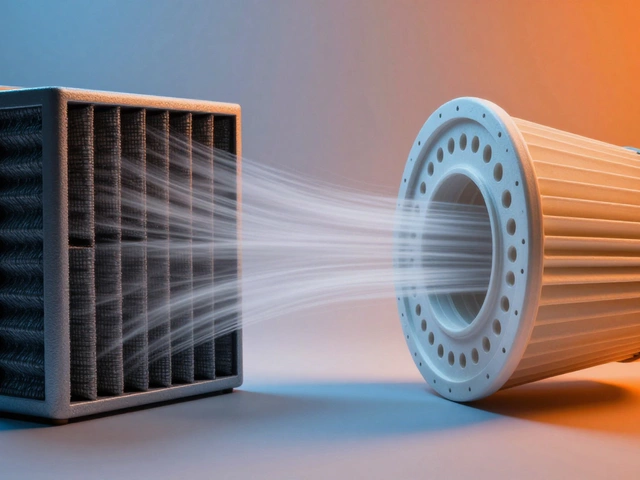
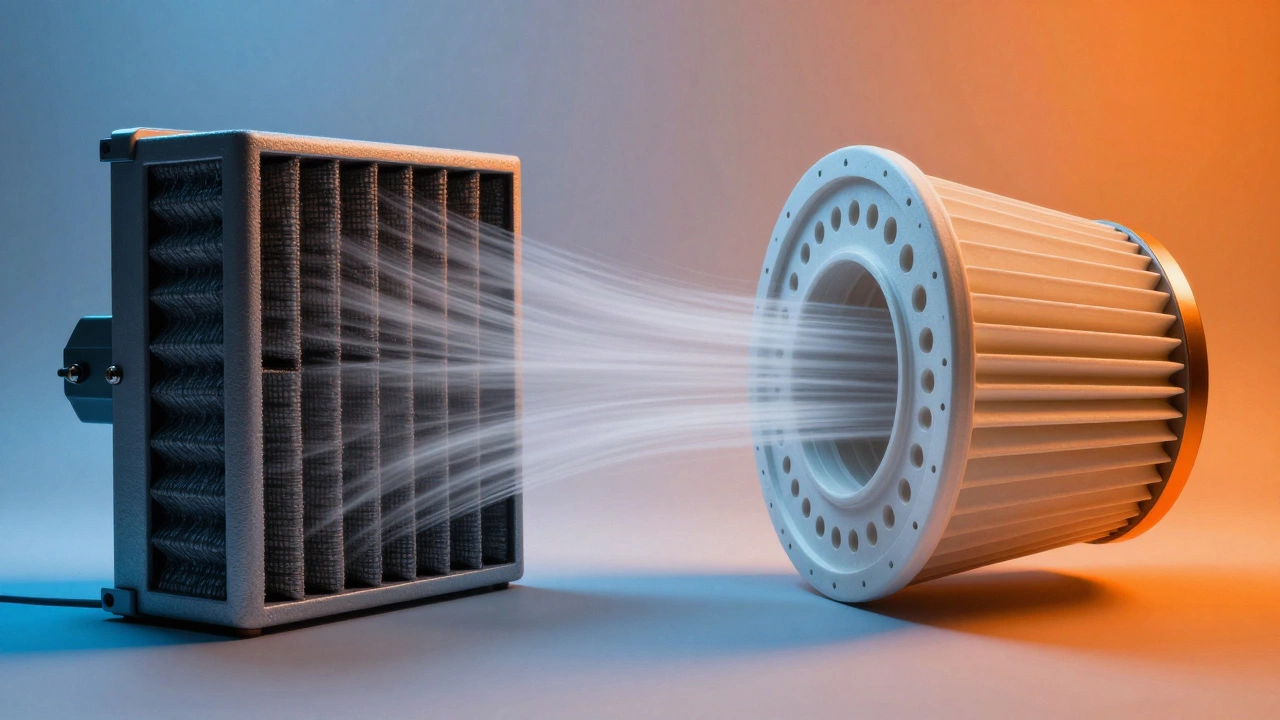
The Great Airflow Paradox
You've probably seen the marketing for high-flow filters: "More air, more power!" It sounds simple. You swap out your restrictive paper filter for a fancy pleated cone, and suddenly your engine breathes easier. But here is the weird part: in the world of engines, "strong" isn't about the filter's physical strength or its ability to trap every single molecule of dust. When people ask if a filter is "too strong," they usually mean one of two things: is it restricting too much air, or is it letting too much dirt through?
If you go too far in either direction, you're not helping your car; you're hurting it. A filter that is "too strong" at filtering (too restrictive) chokes your engine, while one that is "too weak" at filtering (too porous) turns your cylinders into sandpaper. Finding that sweet spot is where the real science happens.
Quick Takeaways for Your Intake
- Restrictive filters reduce horsepower by making the engine work harder to suck in air.
- High-flow filters increase air volume but can let in larger particles if the material is too porous.
- MAF sensor fouling is a common risk with oiled performance filters.
- Engine longevity depends on a balance between volumetric efficiency and filtration quality.
Understanding Airflow Restriction
To get why a filter can be "too restrictive," we have to look at Volumetric Efficiency is the ratio of the actual volume of air-fuel mixture drawn into the cylinder compared to the theoretical volume the cylinder can hold. When your engine is screaming at 6,000 RPM, it wants a massive amount of air instantly. If your filter is too "strong" in its filtration-meaning the pores are too small or the material is too dense-it creates a pressure drop.
Imagine trying to breathe through a thick wool blanket while sprinting. You can do it, but you'll tire out faster because your lungs have to work harder to pull air through the fabric. That's exactly what happens to your pistons. When the intake restriction is too high, the engine spends more energy pulling air in than it does pushing the car forward. This is why some heavy-duty industrial filters, designed for desert environments, are terrible for street performance; they stop everything, including the air your engine needs to make power.
The Risk of "Too Much" Airflow
On the flip side, you have Performance Air Filters, which are aftermarket filtration systems designed to reduce air resistance and increase the volume of air entering the engine. If a filter is "too weak"-or too high-flow-it fails its primary job: protection. The danger here isn't immediate, but it's cumulative. Tiny particles of silica and road grit bypass the filter and enter the combustion chamber.
Once those particles hit the cylinder walls, they act like a grinding compound. They scratch the cylinder bores and wear down the Piston Rings, which are metallic rings that seal the gap between the piston and the cylinder wall to prevent combustion gases from leaking. Over 50,000 miles, this "too-strong airflow" can lead to a loss of compression and a ruined engine. You might gain 5 horsepower today, but you're trading away 100,000 miles of engine life.
The Oiled Filter Trap
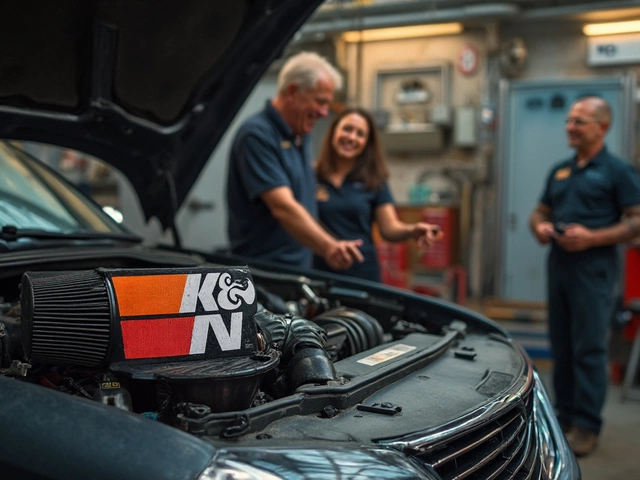
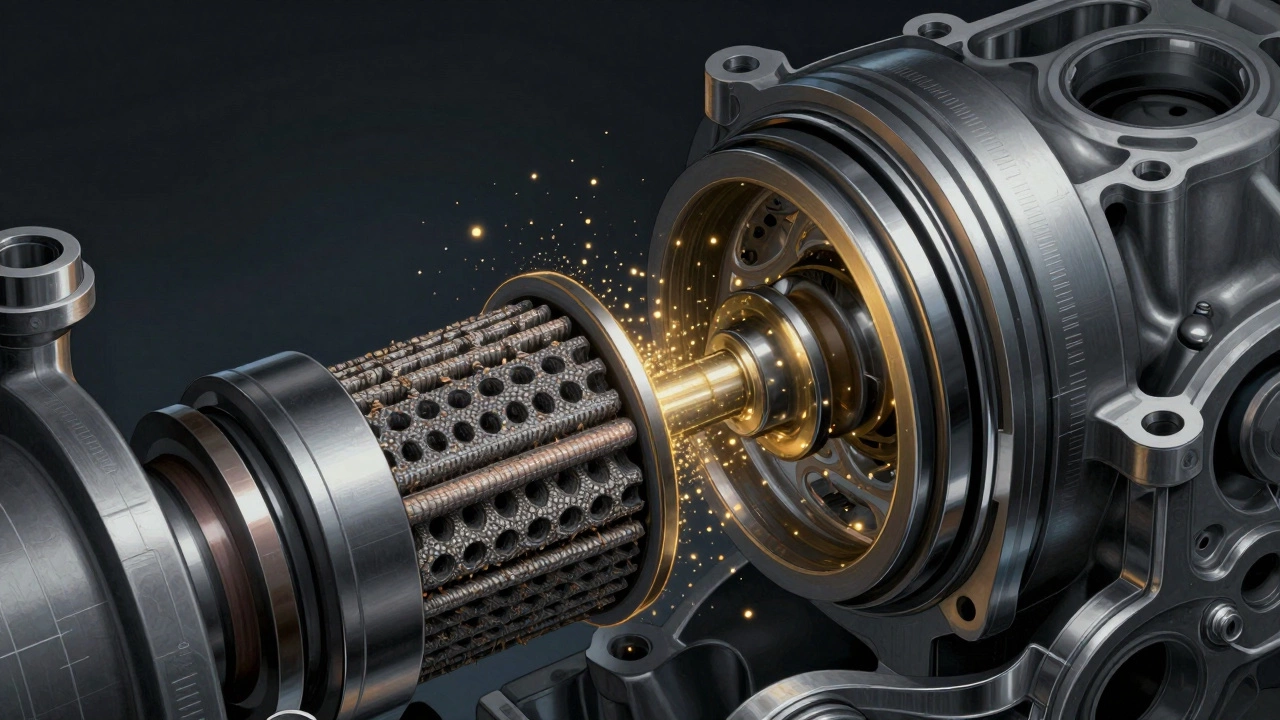
Many performance enthusiasts swear by oiled cotton gauze filters. These use a thin layer of oil to trap dirt while keeping the weave open for maximum airflow. However, this introduces a specific problem: the Mass Air Flow Sensor (or MAF Sensor), which is a device that measures the mass of air entering the intake to help the ECU calculate the correct amount of fuel.
If you over-oil your filter, the excess oil doesn't stay on the fabric. It gets sucked into the intake stream and coats the delicate wire of the MAF sensor. This ruins the sensor's reading, causing the car to run lean or rich. You'll see weird idling, a sudden drop in fuel economy, or even a Check Engine light. In this case, the filter isn't "too strong" in a physical sense, but its chemical properties are interfering with the engine's electronics.
| Filter Type | Airflow Rate | Filtration Level | Maintenance | Best Use Case |
|---|---|---|---|---|
| Paper (OEM) | Moderate | Very High | Replace only | Daily driving & Longevity |
| Cotton Gauze (Oiled) | High | Moderate | Wash & Re-oil | Street performance |
| Dry Performance | High | High | Washable | Track days & High-RPM |
| Heavy Duty (Industrial) | Low | Maximum | Replace only | Off-roading/Dusty areas |
Cold Air Intakes and Heat Soak
Often, when people upgrade their filters, they install a Cold Air Intake (CAI), which is a system that relocates the air filter to a cooler part of the engine bay or outside the bay entirely to increase air density. The logic is that colder air is denser, meaning more oxygen molecules per cubic inch, which allows for a bigger explosion in the cylinder.
But here's the catch: if your CAI is poorly designed and the filter sits right next to the radiator or exhaust manifold, you get "heat soak." The filter might be allowing plenty of air through, but that air is scorching hot. Hot air is less dense and more prone to causing Engine Knock, which is premature ignition of the air-fuel mixture caused by heat or pressure, leading to metallic pinging and potential piston damage. So, your filter isn't "too strong" or "too weak"-the placement is just wrong.
How to Tell if Your Filter is the Problem
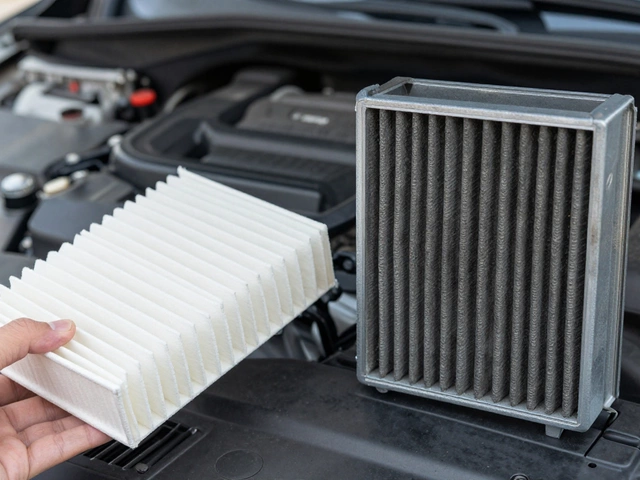
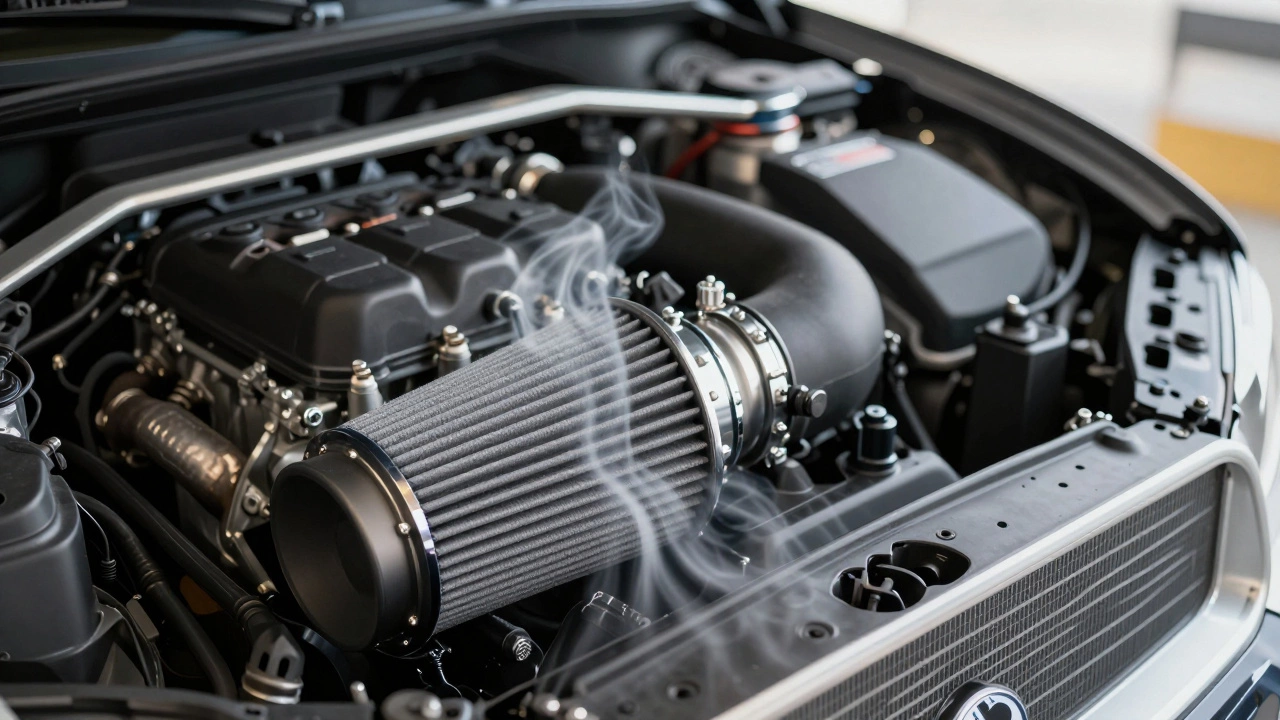
If you're wondering if your current setup is choking your engine or letting in too much debris, look for these signs. If the car feels sluggish during hard acceleration and the filter looks charcoal-gray, it's too restrictive. You're essentially suffocating the engine.
On the other hand, if you've installed a high-flow filter and notice a fine layer of dust accumulating on the Throttle Body (the valve that controls air flow into the intake manifold), your filter is too porous. That dust shouldn't be there. If you see grit in the intake tract, your "strong" airflow is actually a liability.
Will a high-flow filter void my engine warranty?
Generally, changing a filter won't void your entire warranty, but if the manufacturer can prove that a low-quality filter allowed debris into the engine, causing a failure, they may deny a specific claim. Always keep your old OEM filter if you're worried about warranty disputes.
Do I really need to oil my performance filter?
If you have a cotton gauze filter, yes. The oil is what actually traps the microscopic dirt particles. Without it, the filter is just a screen that lets most contaminants through. If you hate the mess of oil, switch to a dry synthetic performance filter.
Can I just remove the air filter entirely for more power?
Absolutely not. While you'll get maximum airflow for a few minutes, you're essentially inviting every pebble, insect, and piece of road debris into your engine. You'll score the cylinder walls and likely kill the engine in a very short amount of time.
How often should I clean a washable filter?
It depends on where you drive. If you're in a dusty area or on gravel roads, every 5,000 to 10,000 miles is a good rule. If you're mostly on paved city streets, you can probably push it to 15,000 or 20,000 miles. Check it visually; if the pleats are clogged, clean it.
Does a "stronger" filter mean more horsepower?
No. A "stronger" filter in terms of filtration usually means more restriction, which actually lowers horsepower. If by "stronger" you mean a higher-performance high-flow filter, it can increase horsepower by reducing the engine's pumping losses, but the gains are often modest without other modifications.
Next Steps for Your Setup
If you're chasing performance, don't just buy the most expensive filter on the shelf. Start by analyzing your environment. If you drive in the city, a high-quality dry synthetic filter is usually the best balance of airflow and protection. If you're building a track car where you replace parts frequently, a high-flow oiled filter works, provided you don't overdo the lubrication.
If you've already installed a performance intake and the car feels "off," check your MAF sensor first. A quick clean with a dedicated MAF sensor cleaner spray often fixes the issues caused by over-oiled filters. Finally, ensure your intake is shielded from engine heat to make sure that all that extra airflow is actually cold, dense air and not hot waste from the radiator.