Air Filter MPG Impact Estimator
Estimated Outcome:
Calculating...Select your options and calculate.
Note: This tool provides estimates based on general automotive trends described in the article. Real-world results vary based on vehicle ECU tuning, driving habits, and environment. Performance filters rarely provide a boost if the existing filter is already clean.
Quick Takeaways
- Replacing a performance air filter only improves MPG if your old filter was severely clogged.
- High-flow filters increase airflow but don't necessarily change how the ECU manages fuel.
- The biggest gains come from maintaining a clean filter rather than upgrading to a 'performance' one.
- Modern fuel-injected engines adjust for airflow, neutralizing most potential MPG gains.
How Your Engine Actually Breathes
To understand why the MPG claim is shaky, we need to look at the Internal Combustion Engine. Your engine is essentially a giant air pump. It sucks in air, mixes it with fuel, and ignites it to create power. The Air Filter is the gatekeeper, a porous medium designed to stop dust, bugs, and debris from entering the cylinders. If debris gets in, it acts like sandpaper on your cylinder walls, causing permanent damage.
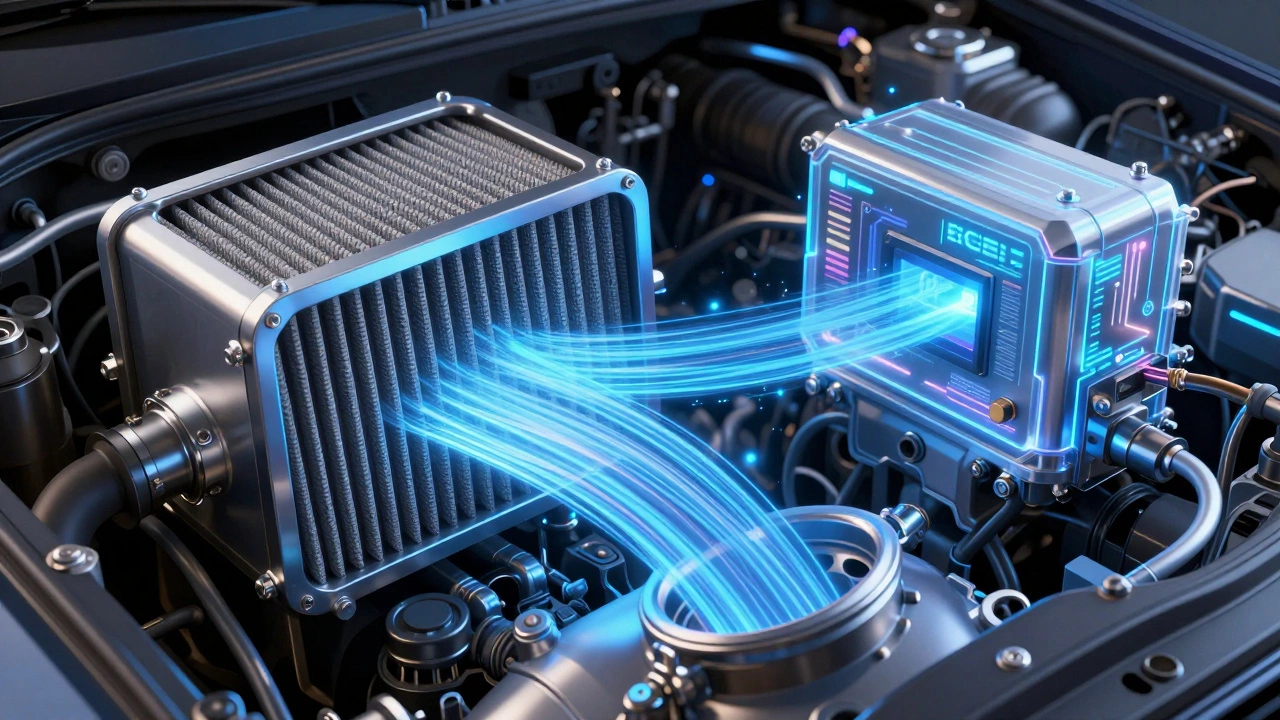
In the old days of carburetors, changing the air flow had a direct impact on the fuel mix. If you could get more air in, you could potentially tune the engine for better efficiency. However, modern cars use an Electronic Control Unit (ECU) and Mass Air Flow (MAF) Sensor. The MAF sensor measures exactly how much air is entering the system and tells the computer to inject the precise amount of fuel needed. Because the ECU is so fast, it simply adjusts the fuel spray to match the air, meaning the ratio stays nearly the same regardless of whether the filter is a standard paper one or a high-end cotton gauze version.
The Difference Between Stock and Performance Filters
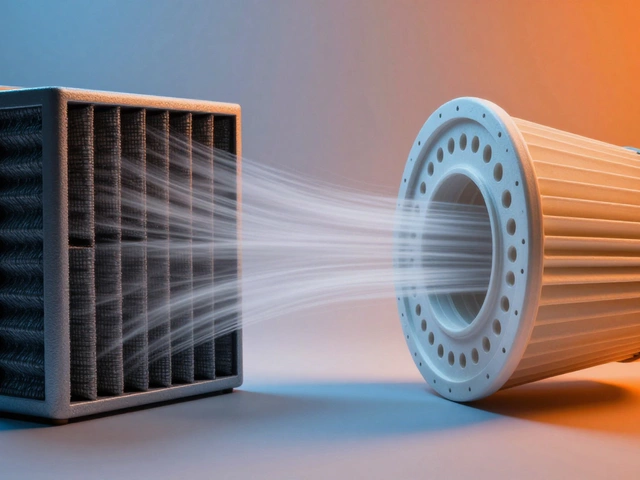
You'll usually see two main types of filters on the shelf: standard paper filters and performance options. Standard filters are typically made of pleated cellulose. They are great at catching tiny particles but create more "restriction," meaning the engine has to work slightly harder to pull air through them. Performance filters, often made from Cotton Gauze or synthetic materials, are designed with larger pores to let more air pass through with less effort.
While it's true that a performance filter reduces restriction, the "gain" is often negligible. Most factory filters are already designed to flow more than enough air for the engine's maximum output. Imagine trying to breathe through a straw while walking; if someone gives you a wider straw, you'll feel a difference. But if you're already breathing through a wide-open pipe, a slightly wider pipe won't make you run any faster.
| Feature | Standard Paper Filter | Performance Filter | Clogged Filter |
|---|---|---|---|
| Airflow Restriction | Moderate | Low | Very High |
| Filtration Efficiency | Excellent | Good to Moderate | Poor (due to bypass) |
| MPG Impact (New) | Baseline | Negligible Change | Significant Drop |
| Lifespan | Replace every 15k-30k miles | Washable / Lifetime | End of life |
When a New Filter Actually Increases MPG
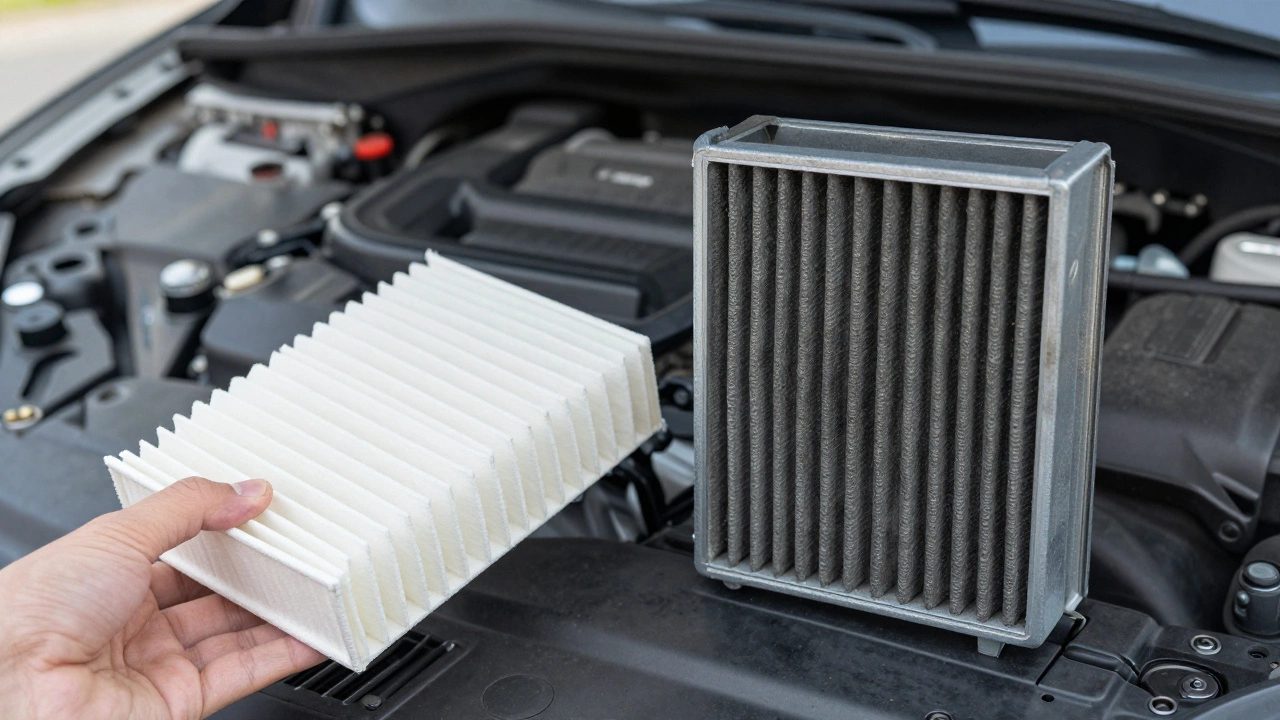
There is one scenario where you will see a jump in your fuel economy: when your current filter is absolutely filthy. When a filter gets clogged with soot, pollen, and dirt, the engine has to work harder to pull air through the blockage. This can lead to a richer fuel mixture or simply a less efficient combustion cycle, which drops your MPG.
If you haven't changed your filter in three years and it looks like a piece of charcoal, replacing it with any clean filter-even the cheapest store brand-will likely improve your MPG. In this case, the improvement isn't coming from the "performance" specs of the new filter, but from the removal of a restriction. You're not adding power; you're simply restoring the engine's ability to breathe normally.
The Trade-off: Flow vs. Filtration
Here is the catch that sales brochures don't mention: there is always a trade-off between how much air flows through a filter and how well it filters. A filter with larger holes (higher flow) naturally lets more tiny particles through. While a Cold Air Intake system might make your engine sound more aggressive and potentially add a few horsepower at high RPMs, it can expose your engine to more micro-abrasives.
For most people, the tiny increase in potential efficiency is outweighed by the risk of letting more contaminants into the Intake Manifold. If you're driving in dusty environments or on gravel roads, a high-performance filter can actually be a liability. The original equipment manufacturer (OEM) filters are designed specifically to protect the engine's longevity over its entire lifespan, not just to maximize airflow for a few miles.
Real-World Testing and Data
Many independent tests, including those by automotive enthusiasts and engineering firms, have put this to the test using dynamometers and fuel-flow meters. The consensus is usually that the MPG gains from a high-flow filter alone are statistically insignificant-often less than 1%. To get a real increase in MPG, you would need to pair the filter with a full Engine Tune or a complete exhaust overhaul to reduce backpressure.
Consider a typical V6 engine. The difference in pressure drop between a clean OEM filter and a performance filter is often so small that the ECU doesn't even register it as a meaningful change. Your driving habits-how hard you hit the gas, your tire pressure, and the weight of the cargo in your trunk-have a far greater impact on your MPG than the material of your air filter.

Practical Maintenance Tips for Better Efficiency
If your goal is to save money on gas, don't spend $100 on a "lifetime" filter. Instead, focus on these high-impact maintenance steps:
- Check your filter every 5,000 miles. If it's grey or black, replace it.
- Avoid "cleaning" paper filters with compressed air; this can create tiny tears in the material that allow dirt to bypass the filter.
- Ensure your air box is sealed correctly. Any leak after the filter allows unfiltered air into the engine, which can trick the MAF sensor into miscalculating fuel needs.
- Combine your filter change with a fresh set of Spark Plugs. A clean spark is far more likely to improve MPG than a high-flow filter.
Do washable filters really last forever?
While they are marketed as "lifetime" filters, the materials eventually degrade. The oil used on many cotton filters can also saturate the MAF sensor if over-applied, causing the car to run poorly or trigger a check engine light. You still need to clean and re-oil them according to the manufacturer's schedule to maintain efficiency.
Can a performance air filter increase horsepower?
In some cases, yes, but the gain is usually very small (1-3%) and only noticeable at high RPMs. For the average commuter, the difference is virtually undetectable. You'll notice the sound of the engine change more than the actual power output.
Will an air filter change affect my warranty?
Generally, replacing a filter doesn't void a warranty. However, if a high-flow filter allows debris into the engine that causes a failure, the manufacturer could potentially argue that the failure was caused by an aftermarket part. Stick to reputable brands to minimize this risk.
Does a Cold Air Intake improve MPG more than just a filter?
A Cold Air Intake attempts to pull denser, cooler air from outside the engine bay. While cooler air is technically better for combustion, most modern cars already have air boxes that do this effectively. Any MPG gain is typically marginal and often negated by the increased tendency of the driver to accelerate harder because the car sounds "sportier."
How often should I actually change my air filter?
Follow your owner's manual, but be realistic about your environment. If you live in a dusty area or drive on dirt roads, you should check it every 5,000 to 10,000 miles. If you live in a clean city, you might be able to stretch it to 15,000 or 20,000 miles.
What to Do Next
If you're looking to optimize your vehicle, start with the basics. Open your hood and pull out your current air filter. Hold it up to a bright light; if you can't see light passing through the pleats, your engine is suffocating. Replacing that filter will give you an immediate, measurable improvement in efficiency.
For those who want more power, consider looking into a professional ECU remap or upgrading your exhaust system. These modifications address the real bottlenecks in your engine's efficiency, whereas a performance filter is mostly an aesthetic and auditory upgrade. Keep your maintenance up to date, keep your tires inflated, and you'll save far more money than any "performance" filter could ever provide.