Carbon Fiber Spoiler Risk Estimator
Enter your vehicle's usage details to estimate the vulnerability of your carbon fiber spoiler to common failure modes like cracking, delamination, and UV damage.
Vehicle & Environment Profile
Risk Assessment
Primary Concern:
Select inputs to see specific risks.
Predicted Issues:
- No issues predicted yet.
You paid a premium for that sleek Carbon Fiber spoiler because you were told it’s stronger than steel and lighter than aluminum. And technically, they’re right-until it hits a pothole or sits under the sun for five years. The truth nobody tells you at the dealership is that carbon fiber isn't just one material; it's a composite system with specific, predictable failure points. If you're thinking about buying a spoiler or already own one, understanding what actually breaks-and why-is the only way to protect your investment.
Quick Summary / Key Takeaways
- Anisotropic Nature: Carbon fiber is incredibly strong in one direction (along the fibers) but weak against forces applied perpendicular to them.
- Matrix Dependency: The epoxy resin holding the fibers together is brittle and susceptible to moisture and heat damage over time.
- Impact Vulnerability: Unlike metal, which dents, carbon fiber cracks or shatters upon sharp impact, often requiring full replacement rather than repair.
- UV Degradation: Clear coats fail before the carbon itself does, leading to yellowing and surface chalkiness if not maintained.
The Anisotropy Problem: Strong Here, Weak There
Most people imagine materials as uniform blocks of strength. Steel is strong everywhere. Aluminum bends uniformly. But carbon fiber works differently. It’s an anisotropic material, meaning its physical properties change depending on the direction of force. Imagine a bundle of uncooked spaghetti. If you push along the length of the noodles, they resist breaking immensely. But try to snap them sideways, and they give way easily.
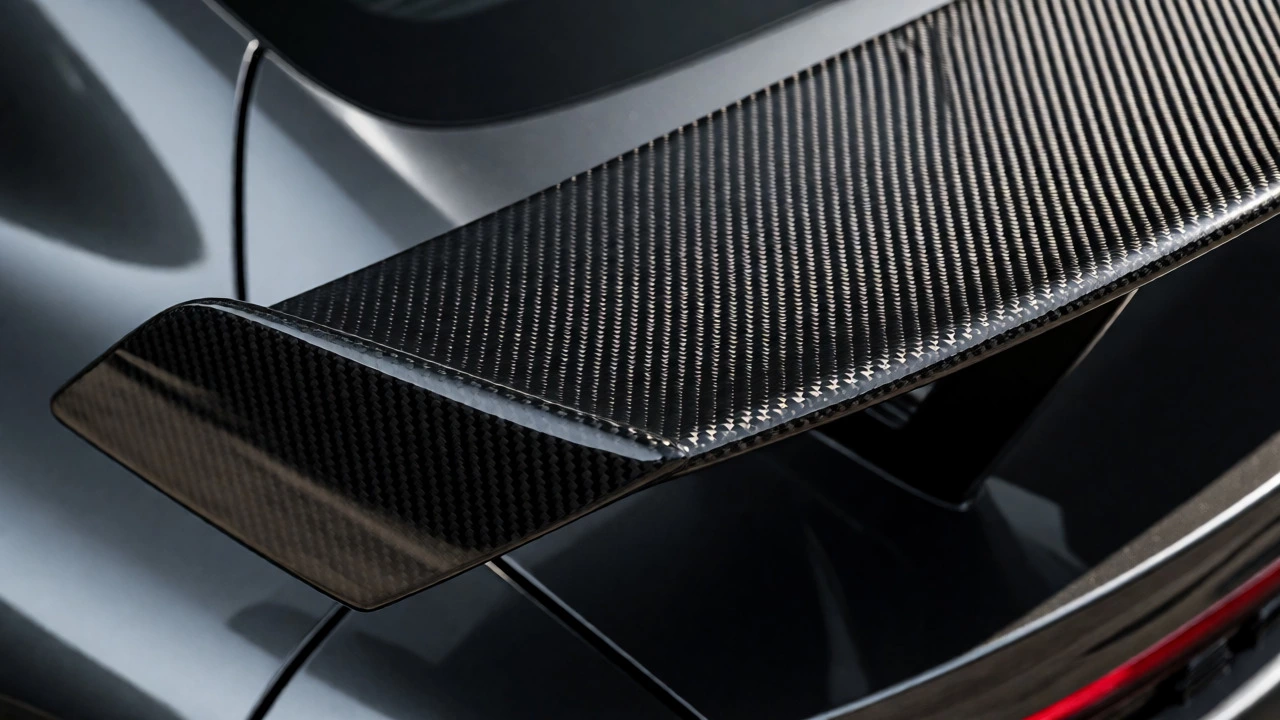
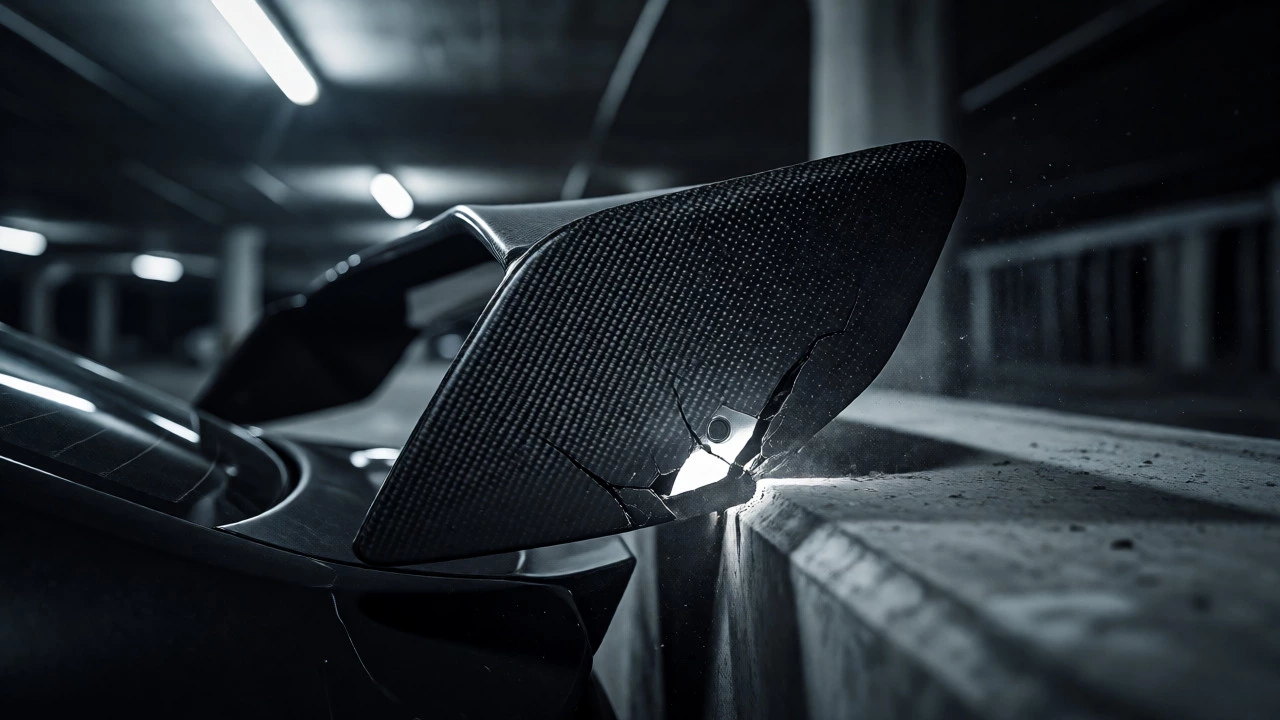
In a Carbon Fiber Spoiler, manufacturers lay these fibers in specific patterns-often called weaves like twill or plain-to maximize strength where aerodynamic loads occur. However, this creates blind spots. If a rock hits the edge of your spoiler at a bad angle, or if you bump into a parking garage pillar, the force might travel across the grain rather than with it. In those moments, the material doesn’t flex; it fractures. This directional weakness is the primary reason carbon fiber parts can look pristine one day and develop hairline cracks the next after minor incidents.
The Resin Matrix: The Hidden Weak Link
While the carbon fibers provide the tensile strength, the epoxy resin matrix holds everything together. Think of the resin as the glue in a plywood sheet. Without it, the layers slide apart. With poor quality resin or improper curing, the whole structure fails. Over time, exposure to environmental elements attacks this matrix more aggressively than the fibers themselves.
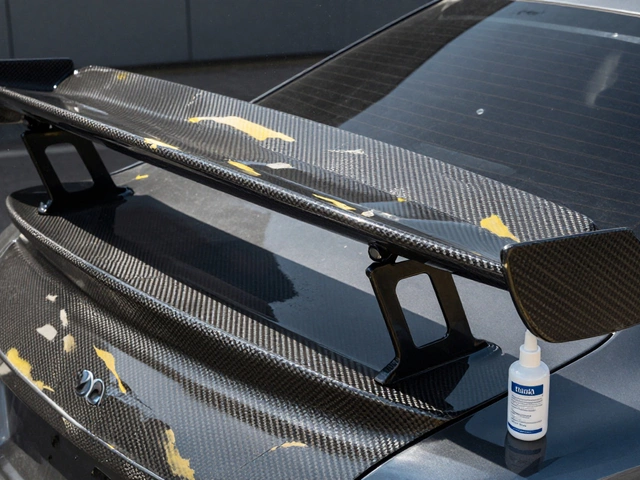
Moisture absorption is a silent killer here. Even high-quality automotive resins allow microscopic amounts of water vapor to penetrate over years of thermal cycling-going from hot summer days to cold winter nights. When this trapped moisture freezes, it expands, creating internal pressure that leads to micro-cracking within the resin. You won’t see this immediately, but eventually, it manifests as "delamination," where the layers of carbon separate from each other. Once delamination starts, structural integrity plummets, and the part becomes prone to snapping under normal wind loads at highway speeds.
Impact Resistance vs. Ductility
This is the biggest misconception buyers have. They confuse hardness with toughness. Carbon fiber is hard-it resists scratching better than painted plastic. But it lacks ductility, which is the ability to deform without breaking. Metal bumpers crumple in low-speed collisions to absorb energy. Carbon fiber spoilers don’t crumple; they crack or shatter.
Consider a common scenario: backing out of a driveway and clipping a concrete curb. A fiberglass bumper might scuff or dent. A carbon fiber spoiler will likely chip or crack near the mounting point. Because the material cannot stretch to absorb that kinetic energy, the stress concentrates at the impact site until the fibers snap. For daily drivers, this means a small fender bender that costs $50 to fix on a steel car could cost $500+ to replace a carbon component. This brittleness is inherent to the physics of the composite, not necessarily a manufacturing defect.
UV Radiation and Surface Degradation
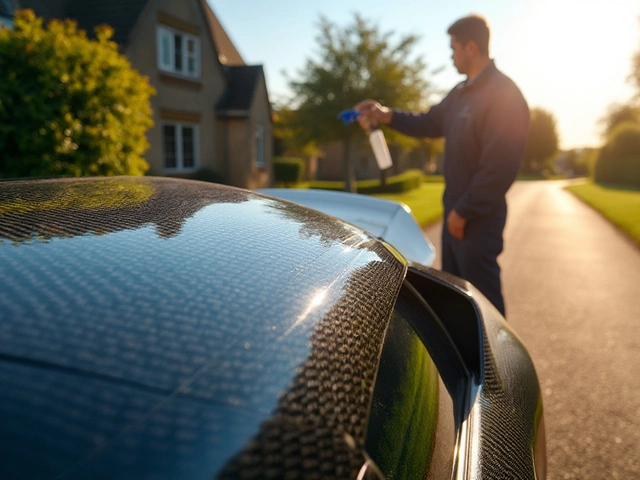
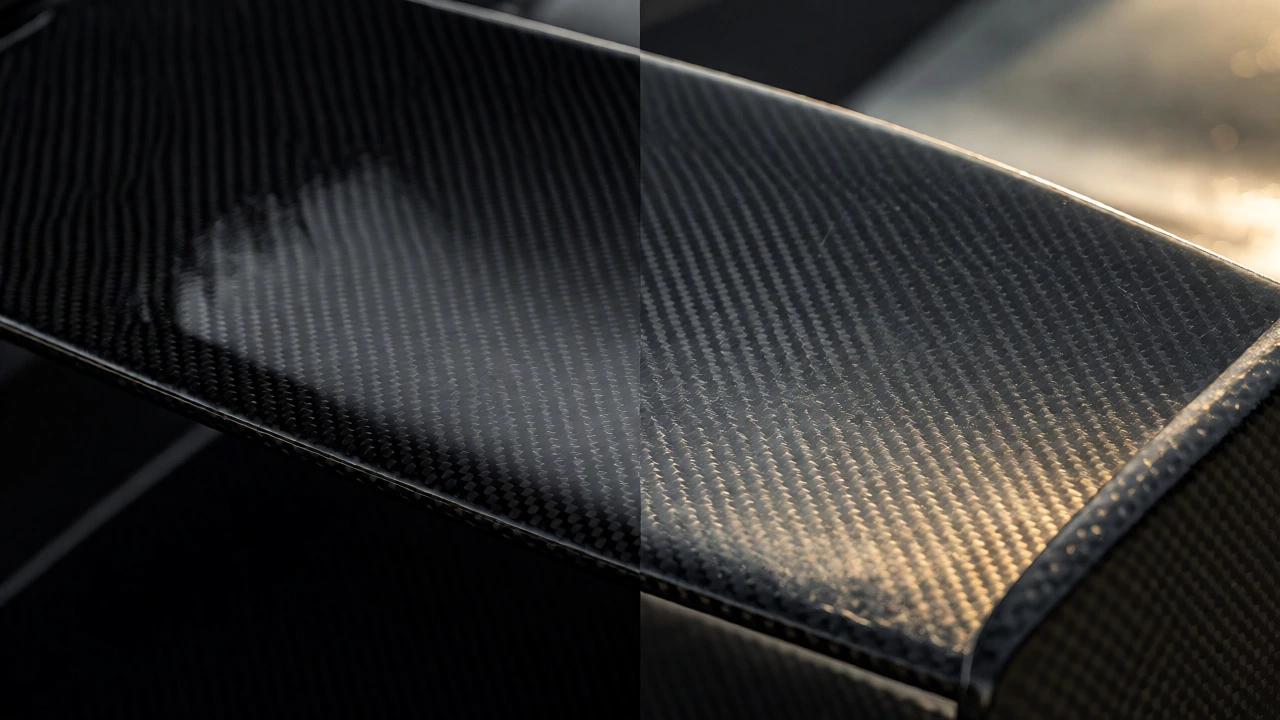
Carbon fiber itself is stable under UV light, but the clear coat protecting it is not. Most aftermarket spoilers use a polyurethane or polyester clear coat to achieve that glossy, wet-look finish. These coatings degrade when exposed to ultraviolet radiation from the sun. Within three to five years of regular outdoor parking, you’ll notice the gloss fading to a matte, chalky texture. Worse, some cheaper clear coats turn yellow, obscuring the beautiful weave pattern underneath.
Once the clear coat fails, the underlying resin becomes vulnerable to direct sunlight, accelerating the breakdown mentioned earlier. While you can polish and re-coat the surface, this is labor-intensive and requires professional body shop work. Neglecting this maintenance turns a premium aesthetic feature into a dull, aged-looking accessory that detracts from the vehicle’s value.
Manufacturing Variabilities and Quality Control
Not all carbon fiber is created equal. The market is flooded with "wet layup" parts versus "pre-preg autoclave" parts. Wet layup involves hand-applying resin to dry fabric in a mold. It’s cheaper but prone to air bubbles, inconsistent resin ratios, and uneven thickness. These inconsistencies create weak points where the bond between layers is thin or compromised by voids.
Pre-preg parts, cured under high pressure and temperature in an autoclave, offer superior consistency. However, even pre-preg parts can suffer from poor design engineering. If the mounting brackets aren’t reinforced properly, the leverage exerted by wind lift at 70 mph can tear the adhesive bonds or shear the bolts. Always check if the manufacturer specifies the grade of carbon (e.g., 3K twill vs. forged carbon) and the type of resin used. High-performance resins like cyanate ester handle heat better than standard epoxies, reducing the risk of softening in extreme climates.
| Material | Primary Weakness | Failure Mode | Repairability |
|---|---|---|---|
| Carbon Fiber | Brittle under impact; sensitive to cross-grain force | Cracking, Delamination, Shattering | Difficult; often requires replacement |
| Fiberglass | Low stiffness; absorbs moisture | Bending, Warping, Gelcoat Peeling | Easier; can be patched and repainted |
| ABS Plastic | Thermal expansion; UV embrittlement | Crazing, Fading, Snapping in Cold | Moderate; welding possible but visible |
| Aluminum | Dents easily; galvanic corrosion | Denting, Oxidation | Easy; can be hammered out or refinished |
How to Mitigate These Weaknesses
Knowing the weaknesses allows you to take proactive steps. First, treat your spoiler like jewelry, not just a car part. Park in shaded areas or use a car cover to block UV rays. Wash it regularly with pH-neutral soap to prevent contaminants from eating into the clear coat. Apply a ceramic coating specifically designed for clear coats to add a sacrificial layer of protection against scratches and UV damage.
Second, be mindful of installation. Ensure the mounting hardware uses proper torque specs. Over-tightening bolts can crush the composite around the hole, creating stress risers that lead to cracking later. Use rubber isolation washers to dampen vibration, which prevents fatigue failure at the bolt holes. Finally, inspect the edges annually. Look for white stress marks or lifting paint, which indicate early-stage delamination. Catching these signs early can save you from a catastrophic failure on the highway.
Does carbon fiber rust?
No, carbon fiber does not rust because it is not a metal. However, the metal fasteners used to attach it can corrode, and the resin matrix can degrade due to moisture and chemical exposure, which may mimic the appearance of decay.
Can I repair a cracked carbon fiber spoiler?
Yes, but it is difficult and expensive. Professional repair involves grinding down the area, applying new layers of carbon fabric and epoxy, and refinishing the clear coat. Often, the cost approaches the price of a new part, so many owners choose replacement instead.
Why is my carbon fiber turning yellow?
Yellowing is usually caused by the degradation of the clear coat or the resin binder due to prolonged UV exposure. It indicates that the protective layer has broken down, exposing the underlying materials to further damage. Re-polishing and re-clearing the surface can restore the original color.
Is forged carbon weaker than woven carbon fiber?
Forged carbon generally has lower tensile strength compared to continuous woven carbon fiber because the short fibers are randomly oriented. However, it offers better isotropic properties (more consistent strength in all directions) and is often used for aesthetic interior trim rather than high-load exterior aerodynamics.
How long do carbon fiber spoilers last?
With proper care, including UV protection and regular cleaning, a high-quality carbon fiber spoiler can last the lifetime of the vehicle. Poorly made parts or those neglected in harsh climates may show significant degradation in 5-10 years.