Exhaust Pipe Sizing Calculator
Recommended Main Pipe Diameter
You’ve just built a 400hp engine setup that promises serious street presence and track-ready performance. You’re excited. But then you hit the wall of confusion: what size exhaust does it actually need? Go too small, and you choke your power. Go too big, and you lose low-end torque, turning your spirited daily driver into a sluggish commuter car. It’s not just about noise; it’s about fluid dynamics and keeping your engine breathing efficiently.
Here is the hard truth: there is no single "magic number" that works for every car. A 400hp turbocharged inline-six breathes differently than a naturally aspirated V8. However, after tuning hundreds of setups in Melbourne workshops, I can tell you that most 400hp applications sit comfortably in a specific range. If you want to avoid wasting money on pipes that don’t perform, you need to understand how horsepower correlates with airflow requirements.
The Quick Answer: General Sizing Rules
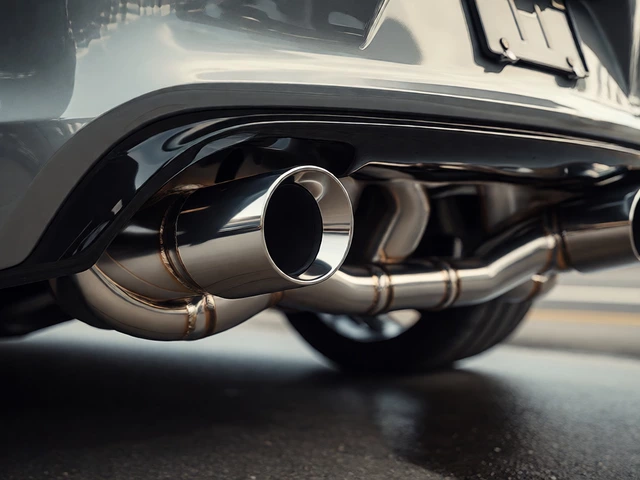
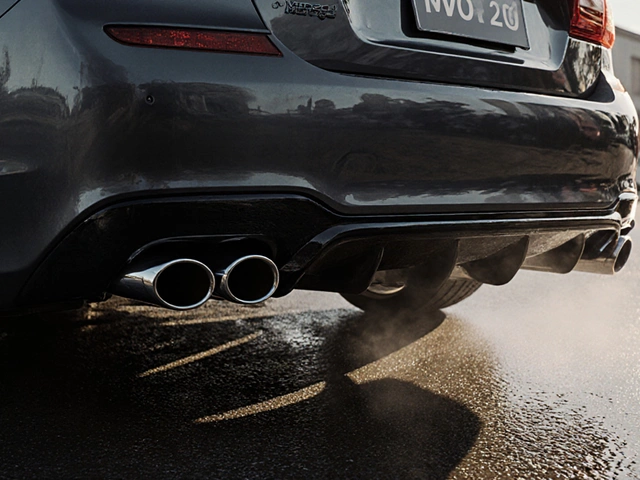
If you are looking for a rule of thumb to get you in the ballpark before you consult a specialist, here is the baseline. For a standard naturally aspirated (NA) engine producing around 400 horsepower, you generally want a main pipe diameter between 2.5 inches and 3.0 inches. If your engine is forced induction (turbo or supercharged), you often need larger piping, typically starting at 3.0 inches and going up to 3.5 inches, because turbos generate significantly more exhaust gas volume per minute than NA engines.
Why the gap? Because exhaust sizing isn't linear. It depends heavily on where that power is made. An engine making 400hp at 6,000 RPM needs different piping than one making 400hp at 3,500 RPM. Let’s break down why this distinction matters so you don’t end up with a system that sounds good but runs poorly.
Understanding Airflow and Backpressure
To pick the right size, you have to think like an engineer, not just a gearhead. Your engine acts as an air pump. Every time a piston moves down, it sucks in air. When it moves up, it pushes out burnt gases. This cycle happens thousands of times a minute. The exhaust system is the exit door for those gases.
If the door is too narrow (too small a pipe), the gases struggle to get out. This creates backpressure resistance against the flow of exhaust gases, which forces the engine to work harder to expel waste. Think of trying to breathe through a thin straw while running a sprint. You’ll feel restricted, and your engine will lose top-end power.
On the flip side, if the door is too wide (too large a pipe), the exhaust gases move too slowly. They lose velocity. Velocity is crucial because it helps scavenge the next cylinder’s exhaust pulse. Without enough speed, the gases linger, diluting fresh intake charge and killing low-RPM torque. This is why oversized exhausts make cars feel lazy off the line, even if they scream at redline.
Naturally Aspirated vs. Forced Induction Differences
This is where most DIYers get burned. They copy their friend’s turbo build specs onto their NA engine, or vice versa. Let’s look at the differences using real-world examples.
A naturally aspirated V8 engine that relies solely on atmospheric pressure for air intake, common in muscle cars and classic sports cars producing 400hp typically has a moderate airflow requirement. These engines often produce peak power higher in the rev range. A 2.75-inch to 3.0-inch main pipe is usually the sweet spot. It provides enough flow for high RPMs without sacrificing the scavenging effect needed for mid-range punch. Going to 3.5 inches on an NA V8 at 400hp is usually overkill unless you plan to boost it later.
Now consider a turbocharged 4-cylinder small-displacement engine forced to ingest more air via a compressor, resulting in higher exhaust gas volumes making 400hp. To achieve that power from a small block, the turbo is spinning fast and pushing massive amounts of air. Consequently, it produces a huge volume of exhaust gas. The exhaust pulses are frequent and dense. Here, a 2.5-inch pipe might actually restrict flow at high boost levels. A 3.0-inch or even 3.25-inch main pipe is often recommended to handle the increased CFM (cubic feet per minute) of exhaust gas.
| Engine Type | Recommended Main Pipe Size | Primary Reason | Risk of Undersizing | Risk of Oversizing |
|---|---|---|---|---|
| Naturally Aspirated V6/V8 | 2.5" - 3.0" | Balances top-end flow with mid-range torque | Loss of top-end power; engine strain | Significant loss of low-end torque; drone |
| Turbocharged 4-Cyl / 6-Cyl | 3.0" - 3.5" | Handles high volume of exhaust gas | Restricts turbo spool; heat soak | Mild torque loss; slower spool-up |
| Diesel Turbo | 3.0" - 3.5" | High exhaust mass due to fuel density | Chokes turbo; excessive EGTs | Poor particulate filter efficiency |
The Role of Headers and Downpipes
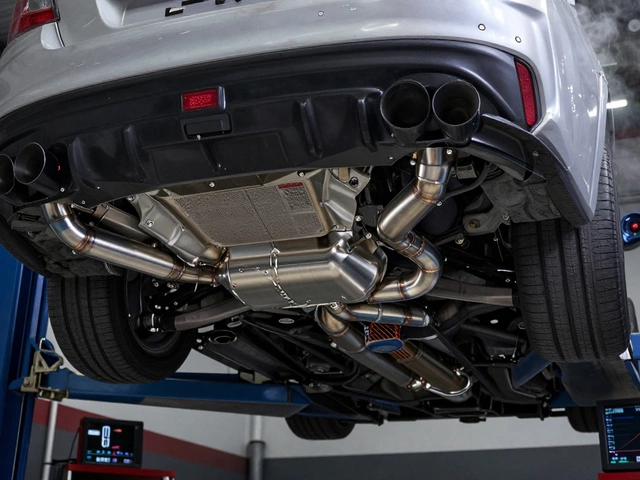
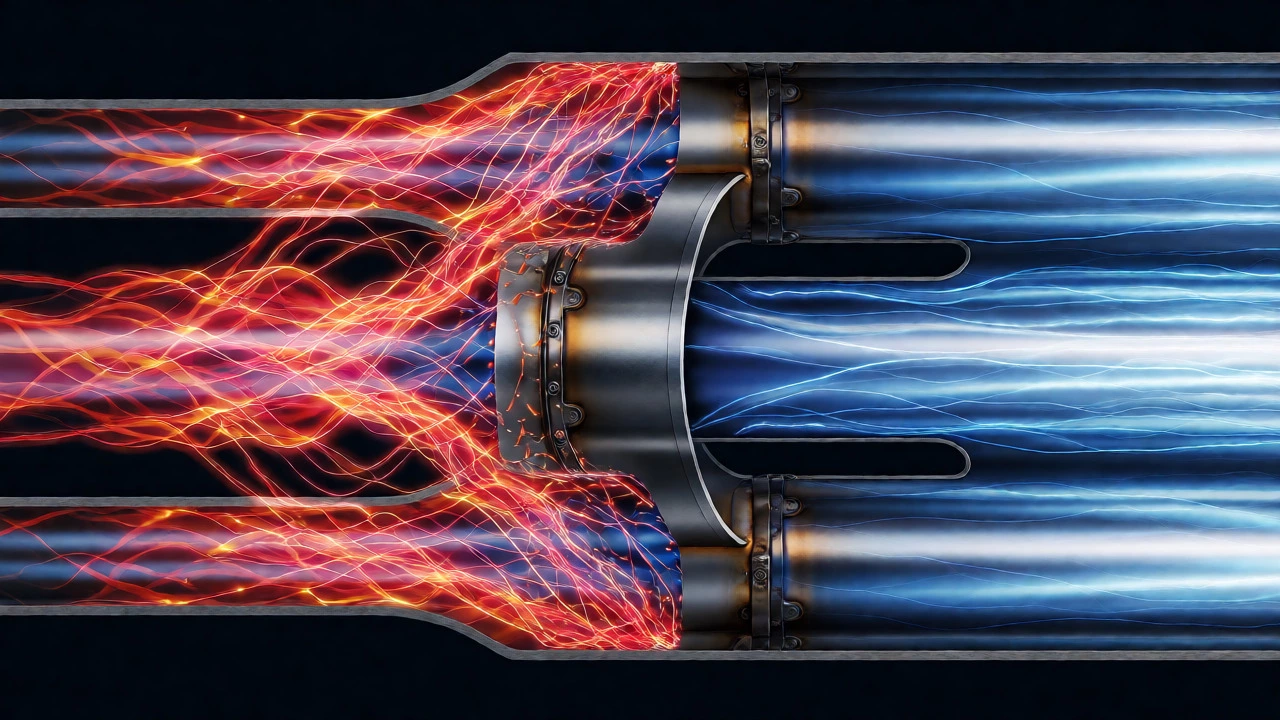
Many people focus only on the tailpipe diameter, but the front of the system matters most. Your headers and downpipes dictate how well the exhaust leaves the cylinders. If you have restrictive stock manifolds, a giant 4-inch exhaust behind them won’t do much.
For a 400hp build, upgrading to long-tube headers is often more beneficial than simply widening the rear pipes. Long-tube headers help merge exhaust pulses correctly, creating a vacuum effect that pulls exhaust out of the cylinders. Once you have efficient headers, the rest of the system should match that capacity. A common mistake is pairing 1.75-inch header primaries with a 3.5-inch exhaust. This mismatch creates turbulence, which kills performance.
If you are running a turbo setup, the downpipe the section of exhaust immediately following the turbocharger turbine, often containing catalytic converters is the biggest bottleneck. Stock downpipes are often clogged with inefficient cats. Switching to a high-flow metal substrate cat or a test pipe (where legal) allows the turbo to spool faster. Ensure your downpipe diameter matches your main pipe diameter to maintain smooth gas flow.
Catalytic Converters and Mufflers: Don’t Forget the Restrictions
It’s not just about pipe width. Length and internal components create resistance. A catalytic converter an emissions control device that converts harmful pollutants into less toxic gases using a ceramic honeycomb structure adds significant backpressure. A generic, cheap cat can ruin the benefits of a large-diameter exhaust. For 400hp, invest in a high-quality, high-flow sport cat. Look for ones with high cell counts (like 400+ cells per square inch) but open structures that allow gas to pass easily.
Mufflers also matter. Some mufflers are designed for silence and pack tight glass wool, which restricts flow. Others are straight-through designs that preserve sound quality while minimizing restriction. At 400hp, you likely want a balance. A resonator followed by a performance muffler is a good compromise. Avoid "megasquirt" style baffled mufflers if you care about power; opt for chambered or turbo-style mufflers instead.

How to Calculate Exact Needs Using CFM
If you want to be precise, use the Cubic Feet per Minute (CFM) formula. This calculates how much air your engine consumes. Since exhaust volume roughly equals intake volume, this tells you how much space the exhaust needs.
The basic formula is:
CFM = (Displacement × RPM × Volumetric Efficiency) / 3456
Let’s say you have a 3.0-liter (183 cubic inches) engine making 400hp. It peaks at 6,500 RPM. Assume a volumetric efficiency (VE) of 95% (typical for a tuned NA engine).
CFM = (183 × 6500 × 0.95) / 3456 ≈ 327 CFM
Now, convert CFM to required cross-sectional area. A general rule is that you need about 0.0045 square inches of area per CFM for optimal flow without excessive velocity drop.
Area = 327 × 0.0045 ≈ 1.47 sq inches
A 2.5-inch pipe has an area of ~4.9 sq inches. A 3.0-inch pipe has ~7.0 sq inches. Wait, why the discrepancy? Because this simple formula doesn’t account for pulse tuning and wave dynamics. In reality, you don’t need the pipe to fit all the air at once; you rely on waves. This is why 2.5-3.0 inches works for NA, while the raw math might suggest smaller. Always treat these calculations as guides, not gospel. Dyno testing is the only way to know for sure.
Common Mistakes to Avoid
First, ignoring the length of the pipes. Exhaust systems are tuned instruments. The length of the primary tubes affects when the exhaust pulse returns to help pull the next one out. Cutting corners on length to save money often hurts performance.
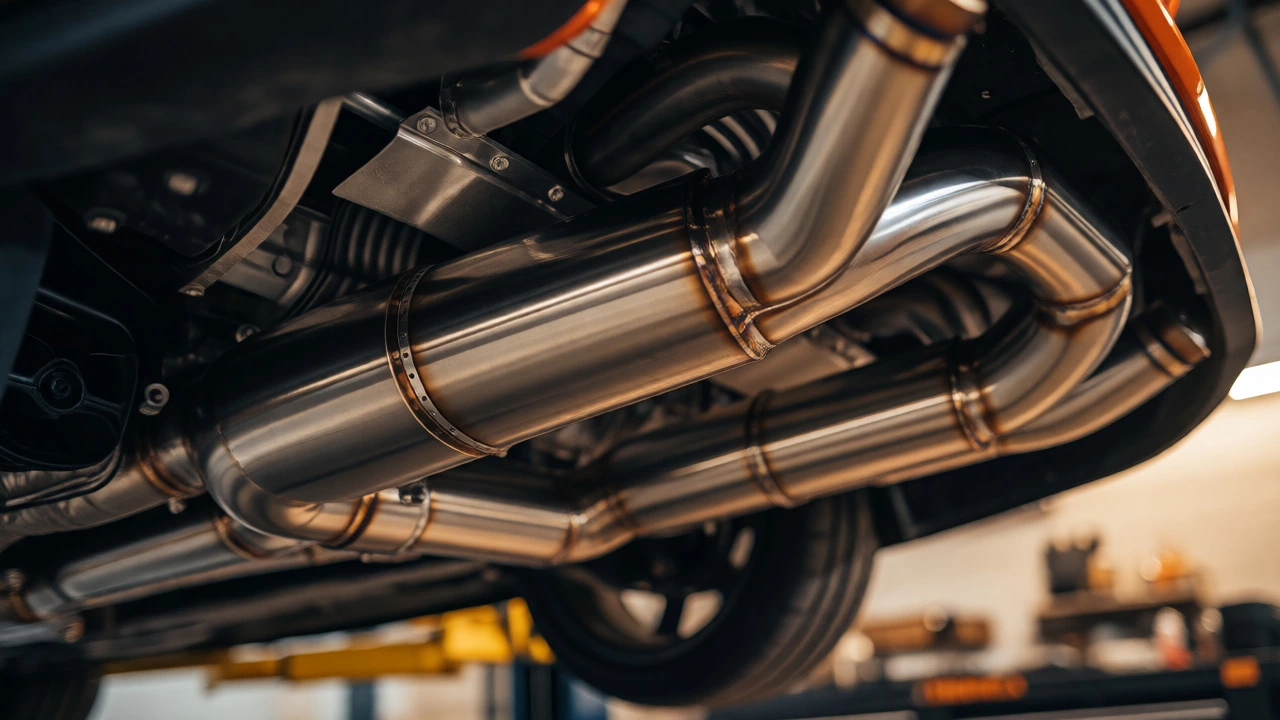
Second, mixing diameters abruptly. If you step down from 3.0 inches to 2.25 inches suddenly, you create turbulence. Use proper reducers with smooth bends. Sharp transitions cause eddies that slow down gas flow.
Third, forgetting about clearance. Larger pipes mean less room for other components. Check your subframe, fuel lines, and suspension travel. A beautiful exhaust that hits your axle every time you go over a bump is useless.
Final Verdict: What Should You Buy?
So, what size exhaust for 400hp? If you drive a naturally aspirated car, start with a 2.75-inch to 3.0-inch system. It’s the safest bet for retaining torque while gaining top-end power. If you are turbocharged, aim for 3.0-inch to 3.5-inch piping, ensuring your downpipe flows freely.
Remember, consistency is key. Match your header collectors, downpipe, mid-pipe, and tailpipes. Invest in quality materials-stainless steel (304 grade) resists corrosion better than aluminized steel, especially in coastal areas like Melbourne. And finally, if you’re unsure, buy slightly smaller rather than massively oversized. You can always remove a muffler or cut a cat later, but you can’t easily add torque lost to an oversized pipe.
Does a bigger exhaust always make more power?
No. While larger pipes reduce backpressure, they also reduce exhaust gas velocity. If the velocity drops too low, the engine loses its ability to scavenge exhaust gases effectively, leading to a loss of low-end and mid-range torque. Power gains are only realized if the engine produces enough exhaust volume to fill the larger pipe efficiently.
Can I use a 2.5-inch exhaust for a turbo 400hp engine?
It is possible, but risky. Turbo engines produce significantly more exhaust gas volume than naturally aspirated engines. A 2.5-inch pipe may become restrictive at high boost levels, causing the turbo to work harder and potentially increasing exhaust gas temperatures. Most tuners recommend moving to 3.0 inches or larger for turbo setups aiming for 400hp.
Will removing my catalytic converter increase power?
Yes, removing or replacing the catalytic converter with a high-flow sport cat reduces backpressure and can yield minor power gains, particularly on turbocharged engines where the cat is close to the turbine. However, ensure you comply with local emissions regulations, as removing cats entirely may fail vehicle inspections in many regions.
Is stainless steel worth it for exhaust systems?
Absolutely. Stainless steel (specifically T304) offers superior durability and corrosion resistance compared to aluminized steel. Given that exhaust systems operate under extreme heat cycles and are exposed to road salts and moisture, stainless steel ensures the system lasts longer and maintains its structural integrity and appearance over time.
How does exhaust length affect performance?
Exhaust length influences the timing of pressure waves returning to the engine. Properly tuned lengths can enhance scavenging, pulling exhaust out of cylinders more effectively and improving volumetric efficiency. Incorrect lengths can cause reversion, where exhaust gases push back into the cylinder, reducing power and efficiency.