K&N vs Stock Filter Cost Calculator
Detailed Breakdown
| Item | Stock Paper | K&N Drop-In |
|---|---|---|
| Initial Purchase | $0 | $0 |
| Replacements/Cleaning | $0 | $0 |
| Total Units/Actions | 0 | 0 |
Swapping your stock paper filter for a K&N is a reusable, high-flow cotton gauze air filter designed to increase engine intake volume while maintaining filtration efficiency. Also known as the K&N High-Flow Air Filter, it’s one of the most popular modifications in the automotive world. But does it actually make a difference? Or are you just paying extra for marketing hype?
The short answer is: yes, but it depends on what you’re looking for. If you want measurable horsepower gains on a dyno chart, you might be disappointed. If you want cleaner throttle response, easier maintenance, and long-term cost savings, the benefits are real. Let’s break down exactly where the magic happens and where the myths live.
The Physics of Airflow: Why It Matters
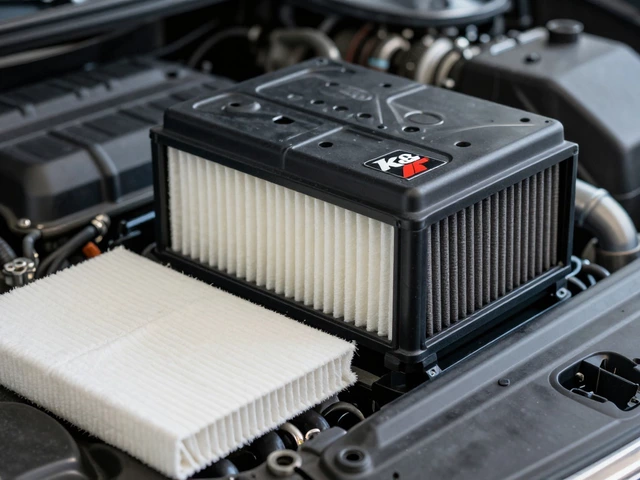
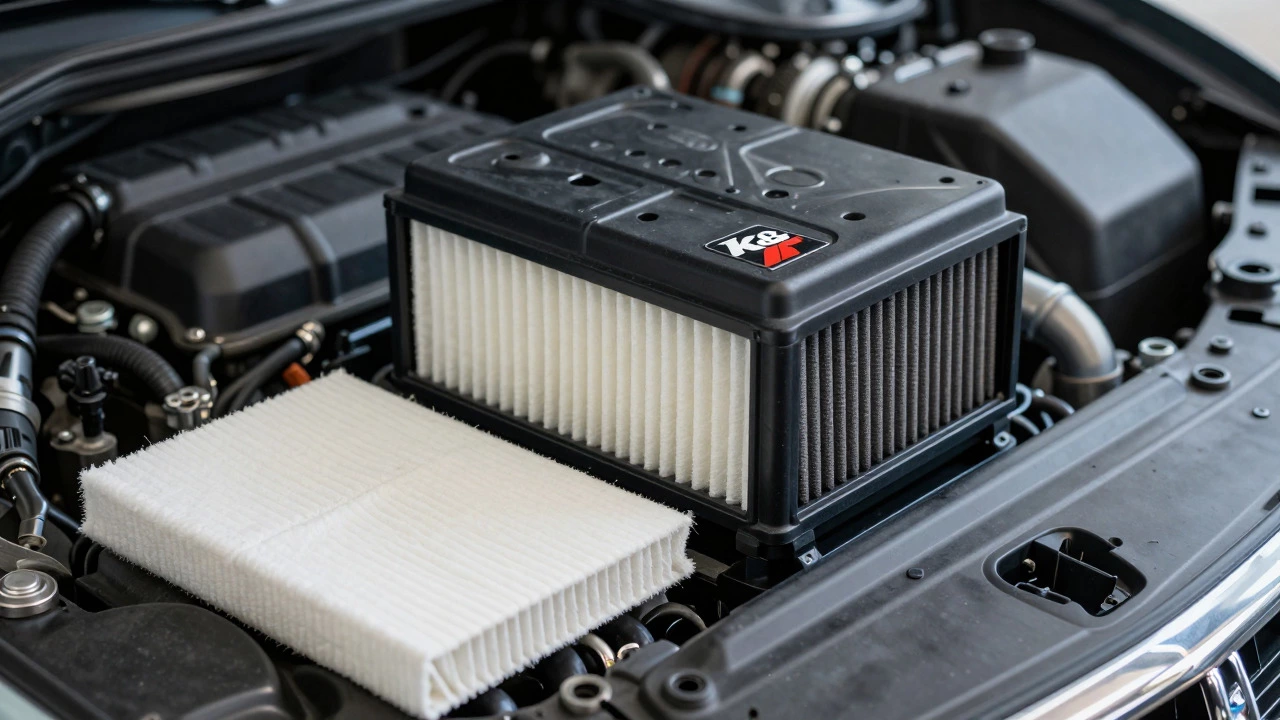
Your engine needs two things to run: fuel and air. The ratio is roughly 14.7 parts air to 1 part fuel by weight. If the air supply is restricted, the engine has to work harder to pull that air in. Stock paper filters are dense. They trap dust effectively, but they also create resistance. A drop-in filter is an air filter that fits into the factory airbox without modifying the vehicle's intake system.
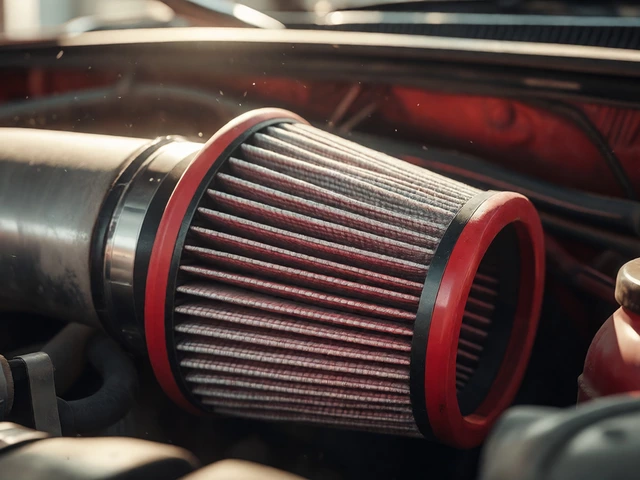
K&N uses a multi-layer cotton gauze media coated with a special oil. This design allows more air to pass through than standard paper, but it’s not like swapping to an open cone filter. Because the factory airbox remains intact, the temperature control (keeping air cool) stays the same. Cooler air is denser, which means more oxygen per cubic inch. So, while the flow restriction drops, the density advantage of the closed box keeps the power curve stable.
- Stock Paper Filter: High restriction, low flow, cheap replacement every 10k-15k miles.
- K&N Drop-In: Low restriction, high flow, reusable for life (with cleaning).
- Open Cone Intake: Very low restriction, potential heat soak issues, requires full system swap.
Will You Feel More Power?
This is the million-dollar question. On a naturally aspirated engine (no turbo or supercharger), the gain is marginal. We’re talking about 1-3 horsepower at best. Will you feel it? Probably not in daily driving. However, many drivers report a sharper throttle response. When you stomp on the gas, the engine doesn’t have to fight as hard to suck in air, so it feels snappier.
For forced-induction engines (turbocharged or supercharged), the story changes slightly. These engines rely heavily on volumetric efficiency. A cleaner air path can help the turbo spool up a fraction faster. In track scenarios, this consistency can matter. For street use, though, the difference is still subtle. Don’t expect a transformation; expect a refinement.
The Real Benefit: Maintenance and Cost
Here’s where the K&N really shines. A stock paper filter is single-use. You buy it, install it, and toss it when it gets dirty. Over a 10-year ownership period, that could mean 6-8 replacements. At $20-$40 each, that adds up.
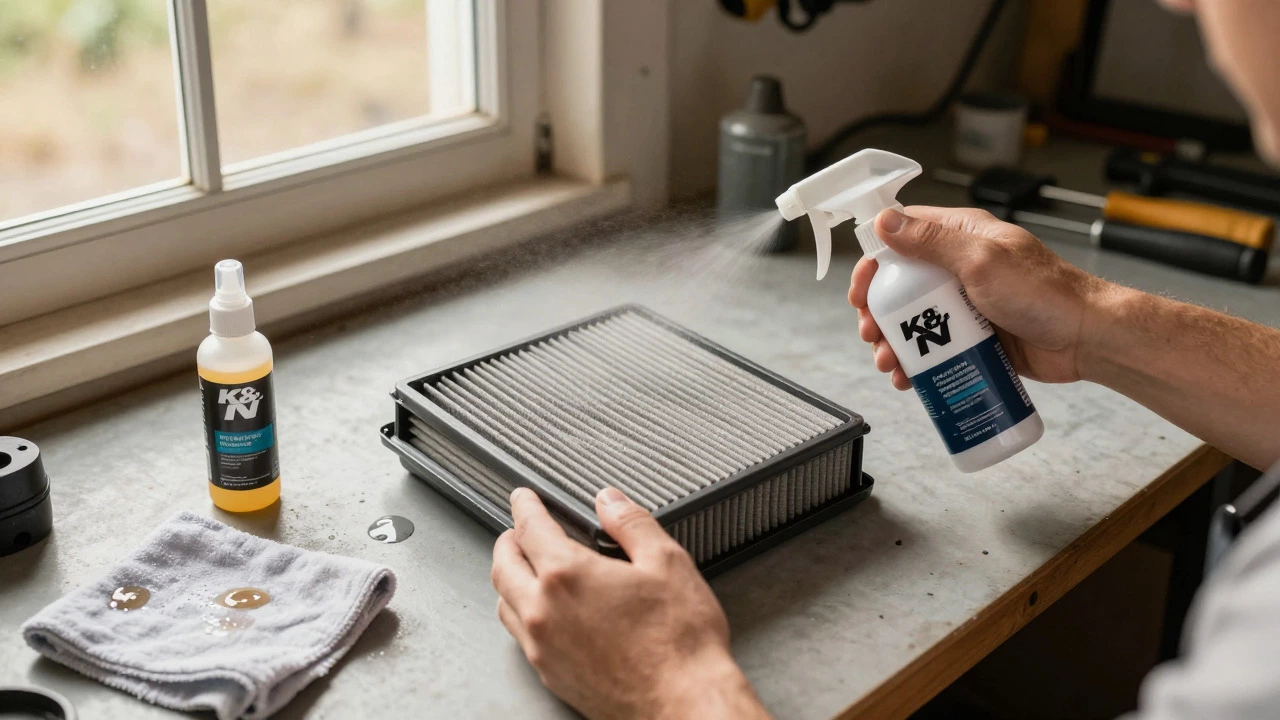
A K&N filter is reusable. You clean it with their specific cleaner and re-oil it. The official recommendation is every 12 months or 12,000 miles, but many owners stretch this depending on their environment. If you drive in dusty rural areas, check it sooner. If you drive in clean urban Melbourne streets, you might go longer. The upfront cost is higher-around $80-$120 AUD-but the lifetime cost is significantly lower if you maintain it properly.
| Item | Stock Paper Filter | K&N Drop-In Filter |
|---|---|---|
| Initial Purchase Price | $25 AUD | $95 AUD |
| Replacements Needed | 7 units | 0 units (cleaning only) |
| Cleaning Kit Cost | $0 | $25 AUD (one-time) |
| Total 10-Year Cost | $195 AUD | $120 AUD |

Installation: Is It DIY Friendly?
Yes, absolutely. This is a 10-minute job. You don’t need special tools. Just remove the airbox lid, take out the old filter, wipe down the box (important! dust buildup inside the box ruins the benefit), place the new filter, and close the lid. Make sure the gasket seals tight to prevent unfiltered air from entering.
One pro tip: When installing, ensure the K&N filter is oriented correctly. Most models have a label side that should face up or toward the center, depending on the specific model instructions. Double-check the fitment guide for your exact car model before buying. Fitment varies wildly between a Toyota Corolla and a Ford Mustang.
Common Myths Debunked
Myth 1: It makes a huge sound difference. It does, but subtly. You’ll hear a slight whoosh when accelerating. It’s not the aggressive roar of an aftermarket cold air intake, but it’s noticeable if you listen closely.
Myth 2: It protects the engine better than stock. Not necessarily. The filtration efficiency is comparable to stock, but because it’s oiled, it traps particles differently. If you live in an area with heavy pollen or construction dust, the oil coating helps capture fine particles that might slip past dry paper. However, if you over-oil it, you risk contaminating the Mass Air Flow (MAF) sensor. Use only the recommended amount of oil.
Myth 3: It voids your warranty. In Australia, under the Australian Consumer Law, a manufacturer cannot void your entire warranty just because you installed an aftermarket part. They must prove that the K&N filter directly caused the engine failure. Since these filters are well-engineered, this is rare. Keep receipts to show you bought a genuine part.
When Should You Skip It?
If you plan to sell the car in 1-2 years, maybe stick with stock. Enthusiasts sometimes prefer original parts. If you drive a diesel truck in extremely dusty conditions, consider a heavier-duty option or check the filter more frequently. And if you’re on a strict budget, the stock filter works fine-it’s just less efficient over time.
FAQ
How often do I need to clean my K&N air filter?
The standard recommendation is every 12 months or 12,000 miles. However, inspect it visually every 6 months. If it looks clogged with dirt or debris, clean it regardless of mileage. Driving in dusty environments may require more frequent cleaning.
Can I wash my K&N filter with regular soap?
No. Regular soap can strip the oil coating unevenly or leave residues that clog the gauze. Always use the dedicated K&N Cleaner & Re-Oiler kit. It’s formulated to dissolve the old oil and apply the new oil evenly across the fabric.
Does a drop-in filter affect fuel economy?
Generally, no significant change. Some users report a slight improvement due to reduced engine load during acceleration, while others see no difference. Fuel economy is influenced far more by driving habits, tire pressure, and aerodynamics than by the air filter type.
Is a K&N drop-in filter better than a stock paper filter for winter driving?
Yes, potentially. In cold weather, engines struggle with startup. A cleaner air path can help the engine reach optimal operating temperature slightly faster. Additionally, the oil coating in K&N filters can help seal out moisture better than dry paper in humid or rainy conditions.
What happens if I forget to re-oil my K&N filter after cleaning?
The filter will lose its ability to trap fine particles effectively. Without the oil coating, the cotton gauze acts more like a mesh screen, allowing dust to pass through. This can lead to increased wear on the engine components. Always re-oil immediately after cleaning and drying.