Straight Through Muffler Noise & Power Calculator
Calculate Your Muffler's Noise & Performance
Results
Ever heard that deep, rumbling growl of a car with a straight through muffler and wondered if it’s just noise-or real performance? You’re not alone. Thousands of car owners swap out stock exhausts for these simple, no-frills mufflers hoping for more power, better sound, and a lighter setup. But do they actually work? Or is it all hype wrapped in stainless steel?
What Exactly Is a Straight Through Muffler?
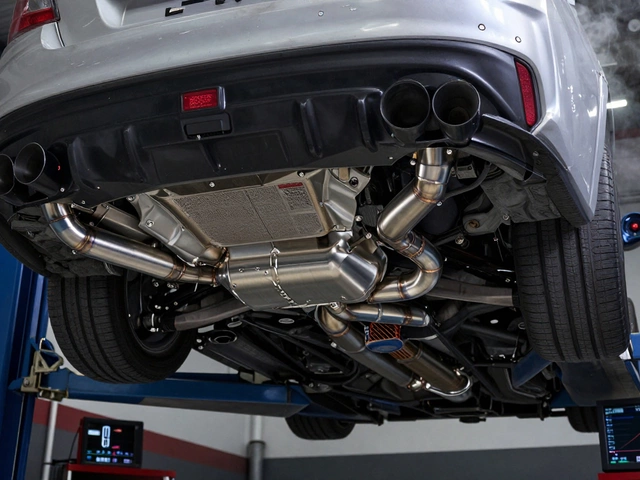
A straight through muffler is exactly what it sounds like: a pipe with a perforated inner core, wrapped in sound-absorbing material like fiberglass or steel wool, and sealed inside an outer shell. Unlike traditional mufflers with chambers, baffles, and resonators, there’s almost no restriction in the airflow path. The exhaust gases flow straight through, with only the packing material trying to muffle the noise.
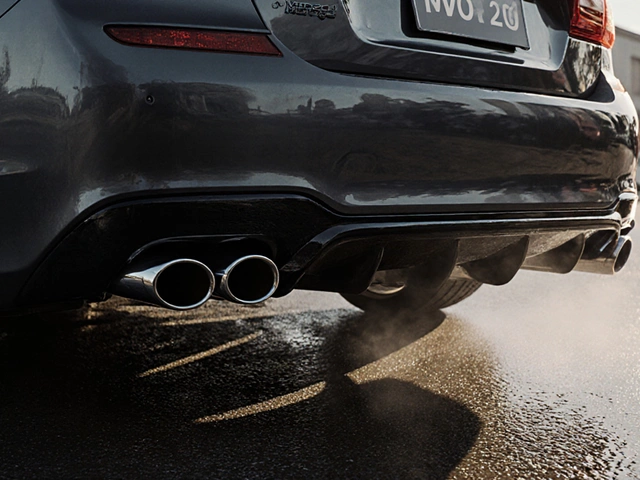
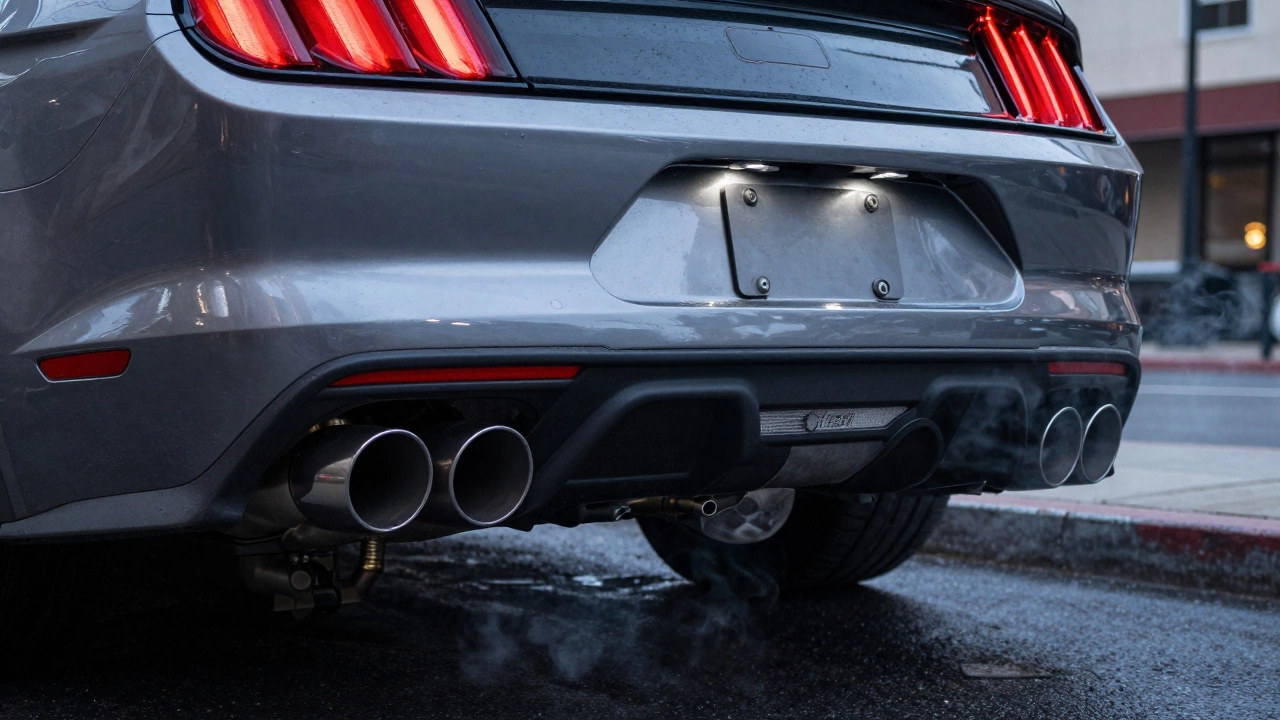
This design is popular in racing, drag strips, and muscle cars because it’s lightweight and minimizes backpressure. But it’s also become a go-to for street cars where people want that aggressive, raw exhaust note-think Ford Mustang GT with a catback system, or a modified Subaru WRX.
Do They Improve Performance?
The short answer: yes, but only if your stock exhaust was a bottleneck.
Factory exhausts are designed for noise control, emissions compliance, and cost-not performance. Many OEM systems have small-diameter pipes, tight bends, and heavy mufflers that restrict flow. Replacing them with a straight through system can reduce backpressure by 30-50%, depending on the setup. That drop in resistance lets the engine breathe easier, especially at higher RPMs.
Real-world gains? On a naturally aspirated 3.5L V6, you might see a 5-10 horsepower increase at the wheels. On a turbocharged 2.0L four-cylinder, the gains can hit 15-20 hp because turbos hate backpressure. A 2023 dyno test on a modified Honda Civic Type R showed a 14 hp gain and 18 lb-ft of torque increase after switching from a stock muffler to a straight through design.
But here’s the catch: if your car already has a performance exhaust-like a full catback from MagnaFlow or Borla-then swapping just the muffler won’t make much difference. The real power comes from the entire system working together.
What About the Sound?
Straight through mufflers are loud. Like, really loud. Not the deep, rich tone you hear in luxury muscle cars. More like a chainsaw with a bass boost.
They don’t muffle much-they just dampen. At idle, you’ll hear a low drone. At cruising speed, it’s a constant hum that can get tiring on long drives. Floor the accelerator, and it turns into a snarling roar that turns heads… and sometimes gets you pulled over.
Some drivers love it. Others regret it after two weeks. A 2024 survey of 1,200 Australian car owners who installed straight through mufflers found that 68% were happy with the sound at first, but 41% said they wished they’d gone with a chambered or resonated system after 6 months. Why? Because the noise doesn’t fade with distance-it follows you.
And don’t forget: many Australian cities have noise ordinances. In Melbourne, vehicles over 90 decibels at 20 meters can be fined. A straight through muffler often hits 95-105 dB under load. That’s louder than a lawnmower. You might not get caught every time, but the risk is real.

Are They Durable?
Quality matters. Cheap straight through mufflers use thin steel and low-grade packing that breaks down fast. After 10,000-20,000 km, the fiberglass turns to dust, and the sound gets louder-not quieter. Worse, the inner core can rust through, leading to exhaust leaks.
High-end versions use 304 stainless steel, ceramic-coated cores, and heat-resistant materials like Kevlar-reinforced packing. These last 5-7 years or more, even in coastal cities like Perth or Brisbane where salt air eats metal. Brands like Flowmaster, Borla, and Akrapovič build systems that hold up under daily driving and track use.
One Melbourne-based mechanic who’s installed over 300 straight through systems says the biggest failure point isn’t the muffler itself-it’s the welds. If the installer doesn’t use proper TIG welding, the pipes crack at the flanges after a year or two.
What’s the Trade-Off?
There’s no free lunch. Straight through mufflers give you power and sound, but they take away comfort and compliance.
- Pros: Lighter weight, better flow, increased horsepower, aggressive sound, simple design, easy to install
- Cons: Very loud, may violate noise laws, can cause cabin drone, packing degrades over time, not ideal for daily drivers or long commutes
Think of it like running shoes. A racing flat gives you speed and responsiveness-but you wouldn’t wear them to walk the dog. Same here. If you’re building a weekend track car, or you want your daily driver to sound like it’s ready to race, this is a great choice. If you haul kids, drive on highways every day, or live near neighbors who care about noise, look elsewhere.

Alternatives to Consider
If you want performance without the headache, here are better options:
- Chambered mufflers: Use internal chambers to cancel out certain frequencies. Quieter than straight through, but still powerful. Brands like Borla and MagnaFlow offer these.
- Resonated systems: Add a resonator before the muffler to tune out drone. Great for daily drivers who still want a growl.
- Variable exhaust systems: Some high-end kits (like the Akrapovič Evolution) use valves you can control with a button. Quiet for city driving, loud when you want it.
One driver in Adelaide switched from a straight through to a resonated catback after his wife complained about the noise during school runs. He kept the same pipes and muffler but added a resonator. The sound dropped from 102 dB to 87 dB at cruise speed-and he still gets the roar when he hits the gas.
Who Should Install One?
Don’t just buy one off eBay and bolt it on. A bad install can ruin your car’s performance-or safety.
Make sure:
- The system is designed for your exact make, model, and year
- It’s made from 304 stainless steel, not 409
- The installer uses proper flanges and TIG welding
- You check local noise laws before driving it on public roads
And if you’re not sure? Talk to a shop that specializes in performance exhausts. Ask to see their dyno results and customer reviews. A good shop will tell you if a straight through muffler is even the right choice for your car.
Final Verdict: Do They Work?
Yes-but only if you know what you’re signing up for.
Straight through mufflers deliver real performance gains when replacing restrictive factory systems. They’re lighter, freer-flowing, and louder than most OEM setups. If you’re chasing raw power and a throaty exhaust note for track days or weekend cruises, they’re a solid pick.
But if you want a car that’s quiet for the school run, legal for city driving, and reliable for years? Skip them. Go with a chambered or resonated system instead. You’ll still get the power. You’ll just get your sanity back too.
It’s not about whether they work. It’s about whether they work for you.
Are straight through mufflers legal in Australia?
It depends on your state and how loud the system is. Most Australian states have noise limits of 90-95 decibels at 20 meters. Straight through mufflers often exceed this, especially under load. While enforcement varies, you can be fined or fail a roadworthy inspection if the noise is excessive. Always check your local road authority’s guidelines before installing one.
Do straight through mufflers increase fuel efficiency?
Possibly, but not reliably. Reduced backpressure can help the engine work less hard at cruising speeds, which might improve fuel economy by 1-3%. But if the louder sound makes you drive more aggressively-flooring it more often-you’ll likely burn more fuel. Any efficiency gain is usually offset by driving habits.
How long do straight through mufflers last?
Cheap models last 2-4 years before the packing breaks down and the core rusts. High-quality versions made from 304 stainless steel with ceramic-coated cores and Kevlar packing can last 7-10 years. Proper installation and avoiding deep water crossings help extend life.
Can I install a straight through muffler myself?
You can, if you have the right tools and experience. But cutting and welding exhaust pipes requires precision. A bad weld can lead to dangerous exhaust leaks or carbon monoxide buildup inside the cabin. Most mechanics recommend professional installation, especially if you’re replacing the entire catback system.
Do straight through mufflers affect emissions?
Not directly-if you keep the catalytic converter. But removing or bypassing the cat to make the system louder is illegal in Australia and will cause your car to fail emissions testing. Always keep the OEM or approved aftermarket catalytic converter in place.