LED Retrofit Suitability Checker
Not every car can handle an LED swap. Use this quick guide to analyze your specific headlight setup before spending money.
Step 1: Identify Housing Type
Look inside the lens. Do you see a clear "bubble" or a silver mirror?
Step 2: Check Physical Fitment
Is there space behind the bulb for fans/heatsinks? Does the dust cap close?
Analysis Complete
Recommended Action:
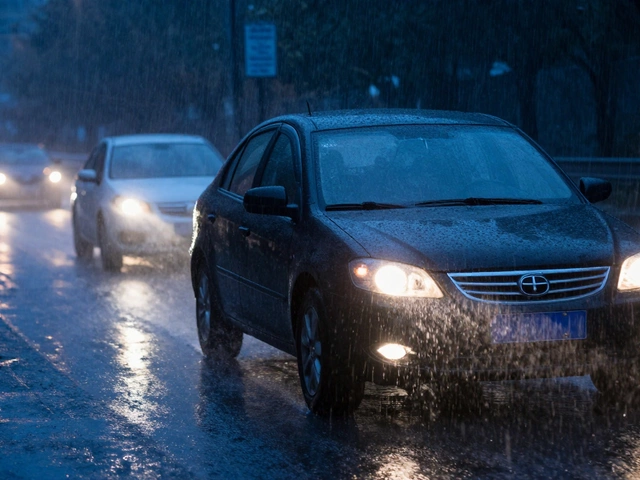
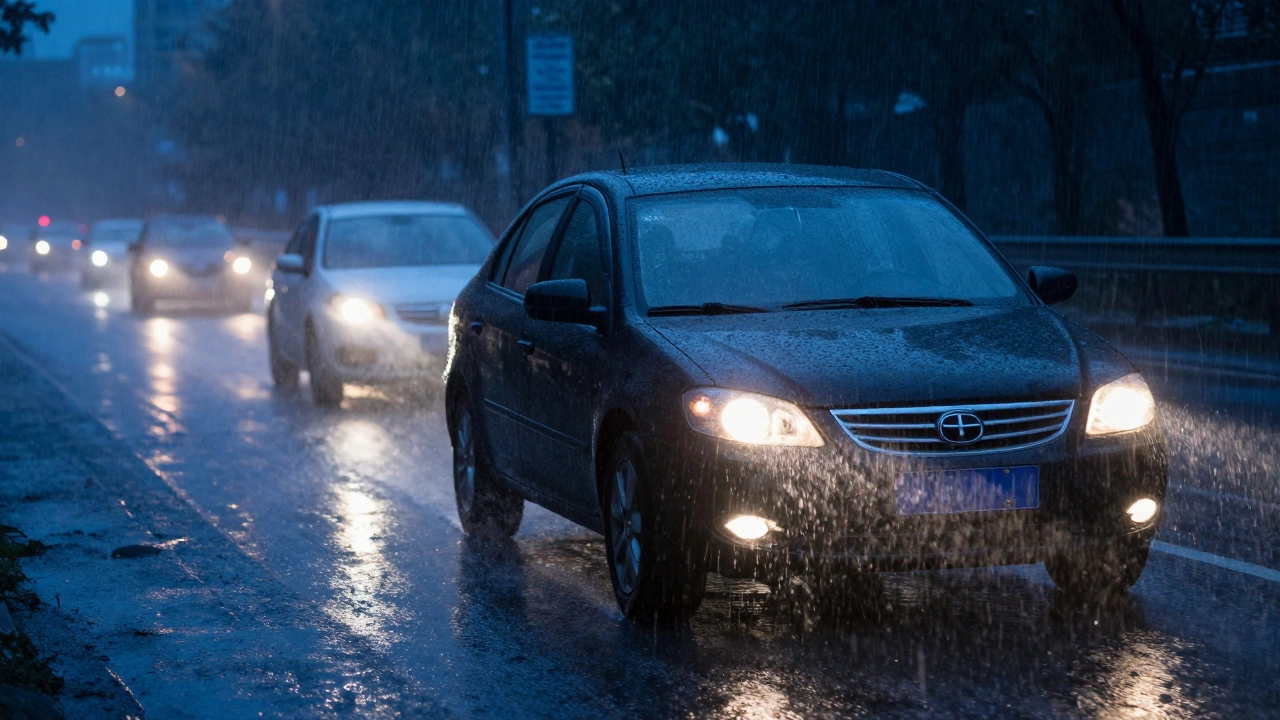
It is a Tuesday night in Melbourne, and the rain is coming down hard. You are squinting at the road, your eyes straining against the glare of oncoming traffic while your own lights barely cut through the wet darkness. It feels like you are driving with half-lit fog lamps instead of proper headlights. The frustration is real, and it is shared by millions of drivers worldwide. The solution seems obvious: swap those dim, yellowish halogen bulbs for bright white LEDs. But here is the catch-just because an LED bulb fits into the socket does not mean it will work correctly in your headlight housing.
You might have seen videos online showing dramatic before-and-after shots where swapping bulbs turns a car’s lighting from 'suburban' to 'stadium.' Those clips are often misleading. They usually feature cars with projector-style housings or modified reflectors. If you take a standard LED bulb and drop it into an older reflector-style headlight designed for a tiny halogen filament, you might end up blinding oncoming drivers while leaving your own lane poorly lit. So, can you put LED bulbs in old headlights? Yes, but only if you understand how light actually works inside that plastic casing.
Key Takeaways
- Fitting vs. Function: An LED bulb may physically fit in the socket, but its larger size can block airflow or misalign the beam.
- Reflector Geometry Matters: Halogen reflectors focus light from a specific point (the filament). LEDs emit light from multiple sides, causing scattered beams and glare.
- The Projector Exception: If your old headlights use a glass lens with a clear bulb behind it (projector style), LED upgrades are generally safe and effective.
- Heat Management: LEDs need cooling fans or heatsinks, which can fail in dusty environments or vibrate loose over time.
- Legal Risks: In many regions, including Australia, non-compliant retrofits can result in fines or failed vehicle inspections.
Why Your Headlight Housing Dictates Success
To understand why a simple bulb swap often fails, we need to look at the anatomy of a headlight. There are two main types of headlight assemblies found in vehicles manufactured before the mid-2010s: reflector-style and projector-style. This distinction is the single most important factor in determining whether an LED upgrade will work for you.
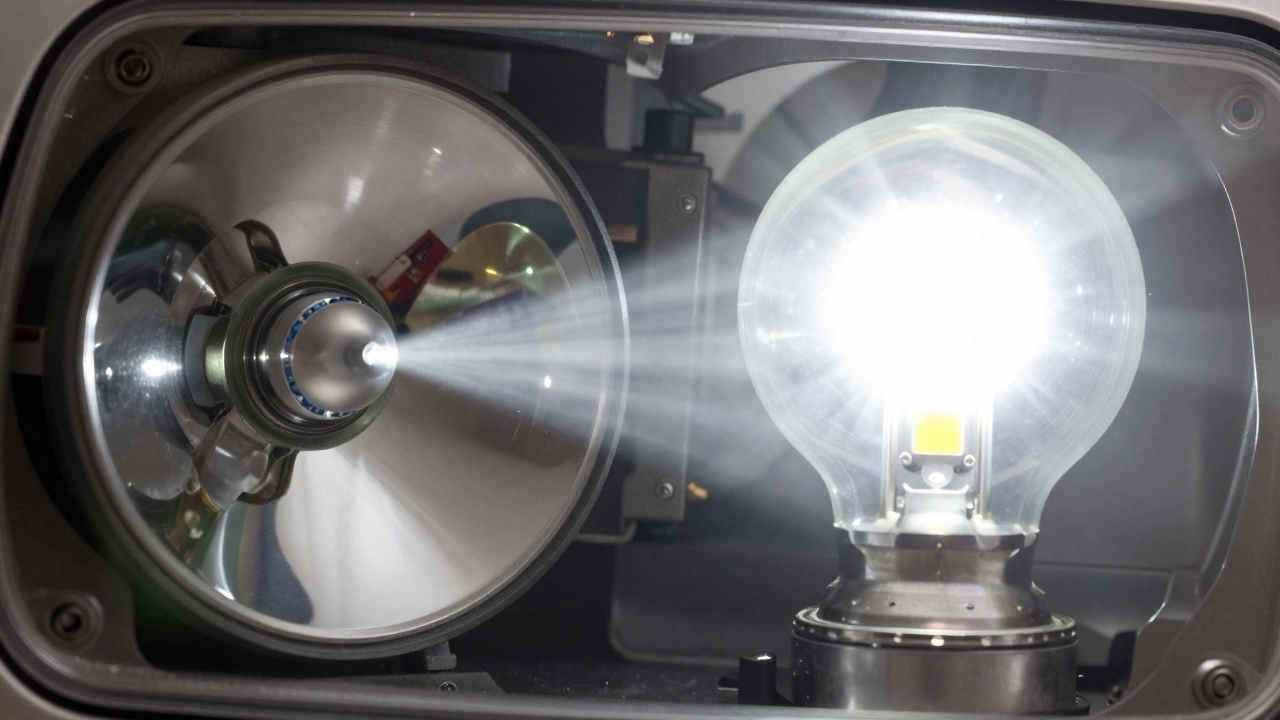
Most older cars, especially budget models or those built before 2005, use reflector-style headlights. Inside the opaque plastic housing, there is a shiny, mirrored surface shaped like a satellite dish. This mirror is precision-engineered to bounce light from a very specific point-the tiny tungsten filament inside a halogen bulb. The filament acts as a perfect point source. When the mirror reflects this light, it creates a sharp cutoff line, keeping the beam directed at the road and away from other drivers’ eyes.
Now, imagine replacing that tiny filament with an LED module. An LED bulb is not a point source; it is a cluster of small diodes arranged around a metal base. These diodes emit light from all directions-front, back, and sides. Because the reflector was designed for a pinpoint source, it cannot properly focus this scattered light. Instead of a clean beam, you get a messy wash of light that goes everywhere except where you need it. Worse, much of that light shoots upward, creating dangerous glare for anyone approaching you.
On the other hand, projector-style headlights use a different mechanism. They feature a clear glass or polycarbonate lens with a distinct circular bubble behind it. Inside that bubble sits a condenser lens that focuses light onto a shutter mask. This system is more forgiving of different light sources because the lens does the focusing, not the reflector. If your car has these projector lenses, swapping in a high-quality LED bulb is far more likely to yield good results without compromising safety.
The Physical Fitment Problem
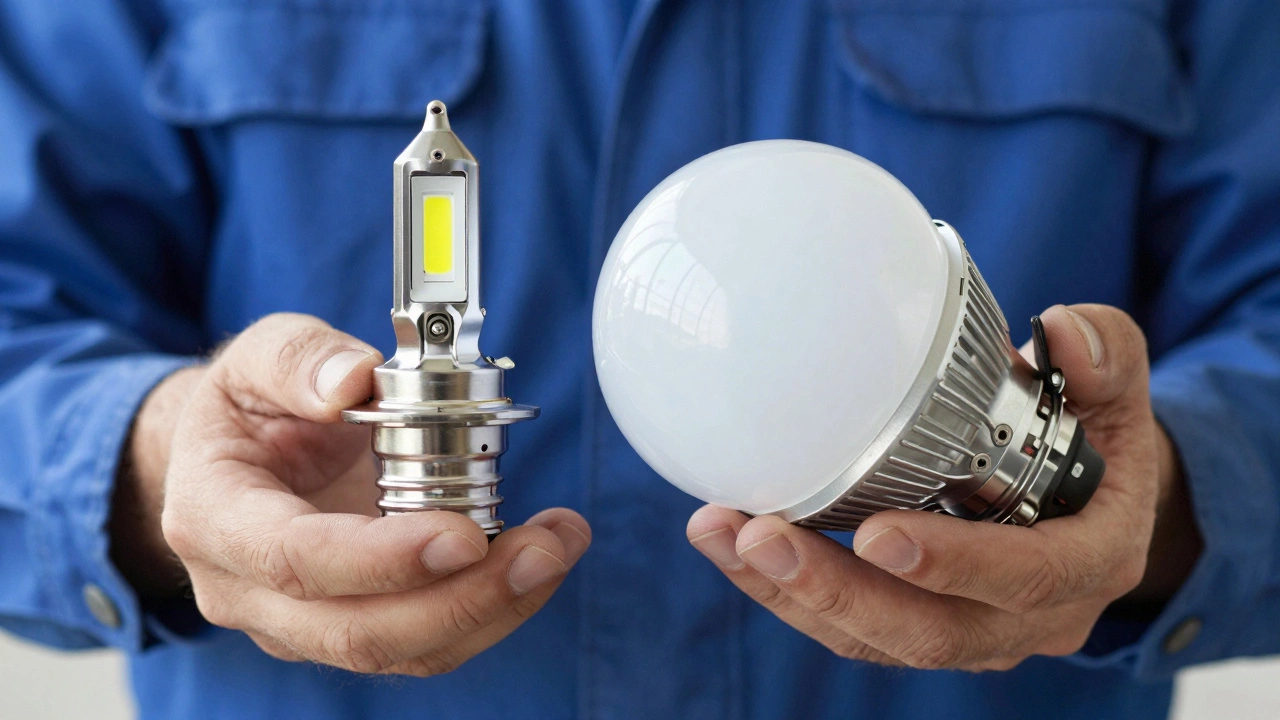
Even if you have the right type of housing, physical dimensions pose another hurdle. Halogen bulbs are relatively compact. LED replacements, however, require significant extra hardware to function. To prevent overheating, LED bulbs need either large aluminum fins (heatsinks) or active cooling via small electric fans. This makes them significantly longer and bulkier than their halogen counterparts.
In many older vehicles, the space behind the headlight assembly is tight. You might find that the LED bulb’s heatsink hits the back of the housing, preventing the bulb from seating fully in the socket. If the bulb isn’t seated correctly, the electrical connection will be poor, leading to flickering lights or complete failure. Furthermore, the dust cover-the rubber seal at the back of the headlight-may no longer close properly. Once moisture gets inside, it fogs up the lens, ruining visibility and potentially corroding the wiring harness.
I once helped a friend install LEDs in his 2008 sedan. The bulbs fit into the socket, but the fan housing protruded just enough to keep the dust cap from sealing. Within three weeks, condensation filled the headlight unit. We had to remove the entire assembly, dry it out, and reinstall the original halogens to save the wiring. It was a costly lesson in checking clearance before buying.
Electrical Compatibility and Canbus Errors
Modern vehicles, even older ones with updated electronics, rely on complex computer systems to monitor components. Halogen bulbs draw a significant amount of power-usually between 50 and 60 watts. LEDs are efficient, drawing only 10 to 20 watts. This difference in resistance can confuse the car’s onboard computer.
When the computer expects a high-resistance load (halogen) but detects a low-resistance one (LED), it may trigger a warning light on the dashboard. This is known as a Canbus error. In some cases, the car might disable the headlight circuit entirely to protect itself from perceived short circuits. While you can buy "Canbus-ready" LED bulbs that include resistors to mimic halogen power draw, these resistors generate heat and add bulk, exacerbating the fitment issues mentioned earlier.
Additionally, cheap LED bulbs often lack proper electromagnetic interference (EMI) shielding. This can cause radio static or interfere with other sensitive electronics in the car. Always look for bulbs that meet automotive EMC standards, such as E-mark certification in Europe or DOT approval in the US, though availability varies by region.
Safety and Legal Implications
This is where things get serious. Using aftermarket LED bulbs in housings not designed for them is illegal in many jurisdictions. In Australia, strict regulations govern vehicle lighting. According to Australian Design Rules (ADR), headlights must produce a specific beam pattern to ensure safety. Modifying a vehicle’s lighting to exceed legal brightness limits or altering the beam spread can result in failing your annual registration inspection.
Beyond fines, there is the moral obligation to other road users. Glare from improperly aimed LED lights can temporarily blind oncoming drivers, increasing the risk of accidents. Insurance companies may also deny claims if they determine that illegal modifications contributed to a collision. It is not worth the risk for a few thousand lumens of extra brightness.
| Factor | Halogen Bulb (Original) | LED Retrofit (Reflector Housing) | LED Retrofit (Projector Housing) |
|---|---|---|---|
| Beam Pattern | Sharp, focused cutoff | Scattered, uneven glow | Generally acceptable |
| Glare Risk | Low (when aligned) | High (blinds oncoming traffic) | Moderate (depends on aim) |
| Lifespan | 1,000-2,000 hours | Variable (heat kills LEDs faster) | 20,000+ hours |
| Fitment Issues | None | Common (dust cap won't seal) | Occasional |
| Legality (Australia) | Compliant | Often Non-Compliant | Case-by-case |
Better Alternatives to Simple Bulb Swaps
If you are unhappy with your current headlights, throwing money at cheap LED bulbs is rarely the best path. Consider these alternatives that offer better performance and compliance:
- Upgrade to High-Quality Halogens: Brands like Osram and Philips make "Night Breaker" or "Ultra" halogen bulbs that offer up to 150% more light output than standard bulbs while maintaining the correct filament position. They are legal, affordable, and fit perfectly.
- Replace the Entire Assembly: For many older cars, you can buy new headlight units that come with integrated LED or HID projectors. These are engineered as a complete system, ensuring proper beam patterns and legality. It costs more upfront but saves headaches later.
- Add Fog Lights: If your issue is seeing the edges of the road in bad weather, adding dedicated fog lights (if your car has provisions for them) can improve visibility without modifying the main beam.
- Clean or Polish Lenses: Yellowed, cloudy lenses can reduce light output by up to 80%. Restoring them with a polishing kit or UV sealant can dramatically improve brightness without any electrical changes.
How to Check If Your Car Is Suitable
Before spending a cent, perform this quick check. Pop the hood and look at your headlights. Do you see a clear, round lens with a black ring around it? That is a projector. You might be okay with an LED swap, provided you choose a reputable brand with good thermal management. Do you see a flat, frosted plastic cover with a shiny silver interior? That is a reflector. Stick with halogens or replace the whole unit.
Also, check the bulb type. Most common sizes are H4, H7, H11, and 9005. Ensure any replacement matches this specification exactly. Mixing up bulb types can damage the socket or create fire hazards due to incorrect voltage handling.
Will LED bulbs void my car warranty?
If your car is still under manufacturer warranty, modifying the electrical system could potentially void coverage related to lighting or electronics. However, for older used cars, this is less of a concern. Always check your specific warranty terms.
Are LED headlights brighter than halogen?
Yes, LEDs typically produce more lumens per watt than halogens. However, brightness alone does not equal better visibility. Proper beam distribution is crucial. An overly bright but poorly aimed LED is worse than a dim but well-focused halogen.
How long do LED bulbs last in cars?
Quality LEDs can last 20,000 to 50,000 hours. Cheap ones may fail in as little as 6 months due to poor heat dissipation. Vibration and moisture are the biggest enemies of automotive LEDs.
Is it illegal to use LED bulbs in Australia?
It depends on the installation. If the LED bulb is not approved for use in that specific headlight housing and alters the beam pattern beyond legal limits, it is illegal. Police can fine you for excessive glare or non-compliant lighting during random checks.
Can I aim LED headlights myself?
You can try, but it is difficult without proper tools. LEDs have multiple light-emitting surfaces, making precise aiming harder than with halogens. It is recommended to have a professional mechanic align them to ensure safety and compliance.