Suspension Upgrade Decision Tool
Your Requirements
Recommended: -
Analysis result goes here...
Lowering Springs
Good for looks and mild handling gains.
Coilovers
Best for track use and customization.
Configure your preferences and click "Analyze Options" to see the recommendation.
You want your car to look aggressive and handle corners like it’s glued to the road. But you’re stuck at a crossroads: do you drop in a set of lowering springs, or do you invest in a full coilover system? It’s one of the most common debates in the car community because both options lower your vehicle, but they do it in completely different ways with vastly different results.
The short answer is this: if you just want a cleaner stance and don’t plan on track days, lowering springs are the budget-friendly pick. If you want to dial in your camber, adjust your ride height after installation, and get serious about cornering stability, coilovers are the only way to go. Let’s break down exactly why, looking at cost, comfort, performance, and maintenance so you can make a call that fits your wallet and your driving style.
What Are Lowering Springs?
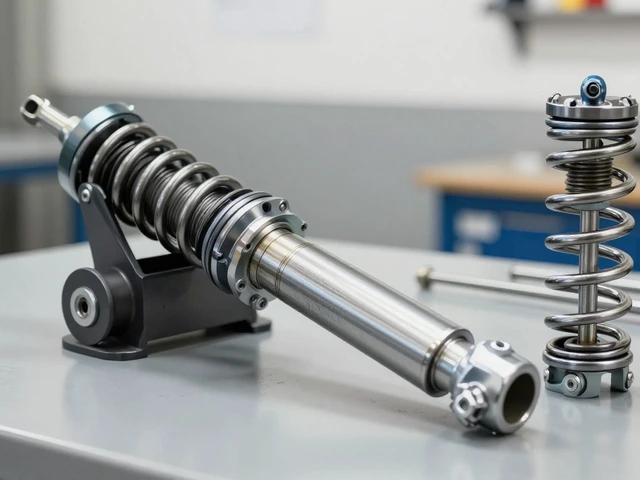
Lowering springs are replacement springs designed to sit lower than your factory units without changing the rest of your suspension geometry. Think of them as a simple swap. You take out the stock spring, put in the shorter, stiffer aftermarket spring, and bolt everything back together. That’s it.
They work by reducing the distance between the upper and lower control arms, which drops the chassis closer to the ground. Most quality brands offer specific rates (like 300 lbs/inch) to ensure the car doesn’t bottom out immediately. The beauty here is simplicity. You keep your original shock absorbers, your original strut mounts, and usually your original sway bars.
This makes them incredibly popular for daily drivers. You get that sleek, planted look where the wheels fill up the arches, but you aren’t compromising too much on comfort. However, there is a catch. Because you are changing the ride height but not the damping, your existing shocks might not be optimized for the new travel range. This can lead to a harsher ride than you expect, especially over speed bumps.
What Are Coilovers?
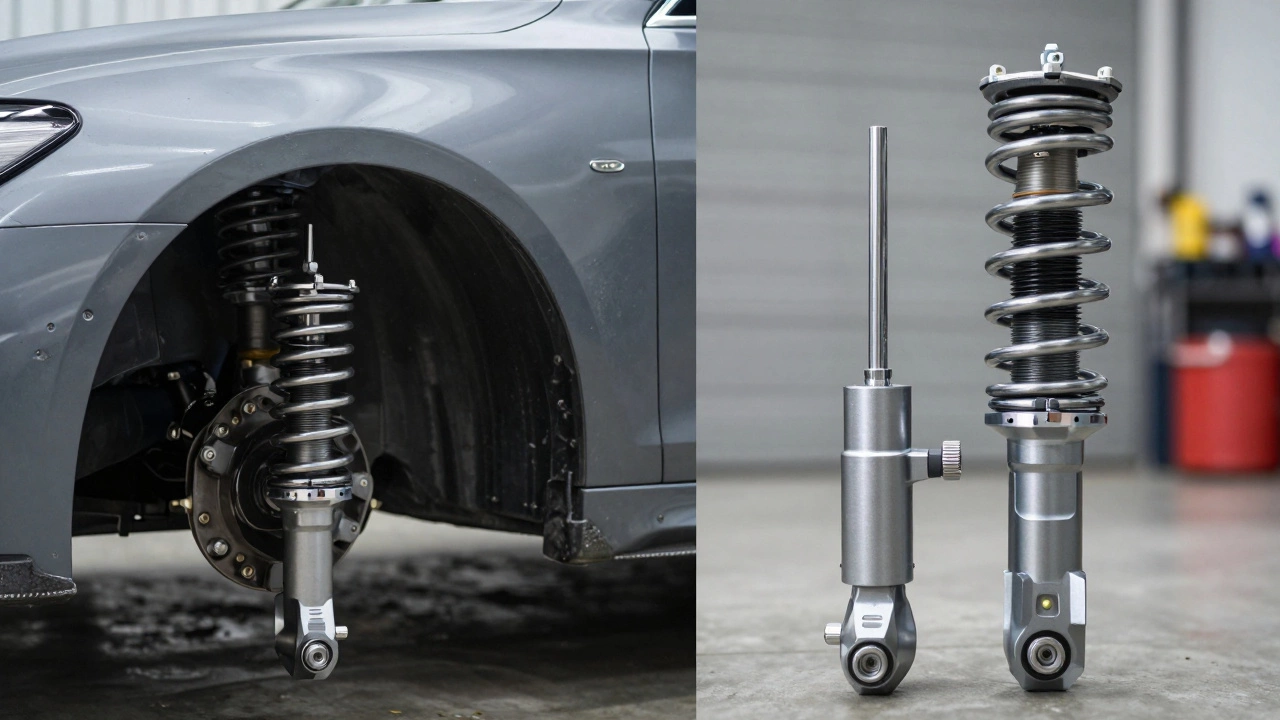
Coilovers are complete suspension assemblies that combine a shock absorber and a spring into a single unit, often with adjustable height and damping. Unlike lowering springs, coilovers replace the entire strut assembly. They are the heavy lifters of the suspension world.
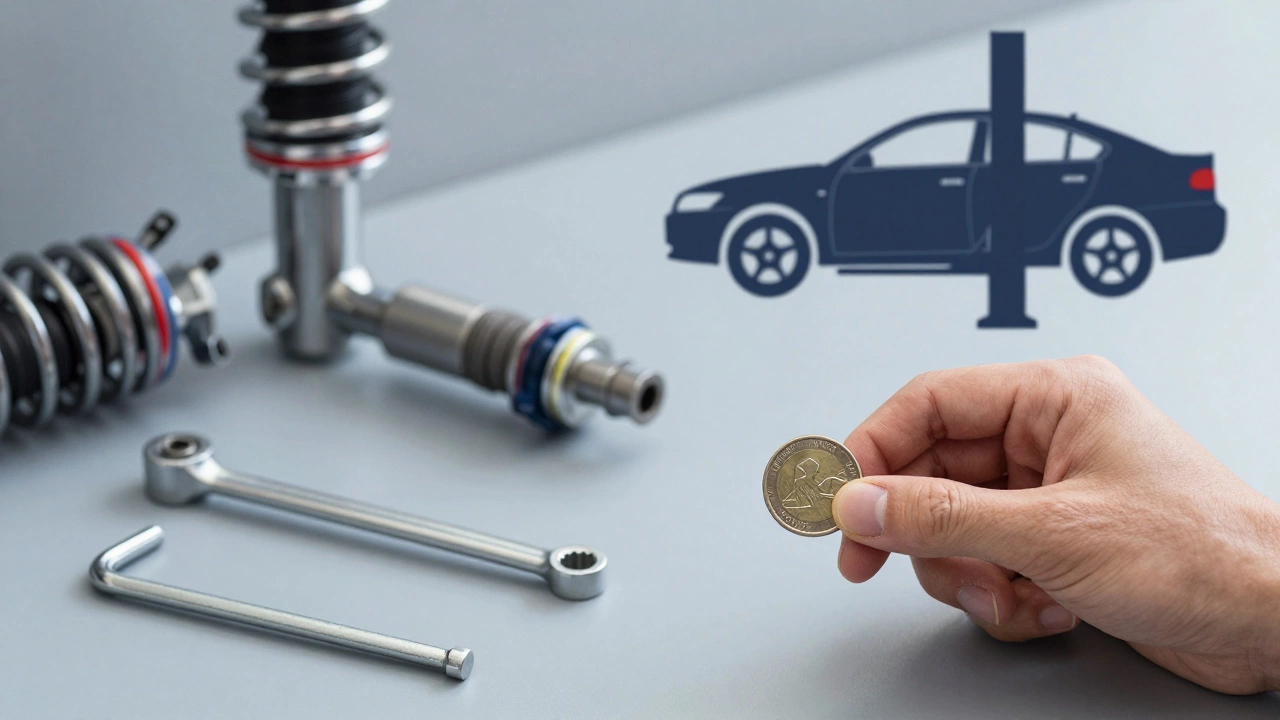
The key difference lies in the "co" part-coil-and the "over" part-the shock sits inside or alongside the coil spring. Modern coilovers come with threaded perches that allow you to turn the body up or down using an Allen key. Many also feature rebound or compression damping adjustments, letting you stiffen the ride for track use or soften it for Sunday cruises.
Because they are engineered as a matched pair, the spring rate and the damping force are calculated to work together. This means better control over wheel movement during hard braking or cornering. You won’t get that floaty feeling some people experience with cheap lowering kits. Instead, you get precise feedback from the road. Of course, this precision comes at a price, both in dollars and in complexity.
Cost Comparison: Budget vs. Investment
Let’s talk numbers, because this is often the deciding factor. A decent set of lowering springs from a reputable brand like Eibach or Bilstein B12 typically runs between $300 and $600 for all four corners. Installation is straightforward enough that many DIYers tackle it in their garage with basic tools.
Coilovers, on the other hand, start around $800 for entry-level monotube systems and can easily exceed $3,000 for high-end, fully adjustable racing setups from brands like KW or Öhlins. You also need to factor in alignment costs. With lowering springs, you might get away with a minor toe adjustment. With coilovers, you will almost certainly need a full four-wheel alignment because you’ve changed the camber and caster angles significantly.
| Feature | Lowering Springs | Coilovers |
|---|---|---|
| Part Cost | $300 - $600 | $800 - $3,500+ |
| Installation Difficulty | Moderate | High |
| Alignment Cost | $50 - $100 | $150 - $300 |
| Lifespan | 50,000 - 100,000 miles | Varies (Seals wear faster) |

Ride Comfort and Daily Usability
If you drive 40 miles a day on highways with potholes, cracks, and expansion joints, comfort matters. Lowering springs generally retain more of your factory ride character. Since you are keeping your OEM dampers, the car still absorbs small bumps reasonably well. Yes, it will be firmer than stock, but it shouldn’t feel like you’re riding on bricks unless you buy extremely stiff race springs.
Coilovers are a mixed bag. Entry-level coilovers are often criticized for being harsh. Manufacturers tune them for performance, not comfort, meaning every pebble on the road translates directly to your spine. High-end coilovers with separate compression and rebound valves solve this, allowing you to soften the damping for street use. But even then, the spring rates are usually higher than stock to prevent body roll. If you value a plush, floating ride, neither option is ideal, but lowering springs are the lesser evil.
Handling and Performance Benefits
Here is where coilovers shine. By lowering the center of gravity and providing matched damping, coilovers drastically reduce body roll. When you throw a car into a corner, the tires stay flatter on the asphalt, maintaining grip longer. This allows for later braking and earlier acceleration out of turns.
Lowering springs also lower the center of gravity, which helps. But without upgraded dampers, the car can still wallow or bounce excessively under heavy load transfer. Imagine hitting a bump mid-corner; with stock shocks and lowered springs, the car might skip sideways. With coilovers, the damper controls that movement instantly. For autocross, track days, or spirited canyon runs, coilovers are non-negotiable if you want consistent lap times.
Adjustability and Customization
One of the biggest advantages of coilovers is adjustability. With lowering springs, your ride height is fixed once installed. If you find you can’t fit over steep driveways or speed humps, you’re stuck. You have to buy new springs or accept the risk of scraping.
With coilovers, you can raise the car slightly for winter roads or lower it further for summer shows. You can also tweak the damping settings based on tire pressure, load, or weather conditions. This flexibility makes coilovers perfect for enthusiasts who want to fine-tune their car’s behavior. It turns your suspension into a tool rather than just a component.
Common Pitfalls and Maintenance
Both systems have downsides you need to watch for. Lowering springs can cause premature wear on CV joints and tie rods due to increased operating angles. They can also lead to oil leaks in struts if the reduced travel causes the seals to overheat or stretch improperly. Always check your manufacturer’s recommendations for strut compatibility.
Coilovers require more maintenance. The external threads can collect dirt and grit, leading to seizing if not cleaned regularly. The wiper seals on the shocks can wear out over time, especially if you hit curbs frequently. You may need to rebuild the shocks every few years, which adds to the long-term cost. Additionally, cheap coilovers from unknown brands often suffer from poor build quality, leaking oil within months. Stick to established names to avoid headaches.
Which One Should You Choose?
Your choice depends entirely on your goals. Ask yourself these three questions:
- Do I drive mostly on smooth roads? → Lowering Springs
- Do I want to adjust my ride height later? → Coilovers
- Is my budget under $700 total? → Lowering Springs
If you are a weekend warrior who occasionally hits a track day but mostly commutes, consider a hybrid approach. Some companies sell "spring-only" kits that are designed to work perfectly with your existing OEM+ shocks. Or, you could start with lowering springs and upgrade to coilovers later when your skills and budget grow.
Remember, no suspension upgrade is perfect. Every modification involves trade-offs. Lowering springs give you looks and mild handling gains for less money. Coilovers give you control, adjustability, and peak performance for a higher price. Pick the one that matches how you actually drive, not how you imagine you’ll drive.
Can I install coilovers myself?
Yes, but it requires more skill than installing lowering springs. You need jack stands, torque wrenches, and possibly strut compressors depending on the design. If you are not comfortable working under your car or aligning wheels, pay a professional shop to do it. Improper installation can damage the threads or compromise safety.
Will lowering springs void my warranty?
In the US, the Magnuson-Moss Warranty Act protects consumers. Dealers cannot void your entire warranty just because you have aftermarket parts. They can only deny claims related to damage caused by those parts. For example, if you rip off a CV axle due to extreme angles from lowered springs, they won’t cover it. But engine issues remain covered.
How low should I lower my car?
A safe starting point is 1 to 1.5 inches. This improves aesthetics and handling without causing major clearance issues. Going lower than 2 inches usually requires additional modifications like camber plates, bushings, or even cutting fenders. Keep in mind local laws regarding minimum ground clearance.
Do coilovers last longer than lowering springs?
Not necessarily. Quality lowering springs can last the life of the car if maintained properly. Coilovers have moving parts and seals that degrade over time, especially with frequent adjustment or exposure to salt and dirt. Expect to rebuild or replace coilovers every 3-5 years of heavy use.
Can I mix lowering springs with stock shocks?
Yes, this is standard practice. Most lowering spring manufacturers design their products to work with OEM dampers. However, always check the manufacturer’s notes. Some very stiff springs may require upgraded shocks to prevent bottoming out or excessive wear on the stock units.