Car Detailing ROI Calculator
Your Inputs
Results & Verdict
Enter your details and click calculate to see if DIY makes sense for you.
There is a moment every car owner faces. You look at the bird droppings on your hood or the coffee stain on the driver’s seat, and you have two choices. You can drive to a professional detailer and hand over $200 to $500, or you can buy a box from the supermarket for $60 and hope for the best. The question isn’t just about money; it is about whether you can actually achieve a result that looks good without ruining your paint.
The short answer is yes, car detailing kits are worth it, but only if you choose the right one and accept that you will be trading time for cash. If you expect a showroom finish with zero effort using a generic kit, you will be disappointed. If you are willing to learn basic techniques and invest in proper tools, you can maintain your vehicle’s appearance indefinitely for a fraction of the professional cost.
The Economics: DIY vs Professional Detailing
Let’s talk numbers first, because that is usually why people ask this question. In Melbourne, a standard exterior wash and wax might cost you $80. A full interior and exterior deep clean runs between $300 and $600 depending on the size of your vehicle and the condition of the upholstery. Professionals charge for their expertise, their time, and their overheads like rent and insurance.
A decent entry-level detailing kit costs between $100 and $250. This includes microfiber towels, shampoo, all-purpose cleaner, glass cleaner, tire shine, and perhaps a ceramic spray sealant. If you detail your own car once a month, that kit pays for itself after the second use. After six months, you have saved roughly $1,000 compared to going to a shop. The math is undeniable. However, there is a hidden cost: your time. A proper DIY detail takes three to five hours. A professional does it in two. You need to decide if your hourly wage makes it worth your while to scrub your own wheel wells.
| Item | DIY Initial Cost | Professional Cost (Per Session) | Time Required |
|---|---|---|---|
| Basic Wash & Wax | $40 (Supplies) | $80 - $120 | 1 - 2 Hours |
| Full Interior/Exterior | $150 (Kit + Chemicals) | $300 - $600 | 4 - 6 Hours |
| Ceramic Coating Application | $80 (Consumer Grade) | $1,000 - $2,500 | 6 - 8 Hours |
| Paint Correction (Polishing) | $200 (Machine Polisher + Pads) | $400 - $800 | 4 - 8 Hours |
What Makes a Detailing Kit Actually Useful?
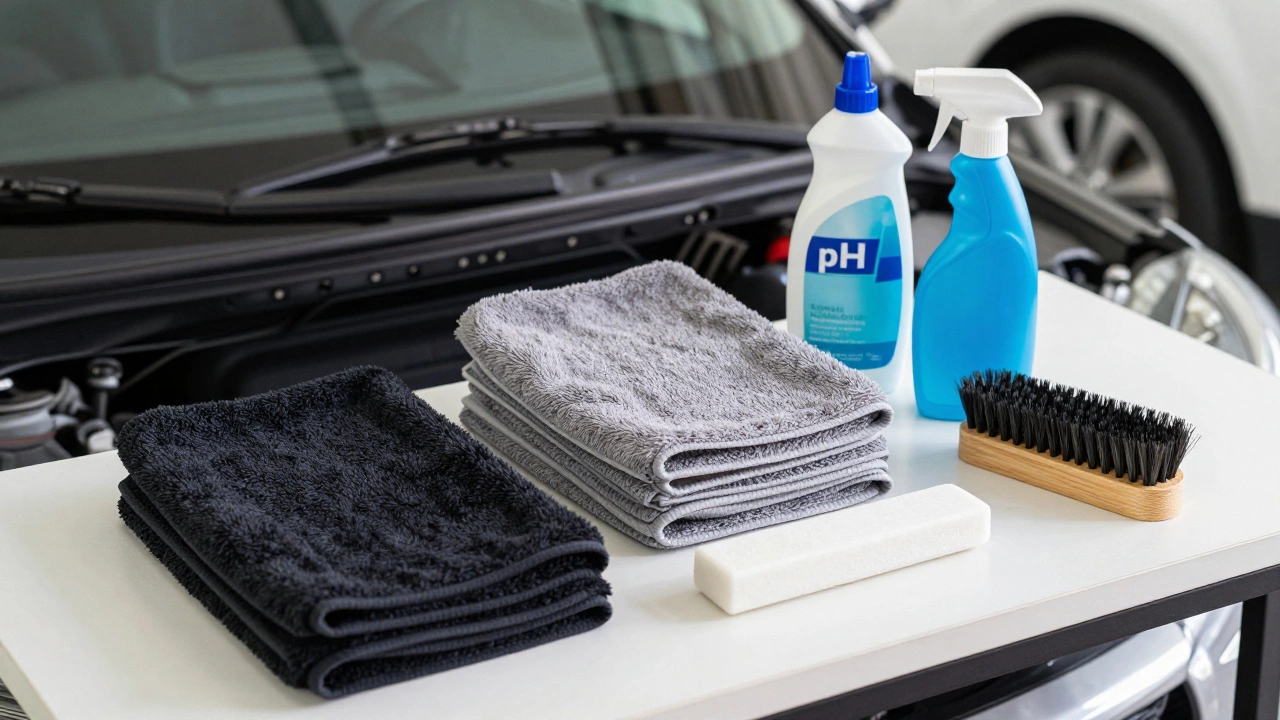
Not all boxes labeled "detailing kit" are created equal. Many cheap kits sold at gas stations contain harsh chemicals that strip wax and degrade plastics over time. They often include low-quality chamois leather that scratches paint or terry cloth towels that leave lint everywhere. To determine if a kit is worth buying, you need to look at the components inside.
A worthwhile kit should prioritize materials over marketing. The most critical item is not the shampoo; it is the microfiber towels. You need high-GSM (grams per square meter) towels. Cheap towels have loose fibers that act like sandpaper on your clear coat. Look for kits that specify GSM ratings, ideally above 400 for drying and 300 for washing. Secondly, check the chemistry. pH-neutral car shampoos are essential. Dish soap, which some cheap kits substitute, removes natural oils from your paint and rubber seals, causing them to crack and fade.
Another red flag is the inclusion of "magic erasers" or abrasive sponges without warnings. These are essentially fine sandpaper. While they remove stains, they also dull the finish. A good kit will include soft-bristle brushes for wheels and vents, allowing you to agitate dirt without scratching surfaces. If the kit relies heavily on sprays and neglects mechanical cleaning tools, it is likely a gimmick.
The Learning Curve: Why Most People Fail
The biggest reason detailing kits end up gathering dust in the garage is not the quality of the products, but the lack of technique. Buying a kit gives you the tools, but it does not give you the skill. Washing a car correctly is counterintuitive to how most people clean their house.
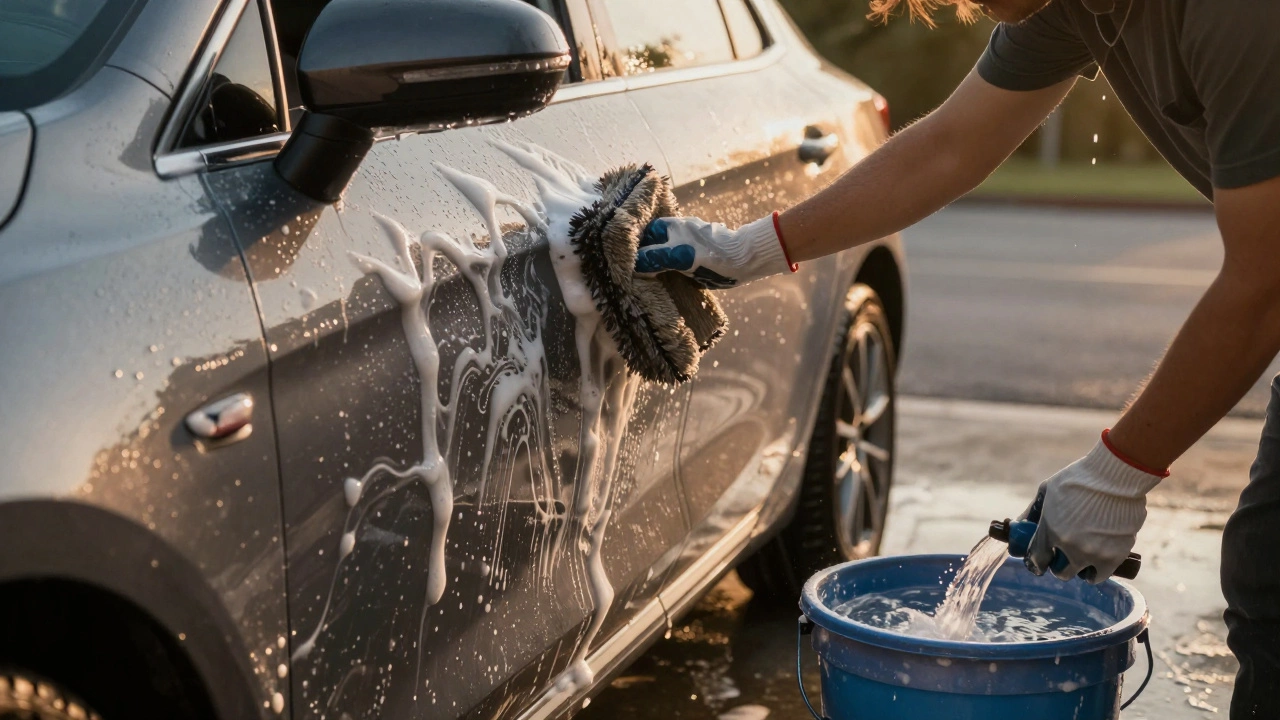
You cannot just spray water and scrub randomly. The industry standard is the two-bucket method. One bucket holds soapy water, the other holds rinse water. You wash one panel, dip your mitt in the rinse bucket to remove grit, then reload with soap. This prevents dragging dirt across the paint, which causes swirl marks. Swirl marks are those tiny circular scratches that make your car look hazy under sunlight. Once you put swirls in, no amount of wax will hide them. You will need machine polishing to fix them, which brings us back to the professional cost.
Interior cleaning requires even more caution. Using too much water on leather seats can cause mold underneath the stitching. Using alcohol-based cleaners on modern dashboard screens can strip the anti-glare coating. A detailing kit is only as good as your knowledge of what surface you are treating. Without reading instructions or watching tutorials, you risk damaging trim pieces, leather, and electronics.
When DIY Doesn't Make Sense
There are specific scenarios where spending money on a kit is a waste. If your car has severe paint damage, oxidation, or deep scratches, consumer-grade products will not fix it. Paint correction requires a dual-action polisher, multiple stages of abrasive compounds, and significant experience. Trying to polish a car by hand is ineffective and exhausting. In these cases, hiring a professional is the only logical choice.
Similarly, if you live in an area with extreme weather conditions, such as heavy salt usage in winter or intense UV exposure in summer, maintaining a perfect finish requires frequent attention. If you do not have the time to wash your car every two weeks, a professional maintenance plan might be more reliable. Consistency is key to protection. A wax applied once a year by an amateur offers less protection than a ceramic coating applied professionally every two years.
Also consider the resale value perspective. If you are selling a high-end luxury vehicle, a professional detail can add perceived value that justifies the cost. For a daily driver that is five years old, the return on investment for a $500 professional detail is negligible. In that case, a $100 kit used monthly keeps the car presentable enough to sell without breaking the bank.
Essential Add-Ons That Kits Often Miss
Even if you buy a comprehensive kit, you will likely need to purchase a few additional items to get true results. Most kits do not include a clay bar. Claying is the process of removing embedded contaminants like tree sap, industrial fallout, and brake dust that washing alone cannot remove. Running your hand over a washed car should feel like baby skin. If it feels rough, you need to clay it before applying wax or sealant. Skipping this step traps dirt under your protection layer.
Another missing piece is often a dedicated wheel cleaner. Brake dust contains iron particles that are acidic. General car shampoo is not strong enough to dissolve iron safely. An iron remover spray turns purple when it reacts with brake dust, indicating it is working. This chemical reaction is crucial for preserving your wheel finish and preventing corrosion.
Finally, consider the lighting. Detailing is visual work. If you are working in a dim garage, you will miss spots. Investing in a portable LED work light allows you to see dust, fingerprints, and imperfections clearly. Good lighting transforms a mediocre job into a great one because you can actually see what you are doing.
Maintaining Your Investment
Once you have decided that a detailing kit is worth it, the next step is maintenance. Detailing is not a one-time event; it is a habit. The goal is to keep dirt from bonding to your surfaces. Regular washing removes loose dirt. Occasional claying removes bonded contaminants. Periodic application of wax or sealant provides hydrophobic protection, making future washes easier.
Rotate your microfiber towels. Use different colors for different tasks to avoid cross-contamination. Use black towels for wheels, grey for paint, blue for glass, and white for interiors. This simple system prevents you from wiping brake dust onto your windshield or window cleaner onto your leather seats. Organization saves time and prevents mistakes.
Store your chemicals properly. Heat degrades many automotive chemicals, reducing their effectiveness. Keep your kit in a cool, dry place. Check expiration dates, especially for waxes and sealants. Old products may not bond correctly to the paint, leading to streaking and poor durability.
Can I use household cleaning products instead of a detailing kit?
You can, but it is risky. Dish soap strips wax and dries out rubber seals. Glass cleaners with ammonia can damage tinted windows. All-purpose cleaners may be too harsh for delicate interior plastics. Automotive-specific products are formulated to be safe for car materials while still being effective. The small price difference is worth avoiding potential damage.
How often should I detail my car myself?
A full detail every 3 to 6 months is sufficient for most drivers. Between details, wash your car every two weeks to remove dirt and road salts. Apply a quick detailer spray after each wash to boost shine and protection. Adjust frequency based on your driving conditions; off-road or coastal driving requires more frequent cleaning.
Is it better to buy individual products or a pre-made kit?
Pre-made kits are great for beginners because they ensure compatibility between products. However, experienced detailers often prefer buying individual items to customize their workflow. If you are new, start with a reputable kit. As you learn what works for your car, you can replace specific items with higher-quality alternatives.
Do I need a pressure washer for a home detailing setup?
No, a standard garden hose with a spray nozzle is sufficient. High-pressure washers can damage seals and force water into electrical components if used incorrectly. The key is agitation (using a mitt or brush) and lubrication (soap), not water pressure. A foam cannon attachment can enhance the wash but is not strictly necessary.
Will a detailing kit remove scratches?
Most basic kits do not remove scratches. They can mask very fine swirl marks with wax or sealant, but deeper scratches require polishing compounds and machines. If your fingernail catches in a scratch, it is too deep for a consumer kit. You will need professional paint correction or touch-up paint for deeper damage.