Quick Summary: The Detailing Side Hustle
- Low barrier to entry with a basic car detailing kit.
- Focus on mobile services to avoid expensive rent.
- Pricing varies by service level (Basic vs. Full Restoration).
- Growth comes from high-quality visual proof (Before/After photos).
- Target high-value clients like luxury car owners or rideshare drivers.
Getting Your Gear Right
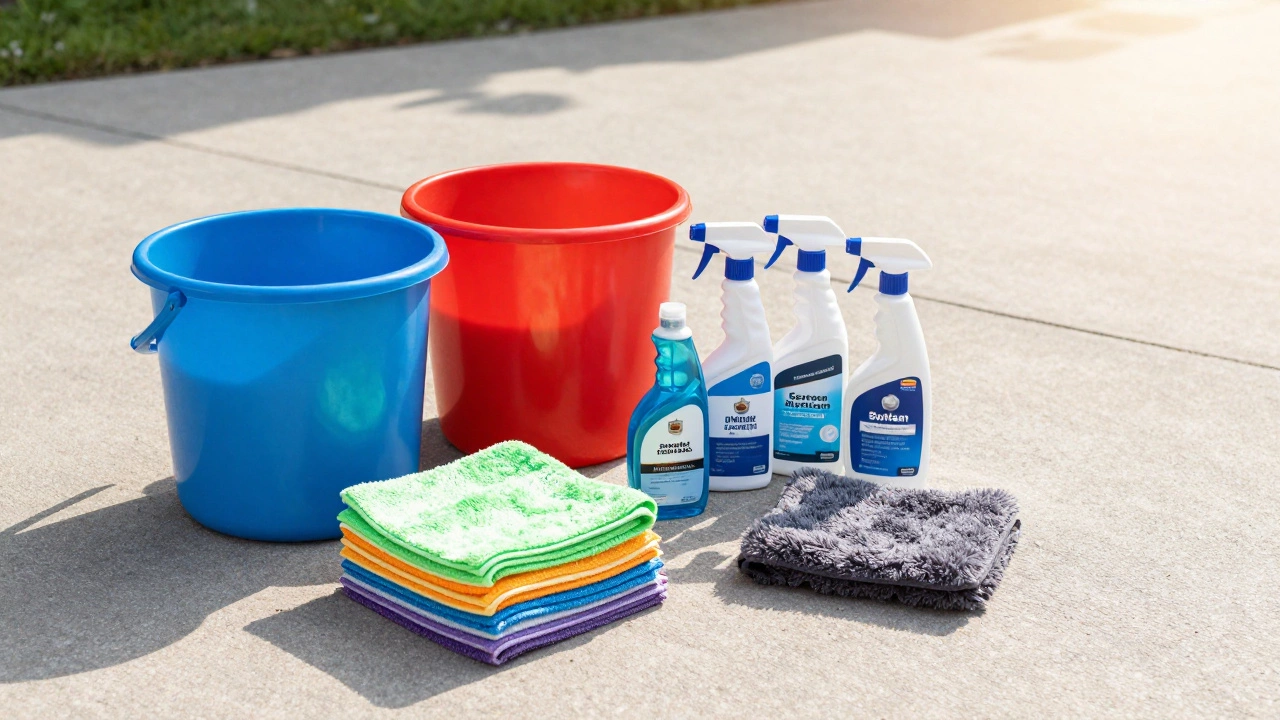
You don't need every gadget on the market to start. In fact, buying too much gear upfront is where most beginners fail. You want a lean setup that fits in a trunk but delivers professional results. Car detailing kits are curated sets of cleaning chemicals, brushes, and cloths designed to treat different surfaces of a vehicle. Instead of buying random bottles, a dedicated kit ensures you don't accidentally use a harsh wheel cleaner on a delicate leather seat.
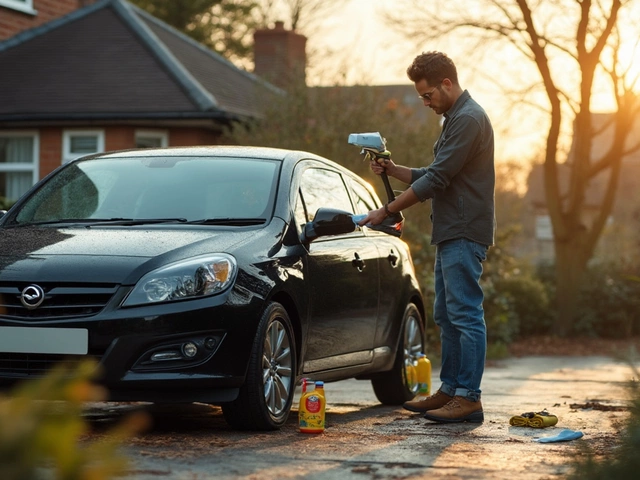
For your first few clients, prioritize a "two-bucket system." This involves one bucket for soapy water and one for rinsing your mitt, which prevents you from rubbing dirt back into the paint. You'll also need Microfiber Towels, which are synthetic fibers designed to absorb liquid and trap dirt without scratching the clear coat. Avoid old t-shirts or bath towels; they'll leave swirls in the paint that a client will definitely notice under sunlight.
| Tool | Beginner Setup | Pro Upgrade | Why it Matters |
|---|---|---|---|
| Pressure Washer | Garden Hose + Nozzle | Electric Pressure Washer | Water efficiency and dirt removal |
| Vacuum | Home Shop-Vac | High-Power Wet/Dry Vac | Removing deep-seated sand and pebbles |
| Polishing | Hand Waxing | Dual Action (DA) Polisher | Removing scratches and oxidation |
| Chemicals | All-purpose Cleaner | pH-balanced Shampoos | Protecting the wax layer |
Defining Your Service Menu
If you just tell a client "I'll clean your car," you'll likely get paid whatever they feel like giving you. To make this a real business, you need a menu. This allows you to upsell and manage your time. Most detailers split their work into three tiers: the Maintenance Wash, the Deep Interior Clean, and the Full Detail.
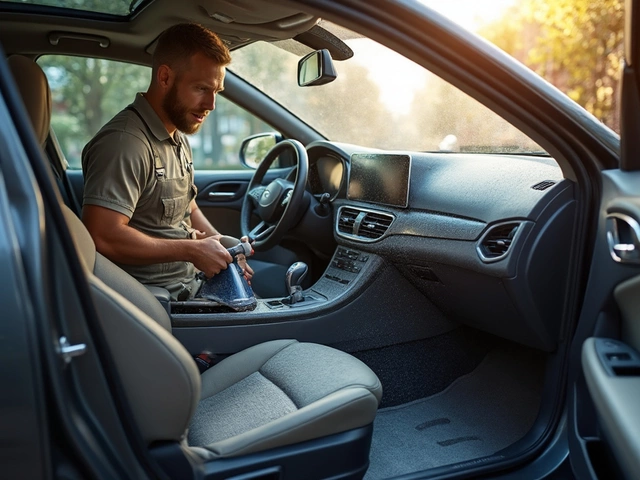
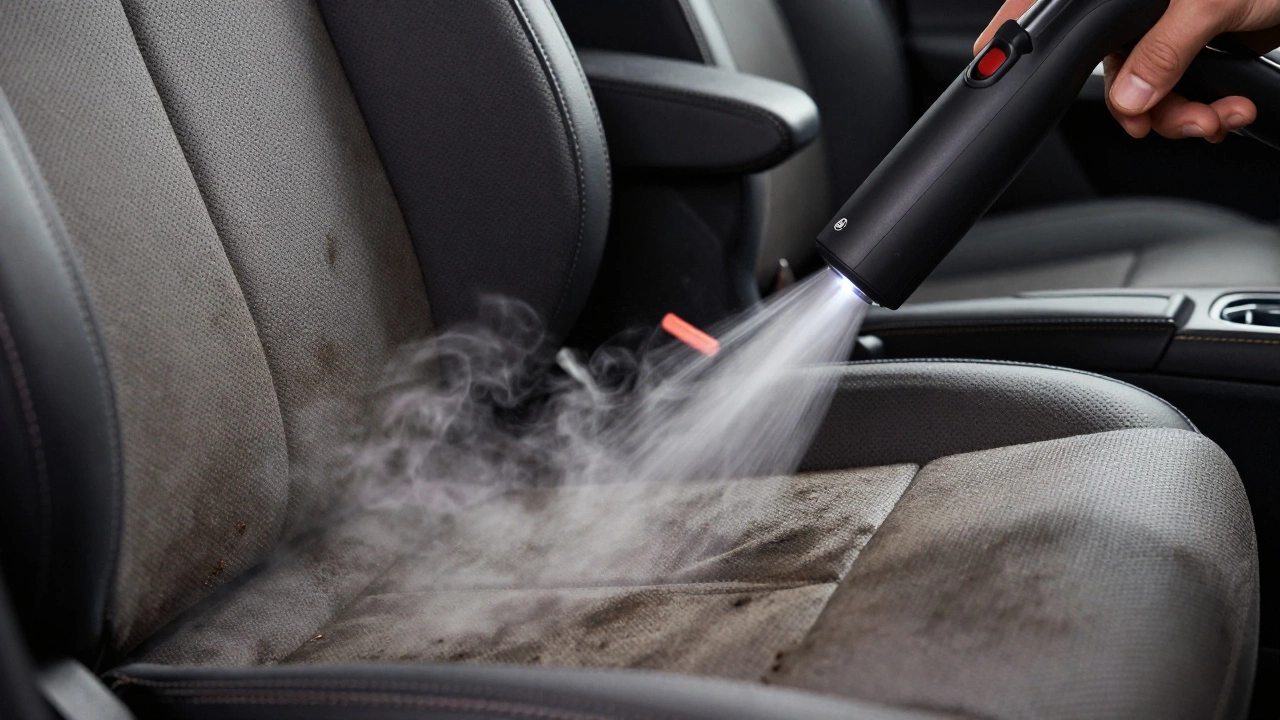
A Maintenance Wash is for the client who already has a clean car and just wants it kept that way. This usually takes 60 to 90 minutes. The Deep Interior Clean is where the real money is. Think about the "parent's car"-goldfish crackers in the creases, spilled coffee in the cup holders, and dog hair embedded in the carpets. Using Steam Cleaners, which are devices that use pressurized hot water vapor to sanitize and lift stains from upholstery, allows you to charge a premium for a level of clean that a vacuum can't touch.
The Full Detail is your "signature" service. This includes a clay bar treatment to remove contaminants from the paint, a polish, and a sealant. This can take a full day but allows you to charge hundreds of dollars. The key here is Paint Sealants, which are synthetic polymers that bond to the paint to provide a long-term protective barrier against UV rays and rain. Unlike old-school wax that lasts a month, a good sealant can last six months, giving the client a tangible value proposition.
Pricing Your Work for Profit
Pricing is the scariest part of a side hustle. Should you charge by the hour or by the job? In detailing, charging by the job is almost always better. If you get faster at your work, an hourly rate actually punishes your efficiency. Instead, price based on the vehicle size and condition.
For example, a compact sedan is easier to clean than a seven-seater SUV. You should charge at least 30% more for larger vehicles. Also, implement a "disaster fee." If you open a door and it looks like a glitter bomb went off in a mud pit, that's an extra $50 to $100. Be transparent about this before you start the engine. Tell the client: "My base price for an interior is $X, but depending on the condition, there might be an additional fee for heavy staining." Most people appreciate the honesty.
Look at your local market. If the high-end shops in your city are charging $500 for a full detail, you can position yourself as the "affordable but professional" alternative at $300. You're still making a great margin since your overhead is just chemicals and gas, but you're an easy "yes" for someone who wants a better result than a cheap car wash.
Finding Your First Five Clients
You don't need a website or a fancy logo to start. You need a phone and a way to show your work. The biggest mistake beginners make is posting a generic flyer on Facebook Marketplace that says "Car Cleaning - Cheap." That attracts the lowest-paying customers who will complain about every cent.
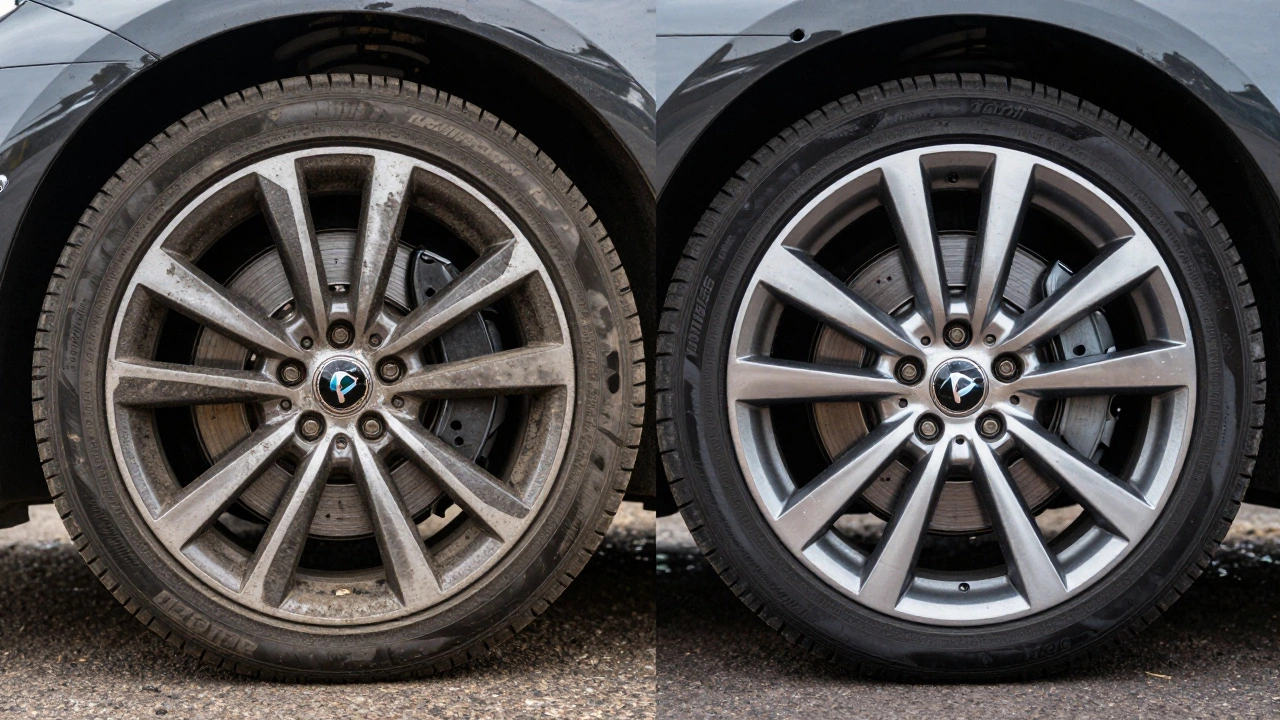
Instead, focus on the "Transformation Shot." Take a photo of a filthy wheel, then a photo of it sparkling. Take a photo of a stained seat, then a photo of it restored. People don't buy a car wash; they buy the transformation. Offer your first three jobs to friends or neighbors at a discount in exchange for these photos and a honest review. Once you have a small portfolio, you have social proof.
Target specific niches. For instance, Rideshare Drivers (Uber/Lyft) are a goldmine. Their cars get beat up daily, and they need them to stay clean to maintain their ratings. If you can offer a "Weekly Refresh" package where you spend 45 minutes tidying the car every Sunday, you've just created recurring revenue-the holy grail of any side hustle.
Avoiding Common Pitfalls
The most dangerous part of detailing isn't the hard work; it's the risk of damaging a client's car. Nothing kills a side hustle faster than burning through a client's clear coat with a polisher or leaving a scratch because you used a dirty rag. This is why education is as important as equipment. You need to understand the difference between Degreasers, which are strong alkaline chemicals used to break down oils and grease on engines or wheels, and interior cleaners. Putting a wheel degreaser on a leather seat can cause permanent discoloration.
Another trap is "scope creep." A client asks you to "just quickly" clean the engine bay, and suddenly you're spending two hours on a task you aren't charging for. Be firm with your service menu. If they want something extra, let them know the price for that specific add-on. It's better to be seen as a professional who values their time than a "nice guy" who works for free.
Lastly, manage your water and power. If you're working in a client's driveway, don't just plug your vacuum into their outdoor outlet without asking. Some older homes have sensitive breakers that will trip if you use a high-draw machine. Always check the power source or invest in a portable power station as you grow.
How much money can I actually make per car?
Depending on your market and service level, a basic interior/exterior clean usually nets $80 to $150. A full restoration detail can range from $250 to $600. Since your material cost per car (chemicals/microfiber wear) is typically under $10, most of that is pure profit minus your travel time.
Do I need insurance to start a detailing business?
While many start without it, it's highly recommended. General liability insurance protects you if you accidentally damage the car (like burning the paint) or if a client trips over your hose. Once you move beyond friends and family, a basic policy is a small price to pay for peace of mind.
What is the best way to prevent scratches during the wash?
Use the two-bucket method and a high-quality microfiber wash mitt. Always wash from the top of the car down to the bottom, and never scrub dried-on dirt; always lubricate the surface with soap and water first to lift the particles away from the paint.
How do I handle rain on a scheduled detailing day?
You have two options: pivot to an "Interior Only" day or reschedule. Most pros have a policy stating that outdoors work is subject to weather. If you have a portable canopy, you can work through light rain, but for polishing and waxing, you need a dry environment.
Which is better: wax or ceramic coatings?
Wax is cheaper and easier to apply but lasts only a few weeks. Ceramic coatings are a chemical bond that can last years and provide better protection. As a beginner, start with high-quality sealants or waxes. Ceramic coatings require a level of paint correction (polishing) that is too risky for a total novice.
Next Steps for Growth
Once you have a steady flow of five to ten clients a month, stop thinking like a cleaner and start thinking like a business owner. Invest your first $500 of profit back into better equipment-perhaps a professional-grade extractor for carpets or a better lighting kit for inspecting paint.
Start a loyalty program. A simple "5th wash is half off" card keeps clients coming back to you instead of searching for someone else. You can also offer "Seasonal Packages," like a Winter Protection kit in May or an Interior Deep Clean in October before the holidays. By creating a schedule, you turn a random side hustle into a predictable income stream.