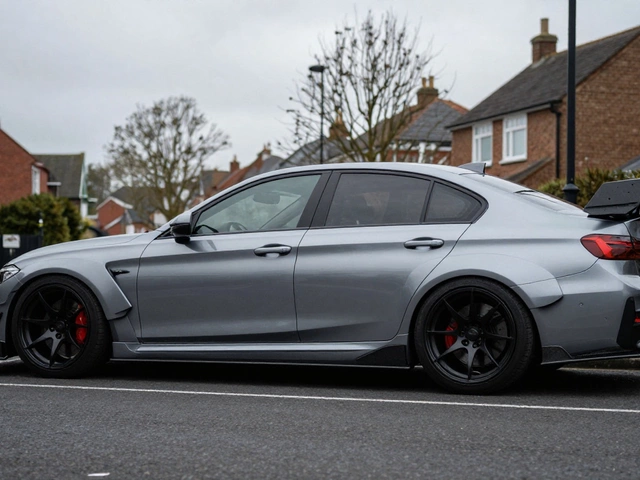

Aerodynamics & Performance Simulator
Vehicle Configuration
Simulation Results
Adjust inputs to see results.
Higher index means better handling in turns.
You’ve seen them on every street corner and in every car magazine. The wide fenders, the aggressive front splitters, the massive rear wings. They look mean. They look fast. But here is the question that keeps owners up at night: do body kits make cars faster?
The short answer is no. Not directly. Slapping a plastic bumper onto your sedan won’t magically add horsepower to the engine or lower your 0-60 time. If you want more raw speed, you need to touch the engine, the transmission, or the weight distribution.
However, the longer answer is much more interesting. While a body kit doesn’t create power, it can change how your car interacts with the air. And in the world of high-speed driving, air is either your best friend or your worst enemy. Depending on how those parts are designed, a body kit can actually help you hold the road better in corners or reduce drag on the highway. Let’s break down exactly what happens when you bolt on those carbon fiber pieces.
Aerodynamics: The Invisible Force
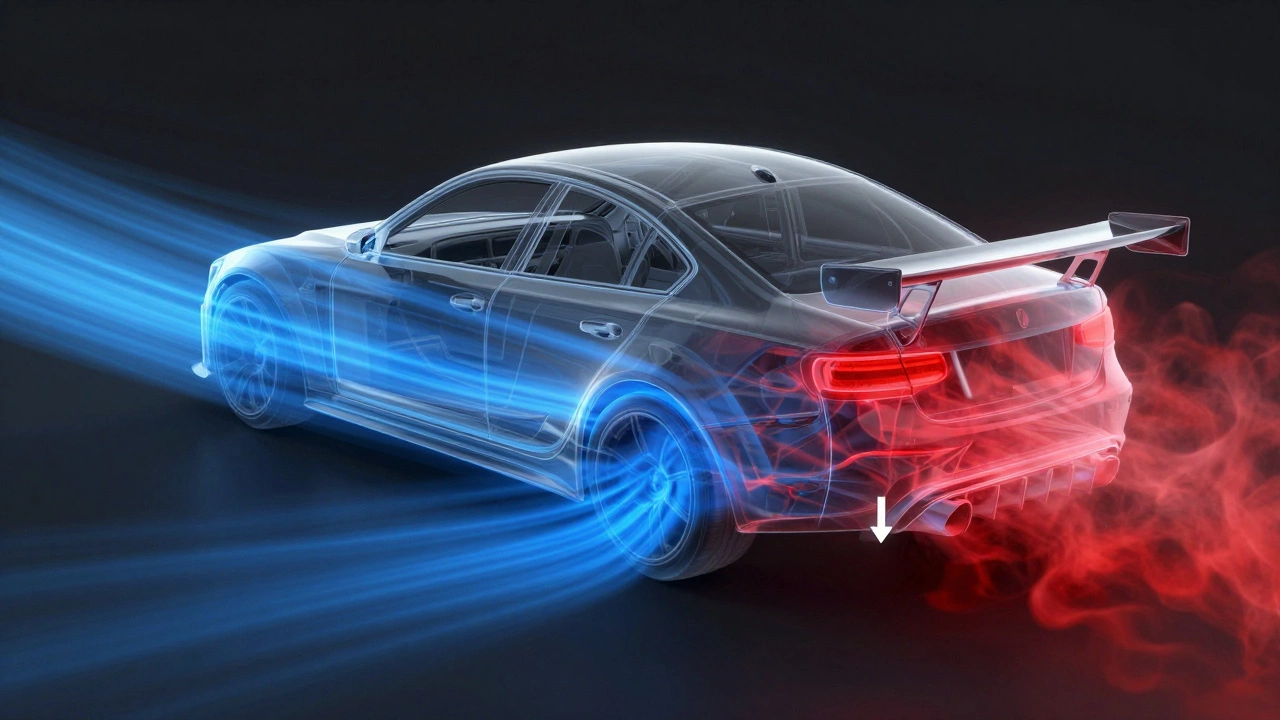
To understand if a body kit helps performance, you have to understand aerodynamics, which is the study of how air flows around solid objects. When a car moves, it has to push air out of the way. This creates resistance, known as drag. Drag acts like an invisible hand pushing back against your car, trying to slow it down.
At low speeds, like 30 mph in the city, drag is negligible. Your engine barely notices it. But as you hit 100 mph or higher, drag becomes the dominant force fighting your acceleration. In fact, above 70 mph, most of your engine’s power is just used to overcome air resistance. This is where a well-designed body kit starts to matter.
A proper aerodynamic package aims to manage this airflow. It doesn’t just block wind; it guides it. By smoothing out the turbulent air around the wheels and undercarriage, certain components can reduce the total drag coefficient of the vehicle. Less drag means the engine doesn’t have to work as hard to maintain high speeds, effectively allowing the car to reach its top speed slightly easier than before.
Downforce vs. Drag: The Trade-Off
Here is where things get tricky. There are two main goals in automotive aerodynamics: reducing drag and increasing downforce. Downforce is essentially negative lift. Instead of letting the car float up like an airplane wing, you want to press it down onto the pavement.
More downforce means more grip. More grip means you can corner faster without sliding off the track. This is why race cars look so extreme. That huge rear wing isn’t there for looks; it’s generating tons of downforce to keep the tires planted during high-speed turns. However, creating downforce almost always increases drag. The harder you press the car down, the more air resistance you create.
This is the critical trade-off. A body kit designed for maximum downforce will make your car slower in a straight line but faster through corners. A body kit designed for minimum drag might help your top speed but could make the car feel light and unstable at high velocities. Most aftermarket body kits fall somewhere in the middle, often prioritizing aesthetics over actual aerodynamic efficiency.
| Goal | Primary Component | Effect on Top Speed | Effect on Cornering |
|---|---|---|---|
| Reduce Drag | Front Lip Spoiler | Increase (slightly) | Neutral/Negative |
| Generate Downforce | Rear Wing | Decrease | Increase significantly |
| Manage Turbulence | Side Skirts | Neutral | Stability improvement |
Does a Rear Wing Actually Help?
Let’s talk about the most visible part of any body kit: the rear wing. You see them everywhere, from cheap plastic replicas to expensive carbon fiber setups. Does putting one on your daily driver make it faster?
For a standard street car, the answer is usually no. In fact, it might make you slower. A large wing generates significant drag. If you’re driving on public roads, you rarely hit the speeds where the downforce benefits outweigh the drag penalties. You’ll notice your fuel economy drop, and your top speed might decrease by a few miles per hour because the engine is fighting the extra air resistance.
However, if you take that same car to a racetrack, the story changes. On a track with tight corners and high-speed sweepers, the downforce from a properly adjusted wing allows you to carry more speed through the turns. Even if you lose a bit of straight-line speed, the time gained in the corners often results in a faster overall lap time. This is why professional racing teams spend millions testing wing angles-they are chasing cornering speed, not straight-line velocity.
It’s also worth noting that not all wings are created equal. A flat piece of plastic attached with zip ties does nothing. An effective wing requires precise geometry, mounting height, and angle of attack. Many aftermarket wings are purely cosmetic, adding zero functional downforce while still adding drag.
Front Splitters and Underbody Trays
If you want real aerodynamic gains, look below the beltline. The area underneath a car is often neglected, but it’s crucial for airflow management. A front splitter extends forward from the bumper, creating a high-pressure zone above it and a low-pressure zone below. This helps stabilize the front end and reduces lift.
When combined with an underbody tray or diffuser, these components smooth out the chaotic air flowing under the chassis. Smooth air exits the rear of the car cleanly, reducing turbulence. Turbulent air behind a car creates drag. By keeping the airflow attached and smooth, you reduce that drag penalty.
Many modern sports cars come with factory-installed diffusers and splitters for this exact reason. Aftermarket versions can replicate this effect, but only if they are engineered correctly. A poorly fitted splitter that flaps in the wind or creates uneven pressure will do more harm than good. Fitment matters. Gaps between the body kit and the car allow air to leak into the underbody, ruining the low-pressure seal needed for effective downforce.
The Weight Factor
We can’t talk about speed without talking about weight. One of the biggest myths about body kits is that they are lightweight upgrades. In reality, many aftermarket body kits are made from polyurethane (PU) or ABS plastic, which are durable but heavy. Adding fifty pounds of plastic to your car’s exterior increases its unsprung and sprung mass.
More weight means slower acceleration, longer braking distances, and increased tire wear. If you install a heavy PU body kit without upgrading your brakes or suspension, you are technically making your car slower in every metric except perhaps top speed stability.
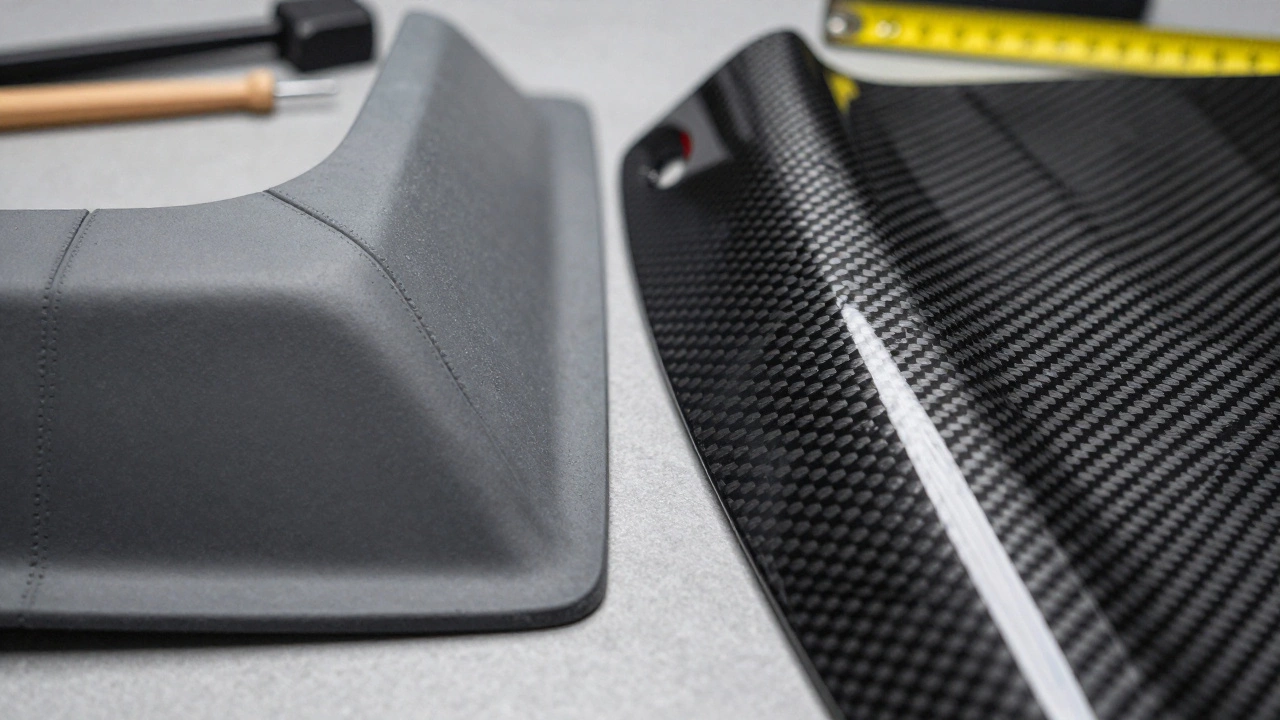
This is why serious enthusiasts opt for fiberglass or carbon fiber body kits. Carbon fiber is incredibly strong and very light. Replacing a steel hood with a carbon fiber one can save dozens of pounds. Removing weight from the front of the car improves handling balance and reduces inertia. So, while the shape of the body kit affects aerodynamics, the material affects weight-and weight is king when it comes to everyday performance.
Cosmetic vs. Functional Kits
Most body kits sold online are cosmetic. They mimic the aggressive lines of JDM (Japanese Domestic Market) or European race cars but lack the engineering behind them. These kits are designed to make your car look wider, lower, and more aggressive. They fulfill the emotional desire for a sportier appearance but offer little to no aerodynamic benefit.
Functional aerodynamic kits, on the other hand, are developed in wind tunnels or using Computational Fluid Dynamics (CFD) software. Companies like Vorsteiner, Mansory, or track-focused brands like APR Performance design their parts with specific airflow goals. These kits often include integrated ducts, vents, and channels that actively move air to cool brakes or reduce cabin noise.
How can you tell the difference? Look at the details. A functional kit will have carefully shaped edges, consistent gaps, and often includes mounting hardware for active adjustments. A cosmetic kit will look sharp from a distance but may have rough seams, inconsistent panel gaps, and no consideration for airflow. If the kit looks like it was slapped on rather than integrated, it’s likely just for show.
Real-World Impact on Lap Times
So, does a body kit shave seconds off your lap time? For the average enthusiast on a local track, probably not noticeably. Unless you are pushing the limits of adhesion, the aerodynamic gains from a modest body kit are marginal compared to driver skill, tire choice, and suspension setup.
However, at higher levels of competition, every tenth of a second counts. In Formula 1 or GT racing, aerodynamics account for the majority of the car’s grip. A small adjustment to a wing angle can change lap times by several tenths. For street-legal track day cars, a well-matched aero package can improve consistency and confidence, allowing drivers to push harder without fear of losing control.
But remember, aerodynamics are speed-dependent. At 50 mph, your body kit is doing almost nothing. At 150 mph, it’s working overtime. If you never exceed 80 mph in daily driving, the aerodynamic benefits are virtually non-existent. You’re paying for looks, not performance.
Installation and Legal Considerations
Before you buy, consider the installation process. Many body kits require drilling, bonding, or modifying existing panels. Poor installation can lead to rattles, water leaks, or even parts flying off at highway speeds. Professional installation ensures proper alignment and secure mounting.
Also, check local regulations. In some regions, excessive modifications to bumpers or lights can make your car illegal for road use. Wide-body kits that extend beyond the original wheel arches may require permits or inspections. Always verify compliance with your local transport authority before hitting the streets.
Conclusion: Looks Good, Drives Different
Do body kits make cars faster? Not in the way you might think. They don’t add horsepower. They don’t turbocharge your engine. But they can change how your car behaves at speed. A well-engineered kit reduces drag or adds downforce, improving stability and cornering ability. A poorly chosen kit adds weight and drag, slowing you down.
If your goal is straight-line speed, focus on weight reduction and engine tuning. If your goal is track performance, invest in quality aerodynamic components and match them with appropriate tires and suspension. If your goal is style, then go ahead-buy the kit that makes you smile every time you walk to your car. Just know that the smile is the primary return on investment, not the stopwatch.
Will a rear wing increase my top speed?
No, a rear wing typically decreases top speed. Wings generate downforce by creating drag. This drag acts against the car's forward motion, requiring more engine power to maintain high speeds. While the wing helps with cornering grip, it sacrifices straight-line velocity.
Are carbon fiber body kits worth the extra cost?
Yes, if weight reduction is a priority. Carbon fiber is significantly lighter than polyurethane or fiberglass. Reducing weight improves acceleration, braking, and handling. Additionally, carbon fiber offers a premium aesthetic and greater durability, though it comes at a higher price point.
Can I install a body kit myself?
It depends on the complexity. Simple spoilers or side skirts can often be installed with adhesive or basic bolts. Full body kits involving bumpers, fenders, and hoods usually require professional fitting to ensure proper alignment, gap consistency, and secure mounting. Poor DIY installation can lead to safety hazards.
Do body kits affect fuel economy?
Yes, potentially. If the body kit increases drag (like a large wing), your fuel economy will likely decrease, especially at highway speeds. Conversely, a kit that reduces drag might slightly improve fuel efficiency, but the effect is usually minimal unless the car was originally very aerodynamically inefficient.
What is the difference between a spoiler and a wing?
A spoiler is mounted flush with the car's body and works by 'spoiling' disruptive airflow to reduce drag and lift. A wing is mounted on supports away from the body and generates downforce by acting like an inverted airplane wing. Wings create more downforce but also more drag.