
Window Tint Curing Risk Calculator
Select options and click Assess Risk to see results.
You just spent good money on window tint is a thin laminate film that can be applied to the inside of glass surfaces in automobiles and buildings. It looks sharp, it blocks the harsh Australian sun, and you feel like a million bucks. Then, two days later, you’re stuck in traffic, it’s 35 degrees outside, and your AC isn’t keeping up. Your instinct screams at you to crack that window open. But then panic sets in: did the installer say three days? Five? Will rolling it down now ruin the job?
The short answer is: probably not, but you are walking on thin ice. The long answer depends entirely on what kind of film you bought, the weather outside, and how well you follow the curing process is the period where the adhesive bonds fully to the glass. Let’s break down exactly what happens when you roll those windows down too soon, why "two days" is a dangerous middle ground, and how to save your tint if you’ve already made a mistake.
The Science Behind the Wait
To understand why installers nag you about waiting, you have to understand what’s happening under the hood-well, under the glass. When a professional installs tint, they don’t just slap it on. They use a slip solution, usually water mixed with a tiny bit of baby shampoo or specialized application fluid, to position the film perfectly on the glass. Once positioned, they squeegee out as much moisture as possible between the film and the glass.
But here’s the catch: you can never get all the water out immediately. A microscopic layer of moisture remains trapped between the adhesive layer is the sticky backing that bonds the film to the glass and the window itself. This leftover moisture needs to evaporate through the edges of the film for the bond to become permanent. This evaporation process is called curing.
If you roll the window down while that moisture is still present, two bad things can happen:
- Creasing: As the window rolls down into the door frame, the wet film can fold over on itself because it hasn’t hardened yet. This creates a permanent crease or bubble that won’t go away.
- Peeling: The mechanical action of the window moving against the rubber seals can pull the edge of the un-cured film away from the glass, causing it to lift or peel.
Why Two Days Is a Grey Area
Most reputable installers give you a timeline ranging from 48 hours to five days. Why such a huge gap? Because curing isn’t just about time; it’s about energy transfer. The heat from the sun helps drive the moisture out faster. In Melbourne, where we might have a scorching 30-degree day followed by a cool, cloudy drizzle, the environment plays a massive role.
If you had a sunny, hot weekend right after installation, two days might be enough for standard dyed films. The heat accelerates evaporation. However, if you live in a cooler climate or installed during winter, the adhesive stays soft much longer. For ceramic tints, which are denser and often thicker, the manufacturer’s warranty often specifies up to seven days for full cure. Rolling them down at day two is risky business.
| Film Type | Hot/Sunny Conditions | Mild/Cloudy Conditions | Cold/Rainy Conditions |
|---|---|---|---|
| Dyed Film | 2-3 Days | 3-5 Days | 5-7 Days |
| Metallic Film | 3-4 Days | 4-6 Days | 6-10 Days |
| Ceramic Film | 3-5 Days | 5-7 Days | 7-14 Days |
Notice the pattern? Ceramic film, despite being premium, often takes longer to cure than cheaper dyed film because of its density. If you paid extra for high-performance ceramic, treat it with more respect. Don’t rush it.
The Risk Assessment: To Roll or Not to Roll?
So, you are at the 48-hour mark. What do you actually lose by cracking the window? It’s rarely catastrophic failure, but it’s annoying. Here is the realistic risk profile based on common scenarios:
Scenario A: You roll it down 1-2 inches. This is generally safe. Most modern window regulators have enough clearance that a slight opening doesn’t force the film into a tight fold. The tension on the film is minimal. If you need ventilation, this is your best bet.
Scenario B: You roll it down halfway. Now you’re gambling. The bottom edge of the tint is exposed to the rubber channel. If there is any residual moisture, the friction can cause a small crease near the bottom corner. These creases often look like little bubbles that refuse to pop.
Scenario C: You roll it down completely. Don’t do it. Unless you are absolutely certain the film is dry (and you can’t really know for sure), rolling the window all the way down puts maximum stress on the adhesive bond. You risk pulling the film out of alignment or creating deep wrinkles along the entire length of the glass.
How to Tell If Your Tint Is Ready
Since you can’t see the moisture directly, you have to rely on indirect signs. Here are a few checks you can perform before you touch that switch:
- The Haze Check: Look at the glass from the outside. Does it look milky or hazy? That haze is often trapped moisture. If it’s still very hazy, wait another day. If it’s clear, you’re getting closer.
- The Touch Test (Careful!): Gently press your finger against the center of the glass (not the edges). If the film feels tacky or moves slightly under pressure, it’s not cured. It should feel solid and integrated with the glass.
- Weather Review: Did you park in direct sunlight for most of the last 48 hours? If yes, you’re likely safer than someone who parked in a garage or under trees.
Remember, patience pays off. A creased window requires a replacement, which costs time and money. Waiting one more day costs you nothing but a bit of discomfort.
What If You Already Rolled Them Down?
Relax. If you rolled your windows down yesterday and didn’t notice anything terrible, you probably got lucky. Sometimes, minor creases appear but disappear once the remaining moisture evaporates and the film shrinks back into place. This can take another week.
However, if you see distinct lines or bubbles that aren’t going away, here is what you can try:
- Sun Bake: Park your car in direct sunlight for several hours. The heat expands the air behind the film and speeds up moisture evaporation. Often, small imperfections will vanish on their own.
- Gentle Massage: Use a soft cloth to gently rub the area around a small bubble. Do not press hard. You are trying to encourage the moisture to migrate toward the edge, not push the film out of place.
- Wait it Out: Give it a full week. Many "bubbles" are actually just pockets of air or water that resolve themselves as the chemical bond completes.
If a large crease persists after seven days, call your installer. Reputable shops often fix these issues for free within the first month because they know it’s part of the learning curve for new customers.

Pro Tips for Faster Curing
You want to speed up the clock so you can enjoy your new look sooner. Here are some actionable steps to help your tint cure faster without damaging it:
Crack the Window Slightly: Yes, you read that right. While you shouldn’t roll them down, leaving them cracked open by about half an inch allows airflow to circulate around the edges of the film. This helps the moisture escape. Just make sure the rain isn’t coming!
Park in the Sun: Solar energy is the biggest accelerator for curing. Aim for at least 4-6 hours of direct sunlight per day. UV rays and infrared heat help dry out the adhesive layer.
Avoid Car Washes: High-pressure water can force its way between the film and the glass, especially if the seal isn’t perfect yet. Stick to hand washing or skipping the wash until the week is up.
Keep the Interior Cool: Ironically, while you want the exterior hot, you don’t want the interior temperature fluctuating wildly. Extreme cold from blasting the AC directly onto the glass can slow down the evaporation process. Keep the vents pointed away from the windows if possible.
Common Myths About Window Tint Drying
There is a lot of misinformation floating around car forums. Let’s clear up a few things.
Myth 1: "If it’s been raining, I can’t roll my windows down." Actually, rain doesn’t affect the internal curing process significantly unless water gets *inside* the door panel. The main factor is humidity and temperature. High humidity slows curing, regardless of whether it’s raining outside.
Myth 2: "Ceramic tint cures instantly." No material cures instantly. Even high-end brands like 3M or Llumar require time for the solvent-based adhesives to set. Marketing materials might say "ready to drive," but that refers to driving home, not operating the windows.
Myth 3: "Bubbles mean the installation was bad." Not necessarily. Small pinhole bubbles are normal in the first few days. They are almost always moisture pockets. Only worry about large, irregular shapes or streaks, which indicate debris under the film or poor squeegeeing.
Final Verdict: Play It Safe
Can you roll your windows down 2 days after tint? Technically, yes, many people do and face no issues. But is it recommended? No. The risk-to-reward ratio isn’t great. For a few minutes of fresh air, you risk a permanent cosmetic defect that could cost hundreds of dollars to fix.
Here is the golden rule: If you must open the window, keep it cracked less than 10%. Avoid rolling it down completely until at least day four, and ideally day seven, especially for ceramic films. Your future self-and your wallet-will thank you for the patience.
How long does window tint take to dry completely?
It typically takes between 3 to 7 days for window tint to fully cure, depending on the film type and weather conditions. Dyed films may cure in 2-3 days in hot weather, while ceramic films can take up to 7-14 days in cooler climates.
What happens if I roll my windows down too early?
Rolling windows down before the tint has cured can cause the film to crease, wrinkle, or peel away from the glass. This happens because the adhesive hasn't bonded fully, and the mechanical movement disrupts the drying process.
Can I wash my car 2 days after tinting?
You should avoid automatic car washes for at least one week. Hand washing is okay after 2-3 days, but be gentle around the edges of the windows to prevent water from seeping under the film.
Why is my window tint still hazy after 2 days?
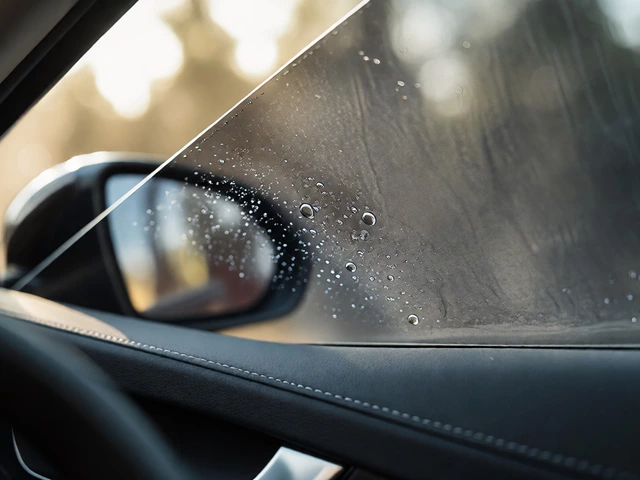
Haze is normal and indicates that moisture is still trapped between the film and the glass. This is part of the curing process. The haze will gradually disappear as the moisture evaporates over the next few days.
Do ceramic tints take longer to dry than regular tints?
Yes, ceramic tints often take longer to cure because they are denser and thicker than standard dyed films. Manufacturers typically recommend waiting 5-7 days before rolling windows down on ceramic installations.