Car Wash Kit Builder & Estimator
Configure Your Setup
Select the options that match your vehicle and desired level of detail.
Your Estimated Kit
Start by selecting your vehicle size to see recommendations.
Recommended Supplies
Have you ever spent an hour washing your car only to realize you’ve just painted a fine layer of dust across the paint? It’s a frustrating feeling. You want that showroom shine, but using the wrong supplies can do more harm than good. The biggest mistake people make is treating a car like a house. They grab a sponge, some dish soap, and a garden hose, thinking it will get the job done. Instead, they strip away protective waxes and embed grit into the clear coat, creating swirl marks that ruin the finish.
Washing a car isn't just about removing dirt; it's about lubrication and safety. The "stuff" you use determines whether your paint stays glossy or turns cloudy over time. To get it right, you need specific tools designed for automotive surfaces. This guide breaks down exactly what you need in your bucket to keep your car looking new without scratching it.
The Foundation: pH-Neutral Car Shampoo
The most critical item in your arsenal is the soap itself. Regular household detergents, like Dawn or Fairy, are designed to cut through grease on dishes. Unfortunately, they also cut through the wax sealants and ceramic coatings on your car. These products often have a high pH level, which strips away protection and leaves the paint dry and vulnerable to UV damage.
You need a pH-neutral car shampoo. These soaps are formulated to clean dirt and grime without attacking the protective layers on your vehicle. Look for shampoos that offer high lubricity. Lubricity means the soap creates a slippery film between the dirt and the paint. This allows the dirt to slide off rather than being dragged across the surface by your hand or mitt.
| Product Type | Lubricity | Effect on Wax/Coating | Best Use Case |
|---|---|---|---|
| Dish Soap (e.g., Dawn) | Low | Strips protection | Removing tar or heavy oil spots only |
| pH-Neutral Car Shampoo | High | Safe / Preserves | Regular maintenance washing |
| All-in-One (AIO) Cleaner | Medium-High | Cleans and adds light gloss | Quick washes when no wax is applied |
Avoid soaps with added glazes unless you know what you're doing. While they might make the car look shiny immediately, they can leave residues that attract more dirt later. Stick to simple, concentrated formulas that you dilute according to the instructions. Using too much soap doesn't clean better; it just makes rinsing harder and increases the chance of water spots.
The Tool: Microfiber Wash Mitts vs. Sponges
If you’re still using a yellow cellulose sponge, throw it out. Sponges hold dirt deep inside their pores. When you squeeze a sponge, the water comes out, but the abrasive particles stay trapped. As you wipe the car, those particles act like sandpaper, grinding into the clear coat.
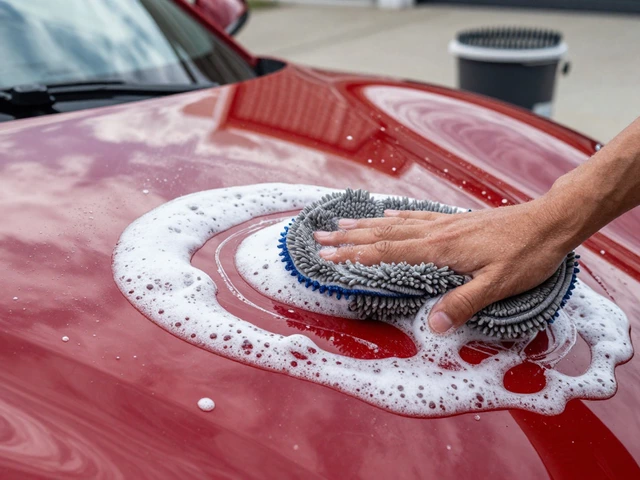
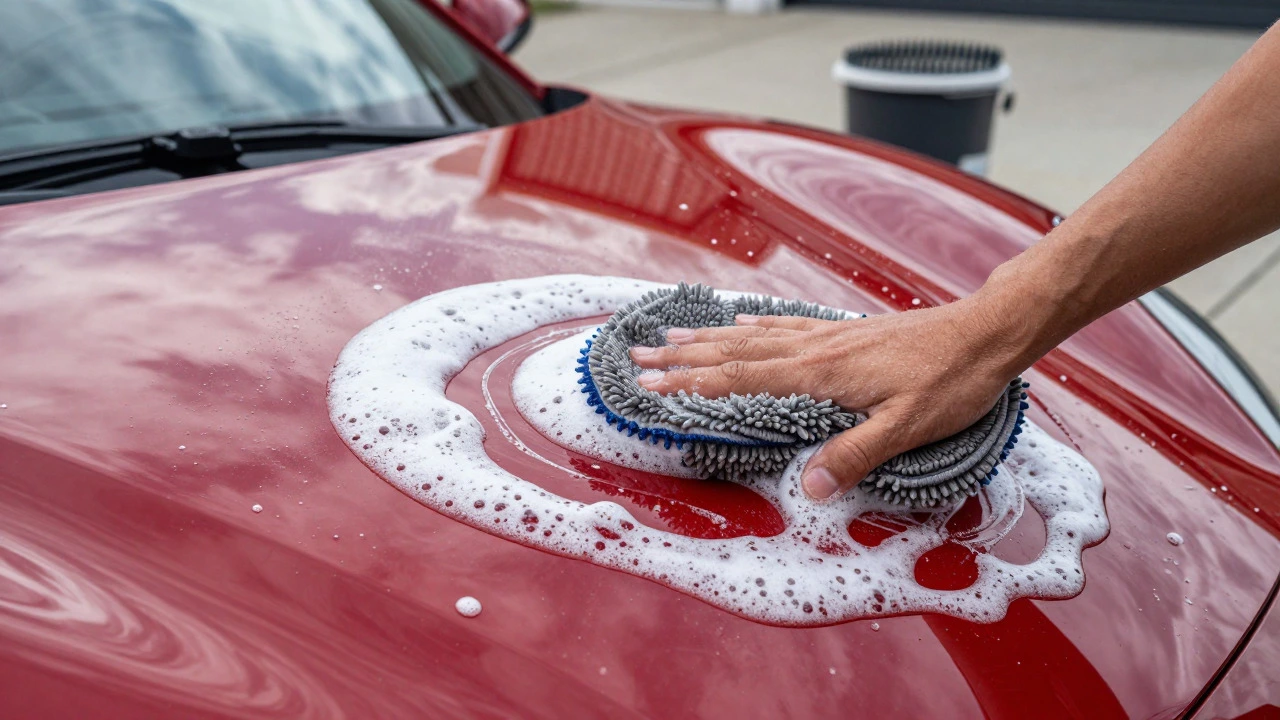
The industry standard is the microfiber wash mitt. Specifically, look for a plush, long-pile microfiber mitt. The thickness of the fibers acts as a cushion. Imagine wearing a thick winter glove versus a thin cotton one. The thick glove protects your hand from cold; the thick mitt protects your paint from rocks and dust.
When buying a mitt, check the GSM (grams per square meter). A higher GSM usually indicates a thicker, more absorbent material. For washing, aim for a mitt with at least 500 GSM. The pile should be soft enough to trap dirt within the fibers, lifting it away from the paint surface. Some mitts feature a velcro wrist strap to prevent them from slipping off your hand when wet, which is a small but useful detail.
- Plush Pile: Traps large debris effectively.
- Soft Touch: Prevents marring on delicate clear coats.
- High Absorbency: Holds more soapy water, keeping the lubrication active longer.
The Method: Two-Bucket System
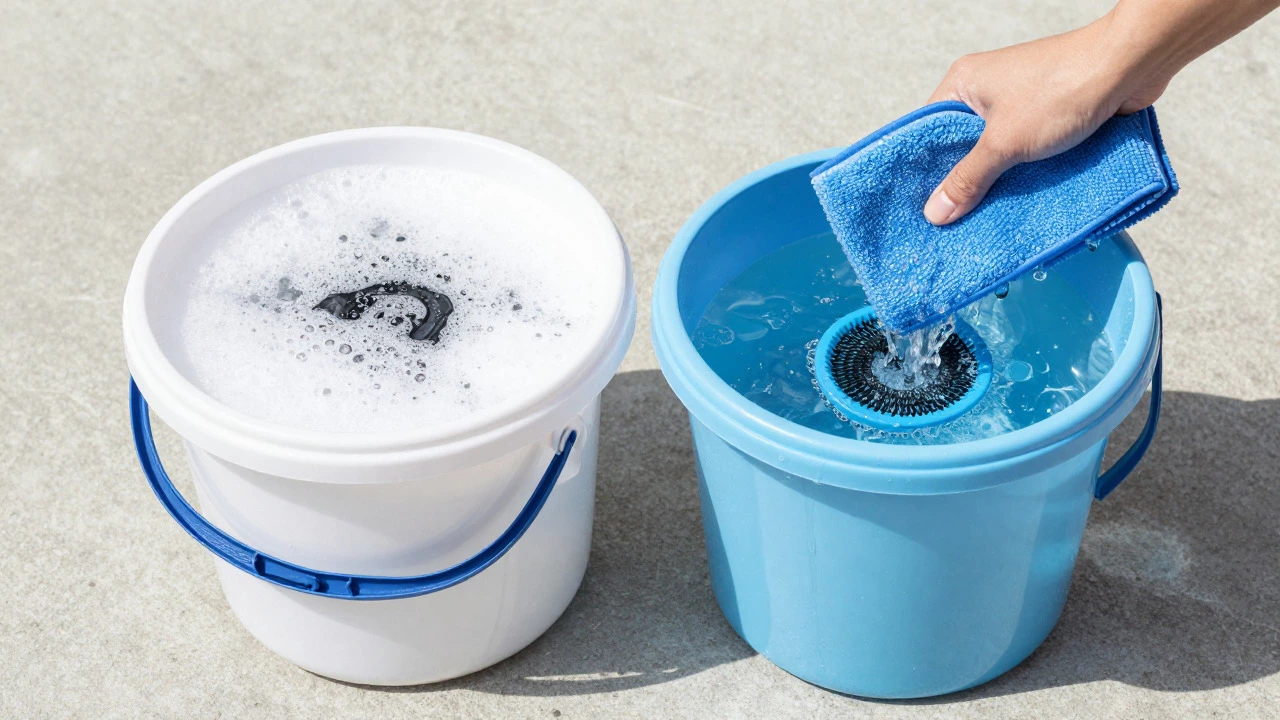
Having the right soap and mitt is useless if you don’t use them correctly. The single biggest cause of swirl marks is reusing dirty water. If you dip your mitt back into a bucket full of mud, you’re picking up grit and applying it back onto the car. This is why the two-bucket method is non-negotiable for anyone who cares about their paint.
Here is how it works:
- Bucket 1 (Soap): Fill this with water and your diluted pH-neutral shampoo.
- Bucket 2 (Rinse): Fill this with plain water.
- Grit Guards: Place a plastic grid at the bottom of both buckets. These guards force dirt to settle at the very bottom, below where your mitt touches the water.
When you wash a panel, dip the mitt in the soap bucket. After wiping the panel, rinse the mitt thoroughly in the rinse bucket before going back to the soap. This ensures that every time you touch the paint, the mitt is relatively clean. Without grit guards, dirt settles on the bottom of the bucket, and your mitt picks it up immediately. With guards, the dirt falls through the mesh and stays out of contact with your cleaning tool.
Rinsing and Drying: Avoiding Water Spots
Rinsing seems simple, but technique matters. Start from the top and work your way down. Gravity pulls dirt downward, so the lower panels are always the dirtiest. If you start at the wheels, you’ll drag that wheel grime up to the hood and doors.
Use a pressure washer or a hose with a spray nozzle. A gentle fan setting is best. High-pressure jets can force water under door seals or damage loose trim if used too closely. Rinse thoroughly to remove all soap residue. Leftover soap dries quickly in the sun and causes spotting.
Drying is where many people fail again. Using an old t-shirt or paper towels can leave lint and scratches. You need a drying towel made of high-quality microfiber or waffle weave fabric. Waffle weave towels are excellent because the textured pattern grabs water quickly without needing to rub hard. Rubbing is the enemy. Instead, lay the towel flat on the panel and let gravity pull the water into the towel, then lift it off. Repeat until dry.
Specialized Cleaners for Wheels and Tires
Your wheels take the most abuse. Brake dust is metallic and acidic. If left on the alloy rims, it can eat into the clear coat of the wheel, causing pitting that is nearly impossible to fix. Do not use your main car soap on wheels. It won’t be strong enough to break down the brake dust.
Use a dedicated wheel cleaner. Look for formulas labeled "iron remover." These cleaners contain chemicals that react with iron particles in brake dust, turning purple or red as they dissolve the contamination. Spray it on, let it dwell for a minute (but don’t let it dry), and scrub with a separate brush reserved only for wheels.
Tires need a different approach. They don’t need to be cleaned for protection; they need to look black and rich. Use a tire dressing after washing and drying. There are two types: water-based and solvent-based. Water-based dressings look natural and matte, while solvent-based ones give a wet, glossy look but can flake off onto your paint. For a subtle, professional look, stick to water-based dressings.
Essential Accessories: Brushes and Clay Bars
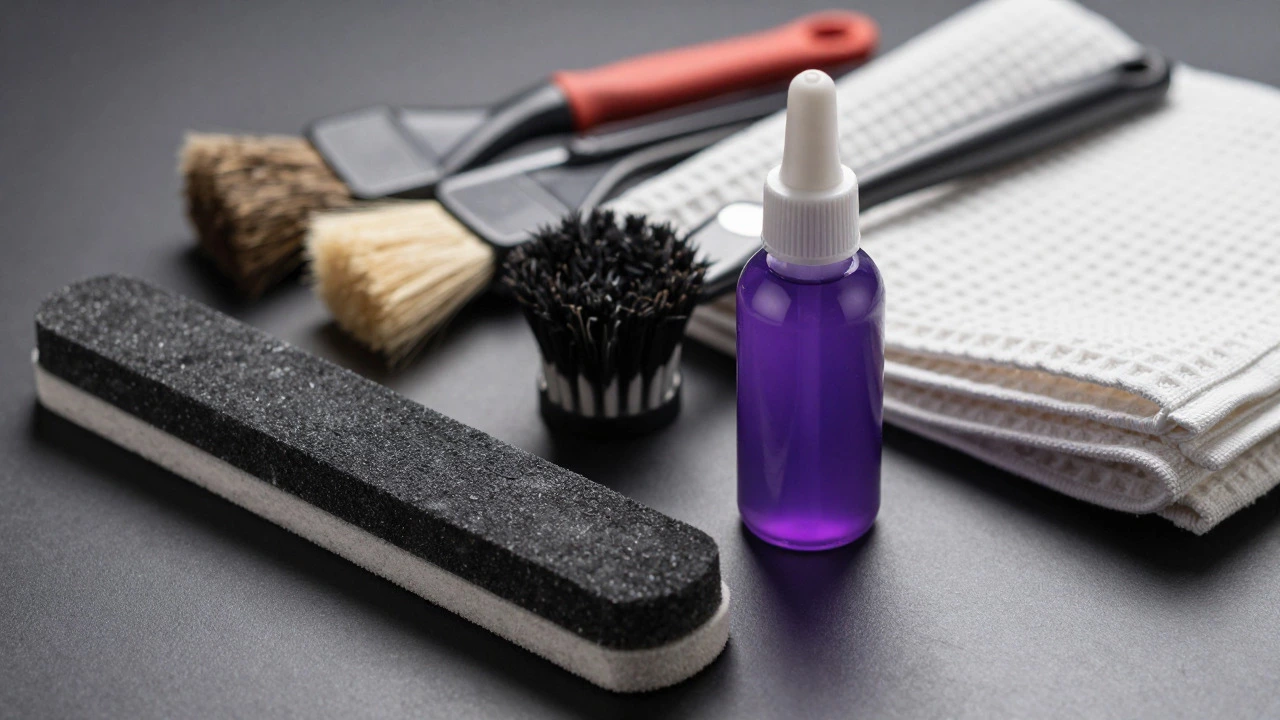
No matter how careful you are, some areas are hard to reach. Wheel wells, door jambs, and emblems collect dirt that a mitt can’t touch. Keep a set of detailing brushes on hand. Soft bristle brushes are perfect for crevices, badges, and vents. Stiffer brushes can handle the lug nuts and wheel barrels.
If your paint feels rough to the touch even after washing, you have bonded contaminants. Tree sap, industrial fallout, and overspray stick to the paint and won’t come off with soap alone. This is where a clay bar comes in. Claying involves gliding a lubricated clay block over the paint to pull out these embedded particles. It’s not something you do every week, but once or twice a year, it restores smoothness to the paint, making it ready for waxing or coating.
What to Avoid: Common Pitfalls
Even with the right stuff, bad habits can ruin your day. Never wash your car in direct sunlight. The heat causes soap and water to evaporate too quickly, leading to water spots and streaks that are hard to remove. Wash in the shade or early in the morning.
Avoid automatic car washes with brushes. Those spinning bristles are loaded with grit from hundreds of other cars. They are essentially giant sponges dragging dirt across your paint. Touchless car washes are safer, but they often use harsh chemicals that strip wax. Hand washing remains the gold standard for preservation.
Finally, don’t mix your towels. Use one set of microfiber towels for washing, another for drying, and a third for interior glass and dash. Cross-contamination means you might accidentally use a towel with wheel cleaner residue on your windshield, causing hazy streaks.
Can I use dish soap to wash my car?
You can, but you shouldn't for regular washing. Dish soap is designed to strip grease, which means it will also strip the wax and sealant protecting your paint. Use it only for spot-cleaning heavy oil stains or tar, then follow up with a proper car shampoo.
How often should I change the water in my buckets?
If you see visible dirt floating in the rinse bucket or settling on the grit guard, change it immediately. Ideally, change the water halfway through the wash process to ensure maximum cleanliness and minimal scratching risk.
Is a foam cannon necessary for washing a car?
It is not strictly necessary, but it is highly recommended. A foam cannon applies a thick layer of soap that loosens dirt before you even touch the paint. This pre-rinse step reduces the amount of friction needed during the contact wash, lowering the risk of scratches.
What is the difference between a wash mitt and a drying towel?
Wash mitts are thick and plush to trap dirt and provide lubrication. Drying towels are thinner, often waffle-weave, and designed to absorb water quickly without holding onto dirt. Using a wash mitt to dry your car can spread residual grit around.
Do I need to clay my car every time I wash it?
No, claying is an aggressive process that removes a microscopic layer of clear coat. Only clay when your paint feels rough or before applying a new wax or ceramic coating. For most drivers, claying once or twice a year is sufficient.