Alloy Wheel Repair Decision Tool
Determine if you can DIY repair your wheels or need a professional based on the type and severity of corrosion.
Estimated Cost:
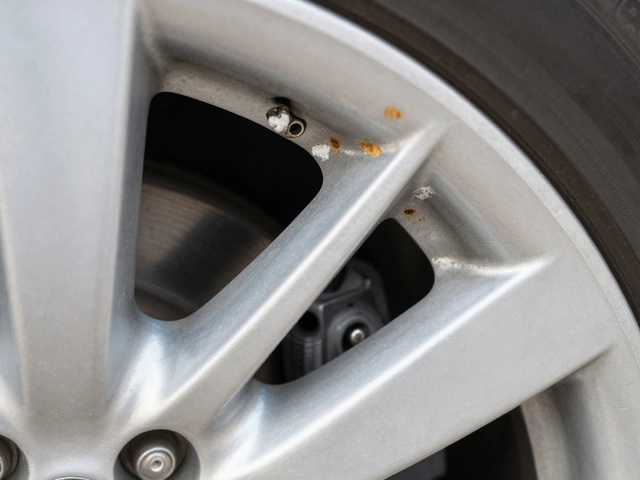
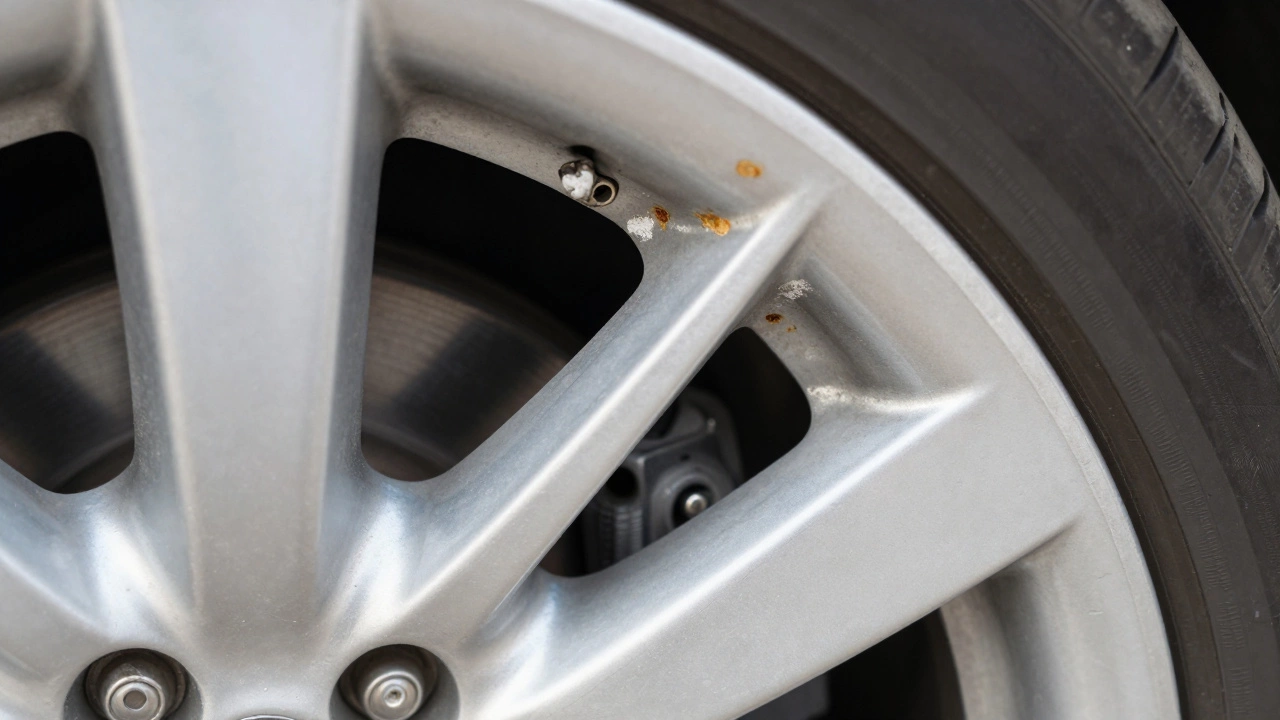
It starts as a small orange spot near the valve stem. Then it spreads, eating into the silver finish of your rims. You look at them and wonder: is this just surface dirt, or is the metal actually rotting away? More importantly, can you save them, or do you need to buy a brand-new set?
The short answer is yes, you can repair corroded alloy wheels in most cases. But there’s a catch. Not all corrosion is created equal, and some damage goes deeper than a simple polish can fix. If you ignore it, you risk structural failure while driving. If you rush the repair, you’ll end up with a patchy finish that looks worse than before.
This guide breaks down exactly how to assess the damage, when to DIY, when to call a pro, and what materials actually work on aluminum alloys. We’ll skip the fluff and get straight to the mechanics of saving your wheels.
Understanding Alloy Wheel Corrosion
To fix the problem, you first need to know what you’re dealing with. Alloy wheels are primarily made from an aluminum-magnesium-silicon mixture designed for strength and lightweight performance. Unlike steel, which rusts (iron oxide), aluminum corrodes through oxidation. This creates white, chalky powder or pitting rather than red flakes.
However, modern wheels often have complex finishes. Clear coats, paint, and chrome plating introduce new failure points. When moisture gets under these layers-usually from curb rash or road salt-it traps against the bare metal. This causes galvanic corrosion if dissimilar metals touch, or simple oxidation if the seal is broken.
| Corrosion Type | Appearance | Structural Risk | Repair Difficulty |
|---|---|---|---|
| Surface Oxidation | Dull, cloudy, or white film | Low | Easy (DIY) |
| Pitting | Small craters or holes in the metal | Medium | Moderate (Pro recommended) |
| Clear Coat Failure | Crazing, peeling, bubbling | Low-Medium | Moderate (Refinish needed) |
| Cracking/Fracturing | Visible splits or bends | High | Very Hard (Often replace) |
If you see deep pits or cracks, stop reading the DIY section and call a specialist. Structural integrity comes first. For surface issues, you have options.
Assessing the Damage: Can It Be Saved?
Before you buy any chemicals, perform a tactile inspection. Run your fingernail over the corroded area. If it feels smooth but looks dull, it’s likely just oxidized clear coat or surface dirt. If you feel a groove or hole, the metal has been eaten away.
Check the bead seat-the inner rim where the tire seals. Corrosion here is dangerous because it can cause air leaks. Even minor pitting on the bead seat usually requires professional re-machining or replacement. Don’t risk a blowout on the highway to save $200 on a repair.
Also, inspect the spokes and barrel. Deep gouges from curbs often expose bare aluminum. If the corrosion has spread beyond the initial impact site, the wheel may be compromised. In Melbourne’s coastal areas, salt spray accelerates this process significantly. Wheels exposed to heavy winter road salt in other regions face similar threats.
Step-by-Step: DIY Surface Restoration
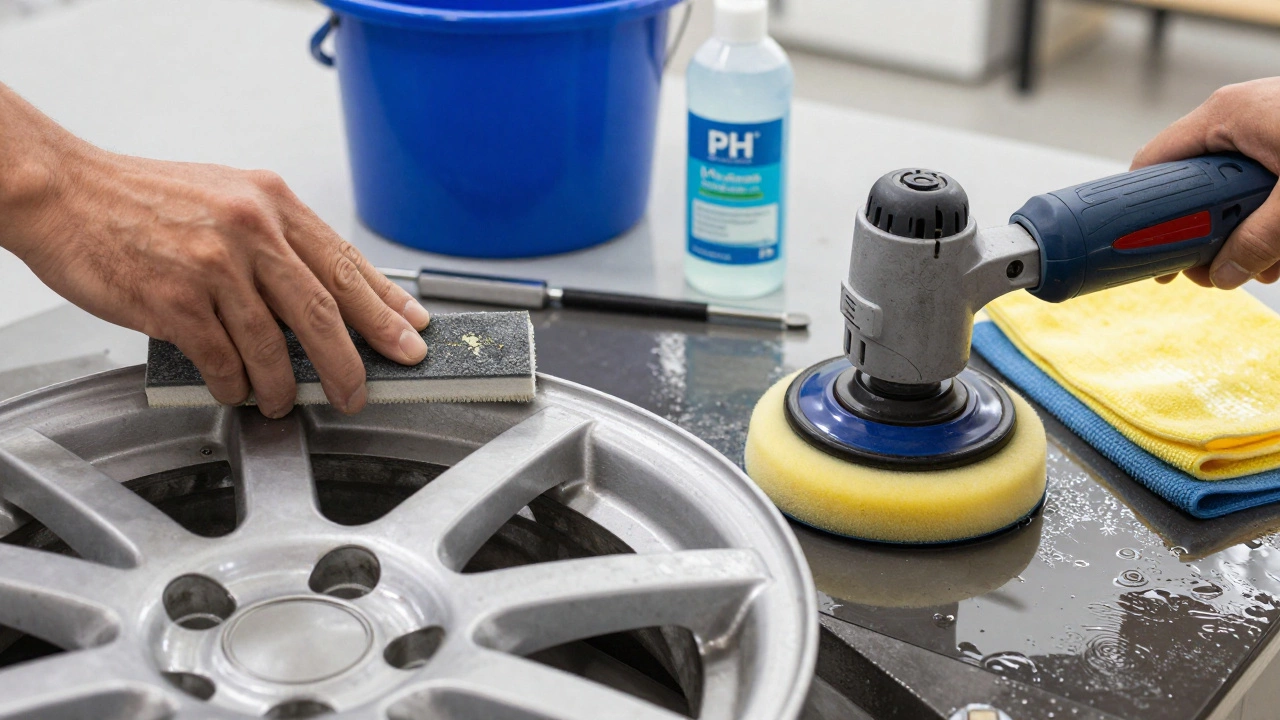
If the damage is superficial, you can restore the shine yourself. Here’s the proven method used by detailers:
- Deep Clean: Use a pH-neutral wheel cleaner to remove brake dust and grime. Avoid acidic cleaners if the clear coat is already failing, as they can etch the remaining layer.
- Clay Bar Treatment: Lubricate the wheel and glide a clay bar over it. This pulls out embedded contaminants that washing misses. You’ll feel the grit grab-that’s the contamination coming out.
- Polishing Compound: Apply a mild abrasive polish with a foam pad on a drill or polisher. Work in small sections. The goal is to remove the oxidized layer without burning through the clear coat. If you don’t have a machine, hand-polishing works but takes twice as long.
- Sealing: Once shiny, apply a ceramic coating or high-quality wax. This creates a barrier against future moisture. Ceramic coatings last longer and offer better chemical resistance than traditional waxes.
This process removes up to 1 micron of material. If the corrosion is deeper than that, polishing won’t help. You’ll just create a flat spot where the metal was removed unevenly.
When to Call a Professional Refinisher
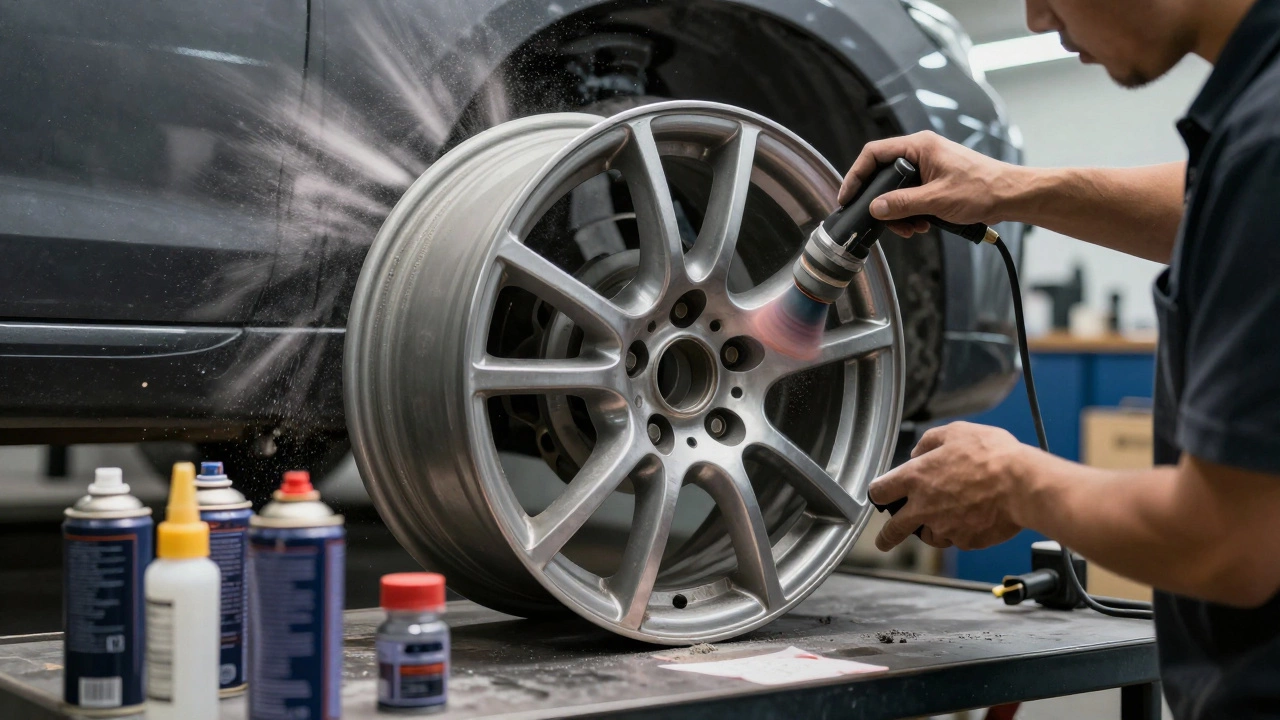
Sometimes, DIY isn’t enough. If the clear coat is peeling, or if you want a like-new finish, you need a full strip and refinish. Here’s what pros do:
- Stripping: They use media blasting or chemical strippers to remove all old paint, clear coat, and corrosion down to bare metal.
- Grinding & Welding: Any dents or cracks are ground out and welded shut. This restores the original shape.
- Priming: An epoxy primer is applied to bond to the aluminum and prevent future corrosion.
- Painting & Clear Coating: High-quality automotive paint and multiple layers of clear coat are sprayed on. This mimics factory conditions.
A professional refinish costs between $150-$300 per wheel in Australia. It’s worth it for expensive OEM wheels or custom designs. For cheap aftermarket rims, buying new might be cheaper.
Preventing Future Corrosion
Fixing corrosion is half the battle. Keeping it away is the rest. Aluminum doesn’t rust, but it does oxidize when protected poorly. Follow these rules:
- Wash Regularly: Brake dust contains iron particles that embed into the clear coat. Wash wheels every two weeks, or after every drive in wet/salty conditions.
- Use Iron Remover: Monthly, spray an iron fallout remover on your wheels. It turns purple as it dissolves metallic contaminants. Rinse thoroughly.
- Protective Coatings: Apply a ceramic sealant annually. Products like Gtechniq or CarPro offer multi-year protection. Reapply every 6-12 months depending on exposure.
- Avoid Harsh Brushes: Stiff bristles scratch the clear coat. Use soft microfiber mitts or dedicated wheel brushes with soft bristles.
In humid climates like Melbourne, moisture sits on wheels longer. Drying them after washing helps prevent water spots that can etch into the finish over time.
Common Mistakes to Avoid
I’ve seen too many people ruin good wheels trying to fix bad ones. Here’s what not to do:
- Don’t Use Steel Wool: It leaves behind iron particles that will rust instantly, creating new corrosion spots.
- Don’t Skip the Primer: Painting directly onto bare aluminum without epoxy primer guarantees peeling within months.
- Don’t Ignore Cracks: Filling a crack with body filler is temporary and unsafe. Heat cycling from braking expands and contracts the metal, breaking the filler.
- Don’t Over-Polish: Aggressive compounding can thin the wall of the wheel, especially near the center bore. Stick to fine polishes unless necessary.
Remember, alloy wheels are investment pieces. Treat them with respect, and they’ll last decades. Neglect them, and they’ll become safety hazards.
How much does it cost to repair corroded alloy wheels?
Costs vary widely based on damage severity. Simple polishing and sealing can be done for under $50 in supplies. Professional refinishing ranges from $150 to $300 per wheel. If welding or major structural repair is needed, expect $400+ per wheel. Always get quotes from certified wheel repair specialists.
Can I paint over corroded alloy wheels?
No, painting over active corrosion is a mistake. The underlying issue remains and will continue to eat through the new paint. You must strip all corrosion down to bare metal, prime with epoxy, then paint. Skipping steps leads to premature failure.
Is it safe to drive with corroded alloy wheels?
Surface corrosion is cosmetic and safe. However, deep pitting, cracks, or corrosion on the bead seat pose serious risks. These can lead to air leaks, wheel imbalance, or even catastrophic failure at speed. Inspect wheels regularly and address structural issues immediately.
Do alloy wheels rust like steel wheels?
No, alloy wheels do not rust. Rust is iron oxide, formed when steel reacts with oxygen and water. Aluminum alloys oxidize instead, forming a white, chalky substance. While less visually dramatic than red rust, aluminum corrosion can still weaken the structure if left unchecked.
How often should I clean my alloy wheels?
Ideally, every two weeks. In harsh conditions-such as winter road salt use or coastal environments-clean them weekly. Brake dust accumulates quickly and contains corrosive elements. Regular cleaning prevents buildup that damages the clear coat over time.