Night Driving Glare & Visibility Simulator
Configure Your Setup
Visual Impact Preview
This represents what an oncoming driver might experience
Glare Risk Level:
ModerateAdjust settings and click simulate to see results.
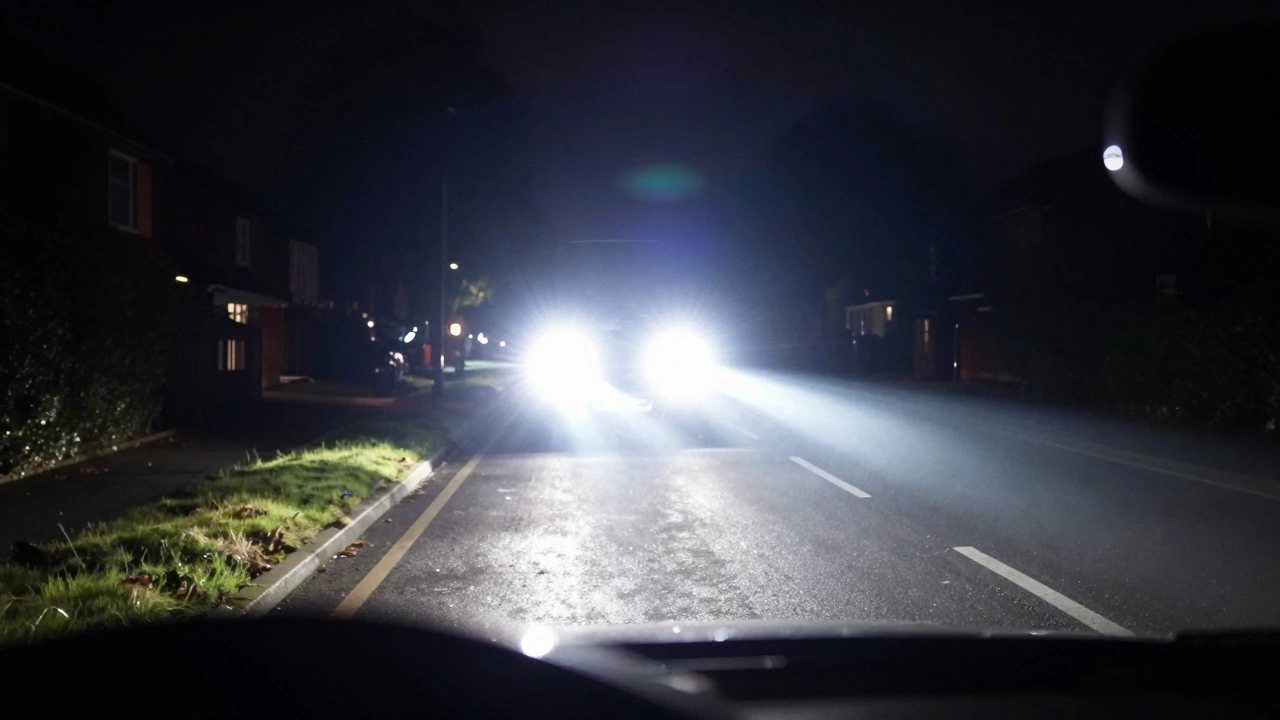
It’s a quiet Tuesday night. You’re cruising down a dimly lit suburban road, eyes relaxed, scanning for pedestrians or stray pets. Suddenly, a pair of blinding white beams cuts through the darkness from the opposite lane. Your vision whites out for three seconds. In those three seconds, you can’t see the edge of the road, the oncoming car, or the child stepping off the curb.
This isn’t a hypothetical horror story. It’s the daily reality for millions of drivers who have switched to LED headlights. While marketing campaigns promise "crisp," "modern," and "energy-efficient" lighting, the truth is more complicated. Using high-intensity LED lights at night can create dangerous glare, reduce your own visibility in certain conditions, and even get you fined depending on where you live.
If you’ve been eyeing an aftermarket LED upgrade or wondering why your new car’s lights feel harsh, you need to understand the physics of light, human biology, and traffic laws before flipping that switch.
The Physics of Blue Light and Human Vision
To understand why LEDs can be problematic at night, we first need to look at how they produce light compared to traditional bulbs. Traditional halogen bulbs emit light across a broad spectrum, including a significant amount of yellow and red wavelengths. This warm light scatters less when it hits moisture in the air or inside your eye.
LED headlights, on the other hand, typically operate at a higher color temperature, often between 5000K and 6500K. This produces a bright, cool white or slightly blue-tinted light. The problem lies in the wavelength. Shorter wavelengths (blue light) scatter much more easily than longer wavelengths (red/yellow light). This phenomenon is known as Rayleigh scattering.
When this scattered light enters your eye, it doesn’t just illuminate the road; it bounces around inside your eyeball. For older drivers, whose lenses naturally become more yellowed and opaque with age, this scattering effect is amplified. This condition, called photophobia, makes bright white lights feel physically painful and disorienting. Even for younger drivers, the intense contrast between the dark surroundings and the stark white beam causes pupil constriction, reducing your ability to see details in the shadows.
- Halogen Bulbs: ~3000K-4000K (Warm White/Yellow), lower intensity, less scatter.
- Xenon HID: ~4000K-6000K (White/Blue), high intensity, requires auto-leveling.
- LEDs: ~5000K-7000K+ (Cool White/Blue), highest intensity per watt, maximum scatter potential.
The result? A driver with properly aimed halogen lights might see a pedestrian in their peripheral vision. A driver with aggressive, unaimed LEDs might only see them once they are directly in front of the bumper because the glare has washed out the surrounding environment.
The Glare Factor: Blinding Oncoming Traffic
The most immediate danger of using high-output LEDs at night is the impact on other drivers. Glare isn’t just annoying; it’s a leading cause of nighttime accidents. When an oncoming vehicle uses improperly aimed or excessively bright LEDs, it creates "disability glare." This reduces the visual performance of the opposing driver by lowering contrast sensitivity.
Imagine trying to read a newspaper while someone shines a flashlight directly into your eyes. That’s what disability glare does to a driver. It temporarily blinds them, increasing reaction times significantly. Studies from transportation safety institutes have shown that recovery time after being hit by high-intensity LED glare can take up to five seconds. At 60 mph, your car travels over 440 feet in five seconds. If there’s an obstacle in that space, you won’t see it until it’s too late.
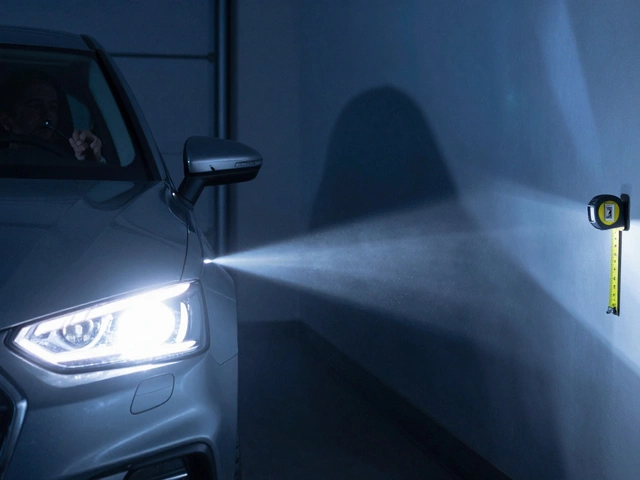
Many aftermarket LED kits are designed to maximize lumen output without regard for beam pattern control. Unlike factory-installed systems that use complex reflectors and projectors to shape the light, cheap LED replacements often throw light in all directions. This "spill" goes above the cutoff line, shooting directly into the eyes of oncoming drivers rather than illuminating the road surface.
| Feature | Halogen | Xenon HID | Aftermarket LED |
|---|---|---|---|
| Color Temperature | Warm (Yellowish) | Neutral/Cool | Cool/Blue-White |
| Glare Potential | Low | Medium-High | Very High (if unaimed) |
| Beam Pattern Control | Good (with reflector) | Requires Projector Housing | Poor (often generic fitment) |
| Reaction Time Impact | Minimal | Moderate | Significant Delay |
If you value the safety of others-and your own liability-you must ensure your lights do not exceed legal intensity limits or aim correctly. Many states and countries have strict regulations regarding lumen output and color temperature. Ignoring these rules can lead to fines, failed inspections, and civil lawsuits if you cause an accident due to glare.
Rain, Fog, and Backscatter: When Brighter Isn’t Better
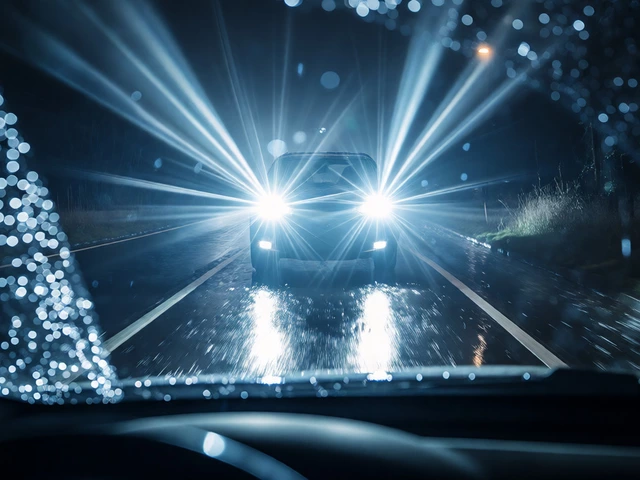
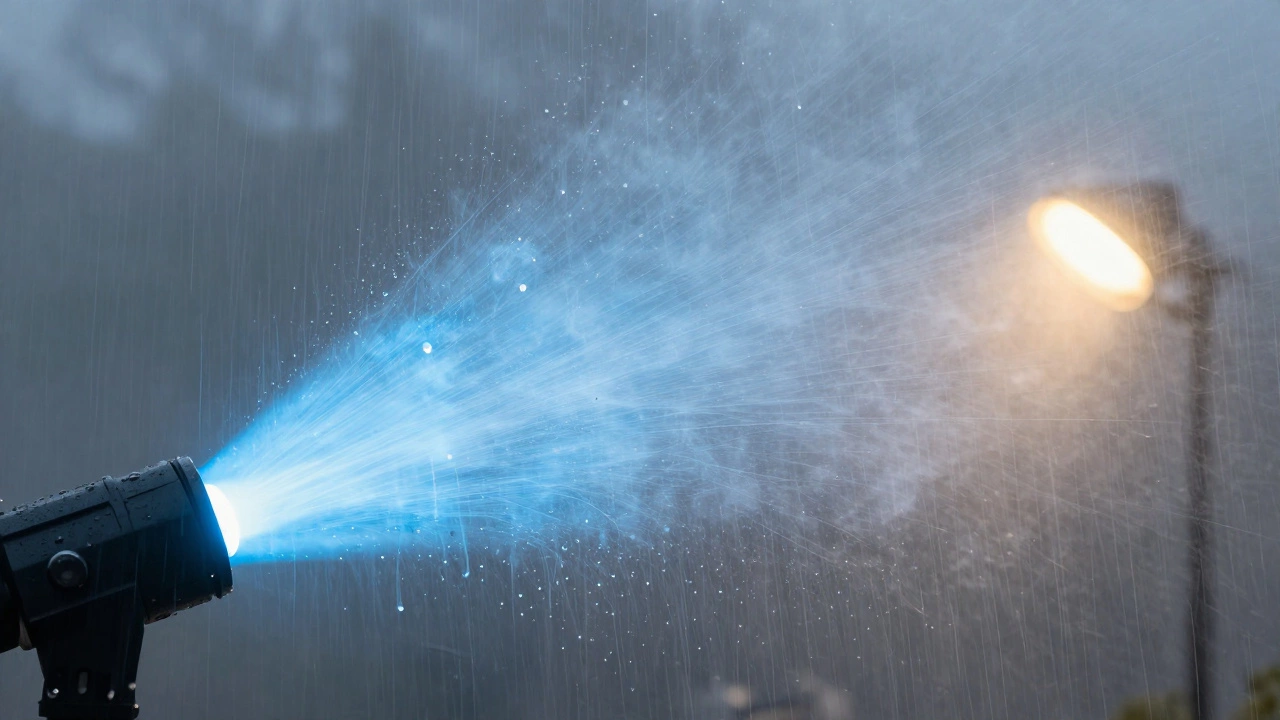
We often assume that brighter lights equal better visibility in bad weather. This is a dangerous myth, especially when it comes to LEDs. In rain, fog, or snow, light reflects off water droplets back toward the source. This is called backscatter.
Because LED light contains more short-wavelength blue light, it scatters more intensely in wet conditions. Instead of seeing the road ahead, you see a glowing white wall. This "white-out" effect severely reduces contrast, making it harder to distinguish lane markings, curbs, and obstacles.
Halogen lights, with their warmer spectrum, penetrate fog and rain better because the longer wavelengths pass through water droplets with less scattering. If you frequently drive in coastal areas, mountainous regions, or cities with frequent rainfall, switching to high-Kelvin LEDs might actually make your nights worse, not better.
Consider this scenario: You’re driving home during a heavy summer storm. Your new LED kit puts out 10,000 lumens. But because of the backscatter, you can only see 20 feet ahead. With halogens, you might see 30 feet. That extra 10 feet could be the difference between stopping safely and hydroplaning into a ditch.
Heat Management and Component Failure
LEDs are marketed as "cool-running" lights, but this refers to the light itself, not the electronics. To produce high brightness, LEDs generate significant heat at their base. Unlike halogen bulbs, which dissipate heat through radiation, LEDs require active cooling via heatsinks and fans.
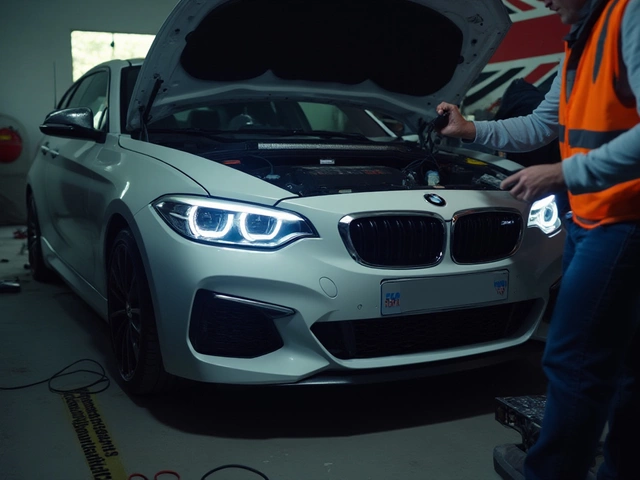
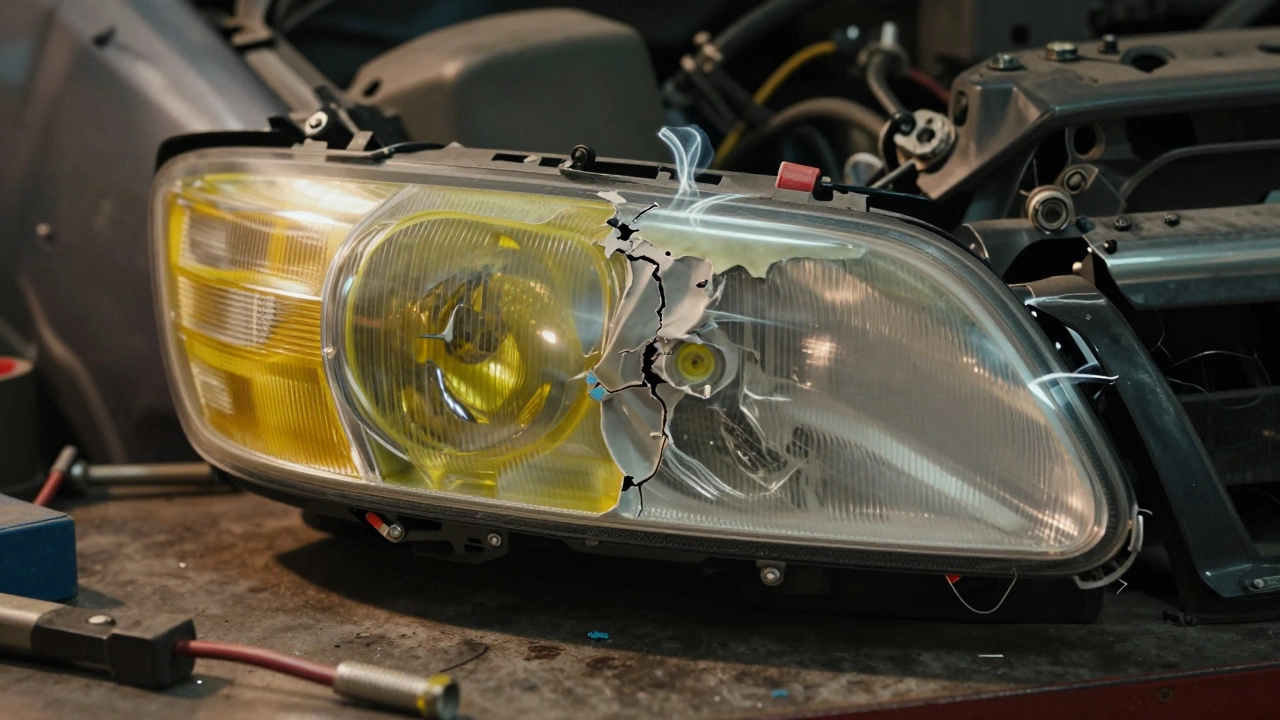
In many aftermarket installations, these cooling systems are cramped within the headlight housing. Over time, the heat can damage the plastic lens of the headlight assembly, causing it to yellow, crack, or melt. This degradation worsens the beam pattern, creating hot spots and further increasing glare for others.
Additionally, the electrical draw of some high-power LED kits can overwhelm older vehicles’ wiring harnesses. Without proper ballasts or resistors, you risk blowing fuses, damaging your ECU, or even starting an electrical fire. Factory LED systems are integrated with the vehicle’s thermal management system; bolt-on kits often lack this sophistication.
- Check Heat Dissipation: Ensure the LED module fits comfortably with airflow space.
- Inspect Wiring: Use inline fuses and verify gauge capacity before installation.
- Monitor Lens Condition: Replace yellowed housings immediately to prevent beam distortion.
If your goal is reliability and longevity, a poorly installed LED kit may fail faster than a $5 halogen bulb. The convenience of instant-on illumination doesn’t outweigh the risk of roadside breakdowns or costly repairs.
Legal Compliance and Insurance Implications
Before buying any aftermarket lighting, check your local laws. In the United States, the Department of Transportation (DOT) and Society of Automotive Engineers (SAE) set standards for headlight performance. Many aftermarket LEDs are not DOT-compliant because they exceed allowable candela levels or fail to maintain a sharp cutoff.
In Europe, UNECE regulations are even stricter. Unauthorized modifications to headlight systems can void your vehicle’s type approval, meaning you cannot legally drive the car on public roads. Police officers can issue tickets for "blinding lights" or "improper equipment," and repeated offenses may lead to insurance denial.
If you’re involved in an accident caused by glare from non-compliant LEDs, your insurance company may investigate whether your modifications contributed to the incident. If they determine your lights were illegal or improperly aimed, they could deny coverage, leaving you personally liable for damages and medical bills.
Always opt for OEM-approved LED upgrades if available. These are tested for compliance, beam pattern accuracy, and thermal safety. Cheap alternatives save money upfront but cost far more in potential legal and financial consequences.
Alternatives to Aggressive LED Upgrades
If you want improved night visibility without the drawbacks of harsh LEDs, consider these safer options:
- High-Quality Halogens: Brands like Osram and Philips offer "Night Breaker" series bulbs that provide brighter, whiter light within legal limits. They’re affordable, easy to install, and universally compatible.
- Laser Headlights: Found on premium vehicles, laser systems combine LEDs with laser diodes to extend range dynamically. They adjust intensity based on speed and traffic, minimizing glare.
- Adaptive Driving Beam (ADB): Available on newer cars, ADB technology uses multiple LED segments to selectively blind-spot oncoming cars while keeping the rest of the road illuminated. This offers the best of both worlds: high visibility and zero glare for others.
- Fog Lights: Install dedicated fog lamps with amber or low-beam white bulbs for adverse weather. Keep main headlights on low beam to reduce reflection.
These solutions prioritize safety and legality over raw brightness. They respect the physics of light and the limitations of human vision.
Are LED headlights illegal?
Not inherently, but many aftermarket LED kits are. Laws vary by region. In the US, lights must meet DOT/SAE standards for intensity and beam pattern. In Europe, UNECE certification is required. Non-compliant LEDs can result in fines, failed inspections, or insurance issues.
Do LED headlights cause more glare than halogens?
Yes, especially if unaimed or overly bright. LEDs emit cooler, bluer light that scatters more in the eye and atmosphere. Poorly designed aftermarket kits often lack proper beam cutoffs, sending light directly into oncoming drivers' eyes.
Can LED headlights damage my car's wiring?
Some high-power LED kits draw excessive current or lack proper ballasts, potentially overheating wires or tripping fuses. Always check compatibility and use protective components like relays or fuses when installing aftermarket LEDs.
What is the best headlight for night driving?
For most drivers, high-quality halogen bulbs or factory-approved LED/HID systems offer the best balance of visibility, safety, and legality. Adaptive Driving Beam (ADB) technology is ideal if available, as it minimizes glare while maximizing range.