Headlight Alignment Checker
Check Your Headlight Alignment
LED headlights need precise alignment. Improperly aimed lights can blind other drivers or reduce your visibility. Enter your vehicle's measurements to verify if your headlights are correctly adjusted.
Correct Beam Height: -- inches
Current Beam Height: -- inches
--
How to Measure: Park 25 feet from a wall, mark the center of the beam, measure from ground to that mark. This should be 2 inches below your headlight's center height.
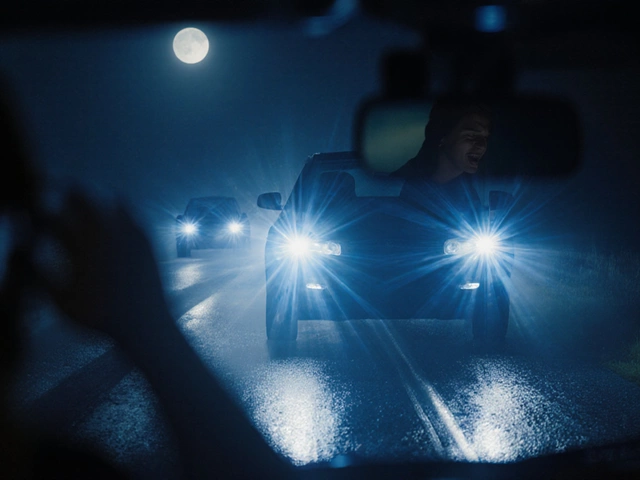
When you swap out old halogen headlights for bright, white LED ones, it’s tempting to think you’re done. But here’s the truth: LED headlights often need adjustment-and skipping this step can make your night driving dangerous, blind other drivers, or even get you pulled over.
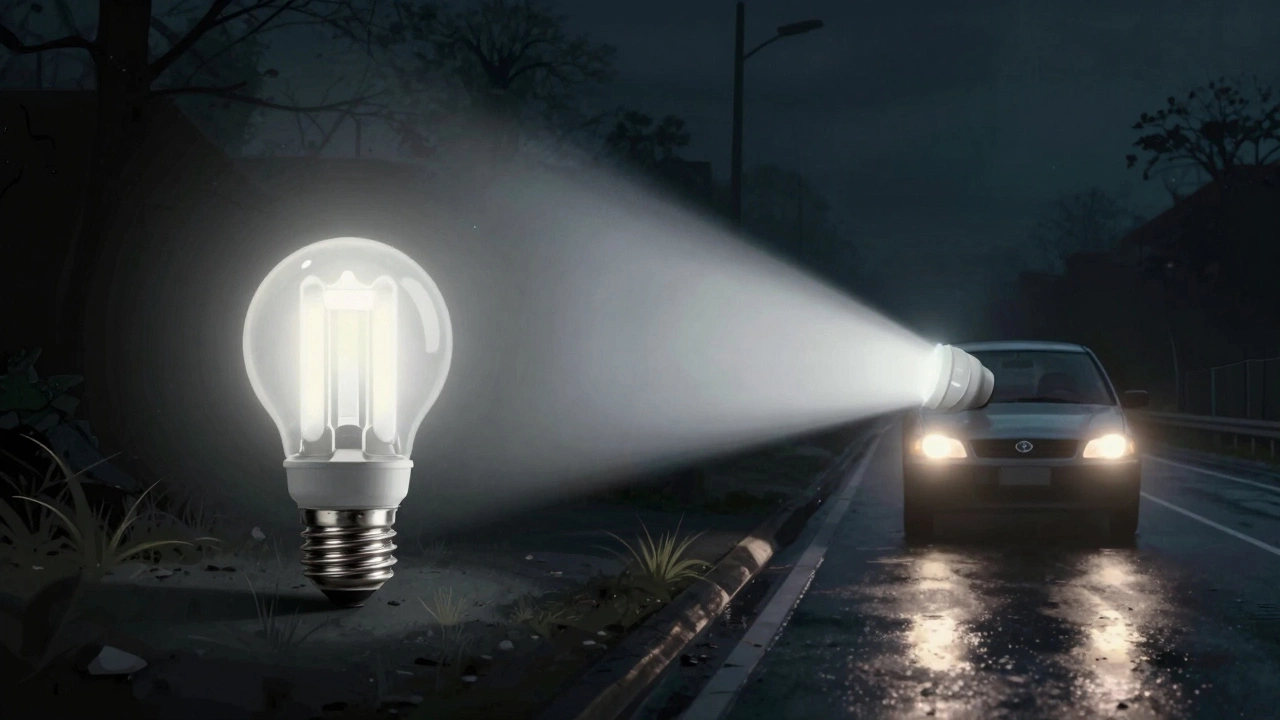
LED bulbs don’t just shine brighter. They produce light differently. Halogen bulbs glow in a wide, scattered pattern. LEDs focus light in a precise, directional beam. That’s why they’re more efficient. But that same precision means even a 1-degree tilt can turn your high beam into a highway hazard.
Why LED Headlights Are Different
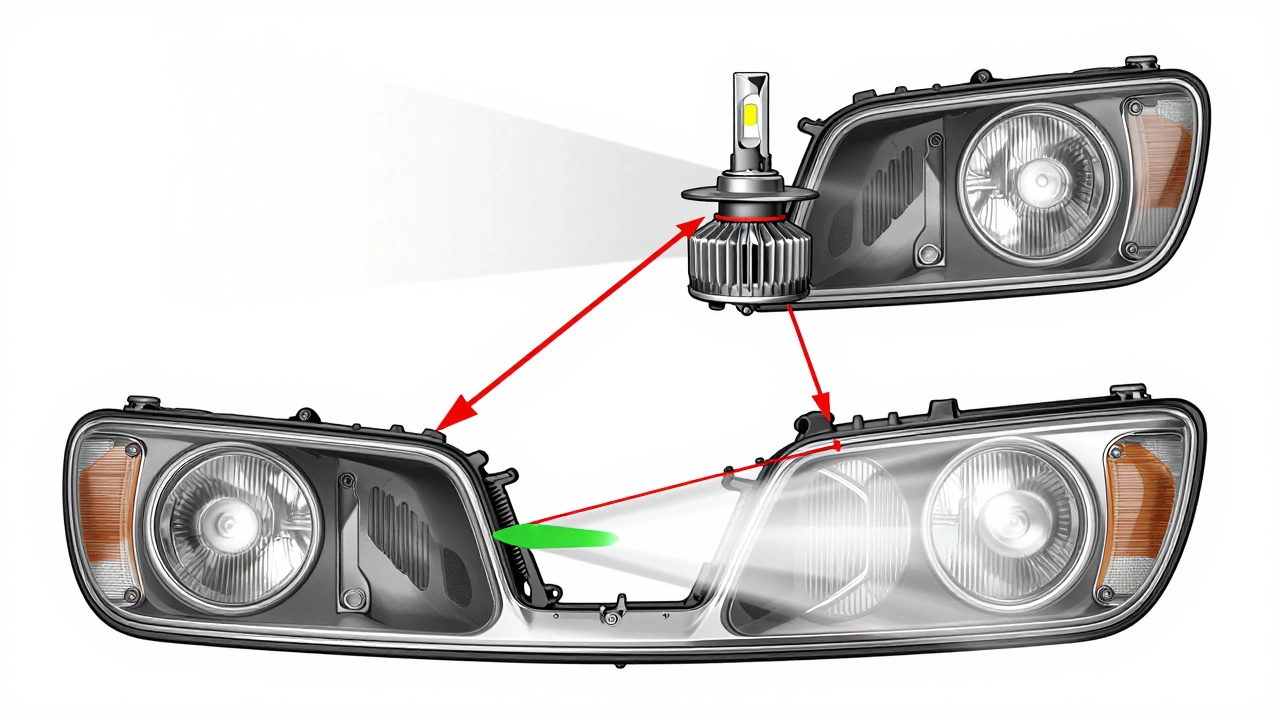
LED headlights use semiconductor chips to produce light, not a heated filament. That means they don’t spread light like halogens. Instead, they rely on lenses and reflectors to shape the beam. Most factory LED systems are engineered as complete units-bulb, lens, housing, and aim-working together. When you retrofit an LED bulb into a halogen housing, you’re breaking that balance.
Think of it like swapping a flashlight with a laser pointer. The laser is brighter, but if it’s pointed at the wrong angle, it doesn’t help you see the road. It just blinds people. That’s exactly what happens with unadjusted LED retrofits.
Studies from the National Highway Traffic Safety Administration show that improperly aimed headlights contribute to over 15% of nighttime crashes involving glare. LED retrofits are a growing part of that problem.
When Adjustment Is Non-Negotiable
You absolutely need to adjust LED headlights if:
- You installed LED bulbs into a housing designed for halogen
- You replaced just the bulb, not the whole headlight assembly
- Your headlights look too high or too low after installation
- Other drivers flash their lights at you more than usual
- You notice the road ahead looks dark while the curb or oncoming cars are blindingly bright
Even if your LED kit claims to be "plug-and-play," that doesn’t mean it’s correctly aligned. Many kits include lenses or reflectors to help, but they still rely on the original housing’s geometry-which was never meant for LEDs.
Factory-installed LED headlights (like on a 2024 Toyota Camry or 2025 Honda Accord) come pre-aligned. No adjustment needed. But if you bought aftermarket bulbs and popped them into a 2018 Ford F-150, you’re on your own.
How to Adjust LED Headlights Yourself
You don’t need a dealership to fix this. Here’s how to do it right:
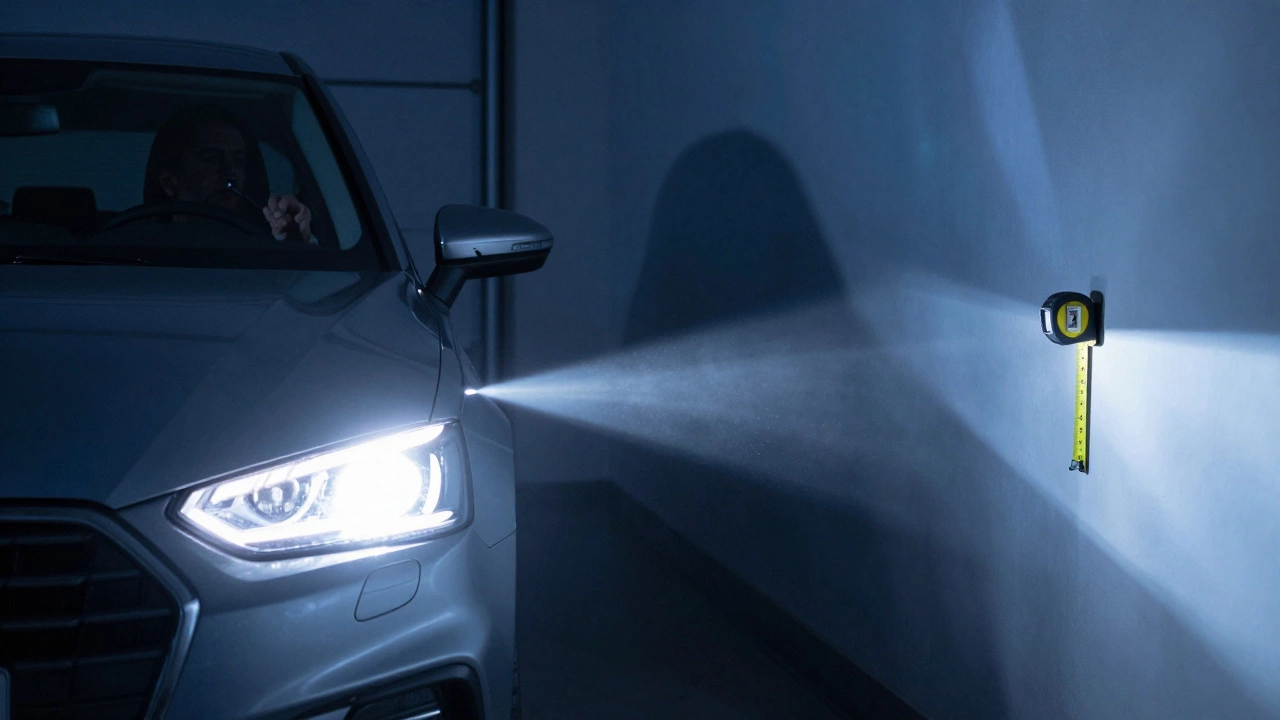
- Find a flat, level surface-like a garage or empty parking lot. Park your car 25 feet from a wall or garage door.
- Make sure your tires are properly inflated and your car is loaded as it normally is (half a tank of gas, no extra weight).
- Turn on your headlights and mark the center of each beam on the wall with tape.
- Measure the height from the ground to the center of the headlight lens. Write it down.
- Turn off the lights. Move your car back 25 feet. Now, the center of the beam should hit the wall about 2 inches below the centerline of the headlight. For example, if your headlight is 30 inches off the ground, the brightest part of the beam should land at 28 inches on the wall.
- Locate the adjustment screws on the back or top of the headlight housing. Most have two: one for vertical (up/down), one for horizontal (left/right).
- Turn the vertical screw slowly. Turn clockwise to lower the beam, counterclockwise to raise it. Adjust until the top edge of the bright part of the beam is just below the 2-inch mark.
- Check both headlights. They should be level with each other.
- Take a short night drive. Watch for glare on oncoming cars’ windshields. If you see it, go back and lower the beam a bit more.
Don’t over-adjust. A beam that’s too low won’t help you see far enough ahead. A beam that’s too high blinds others. The goal is balance.
What Happens If You Don’t Adjust Them
Ignoring headlight alignment isn’t just rude-it’s risky.
Too high? You’re dazzling drivers coming the other way. That’s a major cause of temporary blindness at night. Studies show it takes up to 7 seconds for eyes to recover from LED glare. At 60 mph, that’s the length of a football field-blind.
Too low? You’re driving in a tunnel. You won’t see pedestrians, animals, or road hazards until it’s too late. LED bulbs are brighter, but if the light isn’t hitting the road where you need it, you’re not safer-you’re just wasting power.
Some states have laws requiring headlight alignment. In California, a vehicle with misaligned headlights can be cited under CVC 24400. In New York, it’s a $150 fine. Insurance companies may also deny claims if glare from your headlights contributed to an accident.
Professional Adjustment vs. DIY
DIY works for most people. But if you’re not confident, or your car has complex lighting systems (like adaptive headlights), take it to a pro.
Auto shops with headlight alignment machines use digital scanners that measure beam angle, intensity, and pattern. They can tell you if your LEDs are creating hot spots, uneven cutoffs, or scattered light. These machines cost thousands-most DIYers won’t own one.
Cost for professional adjustment? Usually $40-$80. Compare that to the cost of a ticket, a lawsuit, or worse-a preventable crash.
Other Common LED Headlight Mistakes
Adjustment isn’t the only issue. Here’s what else goes wrong:
- Using non-DOT-approved bulbs-Many cheap LED kits aren’t legal for road use. Look for DOT or SAE certification.
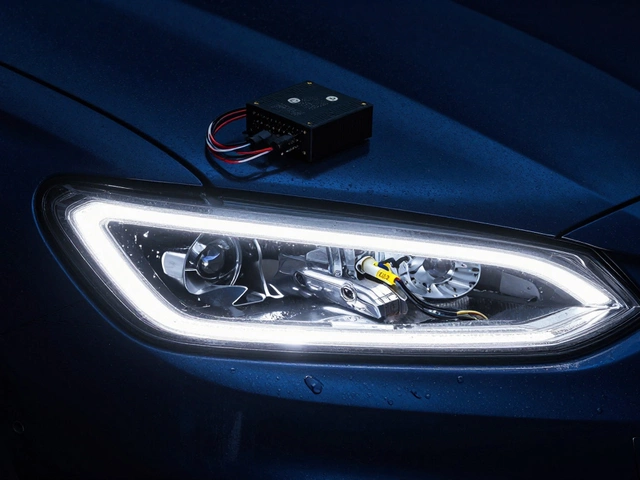
- Ignoring flickering or error messages-Some cars have bulb-out sensors. LEDs draw less power, which can trigger false warnings. You may need CANbus decoders.
- Overheating-LEDs run cooler than halogens, but poor heat dissipation in enclosed housings can kill them fast. Make sure your kit has a proper heat sink.
- Color temperature mismatch-Stick to 5000K-6000K. Anything above 6500K looks blue and reduces visibility in rain or fog.
Good LED kits include everything: bulbs, heat sinks, wiring harnesses, and sometimes even mounting brackets. Skip the $20 Amazon specials. Brands like Philips, Osram, and Auxbeam have tested designs that work better with factory housings.
Final Tip: Test Before You Drive
After adjusting your LEDs, do a quick test at night. Park your car facing a wall, turn on the lights, and walk back 10 feet. Look at the beam pattern. You should see a sharp horizontal cutoff line across the top of the light. Below that line, the road should be evenly lit. Above it? Almost no light.
If you see light above the cutoff, lower the beam. If the cutoff is crooked, adjust left or right. If the pattern looks fuzzy or has dark spots, your bulbs might be incompatible with the housing.
LED headlights can make night driving safer and more enjoyable. But only if they’re aimed right. Don’t assume brightness equals safety. Precision does.
Do LED headlights always need adjustment?
Only if you’re retrofitting LED bulbs into halogen housings. Factory-installed LED systems come pre-aligned and don’t need adjustment. Aftermarket LED bulbs in older cars almost always need realignment to avoid glare and poor visibility.
Can I adjust LED headlights without tools?
Yes. Most vehicles have adjustment screws you can turn by hand or with a flathead screwdriver. You don’t need special tools-just a flat wall, tape, and a measuring tape. The process takes under 30 minutes.
Why do LED headlights blind other drivers?
Because they’re directional and brighter than halogens. If they’re aimed too high, the intense beam hits oncoming drivers’ eyes directly. Halogens scatter light, so glare is less focused. LEDs concentrate it-so alignment is critical.
Is it illegal to have unadjusted LED headlights?
In many states, yes. Misaligned headlights violate vehicle safety codes. You can be pulled over and fined. Some states require headlight inspections during registration. Even if you’re not fined, your insurance could deny a claim if glare from your lights caused an accident.
What’s the best color temperature for LED headlights?
Stick to 5000K-6000K. That’s a clean white with a slight blue tint-closest to daylight. Anything above 6500K looks blue and reduces contrast in rain, fog, or snow. It might look cool, but it makes it harder to see road markings and obstacles.
If you’ve installed LED headlights and still feel unsure, take a slow drive at night. Pay attention to how the road looks ahead and how other drivers react. If you’re getting flashed more than usual, your beams are too high. Adjust them. It’s not a luxury-it’s responsibility.