Wheel Restoration Durability Estimator
How Long Will Your Restored Wheels Last?
Enter your conditions to estimate how long your wheel restoration will last.
Your wheels should stay corrosion-free for approximately under these conditions.
Aluminum alloy wheels look sharp when they’re clean, but corrosion turns them into eyesores-and sometimes, safety hazards. If you’ve noticed white powdery residue, pitting, or flaking on your rims, you’re not alone. Corrosion is common on alloy wheels, especially in areas with road salt, high humidity, or frequent rain. The good news? You can fix it yourself without spending hundreds on replacements. This guide walks you through exactly how to restore corroded aluminum alloy wheels, from diagnosis to final protection.
Understand Why Aluminum Wheels Corrode
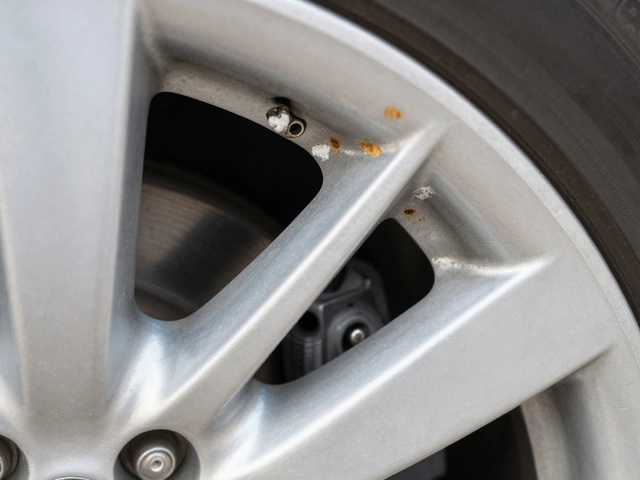
Aluminum doesn’t rust like steel, but it does oxidize. When aluminum reacts with moisture and salts-especially road salt in winter-it forms aluminum oxide. That’s the white, chalky stuff you see. Over time, this oxidation turns into pitting, which eats into the metal. If left untreated, corrosion can weaken the wheel’s structure, leading to air leaks or even cracks.
Most corrosion starts at the edge of the wheel where the paint or clear coat is damaged. Even a tiny scratch from a curb or a stone chip lets moisture in. Wheel cleaners with harsh chemicals, like acid-based products, can also strip protective layers and speed up corrosion. Some factory finishes are thin or poorly applied, making them more vulnerable.
What You’ll Need
You don’t need a professional shop to fix this. Here’s what works:
- Plastic wheel cleaner (non-acidic)
- Soft-bristle brush (nylon, not steel)
- Microfiber towels
- Aluminum wheel polish (like Meguiar’s Ultimate Aluminum Polish or Mothers California Gold)
- 1200- and 2000-grit wet/dry sandpaper
- Isopropyl alcohol (90% or higher)
- Masking tape
- Wheel sealant or ceramic coating (optional but recommended)
Avoid steel wool, wire brushes, or oven cleaners. They scratch the surface and make corrosion worse.
Step 1: Remove the Wheels
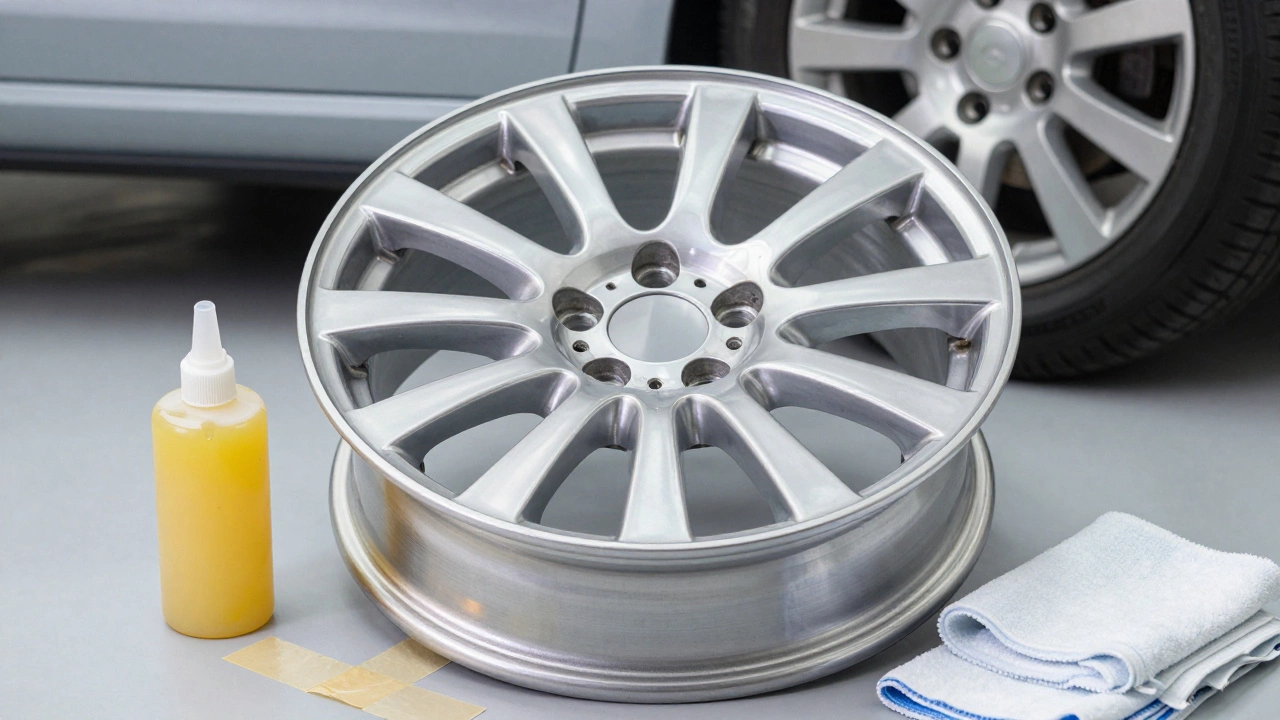
Work on one wheel at a time. Take it off the car and lay it flat on a clean surface. This gives you full access to the inner barrel and spokes-areas where corrosion hides. Don’t skip this step. Cleaning wheels while they’re still on the car leaves behind dirt buildup you can’t reach.
Step 2: Clean Off Surface Grime
Start with a plastic wheel cleaner designed for aluminum. Spray it on, let it sit for 2-3 minutes, then scrub gently with a soft brush. Focus on the crevices and around the lug holes. Rinse thoroughly with water. Don’t let cleaner dry on the surface-it can etch the metal.
For stubborn brake dust, use a dedicated brake dust remover. It won’t hurt the aluminum like acid-based cleaners will.
Step 3: Assess the Damage
After drying, inspect the wheel closely. If the corrosion is just surface-level white powder, you can polish it out. If you see deep pits or holes, the wheel may be structurally compromised. In that case, professional repair or replacement is safer.
Use a flashlight at an angle to spot pitting. Run your finger over the surface-if it feels rough or you can catch your nail, it’s deeper than surface oxidation.
Step 4: Sand the Corroded Areas
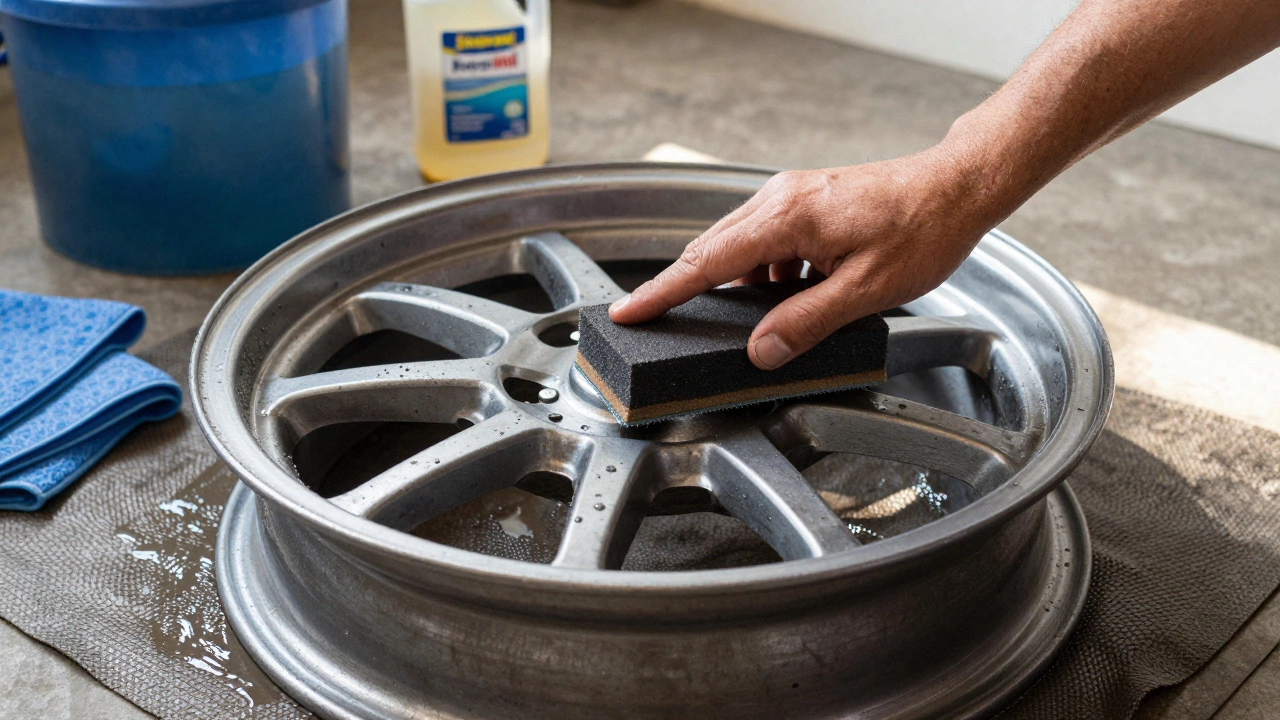
For light to moderate pitting, wet sanding is your best tool. Soak 1200-grit sandpaper in water for 10 minutes. Wrap it around a flat sanding block-don’t sand by hand, or you’ll create uneven spots.
Sand the corroded areas in straight lines, not circles. Keep the surface wet while sanding. This reduces heat and prevents scratches. Go slowly. You’re removing material, not just polishing.
Once the rough spots are smoothed out, switch to 2000-grit paper. Repeat the process. This step removes the scratches left by the coarser paper and prepares the surface for polish.
Step 5: Polish the Wheel
After sanding, wipe the wheel clean with isopropyl alcohol. This removes any leftover grit and oils. Let it dry completely.
Apply aluminum wheel polish with a microfiber cloth or a dual-action polisher on low speed. Work in small sections. The polish contains fine abrasives that restore shine and fill in micro-scratches. Don’t skip this step-it’s what brings back the factory luster.
Buff off the residue with a clean microfiber towel. You should see a noticeable difference. If the wheel still looks dull, repeat the polish application.
Step 6: Protect the Surface
Polished aluminum oxidizes again in weeks if unprotected. Seal it. Use a dedicated aluminum wheel sealant or a ceramic coating made for wheels. These form a barrier against moisture and salt.
Apply two thin coats, letting each dry for 20 minutes between applications. Avoid wax-most car waxes don’t bond well with aluminum and will peel off in a month.
For extra protection, mask off the tire and brake components before applying sealant. It’s messy otherwise.
Step 7: Reinstall and Maintain
Put the wheel back on. Torque the lug nuts to the manufacturer’s spec. Don’t guess-use a torque wrench. Over-tightening can warp the hub or damage the wheel.
Now, maintenance is key. Wash your wheels every two weeks with a pH-neutral cleaner. Avoid pressure washers directly on the rim edges-they can force water into the seal. Dry them after every wash. Moisture is the enemy.
If you live near the coast or use road salt, consider applying sealant every 3-4 months. It’s cheaper than replacing wheels.
What Not to Do
Don’t use oven cleaner. It’s lye-based and eats through aluminum. Don’t use wire brushes-they gouge the surface. Don’t skip drying after washing. Don’t use abrasive pads like Scotch-Brite. Don’t assume clear coat lasts forever-it wears off in 1-3 years.
When to Replace Instead of Repair
Some damage isn’t fixable. If you see:
- Cracks running through the spoke or barrel
- Deep pits larger than 1/8 inch across
- Warped or out-of-round wheels
- Air leaks that won’t seal after repair
-it’s time to replace the wheel. Driving on a structurally weak wheel risks blowouts or loss of control. Safety comes before savings.
How Long Does a Restoration Last?
A properly restored and sealed aluminum wheel can stay corrosion-free for 2-3 years under normal conditions. In salty or humid climates, expect 12-18 months before touch-ups are needed. Regular washing and sealing make a huge difference.
One owner in Michigan restored his 2018 Ford F-150 wheels in 2023. He washed them weekly and reapplied sealant every 4 months. In December 2025, they still looked factory-new. No pitting. No fading. Just clean, shiny rims.
Cost Comparison: Repair vs. Replace
Let’s say you have four corroded wheels:
- DIY repair cost: $40-$80 (polish, sandpaper, sealant)
- Professional restoration: $150-$250 per wheel
- Replacement aftermarket wheel: $120-$300 each
DIY saves you hundreds. Even professional restoration is cheaper than buying new. And you keep the original wheels, which often fit better and match your car’s value.
Can I use vinegar to clean corroded aluminum wheels?
No. Vinegar is acidic and can etch aluminum, making corrosion worse over time. It might remove light surface stains, but it won’t fix pitting and can damage the finish. Stick to aluminum-specific cleaners.
Does wheel corrosion affect tire pressure?
Yes. Deep corrosion near the bead seat-the part that seals against the tire-can create tiny gaps that let air leak out. If your tires lose pressure without visible punctures, check the wheel’s inner edge for pitting or rust buildup.
Can I paint over corroded aluminum wheels?
Not without proper prep. Painting over corrosion traps moisture and causes the paint to bubble and peel. You must remove all corrosion, sand the surface, apply a metal primer, then paint. Even then, wheel paint won’t last as long as the original finish. Restoration is better than painting.
How often should I seal my aluminum wheels?
Every 3-4 months in areas with road salt or coastal humidity. In dry climates, once every 6 months is enough. Check the sealant by spraying water on the wheel-if it beads up, it’s still working. If it spreads out, it’s time to reapply.
Are aftermarket wheel sealants better than factory clear coats?
Some are. Factory clear coats are often thin and designed for cost, not longevity. High-end ceramic wheel coatings like CQuartz Wheel or Gtechniq C5 can last 2-3 years with proper care, far longer than most factory finishes. They’re harder, more chemical-resistant, and repel water better.
Final Thoughts
Corroded aluminum wheels don’t have to mean expensive replacements. With the right tools and a little time, you can bring them back to life. The key is catching it early, removing corrosion properly, and sealing it well. Most people give up after one failed attempt with the wrong products. Stick with the steps above, and your wheels will look better than they did when new.
Don’t wait until the corrosion spreads. Fix it now. Your car will thank you-and so will your neighbors.