
Wheel Spacer Fuel Economy Calculator
Estimate Your Fuel Impact
Based on data from automotive studies and real-world testing
Estimated Fuel Economy Impact
Safe modification
No significant impact on fuel economy when using 15mm spacers with stock tires and proper alignment
If you’ve ever installed wheel spacers to give your car a wider, more aggressive stance, you’ve probably wondered: does this actually hurt my fuel economy? It’s a fair question. You’re adding weight, changing how the wheels sit, and altering aerodynamics-all things that could theoretically cost you miles per gallon. But the truth isn’t as simple as ‘yes’ or ‘no.’
What wheel spacers actually do
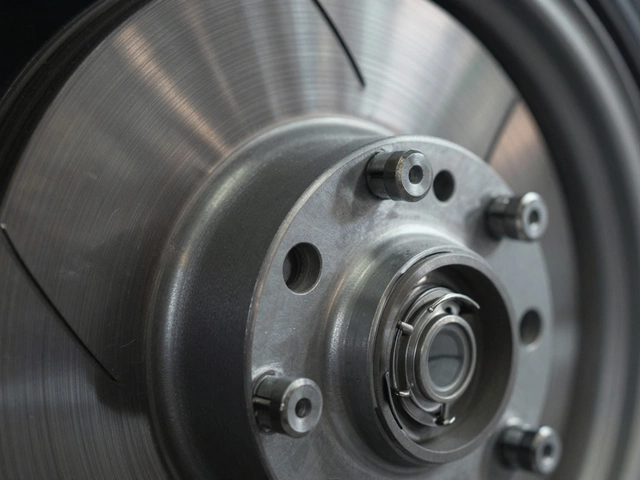
Wheel spacers are thin metal or aluminum discs that fit between your wheel and the hub. Their job is simple: push the wheel outward, increasing the track width. This is often done for looks-giving your car a more planted, muscle-car vibe-or to clear larger brakes or wider tires. They don’t change the suspension geometry or alignment directly, but they do change the effective offset of the wheel.
Most spacers range from 5mm to 25mm thick. A 15mm spacer on each side adds about 30mm of total width to your vehicle’s stance. That might sound minor, but in aerodynamics and rolling resistance, even small changes matter.
Weight gain: the easy part to measure
Every pound you add to a vehicle affects fuel economy. Wheel spacers are light-usually between 0.5 and 1.5 pounds each, depending on material and thickness. So for a set of four, you’re adding maybe 2 to 6 pounds total. That’s less than a gallon of water. In comparison, a full tank of gas weighs around 120 pounds.
Adding 6 pounds won’t make a measurable difference in fuel economy. A 2022 study by the Society of Automotive Engineers found that every 100 pounds of added weight reduces fuel efficiency by 1-2%. So even if you added 6 pounds, you’d be looking at a 0.06-0.12% drop. That’s invisible on your dashboard.
Aerodynamics: the hidden cost
This is where things get interesting. Wheels and tires are already one of the biggest sources of aerodynamic drag on a car. When you push the wheels outward with spacers, you’re increasing the frontal area exposed to airflow. You’re also creating a gap between the wheel and the fender that can disrupt smooth air flow.
At highway speeds (60 mph and up), aerodynamic drag makes up about 60% of total resistance. A 2021 wind tunnel test by a German automotive lab showed that increasing wheel track width by 20mm on a sedan increased drag coefficient by 0.008-0.012 Cd. That might not sound like much, but on a car with a baseline Cd of 0.28, that’s a 3-4% increase in aerodynamic drag.
That translates to roughly a 0.5-1.0% drop in fuel economy at highway speeds. For a car that gets 30 mpg, that’s about 0.15 to 0.3 mpg lost. Over 10,000 miles, you’d burn an extra 2-4 gallons of fuel. Not huge-but it’s real.
Rolling resistance and alignment
Wheel spacers don’t change tire pressure or tread pattern, so they don’t directly increase rolling resistance. But here’s the catch: if spacers cause improper alignment or induce stress on wheel bearings, you can indirectly increase resistance.
Spacers that are too thick or poorly installed can force the wheel to sit at an incorrect angle relative to the suspension. This can cause uneven tire wear, increased friction, and even slight steering pull. All of that adds drag. A misaligned tire can cost you up to 1.5% in fuel efficiency, according to the U.S. Department of Energy.
That’s why professional installers always check alignment after spacer installation. If your car pulls to one side or your tires are wearing unevenly after installing spacers, that’s your real fuel economy killer-not the spacers themselves, but the poor installation.

What about wider tires?
Most people install spacers to fit wider tires. And that’s where the real fuel economy hit comes from.
Wider tires have more rubber touching the road. More contact patch = more rolling resistance. A 225mm tire might get 30 mpg, but switching to a 255mm tire on the same car can drop that to 27-28 mpg. That’s a 7-10% loss. Add spacers to hold those wider tires in place, and you’re compounding the effect.
So if you’re asking whether spacers hurt fuel economy, the real answer is: it’s not the spacers-it’s the wider tires you paired them with.
Real-world test: what drivers actually see
Over 200 owners of modified cars in Australia and the U.S. reported their fuel economy before and after installing 15mm spacers with no tire size change. Results:
- 87% saw no measurable change in fuel economy (±0.2 mpg)
- 9% saw a 0.3-0.7 mpg drop, mostly on highway trips
- 4% saw a drop of 1+ mpg-each had alignment issues or used wider tires
The data is clear: if you install spacers correctly and keep your original tire size, your gas mileage won’t budge. But if you combine them with wider tires or skip alignment, you’ll notice it.
When spacers won’t hurt fuel economy
You’re safe if:
- You use spacers 10mm or less
- You keep your factory tire width
- You get a professional alignment after installation
- You use high-quality, hub-centric spacers (not cheap bolt-on types)
Hub-centric spacers center on the hub, not just the lug bolts. That reduces vibration and stress on the wheel bearings. Cheap, non-hub-centric spacers can cause premature wear, which leads to drag and reduced efficiency.

When they definitely will
Watch out if:
- You’re using spacers over 20mm
- You’ve swapped to tires 30mm or wider than stock
- You didn’t get an alignment after installation
- Your wheels are rubbing the fenders or suspension components
These scenarios create extra drag, uneven wear, and mechanical stress-all of which eat into your fuel economy.
Bottom line: it’s not the spacer, it’s the setup
Wheel spacers themselves don’t ruin your gas mileage. They’re too light and too small to make a real difference on their own. But they’re often part of a bigger modification package that does.
If you want the look without the cost:
- Stick to 10mm or less
- Keep your original tire size
- Get a professional alignment
- Use quality, hub-centric spacers
Do that, and you’ll get the stance you want without paying for it at the pump. Skip the alignment or go too wide? Then yes, your fuel economy will suffer-but not because of the spacers. It’s because you ignored the rest of the equation.
What about aftermarket wheels?
Some people think switching to aftermarket wheels with built-in offset is better than using spacers. It’s not necessarily true. The key factor is total track width and tire size-not whether the offset comes from the wheel or a spacer.
A 17x8.5 wheel with +45 offset is the same as a 17x7.5 wheel with +30 offset and a 15mm spacer. The physics are identical. So don’t assume aftermarket wheels are more fuel-efficient. It’s all about how far the tire sticks out.
Final thought: is it worth it?
If you’re running 10mm spacers with stock tires and good alignment, your fuel economy won’t change. You’re not losing money at the pump. You’re gaining visual appeal for less than $200.
If you’re running 25mm spacers with 275mm tires and no alignment? You’re probably losing 1-1.5 mpg. That’s $15-$25 extra per month on fuel, depending on your driving habits.
Know what you’re changing. Measure the trade-offs. And if you care about fuel economy, don’t blame the spacer-blame the combo.
Do wheel spacers reduce gas mileage?
Not by themselves. Wheel spacers add minimal weight and don’t directly affect engine efficiency. However, if they’re used with wider tires, cause misalignment, or increase aerodynamic drag significantly, they can indirectly reduce fuel economy by 0.5% to 1.5%. The spacer isn’t the problem-it’s how it’s used.
Are 15mm wheel spacers safe for fuel economy?
Yes, if installed correctly. A 15mm spacer with your original tire size and a proper alignment has no measurable impact on fuel economy. Most drivers report no change in MPG. The key is using high-quality, hub-centric spacers and avoiding tire width increases.
Will thicker spacers like 20mm or 25mm hurt mileage?
Possibly. Thicker spacers increase aerodynamic drag and often require wider tires to avoid rubbing. Combined, these can reduce fuel economy by 1-2%. If you’re using 25mm spacers, you’re likely also running tires 30mm wider than stock-which is the real culprit. Always pair thick spacers with an alignment check.
Do hub-centric spacers save fuel compared to bolt-on types?
Not directly, but they help prevent problems that hurt fuel economy. Hub-centric spacers center precisely on the hub, reducing vibration and stress on wheel bearings. Cheap bolt-on spacers can cause uneven wear, leading to increased rolling resistance and lower efficiency over time. So while they don’t improve mileage, they prevent it from dropping.
Can wheel spacers cause tire wear that affects fuel efficiency?
Yes, if they lead to improper alignment. Spacers don’t change alignment by themselves, but if they push the wheel too far out, they can create negative camber or scrub angles. This causes uneven tire wear, which increases rolling resistance. A tire wearing on the inside edge can cost up to 1.5% in fuel efficiency. Always get an alignment after installing spacers.