Wheel Spacer Risk & Fitment Estimator
Enter your spacer specifications to estimate the potential impact on your vehicle's components and overall safety rating.
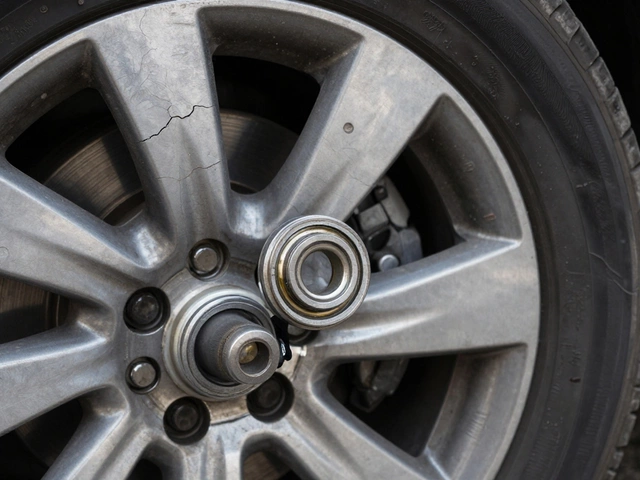
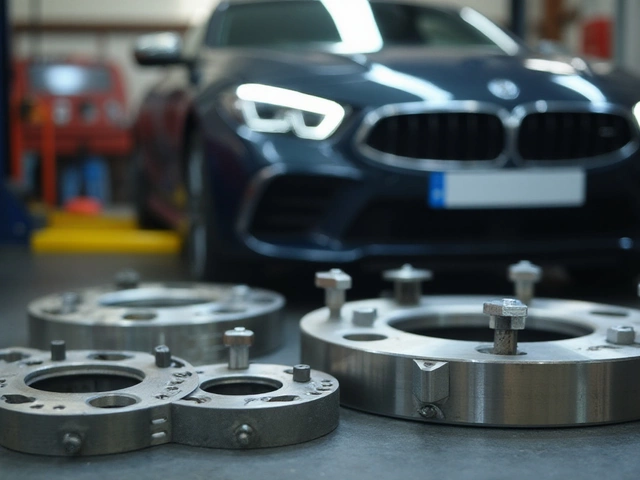
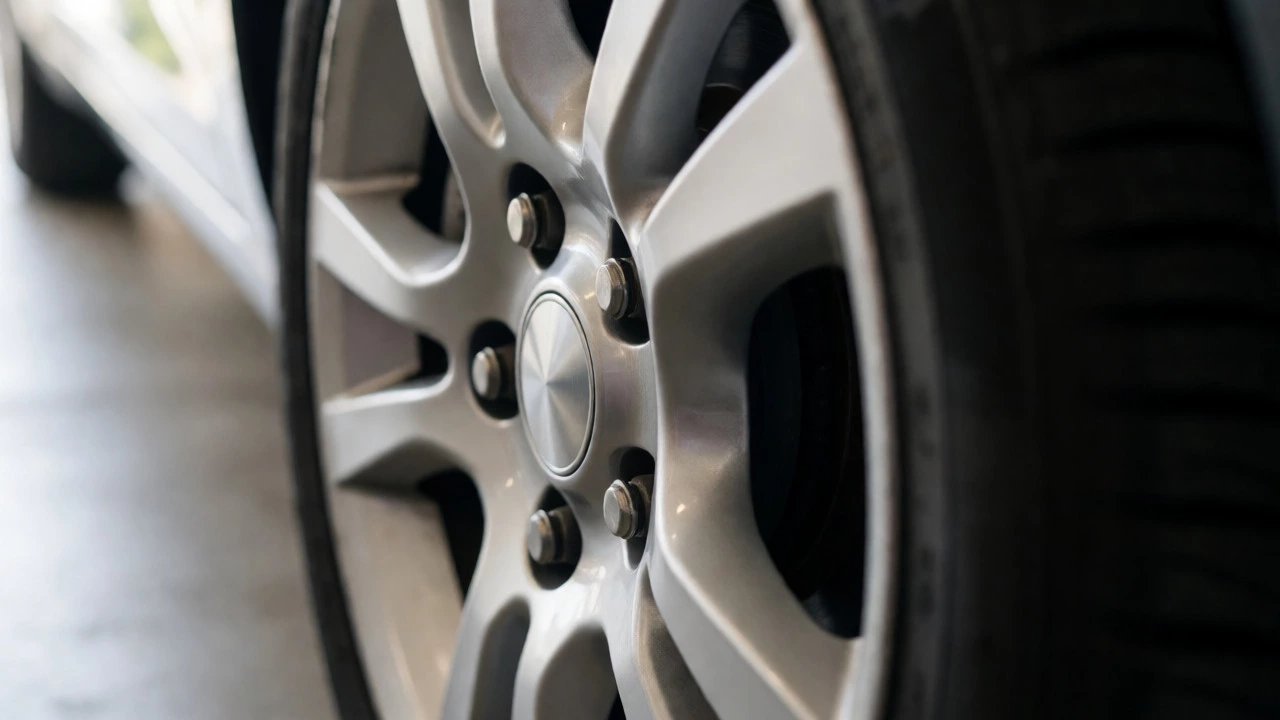
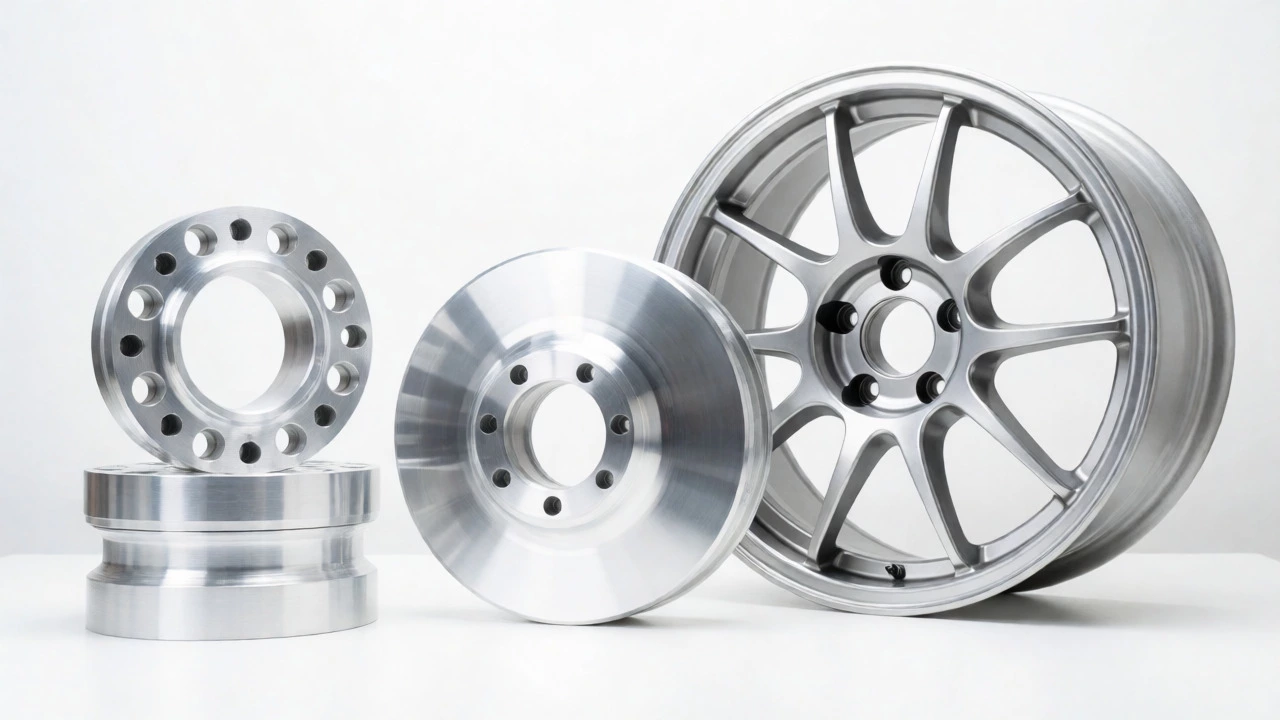
You see a forum post with a slammed hatchback where the wheels sit perfectly flush with the fender arch. It looks aggressive, clean, and factory-perfect. You think, "I can get that look for $150." So you buy a set of wheel spacers, metal discs installed between the wheel hub and the wheel to increase track width or correct fitment issues. But before you slide them onto your studs, you need to understand why mechanics often hate them and why insurance companies might not.
Wheel spacers are not inherently evil, but they are a compromise. They shift the load path of your vehicle away from its engineered center. When you add material between the hub and the wheel, you introduce leverage. That leverage stresses components that were designed to handle forces in a specific way. If you are chasing aesthetics without understanding the mechanical cost, you might end up with vibration issues, premature bearing failure, or worse-a wheel coming off at highway speeds.
The Mechanical Reality: Leverage and Load Paths
Every vehicle is engineered with a specific scrub radius and steering axis inclination. These geometry points determine how the car handles bumps, braking, and cornering. When you install a spacer, you physically move the contact patch of the tire further out from the suspension’s pivot point. This increases the moment arm, meaning every bump hits the suspension components with more force than the manufacturer intended.
Think of it like holding a heavy wrench. If you hold it close to the bolt (the hub), it feels manageable. If you extend the handle by six inches (the spacer), the torque required to turn it increases significantly. Your wheel bearings and CV joints feel this increased torque every time you drive over a pothole. Over thousands of kilometers, this extra stress accelerates wear on parts that are expensive to replace.
| Component | Standard Condition | With Spacer Impact | Risk Level |
|---|---|---|---|
| Wheel Bearings | Designed for direct axial load | Increased lateral load and heat generation | High |
| CV Joints | Optimal angle range | Altered angles leading to faster grease breakdown | Medium-High |
| Steering Rack | Balanced feedback | Heavier steering effort and potential shimmy | Low-Medium |
| Fender Liners | Plenty of clearance | Rubbing during compression or turning | Low (Aesthetic) |
Vibration and Harmonic Imbalance
Have you ever felt a shudder in the steering wheel at 80 km/h? With spacers, this becomes a common complaint. Even high-quality machined aluminum spacers have tolerances. If the spacer is not perfectly concentric with the hub, or if the lug holes do not align perfectly with the studs, you create an imbalance. At low speeds, you might not notice it. But as speed increases, that tiny wobble amplifies into a noticeable vibration.
This isn't just annoying; it's destructive. Constant vibration loosens lug nuts. It wears out tie rods and ball joints prematurely. Some drivers try to fix this by adding wheel weights, but you cannot balance out a structural misalignment with lead tape. The root cause is the interface between the hub, the spacer, and the wheel. If any of those three surfaces aren't perfect, the whole system shakes.
The Hub-Centric vs. Lug-Centric Debate
This is where most DIY installs go wrong. Most modern cars are hub-centric, meaning the center bore of the wheel slides precisely over a raised ring on the hub to center the wheel. The lug nuts only clamp it down; they don't center it. When you add a spacer, you break that connection unless you use a hub-centric spacer with a matching pilot ring.
If you use a cheap, non-hub-centric spacer, the weight of the wheel rests entirely on the tapered seats of the lug nuts. Lug nuts are designed to clamp, not to carry vertical load. Over time, the taper deforms, causing the wheel to loosen. This is why you must always check lug nut torque after installing spacers. For vehicles like the Mazda MX-5 or Subaru WRX, skipping hub-centric rings is a recipe for disaster.
- Hub-Centric: Centering force comes from the metal-to-metal contact of the bore. Safest option.
- Lug-Centric: Centering force comes from the cone of the lug nut. Higher risk of vibration and loosening.
- Threaded Studs: Longer studs are required. If studs are too long, they can bottom out in the hub before the wheel is tight.
Safety Concerns and Failure Modes
Let’s talk about the scary stuff. Can a wheel fall off? Yes. While rare, catastrophic failures happen when spacers are poorly manufactured or improperly installed. Cheaper spacers are often cast rather than forged. Cast aluminum contains microscopic air bubbles that act as stress risers. Under repeated thermal cycling-braking heats the hub, driving cools it-these bubbles expand and contract, eventually causing cracks.
Another failure mode is stud stretching. Adding a spacer means you need longer studs. If you reuse old short studs with a spacer, you reduce the thread engagement. A wheel nut needs full thread engagement to hold safely. If you only have two threads engaging because the stud is too short for the spacer thickness, you’re gambling with physics. Always use extended studs specifically rated for your spacer thickness.
Legal and Insurance Implications in Australia
In Melbourne, we have strict roadworthiness standards. While small spacers (under 10mm) are often overlooked during inspections, larger modifications can fail a pink slip or VASS certificate if they alter the track width beyond specified limits. More importantly, consider your insurance. If you crash and the adjuster determines that unapproved modifications contributed to the accident, they might deny your claim. Modifying suspension geometry changes handling characteristics. If you lose control because your car understeers differently due to widened tracks, your insurer may argue the modification voided the policy terms.
Check your state’s regulations. In Victoria, modifications affecting steering or suspension usually require engineering certification if they exceed certain thresholds. Don’t assume "everyone does it" means "it’s legal." It just means others haven’t been caught yet.
Better Alternatives to Wheel Spacers
If you want better fitment without the risks, look at these options first:
- Correct Offset Wheels: Buy wheels with the right ET (Einpress-Tiefe) value. This is the gold standard. No added hardware, no extra leverage, factory-safe handling.
- Affordable Aftermarket Options: Brands like Enkei or OZ Racing offer various offsets. Spending $800-$1,200 on proper wheels is cheaper than replacing wheel bearings later.
- Tire Stretching: Mounting a slightly narrower tire on a wider rim can push the sidewall out, reducing rubbing without changing the physical wheel position.
- Fender Rolling: If clearance is the issue, rolling the inner lip of the fender is safer than pushing the wheel out.
When Are Spacers Actually Okay?
They aren’t always bad. Track cars use them extensively to fine-tune camber and roll centers. If you are building a dedicated race car, the performance gain outweighs the longevity cost. Also, small spacers (3-5mm) used strictly to clear brake calipers on otherwise perfect-fit wheels are generally safe if they are hub-centric and properly torqued.
The key is intent. Are you using them for function or just fashion? If you’re trying to make a square setup work on a staggered chassis, a small spacer is a pragmatic tool. If you’re trying to fake a wide-body look on a stock chassis, you’re fighting against engineering.
Do wheel spacers ruin wheel bearings?
They accelerate wear rather than instantly ruining them. By extending the wheel outward, you increase the lateral load on the bearing. For daily drivers, this might shave 10-20% off the bearing's lifespan. For aggressive driving, the reduction is significant. Regular inspection and greasing can mitigate this.
Are all wheel spacers dangerous?
No. High-quality, forged, hub-centric spacers from reputable brands like H&R or Eibach are safe when installed correctly. Cheap, cast, non-hub-centric spacers bought online for a bargain price pose the highest risk of cracking or causing vibrations.
How thick should my wheel spacers be?
Generally, keep them under 10mm for street cars. Anything thicker requires longer studs and potentially re-engineering checks. Thicker spacers increase the lever arm effect exponentially, putting disproportionate stress on suspension components.
Can I pass inspection with wheel spacers?
It depends on local laws. In many Australian states, small spacers are accepted if the wheels remain within the fender line and don't rub. However, if the modification alters the track width significantly, you may need an engineer's certificate to prove the suspension can handle the change.
What happens if I don't use hub-centric rings?
The wheel will likely vibrate at higher speeds because it isn't centered on the hub. More critically, the lug nuts bear the entire weight of the wheel, which can cause them to stretch or crack over time, leading to loose wheels.