Spoiler Recommendation Engine
Configure Your Setup
Recommendation
Based on your power and driving style
Loading...
MaterialDescription goes here.
Adjust the settings to find the perfect spoiler configuration for your vehicle.
Walk into any car meet in Melbourne, and you’ll see them: aggressive lips on trunk lids, massive factory-style wings, and delicate ducktails. But here is the hard truth most people miss. Most of those spoilers do absolutely nothing for your handling. They are purely cosmetic. If you want a spoiler that actually pushes your car to the ground at high speeds, you have to look past the show cars and focus on engineering.
The question "which car has the best spoiler" isn't about aesthetics. It’s about aerodynamics. The best spoiler is one that generates significant downforce without creating excessive drag that kills your top speed or fuel economy. Today, we are looking at the vehicles where the manufacturer-or a reputable aftermarket tuner-got the physics right.
Why Carbon Fiber Reigns Supreme
Before naming specific cars, we need to talk about material. If you are serious about performance, carbon fiber is the preferred material for high-performance automotive components due to its exceptional strength-to-weight ratio. Unlike fiberglass, which can flex under load, or ABS plastic, which adds unnecessary weight, carbon fiber stays rigid. This rigidity ensures that the angle of attack remains constant even when you hit a bump at 100 km/h.
Weight matters more than you think. A heavy aluminum wing might generate downforce, but it also rotates around the suspension pivot points, causing instability. A lightweight carbon fiber wing moves with the chassis, keeping the rear end planted predictably. For track days or high-speed highway runs, this difference is night and day.
The King of Aerodynamics: Porsche 911 GT3 RS
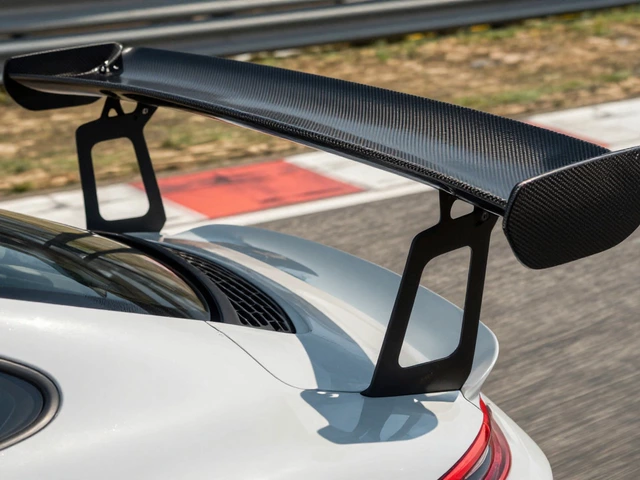
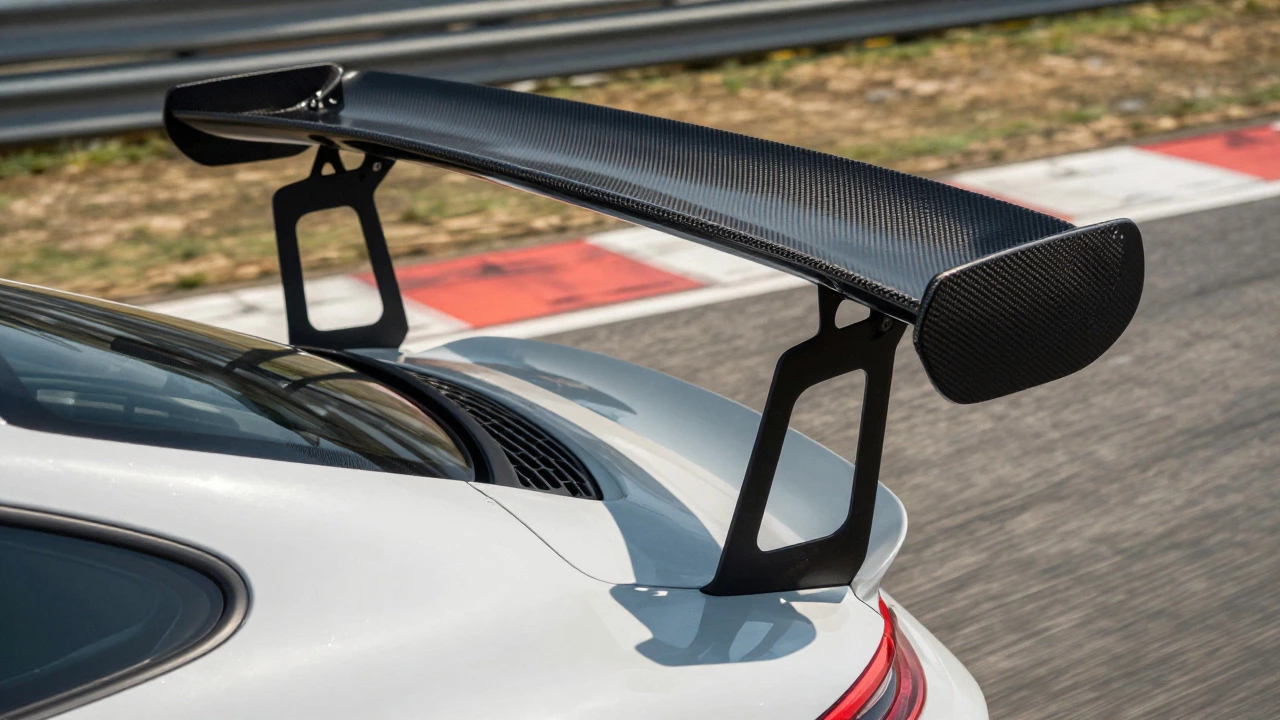
If we are talking about the absolute pinnacle of road-legal aerodynamics, the Porsche 911 GT3 RS is a track-focused sports car renowned for generating extreme downforce through complex active aero systems takes the crown. Porsche engineers didn’t just slap a wing on the back; they designed an entire air management system.
The GT3 RS features a massive, adjustable rear wing that works in tandem with front splitters and side skirts. At high speeds, this setup can generate over 800 kg of downforce. That is enough force to theoretically drive the car upside down on a ceiling if the speed were high enough (though don’t try this at home). The key here is efficiency. The wing is shaped like an airplane wing but inverted, pushing air up to push the car down. It’s not just big; it’s precise.
- Downforce Potential: Over 800 kg at high speed
- Material: High-grade carbon fiber composite
- Function: Active adjustment for cornering vs. straight-line speed
The Tuner Legend: Nissan Skyline GT-R R34
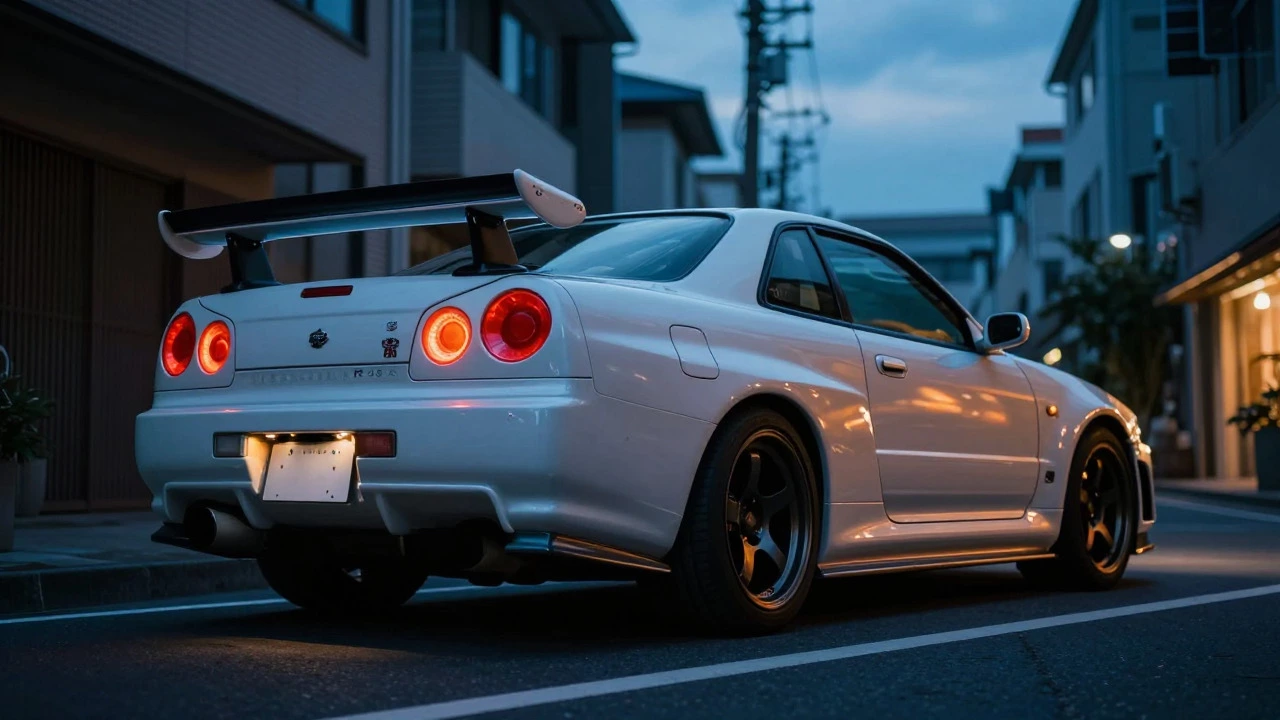
You cannot discuss spoilers without mentioning the Nissan Skyline GT-R R34 is an iconic Japanese supercar famous for its distinctive rear wing design and all-wheel-drive performance. The factory wing on the R34 is a masterpiece of form following function. It was designed by Nissan’s aerodynamicists to balance the immense power of the RB26DETT engine with stability.
The R34’s wing is relatively small compared to race cars, but its shape is optimized for turbulent airflow. It manages the wake behind the car, reducing drag while maintaining grip. Many aftermarket versions exist, often made in carbon fiber to save weight. However, the OEM design remains the benchmark for JDM aesthetics and practicality. It doesn’t scream "look at me" as loudly as a GT3 wing, but it does the job quietly and effectively.
Modern Muscle: Chevrolet Camaro ZL1
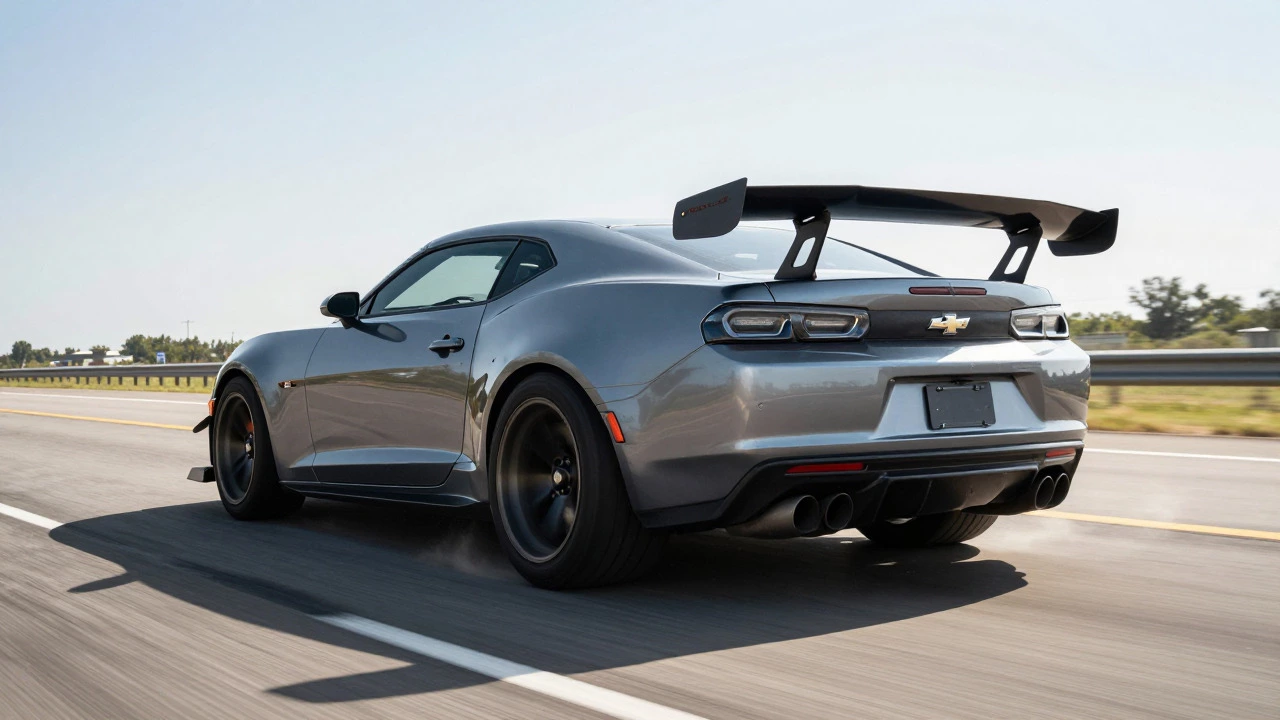
In the American muscle scene, the Chevrolet Camaro ZL1 is a high-performance muscle car featuring aggressive aerodynamic packages including a large fixed rear wing stands out. The ZL1 comes with a massive fixed rear wing as standard equipment. This isn’t an optional add-on; it’s integral to the car’s cooling and stability package.
The ZL1’s wing is huge, often drawing comparisons to Le Mans prototypes. It helps counteract the lift generated by the flat underbody and the powerful V8 engine. While it creates more drag than the Porsche’s sophisticated setup, it provides the brute-force grip needed for quarter-mile launches and high-speed stability on the interstate. For enthusiasts who want raw power combined with visual aggression, the ZL1 offers a compelling package.
The Track Weapon: BMW M3 GTR / E46 M3 CSL
BMW has a history of building cars that look fast because they are fast. The BMW M3 CSL is a limited-edition high-performance coupe known for its lightweight construction and carbon fiber roof and spoiler is a rare gem. Only 1,383 were made, and every single one featured a carbon fiber roof and a subtle yet effective rear lip spoiler. The CSL (Coupe Sondermodell Lightweight) philosophy was about stripping weight and optimizing airflow.
The spoiler on the CSL wasn’t a giant wing; it was a carefully sculpted extension of the trunk lid. This "ducktail" style reduces turbulence and provides moderate downforce without the drag penalty of a tall wing. It’s perfect for drivers who prefer a cleaner look but still demand better handling than a stock sedan. Modern BMW M3 and M4 models continue this tradition with larger, adjustable wings available as part of their aerodynamic kits.
Aftermarket Excellence: Ford Mustang GT500
Sometimes the best spoiler isn’t from the factory. The Ford Mustang GT500 is a high-output American muscle car that benefits significantly from aftermarket aerodynamic enhancements has become a playground for tuning companies like Roush and Hennessey. These tuners offer carbon fiber rear wings that are tested in wind tunnels.
A well-designed aftermarket wing for a GT500 can add hundreds of pounds of downforce, crucial for managing the 700+ horsepower output. The key is fitment. A cheap universal wing will just create noise and drag. A custom-fit carbon fiber wing integrates with the body lines, ensuring smooth airflow transition. This is where the investment pays off: stability at speeds where lesser cars would feel twitchy.
| Car Model | Spoiler Type | Primary Material | Best Use Case |
|---|---|---|---|
| Porsche 911 GT3 RS | Active Multi-Element Wing | Carbon Fiber | Track Days, High-Speed Corners |
| Nissan Skyline GT-R R34 | Fixed Low-Profile Wing | Plastic/Carbon Fiber Aftermarket | Daily Driving, JDM Enthusiasts |
| Chevrolet Camaro ZL1 | Large Fixed Wing | ABS Plastic/Carbon Fiber | Drag Racing, Highway Stability |
| BMW M3 CSL | Trunk Lip/Ducktail | Carbon Fiber | Subtle Enhancement, Weight Reduction |
| Ford Mustang GT500 | Aftermarket GT Wing | Carbon Fiber | High-Horsepower Management |
How to Choose the Right Spoiler for Your Car
Not every car needs a GT3-sized wing. In fact, putting a massive wing on a low-power sedan will only make it slower and noisier. Here is how to decide what fits your needs:
- Assess Your Power: If you have over 400 horsepower, you likely need a wing to keep the rear tires planted during acceleration. Less power? A subtle lip spoiler might be sufficient.
- Define Your Goal: Are you tracking the car? Look for wings with multiple elements (flaps) and endplates. Is it for street use? Prioritize low-profile designs that reduce wind noise.
- Check Compatibility: Ensure the mounting points match your trunk lid. Drilling holes for a poorly fitted wing can lead to water leaks and rust.
- Consider Adjustability: Adjustable wings allow you to change the angle of attack. Lower angles for straight-line speed, higher angles for cornering grip.
Installation and Maintenance Tips
Installing a carbon fiber spoiler requires care. Always use high-quality epoxy or urethane adhesive rated for automotive use. Mechanical bolts should be backed with washers to distribute pressure and prevent cracking the composite material. Regularly check for cracks, especially after hitting potholes. Carbon fiber is strong, but it can delaminate if impacted sharply.
Cleaning is straightforward. Use a pH-neutral car shampoo and a soft microfiber cloth. Avoid harsh brushes that could scratch the clear coat protecting the carbon weave. Waxing occasionally will help maintain the glossy finish and protect against UV degradation.
Does a spoiler really improve performance?
Yes, but only if it is properly engineered. A well-designed spoiler increases downforce, which improves tire grip and braking stability. Poorly designed spoilers add drag and noise without any benefit.
Is carbon fiber worth the extra cost?
For performance applications, yes. Carbon fiber is lighter and stiffer than fiberglass or plastic, leading to better responsiveness and less vibration. For purely cosmetic purposes, cheaper materials may suffice.
Can I install a GT3 wing on my regular 911?
Physically, maybe. Functionally, probably not. GT3 wings are designed to work with specific front splitters and diffusers. Without the full aero package, the wing may create imbalance and excessive drag.
What is the difference between a spoiler and a wing?
A spoiler disrupts airflow to reduce lift, usually integrated into the bodywork. A wing is a separate airfoil that generates downforce by creating a pressure difference above and below it. Wings are generally larger and more aggressive.
Will a spoiler void my warranty?
Usually not, unless it causes damage to the vehicle. However, check with your dealer. Most manufacturers allow aesthetic modifications as long as they are installed correctly and don’t interfere with safety systems.