Carbon Fiber Spoiler Longevity Calculator
Dry Carbon Fiber
Pre-preg, high pressure curedHigher quality resin, tighter bond, smoother finish.
Wet Carbon Fiber
Standard resin layupLower cost, prone to bubbles, faster degradation.
Includes ceramic coating, regular washing, and sealant application.
Select all that apply to your situation.
Estimated Lifespan
With current conditions and care level
Key Recommendations
Adjust settings above to see personalized tips.
There is a persistent myth in the car community that carbon fiber is a brittle material that shatters like glass upon impact. If you have ever watched a crash video where a high-end sports car disintegrates, this belief makes sense. But those videos show extreme forces far beyond what your daily driver experiences. The real question isn't whether it breaks under a sledgehammer; it is whether it survives Australian sunlight, road salt, and minor parking lot scrapes over ten years.
The short answer is yes. Properly manufactured carbon fiber lasts decades. It does not rust, it does not rot, and it resists fatigue better than steel or aluminum. However, its longevity depends entirely on two factors: the quality of the resin matrix holding the fibers together and how well you protect it from ultraviolet (UV) radiation. Let's break down exactly why this material holds up so well and where it might fail.
Why Carbon Fiber Outlasts Steel and Fiberglass
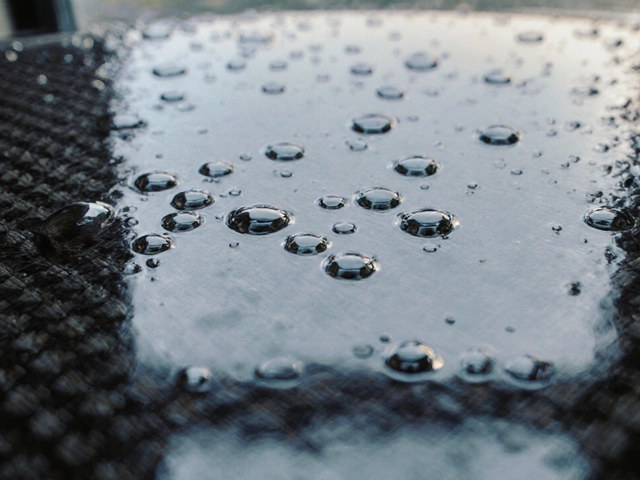
To understand why carbon fiber lasts long, you need to look at its structure. Unlike steel, which corrodes when exposed to moisture and oxygen, carbon fiber is chemically inert. You can leave a raw carbon fiber panel outside in the rain for a month, and the fibers themselves will remain unchanged. This chemical stability is its first line of defense against aging.
Compare this to fiberglass, which is a common alternative made from glass strands embedded in plastic resin. Fiberglass is porous. Over time, moisture can penetrate the surface, leading to delamination (where layers separate) and structural weakness. Carbon fiber composites are denser and less permeable, making them far more resistant to environmental degradation.
Another critical factor is weight. A steel bumper weighs significantly more than a carbon fiber equivalent. That extra weight creates stress on mounting points and brackets. Carbon fiber reduces this load, meaning less vibration and less mechanical stress on the attachment hardware. Less stress translates directly to a longer lifespan for both the part and the car's bodywork.
| Material | Corrosion Resistance | Weight Impact | Expected Lifespan |
|---|---|---|---|
| Carbon Fiber | Excellent (Inert) | Low (Reduces stress) | 15-20+ years with care |
| Fiberglass | Poor (Porous) | Medium | 5-10 years (prone to cracking) |
| Steel | Poor (Rusts) | High (Increases stress) | 10-15 years (unless coated) |
| ABS Plastic | Good | Low | 8-12 years (becomes brittle) |
The Real Enemy: UV Radiation and Oxidation
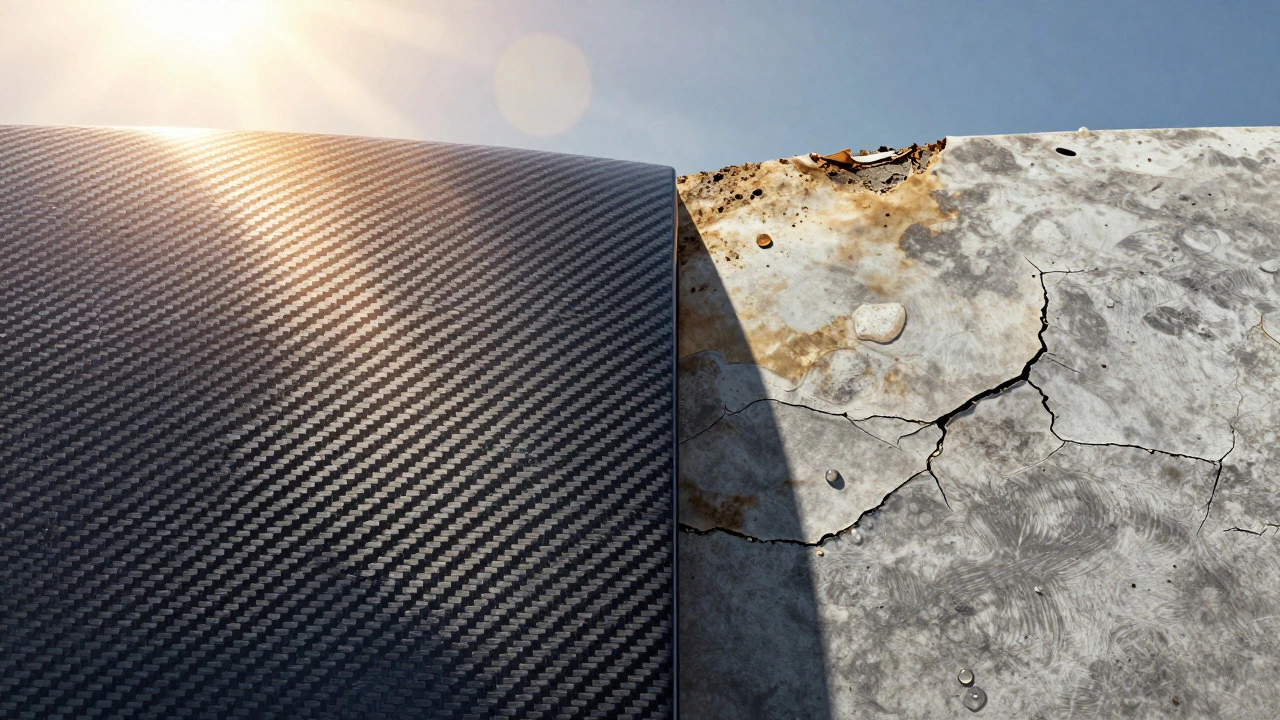
If carbon fiber is so strong, why do some old spoilers look faded and chalky? The culprit is not the carbon fibers themselves; it is the polyester resin that binds the carbon strands together. Most entry-level carbon fiber parts use standard polyester or vinyl ester resins. These resins are susceptible to oxidation when exposed to intense UV rays.
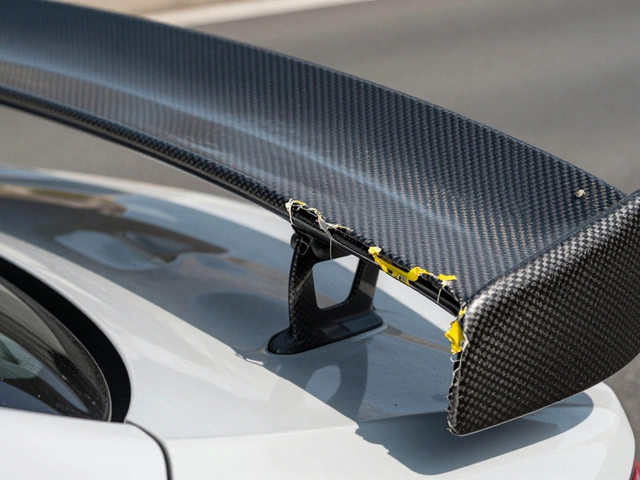
In places like Melbourne, Australia, the sun is harsh. Without protection, the resin begins to break down after 3-5 years. The glossy black finish turns gray, and the weave pattern becomes dull. This is purely cosmetic initially, but if left unchecked, the resin weakens, making the part more prone to cracking from thermal expansion and contraction.
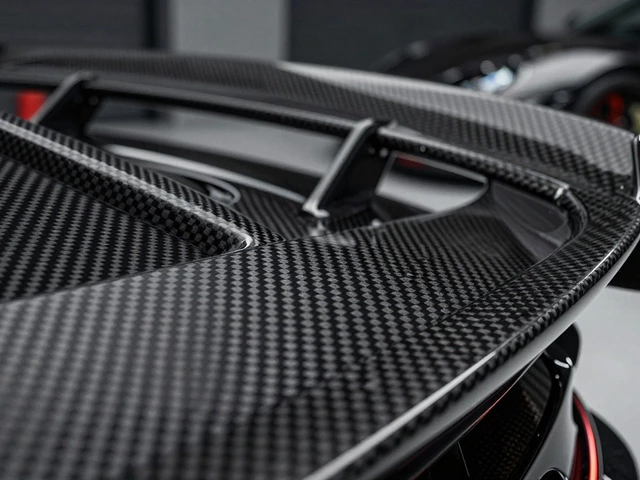
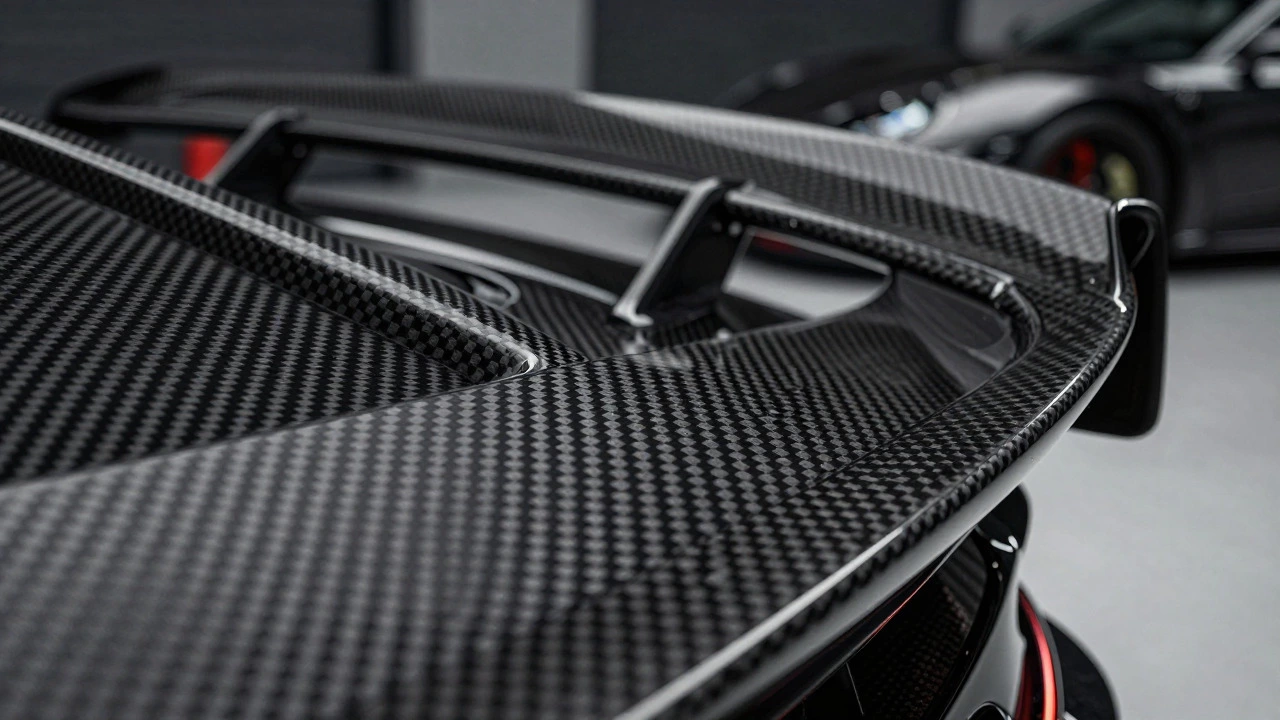
This is where the distinction between "dry" and "wet" carbon fiber matters. Dry carbon fiber uses pre-preg materials cured under high pressure and heat, resulting in a tighter bond and often a higher-quality resin system. Wet layup methods, while cheaper, often trap air bubbles and use lower-grade resins that degrade faster. If you want your spoiler to last as long as the car itself, invest in dry carbon or ensure the wet carbon is sealed properly.
How to Extend the Life of Your Carbon Fiber Parts
You don't need to be a chemist to keep your carbon fiber looking new. The strategy is simple: block UV rays and maintain the sealant layer. Here is a practical routine that works for most owners:
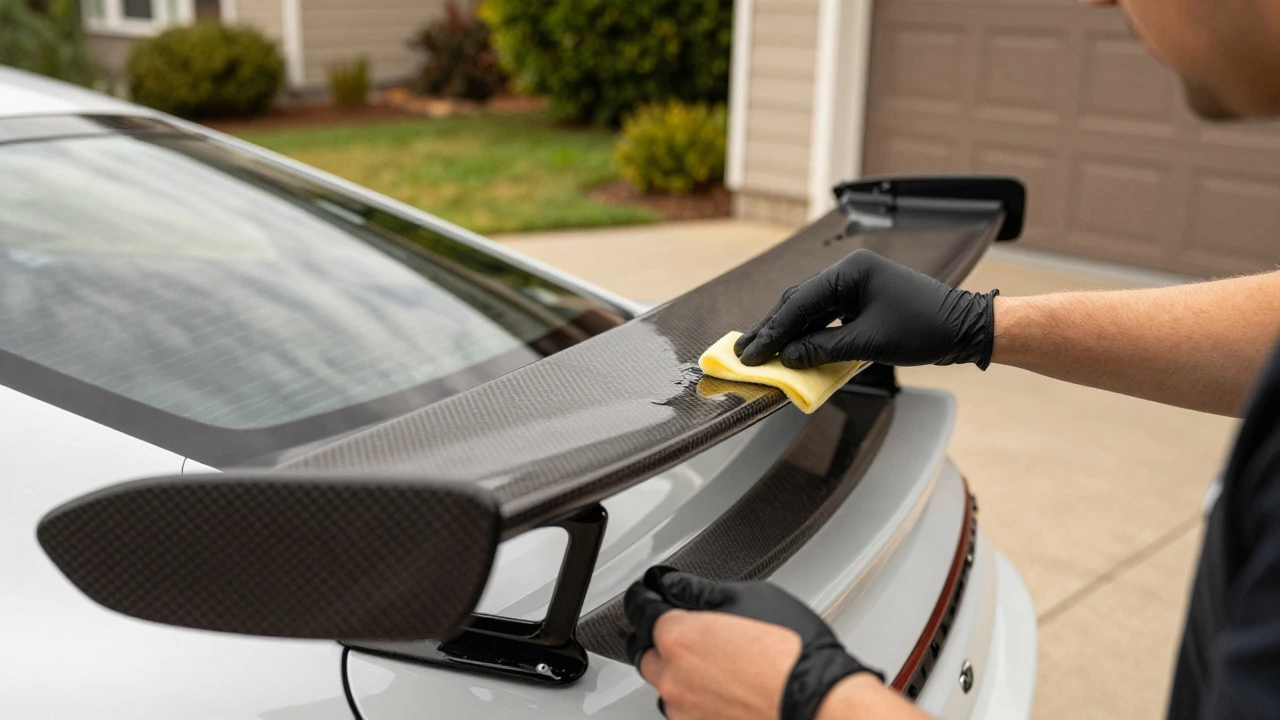
- Apply a Ceramic Coating: This is the single best investment for longevity. A quality ceramic coating creates a hydrophobic barrier that reflects UV light and prevents contaminants from bonding to the surface. Reapply every 1-2 years depending on exposure.
- Use Dedicated Sealants: Products specifically designed for carbon fiber contain UV inhibitors. Regular wax helps, but dedicated sealants offer superior protection against oxidation.
- Avoid Harsh Chemicals: Do not use acidic wheel cleaners or abrasive polishes on your carbon fiber. Stick to pH-neutral car wash soaps. Abrasives scratch the clear coat, creating micro-channels where moisture and dirt can enter.
- Park Smart: When possible, park in the shade or use a car cover. While a cover isn't mandatory, it drastically reduces thermal cycling (expansion and contraction), which can stress adhesive bonds over time.
For existing oxidation, you can often restore the shine. Light sanding with fine-grit paper (1500-2000 grit) followed by polishing can remove the oxidized layer of resin. Once polished, re-seal immediately. If the damage is deep and the fibers are exposed, professional repair may be necessary.
Impact Resistance: What Happens in a Crash?
Let's address the elephant in the room. Carbon fiber is stiff and strong, but it lacks ductility. Ductility is the ability of a material to deform without breaking. Steel bends; carbon fiber snaps. In a high-speed collision, a carbon fiber hood or spoiler will likely crack or shatter. This is actually a safety feature in some contexts-it absorbs energy through fracture rather than transferring all force to the chassis.
However, for everyday use, this brittleness is rarely an issue. A stone chip on the highway might cause a small crack, but it won't compromise the entire structure unless the impact is direct and severe. Minor cracks can often be repaired with epoxy resin and additional carbon fiber patches. The key is to address chips quickly to prevent moisture ingress.
When installing a spoiler, proper adhesion is critical. Using high-strength automotive adhesives like 3M VHB tape ensures the part stays attached during normal driving vibrations. Poor installation leads to premature failure not because the carbon fiber failed, but because the mounting system did.
Cost vs. Longevity: Is It Worth It?
Carbon fiber parts command a premium price. A dry carbon spoiler can cost three to five times more than a fiberglass equivalent. Is the longevity worth the extra expense? For enthusiasts who plan to keep their cars long-term, absolutely. The combination of lightweight performance benefits and aesthetic durability makes it a smart investment.
If you are buying a used carbon fiber part, inspect it closely. Look for signs of previous repairs, uneven gloss, or white hazing (early oxidation). Ask about the manufacturing process. If the seller cannot confirm whether it is dry or wet carbon, assume the worst and adjust your expectations accordingly.
Common Mistakes That Shorten Lifespan
Even the highest quality carbon fiber can fail prematurely due to user error. Avoid these common pitfalls:
- Ignoring Small Cracks: A tiny hairline crack can grow rapidly under thermal stress. Seal it immediately.
- Using Household Cleaners: Ammonia-based cleaners strip protective coatings. Always use automotive-specific products.
- Over-Tightening Bolts: If your spoiler uses bolt-through mounts, do not overtighten. Carbon fiber can delaminate under excessive point pressure. Use washers to distribute load.
- Neglecting Regular Washing: Bird droppings and tree sap are acidic. If left on the surface, they etch into the resin within hours. Wash regularly to remove contaminants.
By treating carbon fiber with respect and maintaining its protective layers, you can expect your spoiler to look and perform like new for the life of your vehicle. It is not magic, but it is engineering at its finest.
Does carbon fiber fade in the sun?
Yes, if unprotected. The resin binding the fibers oxidizes under UV exposure, causing a gray, chalky appearance. Applying a ceramic coating or UV-resistant sealant prevents this fading.
How long does a carbon fiber spoiler last?
With proper care, a high-quality carbon fiber spoiler can last 15-20 years or more. Entry-level wet carbon parts may show signs of wear after 5-7 years without maintenance.
Is carbon fiber stronger than steel?
Carbon fiber has a higher strength-to-weight ratio than steel, meaning it is stronger for its weight. However, steel is more ductile and absorbs impact differently. Carbon fiber is stiffer and lighter but can shatter under extreme force.
Can you repair cracked carbon fiber?
Yes, minor cracks can be repaired using epoxy resin and carbon fiber patches. For extensive damage, professional repair is recommended to restore structural integrity.
What is the difference between dry and wet carbon fiber?
Dry carbon uses pre-preg materials cured under high pressure, resulting in a smoother finish and better durability. Wet carbon involves laying fibers in liquid resin, which is cheaper but more prone to imperfections and faster degradation.