Carbon Fiber Protection Calculator
Your Savings Estimate
Clear Coat Cost
Replacement Cost
Recommended Action: Professional clear coating is essential for your carbon fiber part. The initial investment will save you significantly more than replacement costs. For track use, consider a high-temperature clear coat for maximum durability.
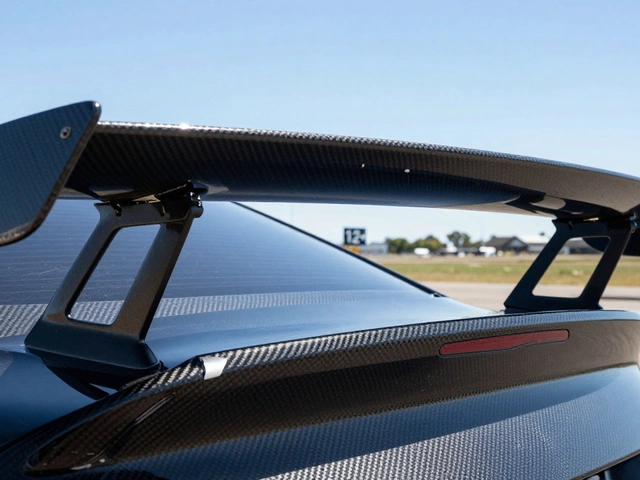
Carbon fiber spoilers look amazing on cars-sleek, lightweight, and undeniably high-performance. But if you’ve ever seen one that’s faded, cracked, or turned yellow, you know the truth: raw carbon fiber doesn’t last long in the sun. So should you clear coat it? The answer isn’t as simple as yes or no. It depends on how you use your car, where you live, and what you’re willing to maintain.
Why raw carbon fiber is a bad idea for most cars
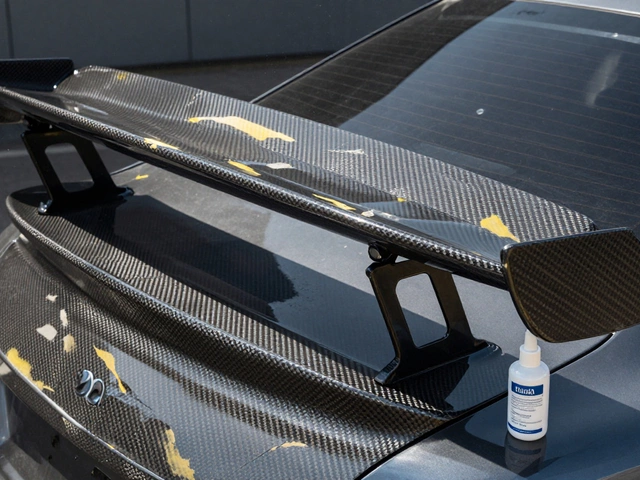
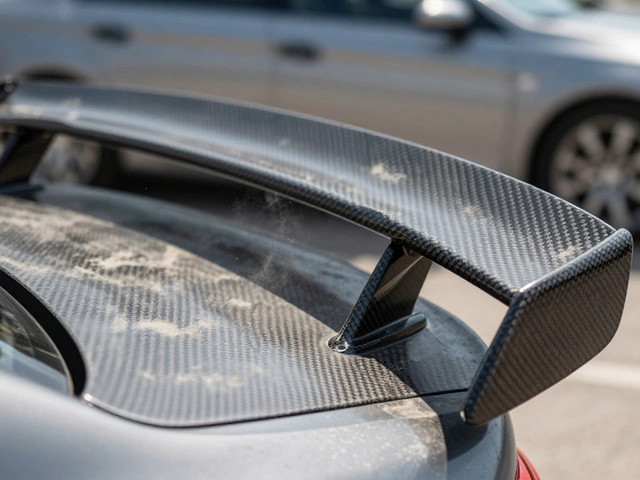
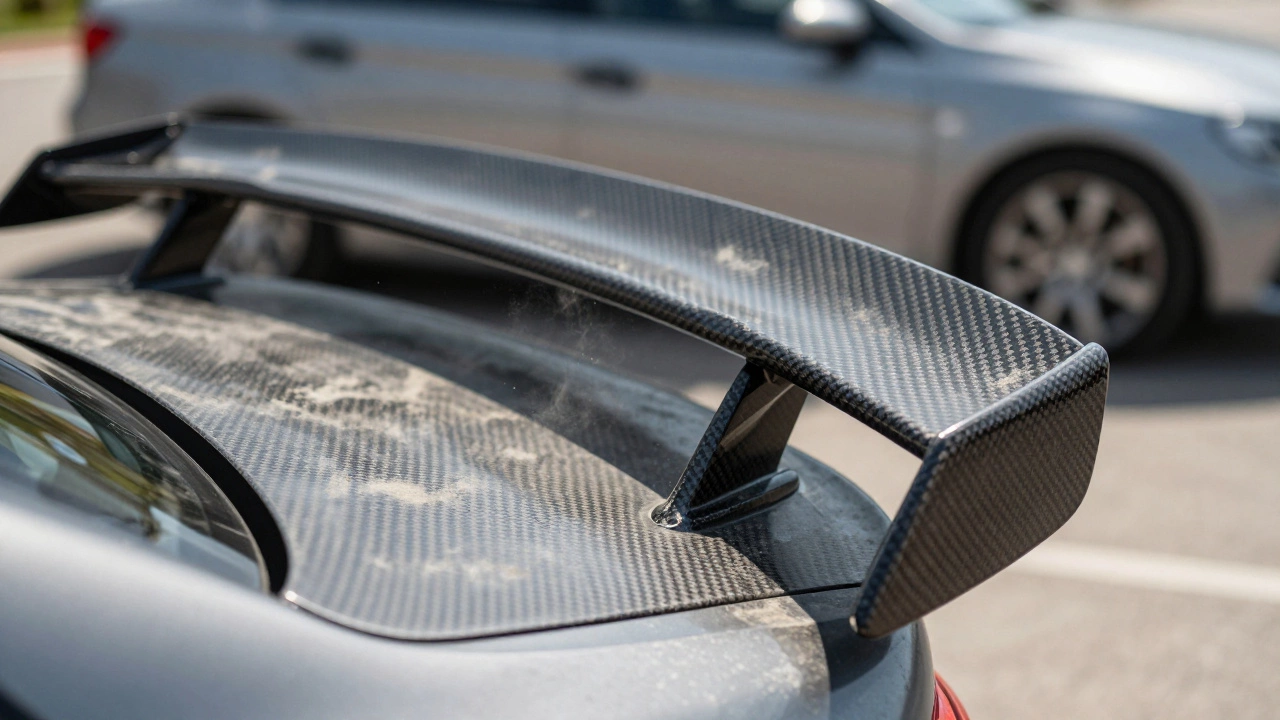
Raw carbon fiber, the kind you see in high-end race cars or museum displays, is just the woven fabric soaked in resin. It has no UV protection. Left exposed, sunlight breaks down the resin over time. In places like Melbourne, where summer UV levels hit 12+ on the scale, that degradation happens fast. You’ll notice it within 6-12 months: the surface starts to look dull, then chalky, then cracks appear along the weave lines.It’s not just cosmetic. The resin that holds the fibers together weakens. Water gets in. Dirt gets trapped. Over time, the carbon fiber can delaminate-layers start peeling apart. That’s not a repair job. That’s a replacement.
Some people think leaving it bare gives it a "factory race look." But factory race cars don’t use raw carbon fiber on body panels. They use painted or clear-coated composites. Even Formula 1 cars have clear coats over their carbon fiber parts. If it’s good enough for them, it’s good enough for your Civic.
What clear coating actually does
Clear coat is a transparent protective layer applied over the carbon fiber. It’s not just paint-it’s a UV-filtering, scratch-resistant, chemical-resistant shield. Think of it like sunscreen for your spoiler.Modern automotive clear coats are polyurethane-based and designed to last 5-10 years with proper care. They block 99% of UV rays, prevent yellowing, and make cleaning easier. A good clear coat will also resist bug splatter, bird droppings, and road grime that would otherwise eat into the resin.
There are two types of clear coat applications: factory-applied and after-market. Factory clear coats are baked on in controlled environments and are the most durable. After-market clear coats are sprayed in a shop and, if done right, can last just as long. The difference? Quality of prep work and the technician’s skill.
The risks of doing it wrong
Clear coating carbon fiber sounds simple, but it’s not. If the surface isn’t perfectly clean, the clear coat will peel. If the temperature or humidity is off during spraying, it will bubble. If they skip sanding and polishing steps, it’ll look cloudy or uneven.Bad clear coat jobs are worse than no clear coat. You spend $300-$600 on a job, and six months later, it’s peeling in patches, looking worse than the original bare finish. That’s why so many people swear off clear coats-they had a bad experience.
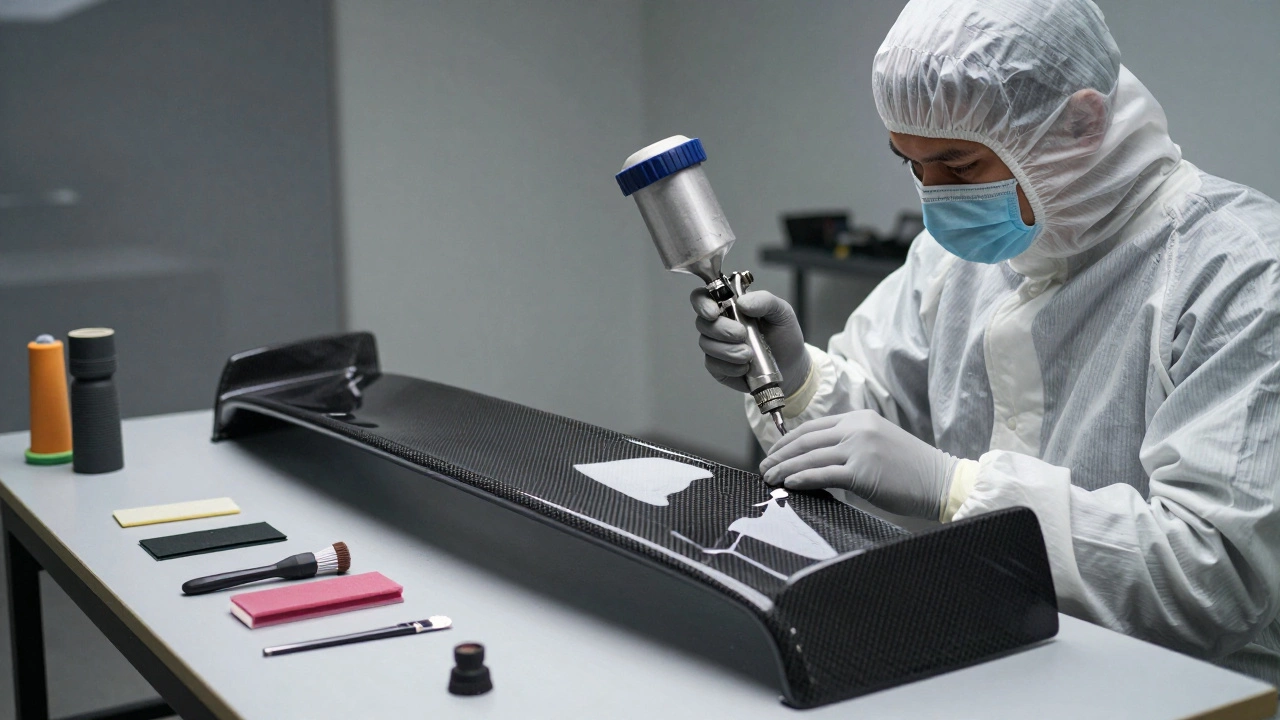
Here’s what a proper job looks like:
- Remove the spoiler from the car.
- Wash with isopropyl alcohol to remove mold release agents.
- Lightly sand with 800-1000 grit to create a bonding surface.
- Apply an epoxy primer designed for composites.
- Spray 2-3 coats of high-quality automotive clear coat (2K urethane).
- Cure in a dust-free environment for at least 48 hours.
- Polish with 2000-3000 grit wet sanding and compound to restore gloss.
Any shop that skips the primer or tries to spray over a dirty surface is cutting corners. Don’t let them take your money.
What about wax or sealants instead?
Some people think they can just wax their carbon fiber spoiler every few months and skip the clear coat. That’s a myth.Wax and sealants sit on top of the surface. They don’t bond to the resin. They wear off in 2-3 months. They don’t stop UV damage-they just delay it. You’ll still get yellowing, cracking, and fading. And if you’ve never clear coated it, the damage is already happening under the wax.
Think of it like painting a wall with temporary chalk. You can wipe it clean, but the wall underneath is still getting wet and crumbling. Wax is a temporary fix. Clear coat is a permanent solution.
When you might skip the clear coat
There are two real cases where you might leave carbon fiber bare:- You’re keeping the car for less than a year and plan to sell it before degradation shows.
- You’re using it on a track-only car that gets cleaned and re-coated after every event.
Even then, it’s risky. Track days expose the spoiler to fuel, oil, brake dust, and high heat-all of which degrade resin faster than sunlight. If you’re serious about track use, you still need a clear coat. Just make sure it’s a high-heat version.
For daily drivers? Never skip it. The cost of replacement is far higher than the cost of protection.
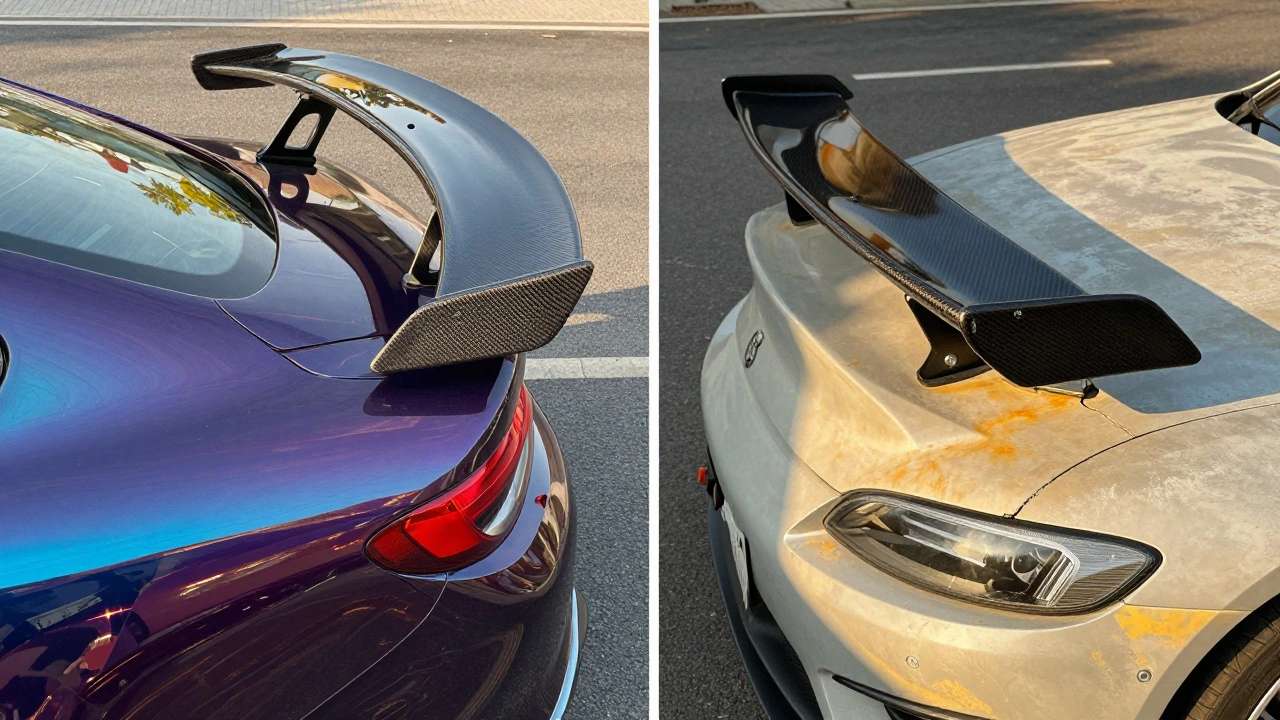
How to maintain a clear-coated carbon fiber spoiler
Once it’s done right, maintenance is easy:- Wash with pH-neutral soap-no harsh cleaners.
- Use a microfiber towel, never a sponge.
- Apply a ceramic coating every 1-2 years to boost protection.
- Avoid automatic car washes with brushes-they’ll scratch the clear coat.
- If you notice swirl marks, polish with a fine-grade compound and a dual-action polisher.
Don’t use spray waxes or quick detailers that contain silicone. They build up and make future polishing harder. Stick to ceramic sealants or pure carnauba wax if you want to add shine.
Cost breakdown: Clear coat vs. replacement
Here’s what you’re really paying for:
| Option | Cost (AUD) | Longevity | Resale Value Impact |
|---|---|---|---|
| Professional clear coat job | $300-$600 | 5-10 years | Increases |
| DIY clear coat kit | $100-$200 | 1-3 years (if done well) | Neutral to negative |
| Replace carbon fiber spoiler (new) | $800-$2,000+ | New again | Increases |
| Replace cracked/damaged spoiler (used) | $400-$1,200 | Unknown | Decreases |
Clear coating costs less than 10% of replacing the part. And it keeps your spoiler looking factory-fresh for years. That’s not just saving money-it’s preserving value.
Final verdict: Yes, clear coat your carbon fiber
If you’ve invested in a carbon fiber spoiler, you didn’t buy it to watch it fade. You bought it to turn heads, to show off your style, to make your car stand out. Clear coating isn’t an optional upgrade-it’s the only way to protect that investment.
Don’t let cheap shortcuts ruin your look. Find a reputable detailer who specializes in composites. Ask to see before-and-after photos of carbon fiber work they’ve done. Check reviews for consistency. Pay for quality upfront. Your spoiler will thank you in five years.
Clear coat it. Maintain it. Drive it. And enjoy the fact that your car still looks brand new-even when everyone else’s carbon fiber parts are peeling in the sun.
Can I clear coat carbon fiber myself?
Yes, but it’s not recommended unless you have experience with automotive spray finishes. DIY kits often fail because of poor surface prep, dust contamination, or incorrect curing conditions. Most people end up with a cloudy, uneven finish that looks worse than bare carbon fiber. Professional application ensures durability and a flawless gloss.
How long does a clear coat last on carbon fiber?
A properly applied 2K urethane clear coat lasts 5-10 years under normal conditions. Exposure to extreme UV, salt, or harsh chemicals can shorten that. Regular washing and occasional ceramic coating boosts longevity. If the clear coat starts to dull or crack before 5 years, the application was likely flawed.
Does clear coat change the look of carbon fiber?
A good clear coat enhances the look. It deepens the weave pattern, adds gloss, and makes the black fibers pop. Cheap or poorly applied clear coats can look hazy or yellow. High-quality clear coats are designed to be optically clear-no color shift, no cloudiness. Always ask to see samples before agreeing to a job.
Is ceramic coating better than clear coat for carbon fiber?
No. Ceramic coating is a top layer, not a base layer. It protects the clear coat but doesn’t replace it. Carbon fiber needs a UV-blocking, chemical-resistant clear coat underneath. Ceramic coating adds extra durability and easier cleaning, but it won’t stop yellowing if the clear coat underneath is missing or degraded.
What happens if I don’t clear coat my carbon fiber spoiler?
It will fade, yellow, and crack within 1-3 years, depending on sun exposure. The resin holding the fibers together breaks down, letting water and dirt in. Eventually, the layers start peeling or delaminating. Repair isn’t possible-you’ll need to replace the entire spoiler, which costs 3-6 times more than clear coating it in the first place.
If you’re thinking about buying a used car with a bare carbon fiber spoiler, inspect it closely. Look for dull patches, fine cracks, or yellowing along the edges. If you see any, assume it’s already damaged. Factor in the cost of repair before making an offer.