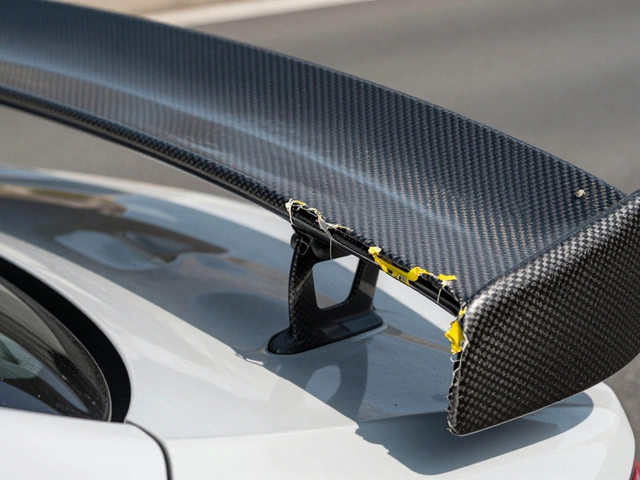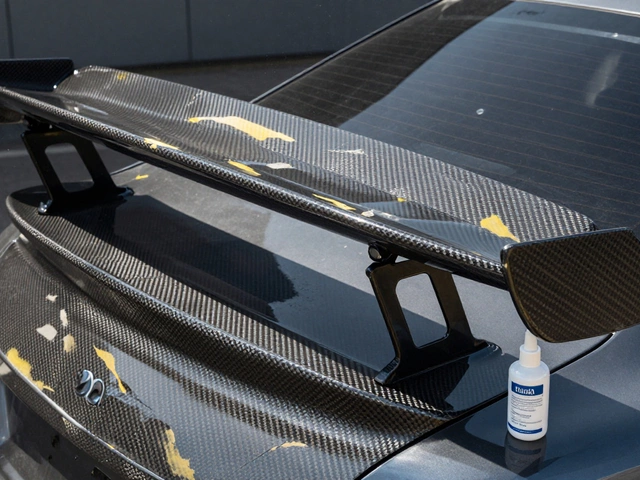
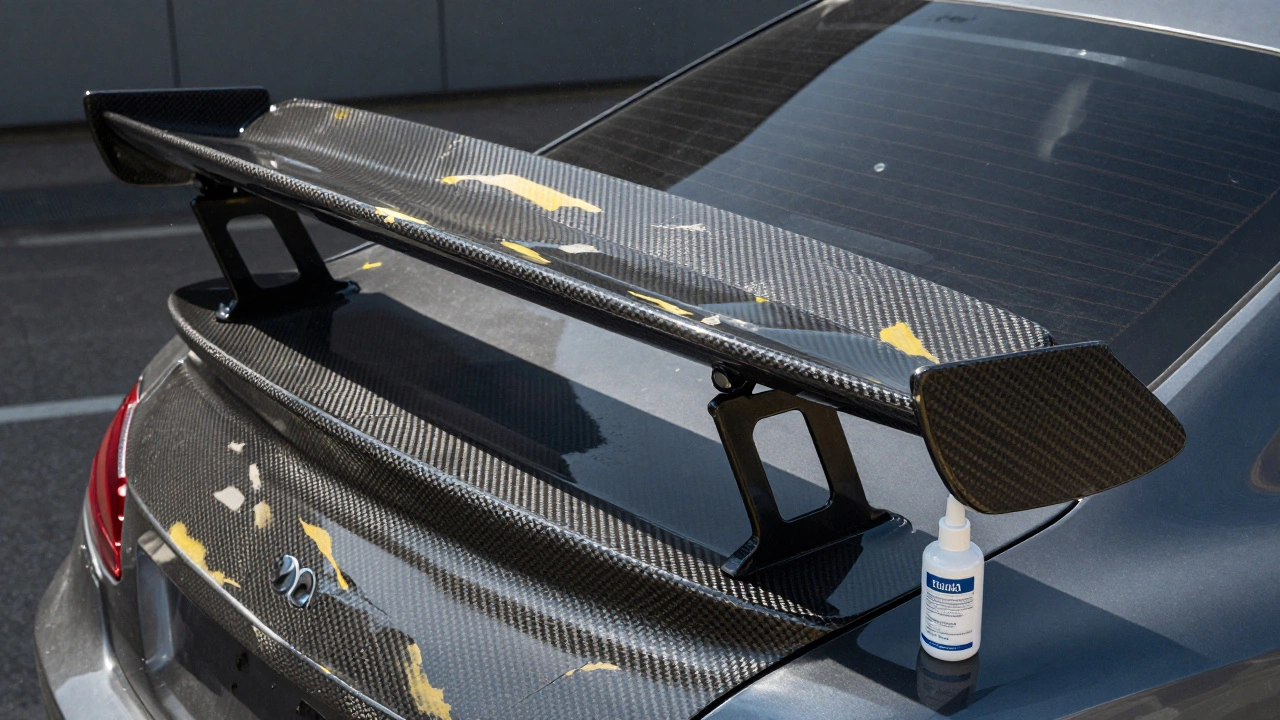
Carbon fiber spoilers look amazing. They turn heads, reduce drag, and scream performance. But if you treat them like regular plastic or metal parts, you’ll regret it. Too many people buy a carbon fiber spoiler thinking it’s just another upgrade, then ruin it within months. Here’s what actually goes wrong - and how to avoid it.
Don’t Skip the UV Protection
Carbon fiber itself doesn’t fade, but the clear coat that protects it does. That glossy, deep finish you love? It’s not the carbon weave - it’s a layer of resin and lacquer. Without proper UV protection, that layer cracks, yellows, and peels. You’ll end up with a dull, patchy spoiler that looks worse than stock.Most factory carbon fiber parts come with a high-quality clear coat. But if you bought an aftermarket spoiler, it might have a thin, cheap finish. Even if it looks perfect at first, sun exposure over time will eat it alive. In Melbourne’s summer, that’s not a question - it’s a guarantee.
Apply a ceramic coating or at least a high-grade automotive wax every 3-4 months. Skip the spray-on stuff from gas stations. Use a product made for carbon fiber. Brands like Chemical Guys and Gtechniq have formulas designed to block UV rays and repel contaminants without dulling the weave. If you don’t protect it, you’re just waiting for damage.
Don’t Install It Without Proper Prep
A carbon fiber spoiler isn’t just bolted on. It’s bonded. Most spoilers use 3M VHB tape or structural adhesive, not screws. If you try to install it with bolts alone, you’ll create stress points. Carbon fiber is stiff. It doesn’t flex like plastic. One bump on a speed bump, and the bond fails.Here’s what actually happens: someone buys a spoiler, drills holes in the trunk lid, screws it in, and thinks they’re done. Six months later, the spoiler lifts at one corner. Wind catches it. It cracks. Then it falls off on the highway. That’s not a manufacturing defect - it’s bad installation.
Proper installation means cleaning the surface with isopropyl alcohol, letting it dry completely, applying high-strength automotive adhesive, pressing the spoiler firmly for 30 seconds, and letting it cure for 24 hours. No shortcuts. No drilling unless the manufacturer says so. And never use silicone sealant - it breaks down under heat and won’t hold.
Don’t Use Harsh Cleaners
You’ve got a nice car. You wash it every weekend. But if you’re using that $5 all-purpose cleaner from the auto parts store, you’re damaging your spoiler.Carbon fiber clear coats are sensitive to harsh chemicals. Ammonia, bleach, and even some degreasers will break down the finish over time. I’ve seen spoilers that looked like they’d been sandblasted - all because someone used a tire cleaner on them by accident.
Use a pH-neutral soap. Wash with a microfiber mitt, not a sponge. Rinse thoroughly. Dry with a clean, plush towel. No pressure washers. No brushes. No scrubbing. If you’ve got road grime, use a clay bar designed for clear coats - gently, with lubricant. Treat it like a matte paint job: delicate, but durable if handled right.
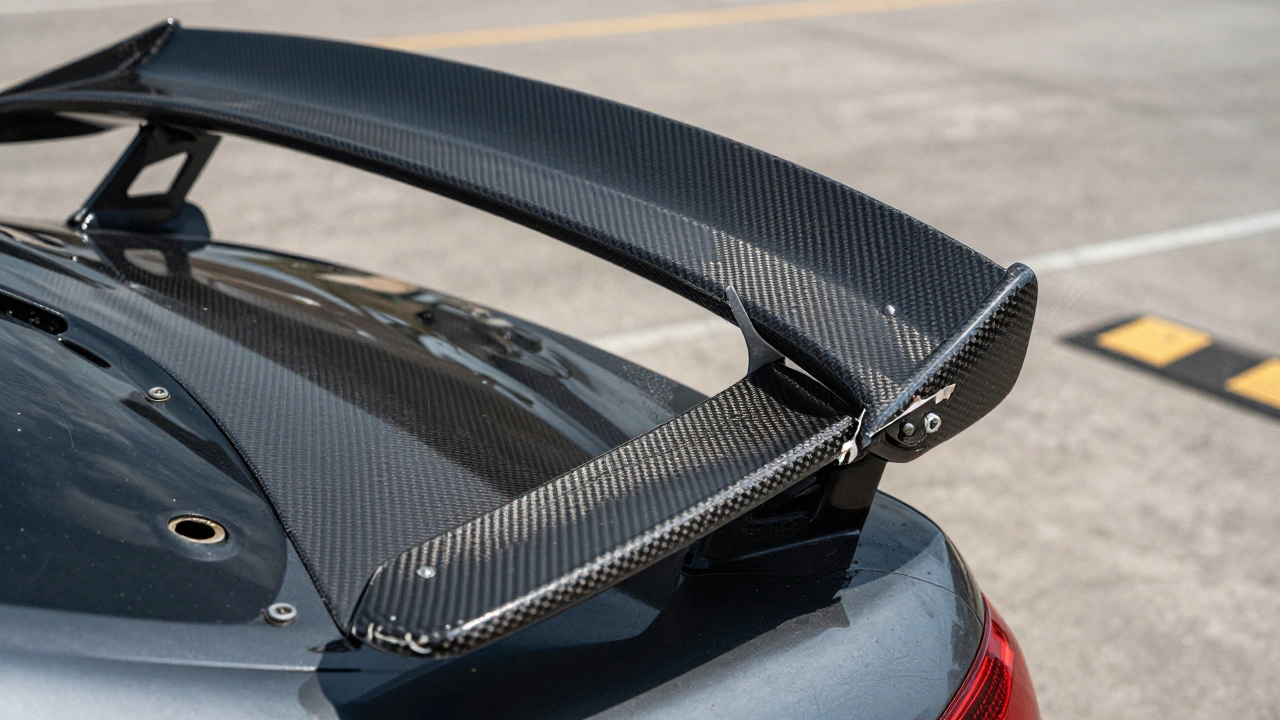
Don’t Park Under Trees or Near Construction Sites
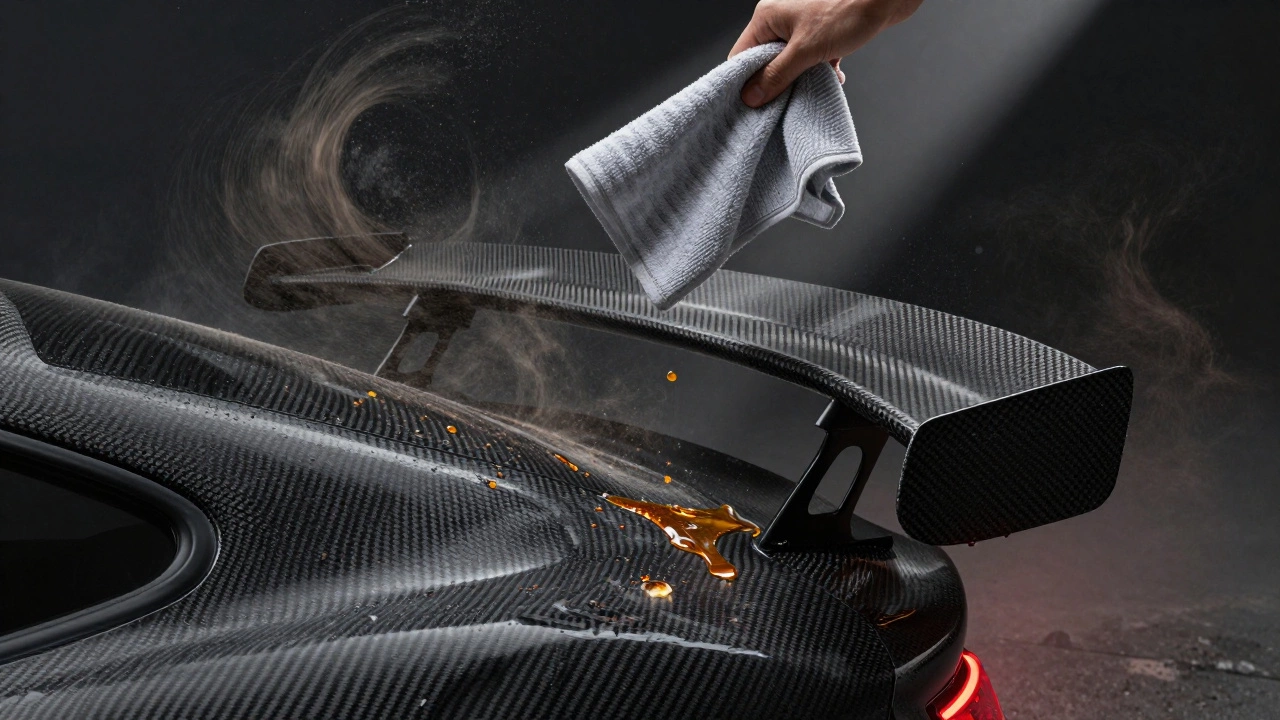
Bird droppings. Tree sap. Dust from sanding. These aren’t just annoyances - they’re carbon fiber killers.Bird droppings are acidic. Left for more than a few hours, they etch into the clear coat. Tree sap is sticky, and when it dries, it pulls the finish apart. Construction dust? That’s ground-up concrete and silica. It’s abrasive. Rub it in with a cloth? You’re sanding the surface by hand.
If you park outside, cover the spoiler. Or at least park away from trees. If you’re working on your car or someone else’s nearby, cover the spoiler with a soft cloth. One hour of exposure to sap or dust can leave permanent marks. And no, wax won’t save you once the damage is done.
Don’t Assume It’s Unbreakable
Carbon fiber is strong - but brittle. It doesn’t bend. It snaps.I’ve seen spoilers cracked from a garage door closing too fast. From someone leaning on it while cleaning the trunk. From a shopping cart rolling into it at the mall. It looks tough, but it’s like glass in a carbon weave. One sharp impact, and you’ve got a spiderweb of cracks.
Don’t use it as a step. Don’t hang bags on it. Don’t let kids climb on the trunk. Even a heavy suitcase dropped from waist height can crack it. Treat it like a piece of fine art - not a utility hook.
Don’t Ignore Minor Damage
A tiny chip. A hairline crack. A scratch from a car wash brush. You think it’s no big deal. But carbon fiber doesn’t rust. It doesn’t corrode. So you ignore it. Then moisture gets in.Once water seeps under the clear coat, it traps between the layers. It causes delamination. The weave starts to lift. The crack spreads. In a few months, that tiny scratch becomes a 3-inch split. And now you’re looking at a $1,200 replacement.
Fix small damage immediately. Use a clear epoxy designed for carbon fiber. Apply it with a toothpick. Let it cure. Then polish it lightly with a microfiber pad. You can’t make it invisible, but you can stop it from getting worse. And if you’re not confident, take it to a shop that specializes in carbon repair. It’s cheaper than replacing it.
Don’t Use It as a Status Symbol - Use It Right
Carbon fiber spoilers aren’t just for show. They’re engineered. They change airflow. They add downforce. But if you install a spoiler that doesn’t match your car’s aerodynamics, you’re not improving performance - you’re making it worse.Some aftermarket spoilers are pure style. They’re too big. Too steep. Too high. They create drag instead of reducing it. Worse, they can lift the rear end at highway speeds. That’s dangerous. And it’s not just theory - there are real-world cases of cars losing rear traction because of poorly designed carbon spoilers.
Match the spoiler to your car’s factory specs. If your car didn’t come with one, research what works. Look for data from wind tunnel tests. Don’t just buy the shiniest one on eBay. A $300 spoiler that’s aerodynamically wrong is worse than no spoiler at all.
And if you’re doing track days? Make sure the spoiler is mounted to a reinforced trunk. Stock trunks aren’t designed to handle the stress. Reinforce it with steel brackets or fiberglass backing. Otherwise, you’re risking a catastrophic failure.
Don’t Forget the Weight
Yes, carbon fiber is lighter than fiberglass or plastic. But that doesn’t mean every carbon spoiler is a weight saver. Some are hollow. Some are solid. Some are just plastic painted to look like carbon.I’ve seen “carbon fiber” spoilers that weighed more than the factory plastic ones. How? Cheap manufacturers fill them with foam or dense resin to make them look heavy. They’re not real carbon. They’re fake.
Check the weight. A real carbon spoiler for a Honda Civic should weigh under 2.5 kg. If it’s over 3.5 kg, it’s probably not worth it. Ask for the manufacturer’s spec sheet. If they won’t give it to you, walk away.
Final Thought: It’s Not Magic
Carbon fiber spoilers look expensive. They feel expensive. But they’re not indestructible. They’re not maintenance-free. They don’t last forever just because they’re made of fancy material.Treat them like high-end electronics - with care, attention, and respect. Protect the finish. Install it right. Clean it gently. Fix small damage fast. And don’t let style override function.
If you do that, your carbon fiber spoiler will look sharp for years. If you don’t? You’ll be buying a new one in 12 months.
Can I wash a carbon fiber spoiler with a pressure washer?
No. Pressure washers can force water under the clear coat, causing delamination and cracking. Always use a soft microfiber mitt and pH-neutral soap. Rinse gently with low-pressure water.
Is real carbon fiber worth the extra cost?
Yes - if it’s genuine. Real carbon fiber is 30-40% lighter than fiberglass and stronger. But many aftermarket parts are fiberglass with a carbon-look print. Check the weight, ask for material specs, and look for visible weave texture under light. If it looks too perfect, it’s probably fake.
How do I tell if a carbon fiber spoiler is properly bonded?
A properly bonded spoiler won’t rattle or flex when you press on it. There should be no gaps around the edges. If you can slide a credit card between the spoiler and the trunk, the bond is weak. Also, check for adhesive residue on the mounting surface - it should be clean and even.
Can I paint over a damaged carbon fiber spoiler?
Not without stripping the clear coat first. Painting over a damaged clear coat will look terrible and trap moisture. You need to sand the area, apply primer, then reapply a new clear coat. This requires professional equipment. DIY paint jobs on carbon fiber rarely hold up.
Do carbon fiber spoilers improve fuel efficiency?
Only if they’re aerodynamically correct for your car. A poorly designed spoiler can increase drag and reduce fuel economy. A well-designed one reduces lift and turbulence, which can improve efficiency by 1-3% at highway speeds. But most aftermarket spoilers are for looks, not function.