Window Tint Visibility & Legal Checker
Visual Simulation
Light passing through the window:
You just got your car windows tinted with that sleek, dark look you’ve been wanting. It looks great in the showroom light. But then you drive home at dusk, and suddenly your side mirrors feel like black holes. You glance over and wonder: can people actually see me through this 20% tint?
The short answer is yes, but it’s not as simple as a binary switch. Visibility depends heavily on lighting conditions, the angle of view, and what kind of film you actually have installed. Understanding how 20% tint works will save you from awkward moments where someone tries to wave at you, or worse, help you avoid a fine if you’re driving in a strict jurisdiction.
What Does 20% Tint Actually Mean?
To understand visibility, we first need to decode the number. When shops talk about 20% window tint, they are referring to the Visible Light Transmission (VLT) percentage. This metric tells you exactly how much visible light passes through the glass and the film combined.
A 20% VLT means only 20% of outside light gets into your car. Conversely, 80% of that light is blocked. For context, clear glass has a VLT of around 70-80%, while a completely opaque surface would be 0%. So, 20% is considered very dark. In the world of automotive styling, this is often called "limo tint" because it approaches the level of privacy found in luxury sedans and executive vehicles.
| VLT % | Visual Appearance | Typical Use Case |
|---|---|---|
| 5% | Nearly opaque (Limo style) | Privacy vans, high-security vehicles |
| 15% | Very dark, slight reflection | Rear side windows for maximum privacy |
| 20% | Dark, reflective exterior | Popular for aesthetics and moderate privacy |
| 35% | Medium dark | Front side windows (legal in many areas) |
| 50% | Light tint | Windshields, front sides for safety |
Daytime Visibility: Can They See In?
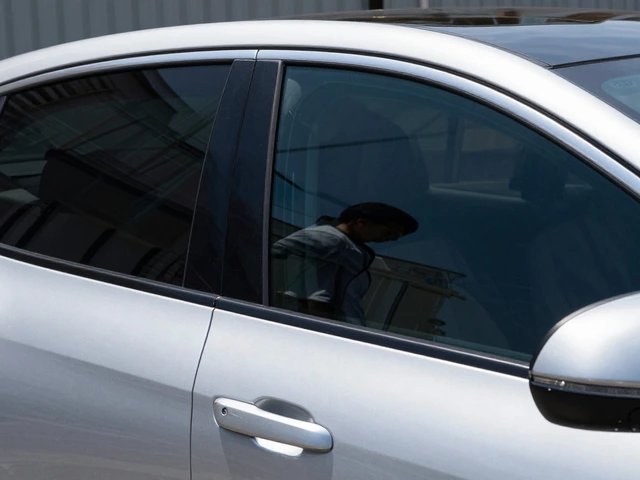
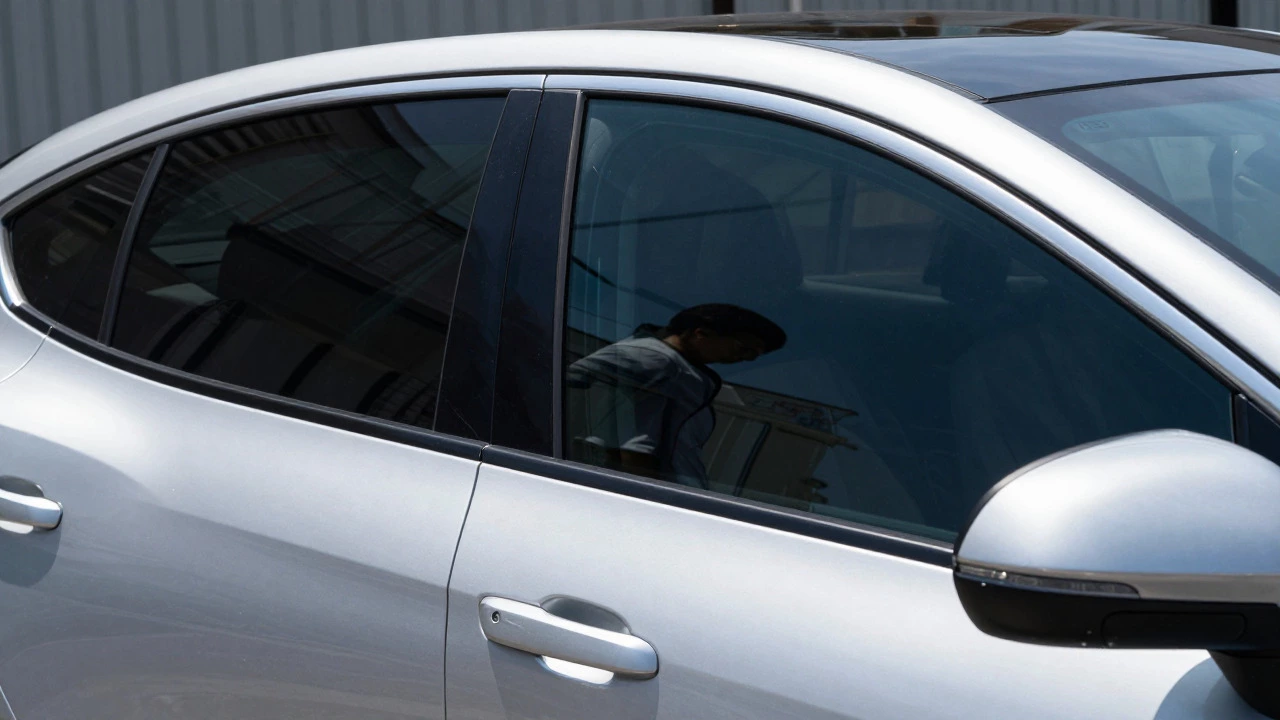
During the day, especially when the sun is bright, 20% tint offers excellent privacy. The physics here rely on contrast. If it is brighter outside than inside your car, the light reflects off the outer layer of the tint film before it can penetrate deep enough to reveal details inside.
If you park your car under direct sunlight, a person standing next to your window will likely see their own reflection or the surrounding environment rather than you sitting in the driver’s seat. They might notice shadows or movement-like an arm moving across the steering wheel-but identifying specific features like your face or what you are holding becomes difficult without getting extremely close to the glass.
However, "difficult" does not mean "impossible." If someone presses their eye against the window, or if there is a strong light source inside your car (like a dashboard screen glowing brightly), the contrast shifts. The internal light acts as a beacon, allowing observers to silhouette shapes and movements clearly.
Nighttime Visibility: The Mirror Effect Reverses
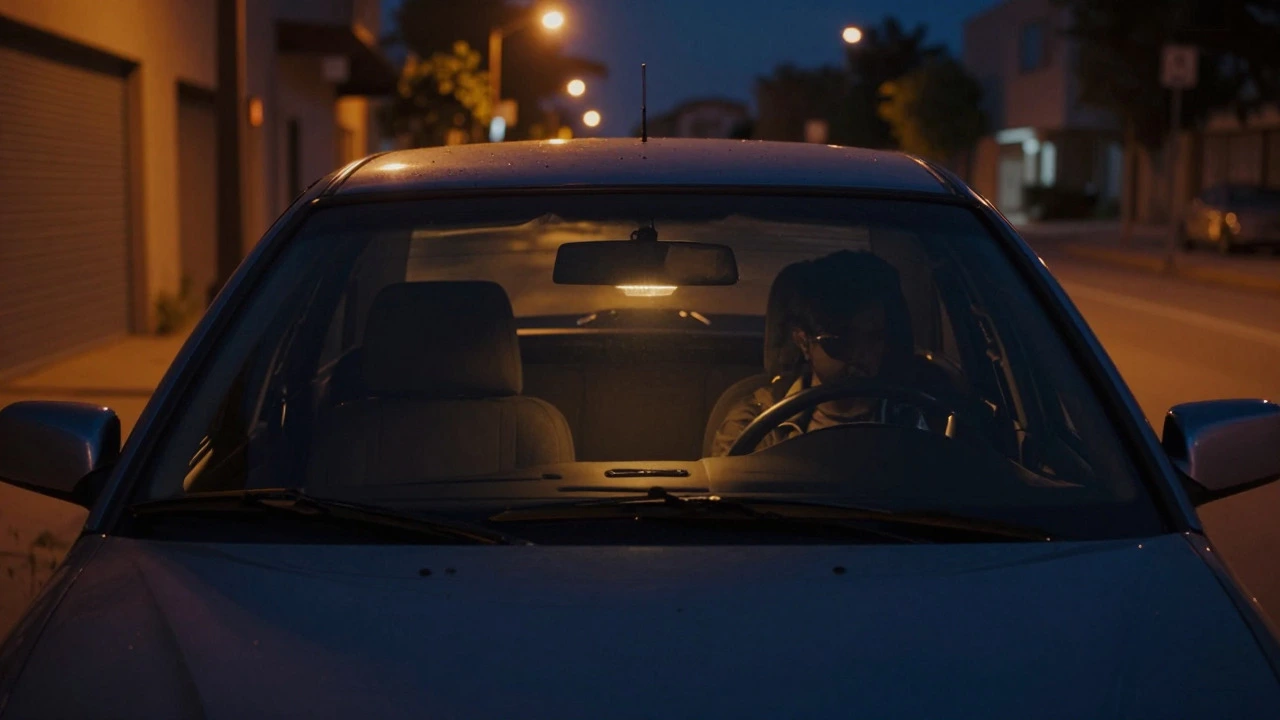
This is where most drivers get surprised. At night, the dynamic flips completely. When it is darker outside than inside your vehicle, the reflective properties of the tint diminish significantly. Now, the interior lights of your car become the dominant light source.
If you have dome lights on, bright LED dashboards, or even just streetlights illuminating the cabin, people outside can see you quite clearly through 20% tint. It becomes more like looking through sunglasses than a mirror. A pedestrian walking past your parked car at night can easily spot you sleeping in the back seat or reading on your phone.
For drivers, this creates a two-way visibility issue. Not only can they see you, but you also have a harder time seeing them. This is why many safety experts recommend lighter tints for front side windows. Your peripheral vision drops sharply with 20% film after sunset, making it harder to spot cyclists or pedestrians crossing the street.
Angle Matters: The Glancing View
Visibility isn't just about light; it's about geometry. Window tint behaves differently depending on the viewing angle. When someone looks directly perpendicular to the window (straight on), they see the least amount of detail due to maximum reflection.
But if they approach from a sharp angle-say, from the front corner of your car-the reflection decreases, and transparency increases. This is known as the Brewster's angle effect in optics, though you don't need the physics degree to notice it. If a police officer walks around your car during a traffic stop, they will likely see more of the interior from the front quarter panel than from the side door.
This angular transparency is crucial for security. If you are leaving valuables in your car during the day, remember that a thief doesn't need to stare straight at the window. A quick glance from a diagonal angle might reveal a laptop bag on the passenger seat, even with 20% tint.
Types of Film: Dyed vs. Ceramic vs. Carbon
Not all 20% tints are created equal. The material composition affects both heat rejection and visual clarity, which indirectly impacts how well others can see in.
- Dyed Film: This is the cheapest option. It adds layers of dye to absorb light. While it looks dark, it can fade over time and sometimes has a purple hue. It offers good privacy but less heat rejection. Because it absorbs light rather than reflecting it efficiently, it can sometimes appear slightly clearer at night compared to metallic films.
- Ceramic Film: High-end ceramic tints use non-conductive ceramic particles. They reject heat incredibly well without interfering with GPS or radio signals. Visually, they tend to have a neutral color and maintain consistent darkness day and night. They often provide the best balance of privacy and clarity for the driver.
- Carbon Film: Made with carbon fibers, these films offer a matte finish and good durability. They block UV rays effectively and resist fading better than dyed films. The appearance is similar to dyed but with a richer, deeper black tone.
- Metallic Film: These contain tiny metal particles that reflect heat. They are highly reflective, which enhances daytime privacy. However, they can interfere with electronic signals and may corrode over time. The high reflectivity makes them the hardest to see through during the day, but they can create glare issues at night.
Legal Limits: Is 20% Tint Allowed?
Before you commit to 20% tint, check your local laws. Regulations vary wildly by country, state, and even city. In many places, 20% is too dark for any window except perhaps the rear windshield or back side windows.
In Australia, for example, regulations are strict to ensure police can identify occupants and drivers can see hazards. Most states require front side windows to allow at least 35% VLT. Some jurisdictions go even higher, requiring 50% for the front sides. Applying 20% tint to your front doors could result in a fine, a compliance sticker requirement, or being forced to remove the tint entirely.
In the United States, laws differ by state. Texas allows 25% on front side windows, so 20% would be illegal there. California requires 70% VLT on front side windows, making 20% a guaranteed ticket. Always verify current statutes with your local Department of Motor Vehicles or transport authority before installation.
Safety and Practical Considerations
Beyond legality, consider safety. Dark tint reduces your field of view. Studies suggest that reduced visibility contributes to accidents, particularly at intersections and during nighttime driving. If you frequently drive in heavy rain or fog, 20% tint exacerbates the problem by further dimming already low-light conditions.
Additionally, think about emergency situations. If your car breaks down on the highway, high-visibility clothing helps rescuers find you. Dark tint hides you. If you are involved in an accident, first responders need to assess passengers quickly. Opaque windows delay this process.
For families with children, 20% tint on rear windows can make it hard for parents to monitor kids in rear-facing seats without turning around constantly. Many parents opt for 35% or 50% on the rear sides to balance privacy with supervision.
How to Test Before You Buy
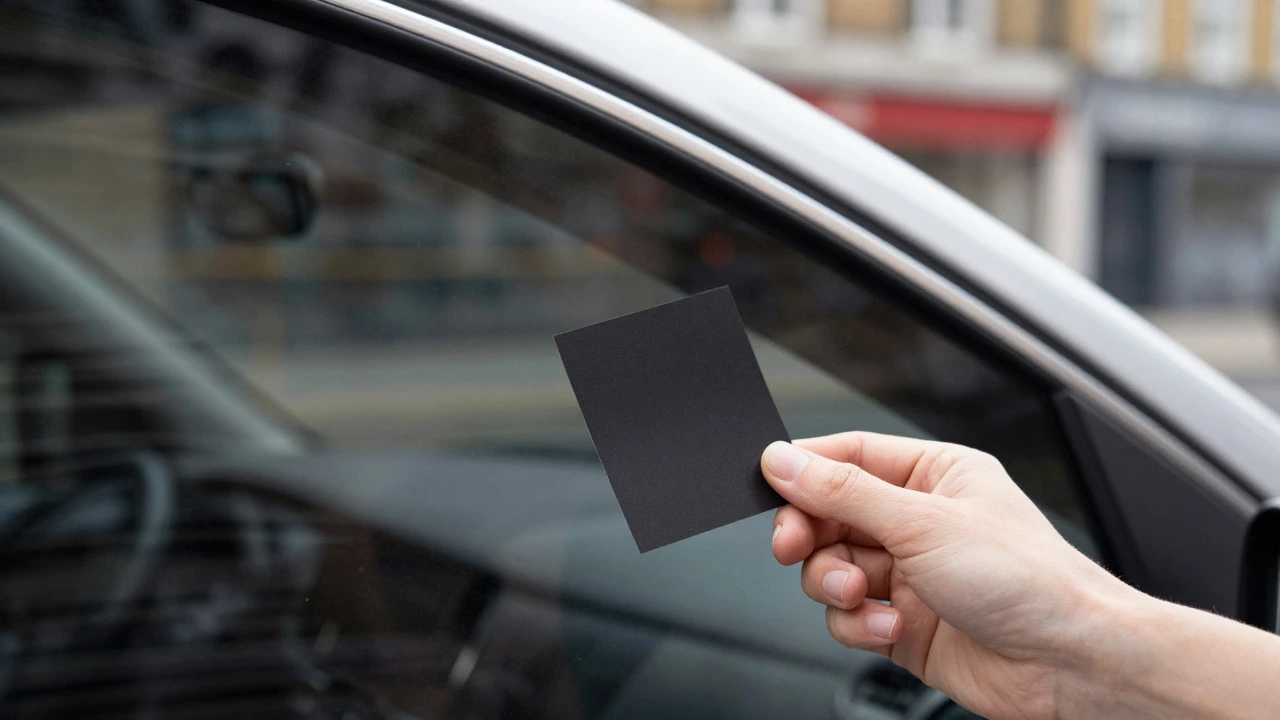
Don't guess. Test it. Most reputable tint shops offer sample swatches. Take a piece of 20% film and hold it up to your window. Step outside. Look in. Then turn on your interior lights and try again. Check how it looks at different times of day. Sit in the driver's seat and check your blind spots. If you feel claustrophobic or unable to see clearly, step up to 35% or 50%.
Remember, once tint is applied, removing it is expensive and risks damaging defroster lines on rear windows. Taking ten minutes to test the visibility now saves hundreds of dollars and hours of hassle later.
Is 20% tint legal for front windows?
In most jurisdictions, 20% tint is illegal for front side windows. Many regions require a minimum of 35% to 70% VLT for front windows to ensure driver visibility and police identification. Always check local laws before applying dark tint to the front.
Can police see through 20% tint at night?
Yes, police can usually see through 20% tint at night, especially if your interior lights are on or streetlights illuminate the cabin. The contrast between the dark outside and lit inside makes the tint nearly transparent from the outside.
Does 20% tint reduce heat?
Yes, 20% tint blocks significant heat, particularly if it is ceramic or carbon film. It rejects infrared radiation and UV rays, keeping the cabin cooler. However, the heat rejection depends more on the film technology than just the darkness percentage.
Will 20% tint fade over time?
Dyed 20% tint tends to fade and turn purple after a few years. Ceramic and carbon films are much more durable and resistant to fading, maintaining their dark appearance for the life of the vehicle.
Is 20% tint better than 35% for privacy?
20% tint offers more daytime privacy than 35% because it lets in less light. However, the difference in nighttime privacy is negligible since both become quite transparent when interior lights are on. Choose based on your aesthetic preference and legal limits.