Alloy vs. Steel Wheel Impact Calculator
You’re standing in the tire shop or scrolling through an online store, staring at two prices that don’t make sense. One set of wheels costs $200, the other costs $800. Both look like they’ll fit your car. Both are round. But one is labeled "alloy" and the other is just "steel." What are you actually paying for? Is it just marketing fluff, or does it change how your car drives?
The short answer is yes, it changes everything. It affects your fuel economy, your braking distance, your ride comfort, and even how fast your car accelerates. Most people assume alloy rims are just a cosmetic upgrade to make their car look cooler. They are, but they also do heavy lifting-literally-by changing the physics of how your vehicle moves.
What Are Alloy Rims Made Of?
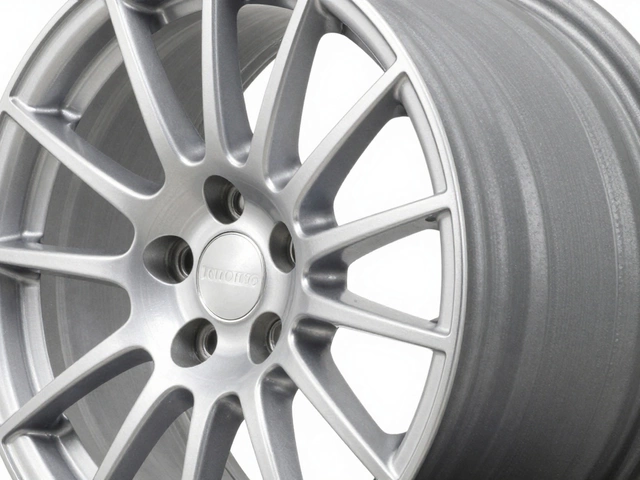
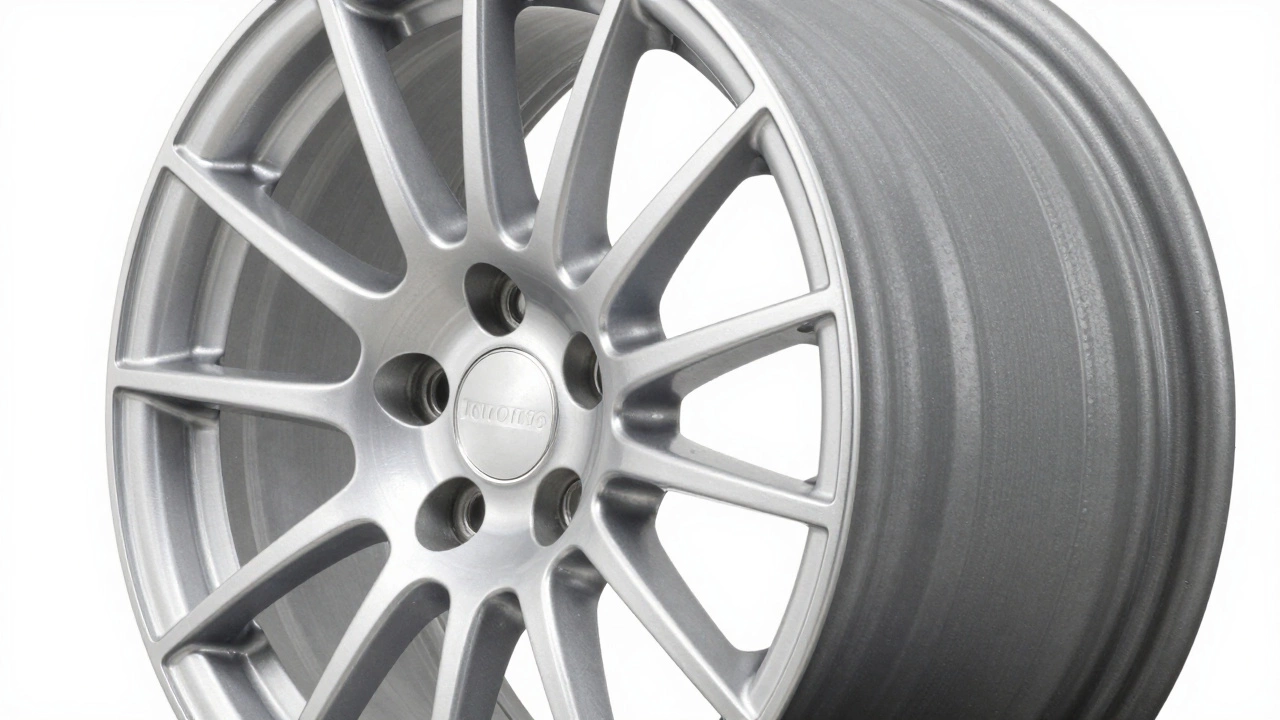
When we talk about alloy rims, we aren't talking about a single metal. An alloy is a mixture of two or more elements, where at least one is a metal. In the world of car wheels, the most common material is an aluminum-magnesium alloy. Sometimes titanium or silicon gets mixed in, depending on what the manufacturer wants to achieve.
Aluminum alloys are lightweight, strong, and conduct heat well. This combination makes them ideal for wheels because reducing weight here has a massive impact on performance. Unlike solid blocks of metal, these wheels are usually cast or forged. Casting involves pouring molten metal into a mold, which allows for complex, stylish designs. Forging involves pressing solid metal under extreme pressure, creating a denser, stronger wheel that’s often used in high-performance cars.
The key attribute of an alloy wheel is its density. Aluminum is significantly less dense than steel. This means for the same volume, an alloy wheel weighs much less. That weight difference is the secret sauce behind why enthusiasts prefer them.
What Are "Normal" (Steel) Rims?
When people say "normal rims," they usually mean steel wheels. These have been the standard for decades. If you buy a base-model sedan or a work truck, it likely comes with steel wheels from the factory. They are made from stamped sheets of steel that are welded together. Because they are cheap to manufacture, they keep the overall cost of the car down.
Steel wheels are incredibly tough. You can hit a pothole at highway speeds, and while the wheel might bend slightly, it rarely shatters. You can take it to a welder, straighten it out, and drive on. They are also excellent at absorbing road shocks. If you’ve ever driven a budget car over a bumpy construction site and felt the ride was surprisingly smooth, that’s the steel wheel doing its job by flexing slightly to absorb the impact.
However, they come with downsides. They are heavy. A typical steel wheel can weigh 15-20% more than an equivalent alloy wheel. And unless they are painted or hubcaps are added, they look... well, industrial. Grey, dull, and functional.
The Weight Factor: Unsprung Mass Matters
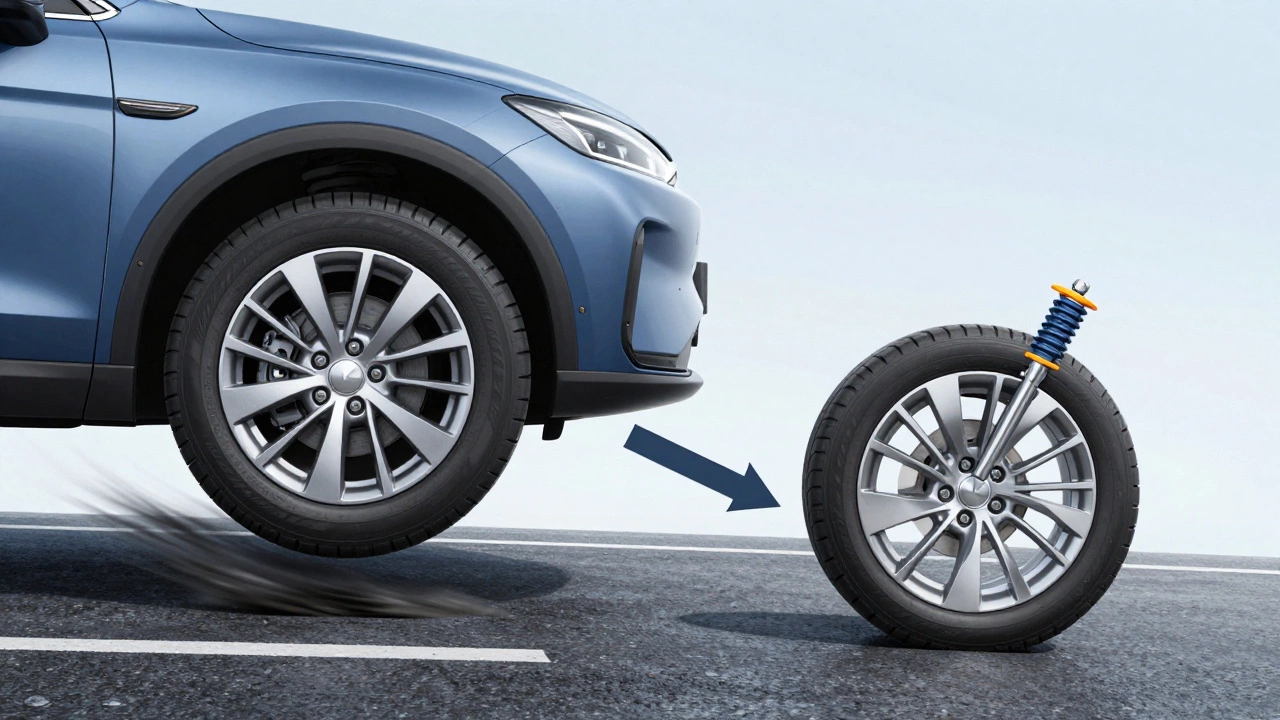
This is the technical part that actually matters for driving dynamics. Engineers call wheel weight "unsprung mass." This refers to any part of the car that isn’t supported by the suspension-the wheels, tires, brakes, and hubs.
Here’s the rule of thumb: Reducing unsprung mass is one of the most effective ways to improve handling. Why? Because the suspension has to push this weight up and down every time you hit a bump. The heavier the wheel, the harder the suspension works. With a heavy steel wheel, the suspension reacts slower. The tire loses contact with the road for fractions of a second longer when hitting uneven surfaces. This leads to reduced grip, poorer steering response, and a feeling of "floatiness" during cornering.
Switch to alloy rims, and you reduce that unsprung mass. The suspension can react faster. The tire stays planted on the asphalt better. Your steering feels sharper. You don’t need a race track to feel this; you notice it immediately when changing lanes on the freeway or taking a sharp turn in a parking lot.
Heat Dissipation and Braking Performance
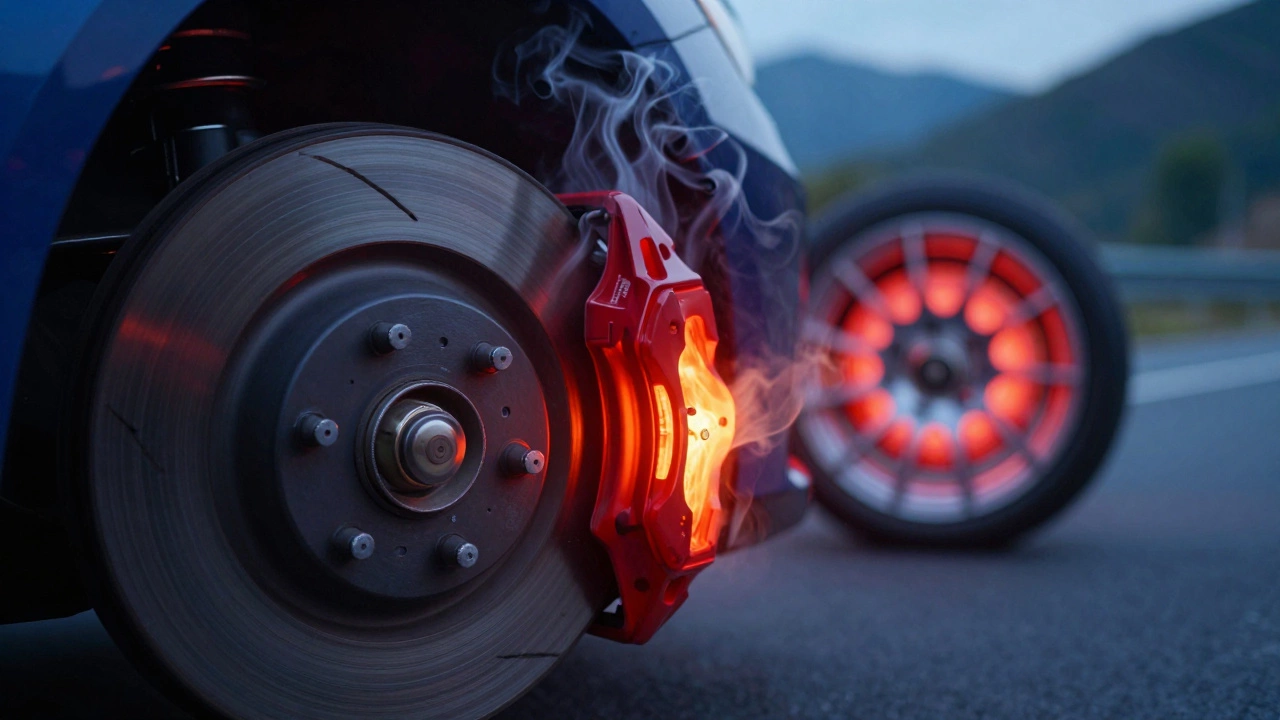
Brakes generate immense heat. When you slam on the brakes, friction turns kinetic energy into thermal energy. That heat needs to go somewhere. If it stays trapped around the brake rotor, the brakes fade. They become less effective, and stopping distances increase. This is dangerous.
Aluminum alloys are excellent conductors of heat. They act like a giant heatsink, pulling heat away from the brake assembly and dissipating it into the air as the wheel spins. This keeps your brakes cooler for longer periods, especially in stop-and-go city traffic or when driving down steep hills.
Steel, on the other hand, is not a great heat conductor. It traps heat near the brake components. While modern brake systems are designed to handle this, alloy wheels provide a distinct safety margin. In emergency situations where repeated hard braking is required, alloy wheels help maintain consistent braking performance.
| Feature | Alloy Rims | Steel Wheels |
|---|---|---|
| Weight | Light (Lower unsprung mass) | Heavy (Higher unsprung mass) |
| Heat Dissipation | Excellent (Cools brakes faster) | Poor (Traps heat) |
| Durability | Can crack or bend; harder to repair | Bends easily; easy to weld/straighten |
| Ride Comfort | Firmer (Transmits more road noise/vibration) | Softer (Absorbs bumps better) |
| Cost | Expensive ($300-$1000+ per wheel) | Cheap ($50-$150 per wheel) |
| Aesthetics | Stylish, customizable finishes | Plain, usually requires hubcaps |
| Rust Resistance | Does not rust (can corrode/oxidize) | Prone to rust if paint chips |
Corrosion and Rust: The Long-Term Battle
If you live in a place like Melbourne, Australia, where we get salted roads in winter or high humidity, corrosion is a real concern. Steel wheels rust. It’s inevitable. Once the protective paint layer chips off due to road debris or curb rash, moisture gets to the bare metal. Rust spreads, weakening the structure and looking terrible. You have to constantly touch up the paint or replace them.
Alloy wheels don’t rust in the traditional sense because they contain no iron. However, they can suffer from oxidation and pitting corrosion. Salt and chemicals can eat away at the surface finish, leaving ugly white spots or deep pits. While this doesn’t compromise structural integrity as quickly as rust does on steel, it does ruin the appearance. To combat this, many people apply ceramic coatings or wax specifically designed for alloys to create a barrier against road salts.
Repairability: What Happens When You Curb Them?
We’ve all done it. You’re turning into a driveway, misjudge the angle, and scrape the side of the wheel against the concrete curb. The sound is awful. Now, what happens next depends entirely on the material.
If you have steel wheels, you’re likely fine. The steel will dent inward. A professional wheel alignment and maybe a slight straightening process can fix it. It’s cheap and quick. You might see a small dent, but it’s safe to drive.
If you have alloy rims, the situation is trickier. Aluminum is brittle compared to steel. Instead of bending, it can crack. A hairline fracture in an alloy wheel is a major safety hazard. It can propagate and cause the wheel to fail while driving. Even if it doesn’t crack, a bent alloy wheel is very difficult to repair. It requires specialized heating and pressing equipment. Often, the cost of repairing a damaged alloy wheel approaches the cost of buying a new one. For this reason, many fleet managers and budget-conscious drivers stick with steel.
Which Should You Choose?
Your choice shouldn’t be based on looks alone. It should match how you use your car.
Choose Alloy Rims if:
- You drive a performance car or want better handling.
- You care about fuel efficiency (lighter wheels reduce rolling resistance).
- You want a specific aesthetic that matches your car’s style.
- You drive in warm climates or do frequent highway driving where brake cooling is beneficial.
- You have the budget for higher upfront costs and potential repair bills.
Choose Steel Wheels if:
- You drive primarily in rural areas with poor road conditions.
- You tow heavy loads frequently (the strength of steel is advantageous).
- You are on a tight budget.
- You want a softer, more comfortable ride over rough terrain.
- You plan to swap wheels seasonally (e.g., using steelies with winter tires to protect expensive alloys from salt).
A popular compromise among enthusiasts is to buy one set of alloy wheels for summer and daily driving, and keep the original steel wheels for winter. This protects your investment from salt damage and ensures you always have a backup set if an alloy cracks.
Maintenance Tips for Both Types
No matter which you choose, maintenance extends their life. Clean your wheels regularly. Brake dust is acidic and can eat into both steel paint and alloy clear coats. Use a pH-neutral wheel cleaner. Avoid harsh brushes that can scratch the surface. For alloys, inspect the barrel area (the inside part hidden by the tire) for cracks annually. For steel, check for bubbling paint, which indicates rust starting underneath.
Are alloy rims safer than steel wheels?
Safety depends on context. Alloy rims offer better braking performance due to heat dissipation and better handling due to lower unsprung mass. However, steel wheels are less likely to catastrophically fail upon impact. A dented steel wheel is usually still safe, whereas a cracked alloy wheel is a severe danger. For everyday driving, alloys are generally considered safer due to improved control and stopping power.
Do alloy rims really improve fuel economy?
Yes, but the effect is modest. Lighter wheels reduce the rotational mass the engine has to move. This reduces fuel consumption, typically by 1-3%. While it won’t save you hundreds of dollars instantly, it adds up over thousands of kilometers. The bigger benefit is usually acceleration responsiveness rather than pure MPG gains.
Can I put alloy rims on my truck?
You can, but you must ensure the load rating matches your vehicle’s Gross Vehicle Weight Rating (GVWR). Trucks carry heavy loads, and standard passenger car alloys may not be strong enough. Look for alloys specifically rated for light trucks or SUVs. If you frequently tow heavy trailers, steel wheels are often recommended for their durability and ease of replacement.
Why are alloy rims so expensive?
The manufacturing process is more complex. Casting or forging aluminum requires precise molds, higher temperatures, and stricter quality control to prevent internal bubbles or weaknesses. Additionally, alloys are often designed with intricate spokes for aesthetics and airflow, which adds to production costs. Steel wheels are mass-produced using simple stamping processes, keeping costs low.
How do I know if my alloy wheel is cracked?
Visual inspection is the first step. Look for hairline fractures, especially near the center hole or the spoke roots. Tap the wheel gently with a rubber mallet; a cracked wheel may produce a different, hollow sound compared to a solid one. However, the best method is a professional ultrasonic test performed by a wheel specialist. Never ignore a suspected crack, as it can lead to sudden wheel failure.