Air Filter Balance Calculator
Select your primary driving goal and environment to see how much restriction you should tolerate for optimal performance and engine life.
Analysis Results
Recommended Restriction Level:
Low
Filtration Priority:
Standard
Expert Recommendation
You just bought a shiny new performance air filter for your car, expecting instant horsepower gains and a better exhaust note. You install it, fire up the engine, and… nothing feels different. Or worse, your fuel economy drops, and the throttle response feels sluggish. Why would a part designed to help your engine breathe actually make it work harder? The answer lies in a counter-intuitive concept: air filter restriction.
Most people assume that "more flow is always better." While that’s generally true for the intake path as a whole, the specific design of an air filter involves a delicate balance between filtration efficiency and airflow resistance. If a filter is too restrictive, it chokes the engine. But if it’s not restrictive enough-or rather, if it lacks sufficient surface area or proper media density-it might let in dirt that destroys your engine long before you notice any power loss. Let’s break down when a filter becomes a bottleneck and how to spot the signs.
The Physics of Engine Breathing
To understand restriction, you have to think about what your engine is actually doing. It’s essentially a giant vacuum cleaner. Every time the piston moves down during the intake stroke, it creates negative pressure (vacuum) inside the cylinder. This vacuum pulls air through the intake system. The internal combustion engine relies on this precise mixture of air and fuel to generate power.
Air filter restriction refers to the resistance the filter medium presents to this incoming air. Think of it like trying to drink a thick milkshake through a tiny straw versus a wide smoothie straw. The narrower the straw (or the denser the filter), the more effort your lungs (or the engine) need to exert to get the same amount of liquid (or air) in.
In automotive terms, we measure this resistance in inches of water column (inH2O) or millibars of pressure drop. A healthy, unrestricted intake system should have minimal pressure drop at idle and moderate RPMs. However, every material has limits. Paper filters are cheap and efficient but can clog quickly. Foam filters offer good flow but poor filtration unless oiled heavily. Cotton gauze filters, popularized by brands like K&N, sit in the middle ground, offering reusable performance with moderate restriction.
When Restriction Becomes a Problem
Is there such a thing as a filter being *too* restrictive? Absolutely. Here is where things get tricky. Many aftermarket "high-flow" filters are marketed as removing restriction, but some budget options or poorly designed universal fitments can actually increase it compared to a clean OEM paper filter.
If the filter media is too dense without having enough surface area to compensate, the engine struggles to pull air in at higher RPMs. This leads to throttling losses, where the engine wastes energy fighting against the vacuum created by the restricted intake. You won’t necessarily see this on a dyno run unless you’re measuring volumetric efficiency closely, but you will feel it in daily driving.
- Sluggish Throttle Response: The engine hesitates because it can’t get air into the cylinders fast enough when you step on the gas.
- Reduced Top-End Power: At low RPMs, the engine might feel fine because it doesn’t need massive airflow. But at 5,000+ RPM, the restriction hits a wall, and power plateaus or drops.
- Check Engine Lights: In modern cars with mass airflow (MAF) sensors, unexpected changes in airflow velocity due to restriction can confuse the sensor, triggering lean or rich codes.
Conversely, if a filter is not restrictive enough-meaning it flows freely but fails to trap particles-you face a different set of problems. Dirt acts like sandpaper inside your cylinders. Over time, this causes premature wear on piston rings and cylinder walls, leading to oil consumption and compression loss. So, the goal isn't zero restriction; it's optimal restriction.
Filtration Efficiency vs. Airflow: The Trade-Off
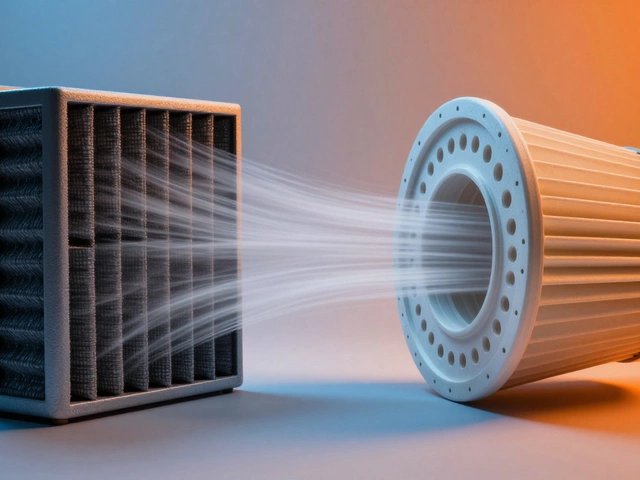
Every air filter faces a fundamental engineering trade-off. To catch smaller particles, you need tighter pores or thicker media. Tighter pores mean more resistance. To reduce resistance, you open up the pores or thin the media. Larger pores mean less filtration.
Let’s look at common filter types and how they stack up in this battle:
| Filter Type | Airflow Capacity | Filtration Efficiency | Lifespan | Best For |
|---|---|---|---|---|
| Standard Paper | Moderate | High (99%+) | Short (15k miles) | Daily drivers, warranty compliance |
| Cotton Gauze (K&N style) | High | Moderate-High (98%) | Long (50k+ miles) | Enthusiasts, track days |
| Foam (Oil Bath/Dry) | Very High | Low-Moderate | Medium | Off-road, dirty environments |
| Synthetic Media | High | High | Medium-Long | Modern turbo engines |
Notice that standard paper filters often have surprisingly good flow rates when new. They are pleated extensively to maximize surface area within a small box. When these pleats get crushed or dirty, flow plummets. Aftermarket cotton filters rely on larger pleat spacing and thinner media to maintain flow even as they collect dust. However, if you buy a cheap knock-off cotton filter with fewer pleats than the OEM unit, you’ve just increased restriction significantly.

Signs Your Air Filter Is Too Restrictive
How do you know if your current setup is choking your engine? You don’t need a dyno to find out. Your car gives you clear signals if the intake is struggling.
First, check your fuel economy. If you installed a new filter and mileage dropped by more than 5%, suspect restriction. The engine control unit (ECU) adds more fuel to compensate for perceived lack of air, or the driver presses the pedal deeper to get the same speed, burning more gas.
Second, listen to the engine. A highly restricted intake often produces a distinct whistling or sucking sound from the intake tube, especially under hard acceleration. This is the sound of air being forced through a narrow gap. While some enthusiasts like this noise, it’s physically inefficient.
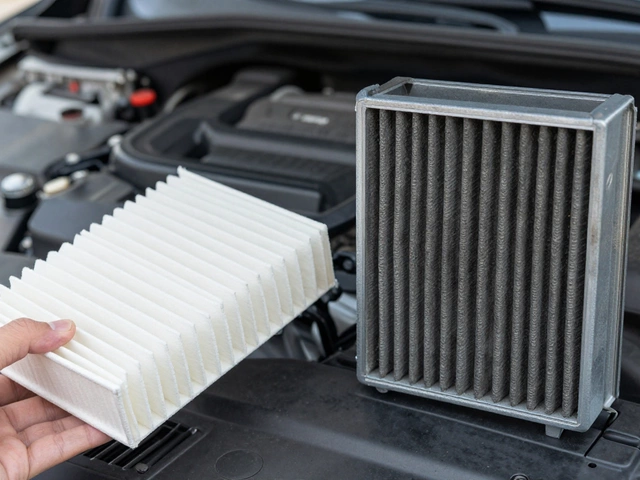
Third, inspect the filter element itself. If it looks collapsed, warped, or crushed flat, it’s restricting flow regardless of its material. This happens frequently with low-quality foam filters that degrade over time, losing their structural integrity. A collapsed filter blocks the intake passage entirely, acting like a plugged nose.
The Myth of "Zero Restriction" Intakes
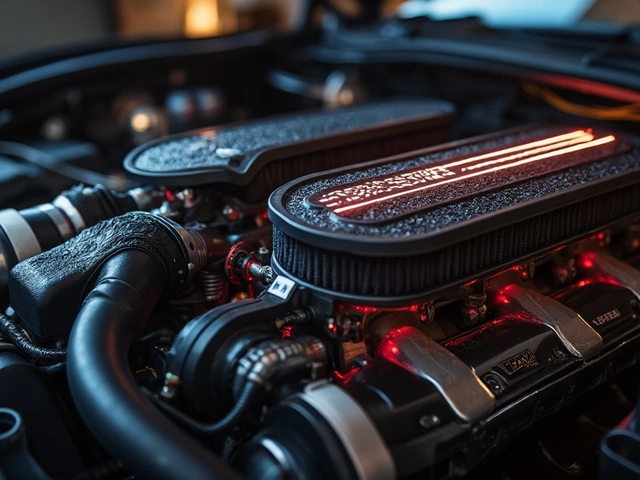
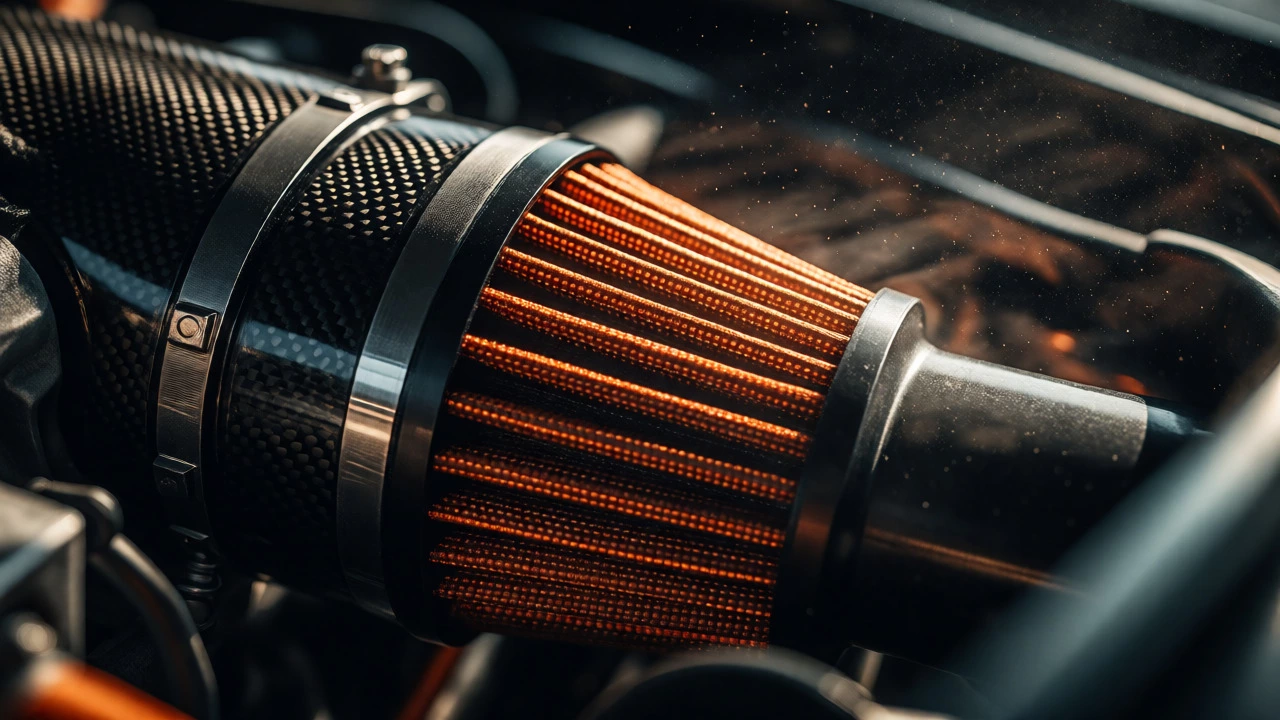
Many modifications aim to remove all restriction. Short ram intakes and cold air kits promise this. But here’s the catch: removing restriction isn’t always linear. If you remove the factory airbox and replace it with an open-element cone filter, you might lose the thermal shielding that keeps intake air cool. Hot air is less dense than cold air. Less dense air means less oxygen per cubic foot. Even if the filter flows freely, hot air reduces power.
So, while a cold air intake aims to lower temperature and reduce restriction simultaneously, many DIY setups fail at one or both. An open filter sucks in hot engine bay air, negating the flow benefits. A well-designed closed-box system with a high-flow synthetic filter often outperforms a cheap open cone because it maintains cooler air temperatures despite slightly higher initial restriction.
This brings us back to the central question: Can filters be too restrictive? Yes, but only if they deviate from the manufacturer’s calibrated flow curve without compensating elsewhere. Modern engines are tuned via software to expect certain airflow characteristics. Deviating too far can throw off MAF readings, causing the ECU to enter limp mode or adjust timing incorrectly.

How to Choose the Right Balance
Selecting the right filter depends on your usage. If you drive a daily commuter, stick with high-quality OEM or equivalent synthetic filters. They offer the best balance of filtration and cost. Don’t chase marginal flow gains that require constant maintenance.
If you’re building a project car or going to the track, consider multi-layer cotton gauze filters. These provide excellent flow and durability. Ensure the brand publishes actual flow bench data. Look for numbers like CFM (cubic feet per minute) at specific pressure drops (e.g., 28 inH2O). Compare these numbers to stock specs. If the aftermarket filter shows lower CFM at the same pressure drop, it’s more restrictive, not less.
For off-road vehicles, prioritize filtration over flow. Dust and mud kill engines faster than slight restriction hurts performance. Use dual-stage filters or pre-filters (like cyclonic separators) to keep debris away from the main element. This reduces the load on the primary filter, allowing it to stay cleaner and flow better for longer.
Maintenance Matters More Than Brand
A $100 high-flow filter that hasn’t been cleaned in 30,000 miles will perform worse than a $10 paper filter replaced every 15,000 miles. Clogging is the real enemy of airflow. As dust accumulates, the filter’s permeability decreases exponentially. Initially, flow remains stable, but once the pores begin to block, restriction spikes rapidly.
Regular cleaning is crucial for reusable filters. Use dedicated cleaner and oil kits. Do not use compressed air, which can tear the mesh. And never over-oil a cotton filter. Excess oil coats the MAF sensor, causing erratic readings that mimic restriction issues. Cleanliness ensures the filter operates within its designed parameters, preventing accidental over-restriction.
Do performance air filters really add horsepower?
On naturally aspirated street cars, gains are usually negligible (1-3 HP) and often within margin of error. On turbocharged or supercharged engines running boost, reduced restriction can allow the turbo to spool faster and reach target boost sooner, potentially yielding noticeable gains (5-15 HP) depending on the tune and other mods.
Can a dirty air filter damage my engine?
Yes. A severely clogged filter restricts airflow, causing the engine to run rich (too much fuel). This can foul spark plugs and increase carbon buildup. Conversely, if the filter is damaged or missing, unfiltered air introduces abrasive particles that score cylinder walls and damage piston rings, leading to expensive internal repairs.
Is it bad to drive without an air filter?
Never drive without an air filter, even for short distances. Without filtration, road dust, bugs, and debris enter the engine directly. This causes immediate abrasive wear. Additionally, the lack of filter disrupts airflow dynamics, confusing MAF sensors and potentially triggering check engine lights or poor idle quality.
How often should I replace or clean my air filter?
Paper filters typically last 15,000-30,000 miles, depending on conditions. Reusable cotton filters can last 50,000-100,000 miles but require cleaning every 25,000-30,000 miles. Always inspect visually. If it looks gray/black or oily, service it. Driving in dusty areas requires more frequent attention.
Does a high-flow filter void my warranty?
Generally, no, thanks to the Magnuson-Moss Warranty Act in the US. Manufacturers must prove the modification caused the failure to deny a claim. However, if a poorly maintained high-flow filter lets dirt in and damages the engine, they may argue negligence. Keep receipts and maintenance records to protect yourself.