Wheel Size Decision Tool
Your Driving Profile
Recommendation
Select Your Options
Adjust the settings on the left to see which wheel size is best for your specific situation.
So you’re staring at a set of 17-inch alloy wheels that look sharp, but your car currently sits on 16-inch rims. The question isn’t just about looks. It’s about whether that one-inch jump in diameter is worth the trade-offs in ride quality, cost, and fuel economy. There is no universal "better" option here. What works perfectly for a daily commuter might be a nightmare for someone driving on rough country roads.
The decision between 16-inch and 17-inch wheels comes down to what you value more: aesthetics and handling precision, or comfort and durability. Let’s break down exactly how that extra inch changes everything from your wallet to your suspension.
Visual Impact and Stance
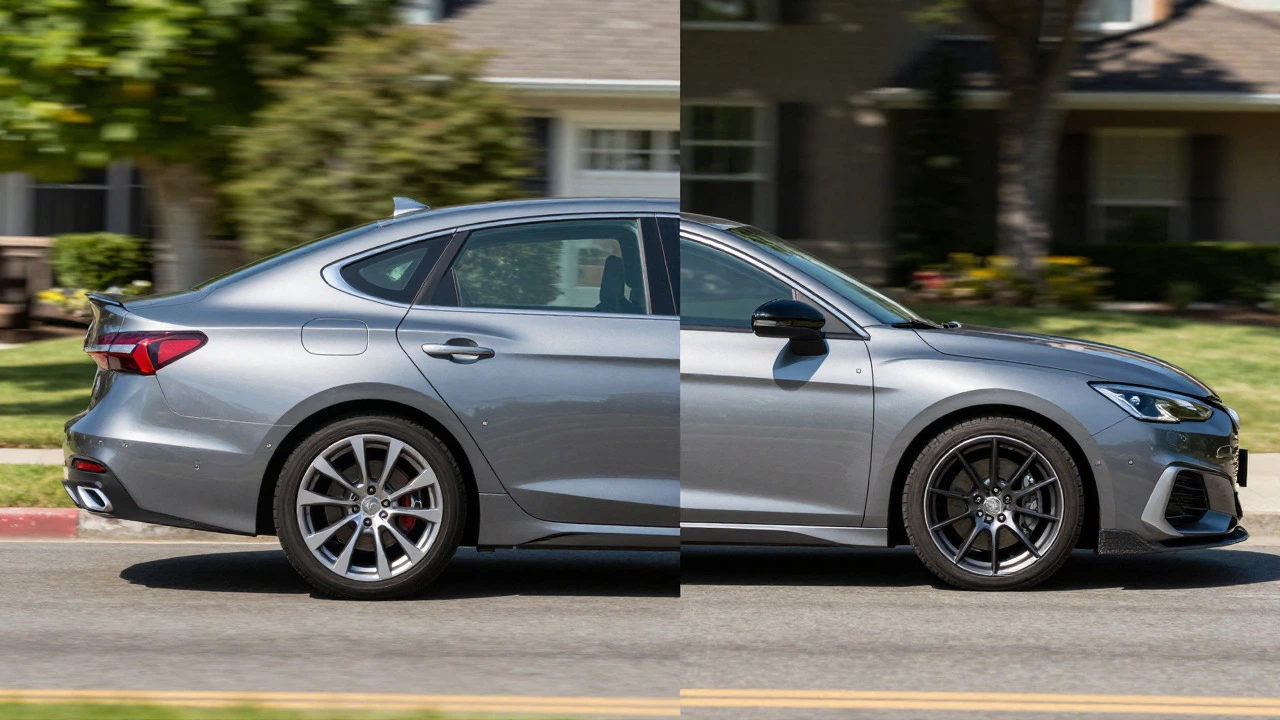
Let’s address the elephant in the room first: bigger wheels generally look better. That’s why manufacturers offer them as upgrades. When you move from 16 to 17 inches, you aren’t just changing the metal ring; you are changing the visual balance of the vehicle. A 17-inch wheel fills the wheel well more aggressively, reducing the amount of visible tire rubber. This creates a sportier, lower stance that many enthusiasts chase.
However, this is subjective. If you drive a compact sedan or a small SUV, 17-inch wheels often strike the right balance between looking modern and not appearing undersized. On larger trucks or heavy-duty vehicles, 17-inch wheels might actually look too small, making the vehicle look top-heavy. Conversely, putting 18-inch or larger wheels on a small hatchback can make it look like a child wearing adult shoes. For most mid-size cars, 17 inches is considered the "sweet spot" for aesthetics without going overboard.
Ride Comfort and Sidewall Height
This is where the physics get real. To keep the overall diameter of the tire consistent (so your speedometer stays accurate), when you increase the wheel diameter, you must decrease the tire height. This is called the aspect ratio.
- 16-inch setup: Typically uses a tire with a higher profile, such as 205/55R16. The sidewall is taller and thicker.
- 17-inch setup: Typically requires a lower profile tire, such as 225/45R17. The sidewall is shorter and stiffer.
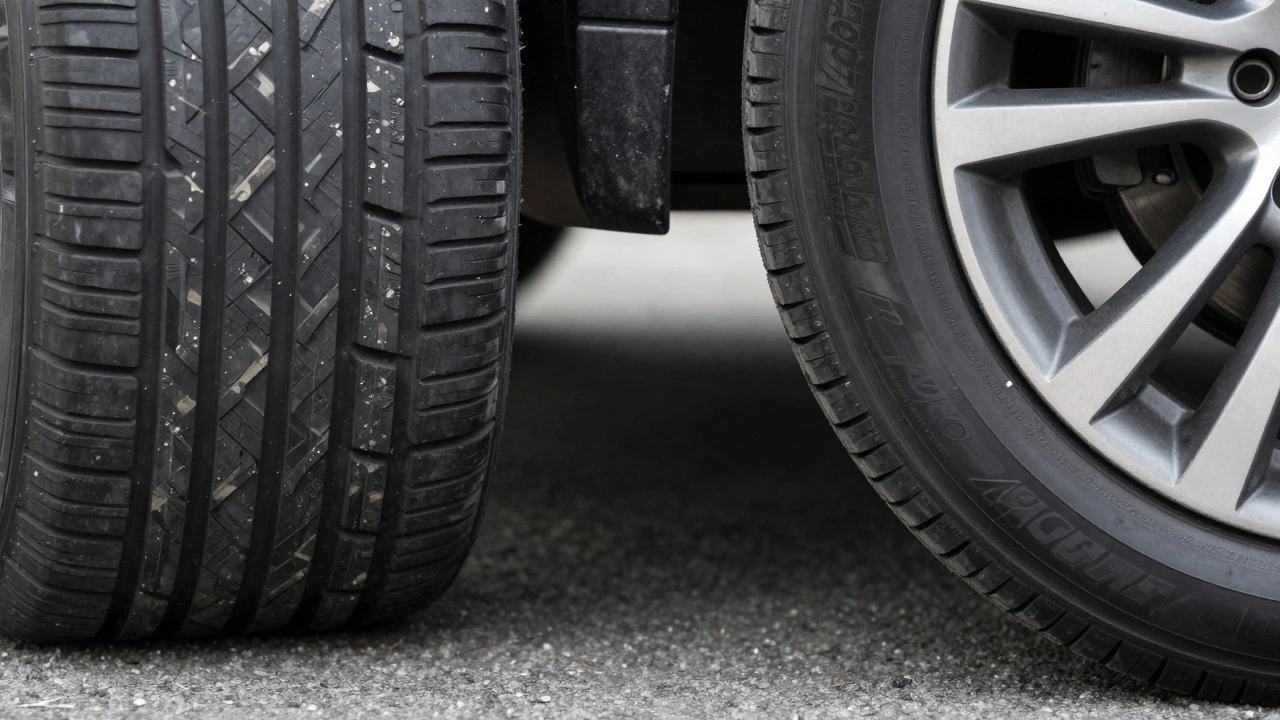
A taller sidewall acts as a secondary shock absorber. It flexes over potholes, cracks, and speed bumps, absorbing energy before it reaches your car’s suspension. A low-profile tire on a 17-inch wheel has very little give. You will feel every imperfection in the road surface directly through the steering wheel and seat. If your local roads are cracked or poorly maintained, sticking with 16-inch wheels will provide a noticeably smoother, quieter ride.
Handling and Responsiveness
If you enjoy driving on winding roads or track days, the 17-inch wheel usually wins on performance. Because the sidewall is stiffer, there is less lateral flex during hard cornering. This means the contact patch-the part of the tire touching the road-stays planted more effectively. You get sharper turn-in response and less body roll.
Additionally, 17-inch wheels allow for wider tires. While a 16-inch wheel might max out at a width of 205mm or 215mm safely, a 17-inch rim can easily accommodate 225mm or even 235mm widths. More rubber on the road equals better grip in dry and wet conditions. However, this improved handling comes at the cost of the comfort we discussed earlier. You have to choose between feeling connected to the road or floating above it.
Fuel Economy and Rotating Mass
Bigger wheels are heavier. Even if they are made of lightweight aluminum alloy, a 17-inch wheel typically weighs more than its 16-inch counterpart. This adds "unsprung mass" to your vehicle. Unsprung mass is weight not supported by the suspension. Higher unsprung mass makes it harder for the suspension to react quickly to bumps, further degrading ride quality.
From an efficiency standpoint, that extra weight matters. Your engine has to work harder to accelerate and rotate heavier wheels. In real-world testing, upgrading from 16 to 17-inch wheels can reduce fuel economy by roughly 1% to 3%. It doesn’t sound like much, but over thousands of miles, it adds up. Furthermore, low-profile tires often have slightly higher rolling resistance due to their construction, which can compound this effect. If you do a lot of city driving with frequent stops, the 16-inch setup is more economical.
Durability and Repair Costs
Here is a harsh reality: 17-inch wheels are more prone to damage. Because the sidewall is shorter, there is less protection for the rim itself. Hit a deep pothole or curb sharply, and the force transfers directly to the alloy rim, causing bends, cracks, or curb rash. Repairing a bent 17-inch alloy wheel can cost anywhere from $50 to $200 per wheel, depending on the severity. Sometimes, they need complete replacement.
Tire costs also rise significantly. Low-profile tires are more expensive to manufacture and purchase. A set of four high-performance summer tires for 17-inch wheels can cost $100-$300 more than equivalent all-season tires for 16-inch wheels. Plus, because the sidewall is thinner, these tires are more susceptible to bulges and blowouts from impacts. If you live in an area with winter ice or poor road maintenance, 16-inch wheels are simply more resilient and cheaper to maintain.
| Feature | 16-Inch Wheels | 17-Inch Wheels |
|---|---|---|
| Ride Comfort | High (Taller sidewall absorbs shocks) | Lower (Stiffer sidewall transmits road noise) |
| Handling | Good (More sidewall flex) | Excellent (Less flex, sharper response) |
| Fuel Efficiency | Better (Lighter rotating mass) | Slightly Lower (Heavier wheels/tires) |
| Durability | Higher (Better impact protection) | Lower (Rims more exposed to damage) |
| Cost | Lower (Cheaper wheels and tires) | Higher (Premium pricing for both) |
| Aesthetics | Conservative/Standard | Sporty/Aggressive |
Winter Driving Considerations
If you live in a region with snow and ice, wheel size becomes a practical safety issue rather than just a cosmetic one. Winter tires perform best when they have sufficient tread depth and sidewall flexibility to conform to icy surfaces. Low-profile tires on 17-inch wheels often struggle in deep snow because the stiff sidewall doesn't bite as effectively as a softer, taller compound.
Many drivers who upgrade to 17-inch wheels for summer use buy a second set of 16-inch steel wheels specifically for winter. This allows them to use thicker, more durable winter tires that are cheaper and last longer. If you don’t want to manage two sets of wheels, sticking with 16-inch wheels year-round simplifies your life and improves winter traction.
Braking Performance
Larger wheels allow for larger brake rotors and calipers. If you plan to upgrade your braking system for performance reasons, 17-inch wheels might be necessary to clear big brake kits. For standard street driving, however, the difference in braking distance between 16 and 17-inch setups is negligible, provided the tires are in good condition. The primary benefit here is heat dissipation; larger wheels often have better airflow around the brakes, preventing fade during aggressive driving. For the average commuter, this is rarely a deciding factor.
How to Decide: A Practical Checklist
To make the final call, ask yourself these questions based on your daily reality:
- What are your roads like? Smooth highways? Go for 17s. Cracked suburban streets or rural gravel? Stick with 16s.
- How do you drive? Relaxed cruiser? 16s offer comfort. Enthusiast who corners hard? 17s offer control.
- What is your budget? Are you willing to pay more for tires, potential rim repairs, and slightly higher gas bills? If yes, 17s are viable. If no, 16s are smarter.
- Do you drive in winter? If yes, consider if you want to buy a separate winter wheel set. If not, 16-inch all-season tires are more forgiving.
Ultimately, 17-inch wheels are not objectively "better." They are a trade-off. You are buying style and handling precision with your comfort and wallet. For most daily drivers prioritizing longevity and ease of ownership, 16-inch wheels remain the pragmatic champion. But if that sporty look and tighter handling excite you every time you get behind the wheel, the 17-inch upgrade is worth the compromise.
Will 17-inch wheels fit my car if it came with 16-inch?
Not automatically. You must check the bolt pattern, offset, and center bore. Additionally, you need to ensure the tires chosen for the 17-inch wheels match the overall diameter of your original 16-inch setup within a 3% margin to avoid speedometer errors and ABS issues. Always consult a professional installer or use a wheel fitment calculator specific to your vehicle model.
Does upgrading to 17-inch wheels void my warranty?
Generally, no. Changing wheel size does not void your powertrain or bumper-to-bumper warranty unless the dealer can prove that the new wheels directly caused a specific failure (e.g., a bent rim damaging the suspension). However, some manufacturers may deny claims related to suspension wear if non-OEM sizes were used. Check your owner's manual for restrictions on wheel dimensions.
Are 17-inch wheels safer than 16-inch?
Safety depends on the situation. 17-inch wheels with wider, high-grip tires can improve cornering stability and dry/wet braking performance. However, they can be less safe in winter conditions or on rough roads due to increased risk of blowouts and reduced traction on ice. For general safety, proper tire pressure and tread depth matter more than wheel size.
How much more do 17-inch tires cost compared to 16-inch?
On average, a set of four 17-inch tires costs $50 to $150 more than equivalent 16-inch tires. Premium performance brands can see a price gap of $200 or more. The cost difference varies based on tire brand, seasonality (summer vs. all-season), and current market prices.
Can I put 16-inch tires on 17-inch wheels?
No. Tire sizes are specific to wheel diameters. A tire marked R16 is designed for a 16-inch rim bead seat. Trying to mount it on a 17-inch rim will result in an improper seal, air leaks, and potential tire failure. You must buy tires specifically rated for 17-inch wheels (marked R17).