
Suspension Upgrade Advisor
Enter Your Setup Details
Tell us about your planned modification and current vehicle state.
Recommendation
Risk Factors:
Enter your details to see if your struts can handle the drop.
There is a persistent myth in the car modification scene that simply swapping your factory coils for lowering springs will inevitably destroy your struts. You hear it at every meet: "You need to change the shocks too, or they'll blow." It sounds scary, especially when you are trying to keep costs down. But the reality is more nuanced than a simple yes or no. In many cases, your stock struts will survive just fine. In others, they might fail prematurely. The difference comes down to how much you drop the car, the quality of the parts, and how hard you drive.
If you have been sitting on the fence about lowering your vehicle, this guide breaks down exactly what happens to your suspension components under increased load. We will look at the physics, the warning signs of failure, and when it actually makes sense to upgrade to a full coilover system.
The Physics of Dropping Your Car
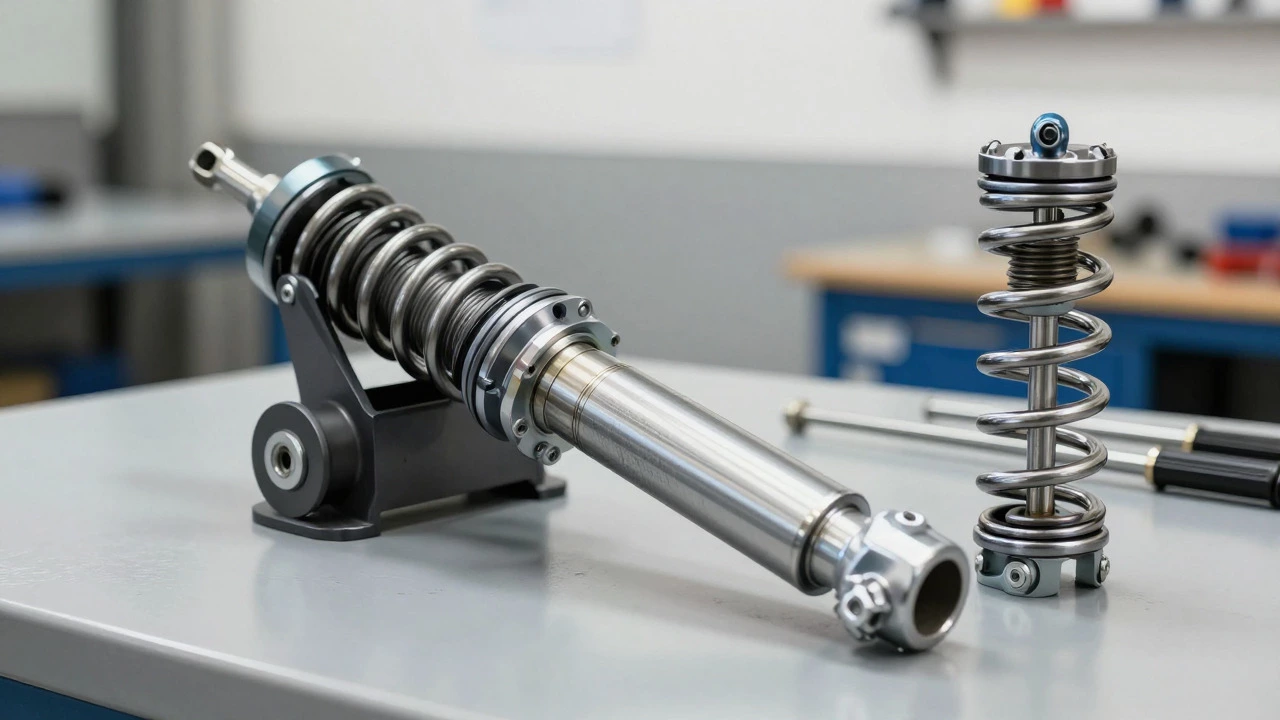
To understand why struts sometimes fail, you first need to understand what they do. A strut is not just a spring; it is a critical part of your steering and suspension geometry. It holds the wheel up, but its primary job is damping. It controls the speed at which the spring compresses and rebounds. When you install stiffer, shorter lowering springs, you change the dynamics of this system.
Factory struts are tuned to work with factory springs. They expect a certain amount of travel and a specific rate of compression. Lowering springs are typically stiffer (higher spring rate) and shorter. This means two things happen immediately:
- Increased Spring Rate: The spring pushes back harder against the shock absorber. If the strut’s internal valving isn't strong enough to handle this force, it can bottom out internally or overheat.
- Reduced Travel: The car sits lower, meaning there is less distance between the tire and the fender, and less room for the suspension to move up and down before hitting mechanical limits.
This doesn't mean destruction is guaranteed. It means the strut is working harder. If you lower the car by a modest amount-say, 1.5 inches (about 38mm)-most modern factory struts can handle the extra load without issue. However, if you go aggressive, dropping 2.5 inches or more, the stress on the seals and internal valves increases significantly.
When Do Struts Actually Fail?
Not all failures are created equal. Sometimes a strut fails because of age, not the springs. To know if your setup is risky, you need to look at the specific conditions that lead to premature wear.
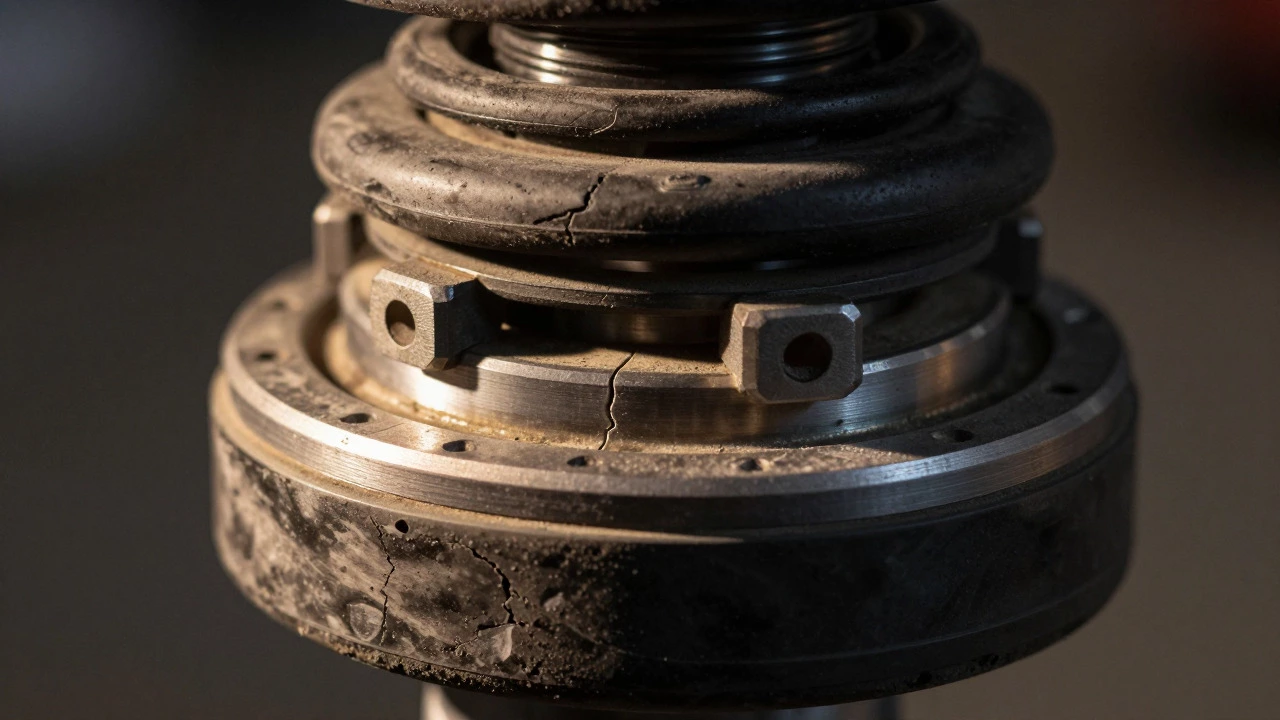
The biggest enemy of a strut paired with lowering springs is heat. Damping works by forcing hydraulic fluid through tiny holes. Stiffer springs create faster, more violent movements over bumps. This generates heat. If the fluid gets too hot, it thins out and loses its ability to dampen. Eventually, the seals degrade from the heat and pressure, leading to leaks. Once a strut leaks, it has zero damping capability. You might still bounce around, but the control is gone.
Another common failure point is the strut mount. Factory mounts are often made of soft rubber designed to absorb noise and vibration. Lowering springs increase the angle of the suspension components. This puts uneven stress on the mount bearings. Instead of the strut failing, the bearing in the mount might crack or seize, causing knocking noises when you turn the steering wheel.
Here is a quick breakdown of risk levels based on drop height:
| Drop Height | Risk Level | Likely Outcome |
|---|---|---|
| 0.5 - 1.0 inch | Low | Stock struts usually last their normal lifespan. |
| 1.5 - 2.0 inches | Moderate | Struts may wear out 20-30% faster. Mounts may creak. |
| 2.5+ inches | High | Premature strut failure likely. Coilovers recommended. |
Symptoms of a Failing Strut Setup
You don't need to be a mechanic to tell if your struts are struggling with new springs. Pay attention to how the car feels and sounds. Early detection can save you from a dangerous situation on the highway.
The most obvious sign is a change in ride quality. If your car used to float over bumps and now it feels harsh, jarring, or "chattery," your struts might be overwhelmed. This is called "spring chatter." The spring is oscillating faster than the shock can control it. You will feel every pebble on the road as a distinct hit.
Listen for noises. A healthy suspension is quiet. If you hear clunking when going over speed bumps, check your strut mounts and bushings. If you hear a hissing sound when turning sharply, you might have air leaking into the hydraulic fluid, indicating a seal failure.
Visually inspect the struts. Look for oil seeping around the chrome shaft. A thin film of grease is normal and helps protect the seal. But if you see wet, dripping oil, the strut is dead. It needs replacement immediately. Also, check the alignment. Lowering springs change the camber angle (the tilt of the wheels). If the negative camber is too extreme, you will wear out the inside edge of your tires rapidly. This isn't a strut failure, but it is a direct consequence of lowering the car without proper adjustment.
Lowering Springs vs. Coilovers: Making the Right Choice
If you are worried about ruining your struts, the alternative is installing coilovers. These are complete suspension units where the spring and shock are pre-assembled and matched. They offer adjustable ride height and often better damping performance.
So, should you skip the springs and go straight to coilovers? It depends on your goals and budget.
Choose lowering springs if:
- You want a modest drop (under 2 inches).
- Your current struts are relatively new (less than 40,000 miles / 64,000 km).
- You prioritize cost-effectiveness. Springs cost $100-$300, while coilovers range from $800 to $2,000+.
- You drive mostly on smooth roads and don't track the car.
Choose coilovers if:
- You want an aggressive stance (2.5+ inches drop).
- Your current struts are old or worn.
- You want adjustable damping for different driving conditions.
- You plan to take the car to a race track or autocross event.
One pro tip: If you buy lowering springs, consider upgrading to high-performance aftermarket shocks like Bilstein B4 or Koni Special Active. These are designed to bolt onto existing spring perches but have stronger valving to handle stiffer springs. It’s a middle ground that protects your investment without the full price tag of coilovers.

Maintenance Tips for Extended Life
If you decide to stick with lowering springs and stock struts, you can extend their life with some simple maintenance habits.
First, get an alignment done immediately after installation. Don't wait. Incorrect camber and toe settings put lateral stress on the strut bearings. Second, avoid potholes. It sounds obvious, but with reduced ground clearance, you have less margin for error. Hitting a curb or deep hole at speed can bend the strut housing itself, which is a total loss scenario.
Third, check your suspension fluid levels if your car has accessible reservoirs (rare on modern unibody cars, but common on trucks/SUVs). More importantly, keep the area clean. Mud and salt can accelerate corrosion on the strut shafts. A light coating of silicone spray on the chrome shaft (not the seal!) can help repel dirt.
Finally, rotate your tires regularly. Uneven tire wear changes the balance of the suspension, putting extra strain on the struts. If one side of the car is bouncing more than the other, replace the struts in pairs, never singly.
Frequently Asked Questions
Can I use lowering springs on my old struts?
It depends on the condition of your struts. If your struts are over 60,000 miles (96,000 km) or show any signs of leaking, do not use lowering springs. The added stress will likely cause immediate failure. For older struts, it is safer to replace them with new OEM or performance shocks before installing springs.
How long do lowering springs last compared to stock springs?
Quality lowering springs from reputable brands like Eibach, H&R, or BC Racing can last the lifetime of the vehicle if maintained properly. Cheap, unknown brand springs may sag or break within 1-2 years due to inferior steel quality and lack of proper tempering.
Do lowering springs affect fuel economy?
Yes, slightly. By lowering the car's center of gravity and reducing aerodynamic drag under the chassis, you can see a small improvement in fuel efficiency, typically 1-3%. However, if the ride becomes harsher and you drive more aggressively to compensate, this benefit may be lost.
Is it safe to drive with only lowering springs and no new shocks?
For daily driving on good roads, yes, it is generally safe if the drop is moderate (under 2 inches) and the struts are in good condition. However, braking distances may increase slightly, and handling in emergency maneuvers could be less predictable due to reduced damping control.
What is the best brand of lowering springs?
Top-tier brands include Eibach Pro-Kit, H&R Sport Springs, and KW Varioclip. These companies test their springs extensively for durability and ride comfort. Avoid generic eBay specials unless you are on a very tight budget and accept higher risk of sagging.