Carbon Fiber Spoiler Care Calculator
Assess Your Spoiler's Condition
Enter your usage patterns to see expected lifespan and maintenance recommendations
UV Exposure
Maintenance Habits
Protection Status
Results & Recommendations
Expected Lifespan
Risk Level
Key Recommendations
Carbon fiber spoilers look sharp. They turn heads on the street, add grip at high speeds, and scream performance. But if you’ve ever seen one with a dull, cracked, or flaking surface, you know they don’t last forever. The truth? Carbon fiber doesn’t rust like steel-but it can still break down. And the things eating away at it aren’t what you’d expect.
Carbon fiber isn’t metal. So what’s actually damaging it?
Carbon fiber is made of thin strands of carbon woven together and soaked in a resin-usually epoxy. The fibers themselves are incredibly strong, but they’re buried in plastic. That resin? It’s the weak link. When the resin breaks down, the fibers lose their hold. They start to separate, crack, or peel. That’s not corrosion in the rust sense. It’s degradation. And it’s happening because of things you might be exposing your spoiler to every day.
UV radiation is the silent killer
Sunlight doesn’t just fade paint. It eats epoxy resin. Over time, UV rays break the chemical bonds in the resin that holds the carbon fibers together. This is why older carbon fiber parts look chalky, dull, or yellowed. You might not notice it at first. But after a few years of daily sun exposure-especially in places like Melbourne where summer UV levels hit 12+ on the scale-the surface starts to lose its gloss. The resin becomes brittle. Tiny cracks form. Water gets in. And once moisture sneaks past the surface, the damage accelerates.
Most factory carbon fiber parts come with a clear coat. But that coat isn’t permanent. It’s usually a urethane or polyurethane layer, and it can chip, scratch, or fade. Once that layer is gone, the resin is exposed. And that’s when things go downhill fast.
Chemicals you didn’t know were dangerous
You clean your spoiler with car shampoo, right? Sounds safe. But not all cleaners are created equal. Solvents like acetone, brake cleaner, or even some wheel cleaners contain chemicals that eat through resin. I’ve seen carbon fiber spoilers stripped of their finish after someone used a degreaser meant for engine bays. It doesn’t melt the fibers-but it dissolves the glue holding them in place.
Then there’s road salt. Even if you’re not near the ocean, winter road treatments in colder climates contain chlorides and other salts. When those dry on the surface, they pull moisture into the resin. Over time, that moisture causes micro-blisters under the clear coat. It’s not rust. It’s delamination. And it’s permanent.
And don’t forget fuel. A small spill from a gas nozzle or a leaking filler neck can leave a residue that softens the resin. It might look like a stain at first. But over weeks, that spot will bubble and crack. I’ve seen three carbon fiber rear spoilers replaced in six months because owners didn’t realize how sensitive the surface was to hydrocarbons.

Physical damage opens the door
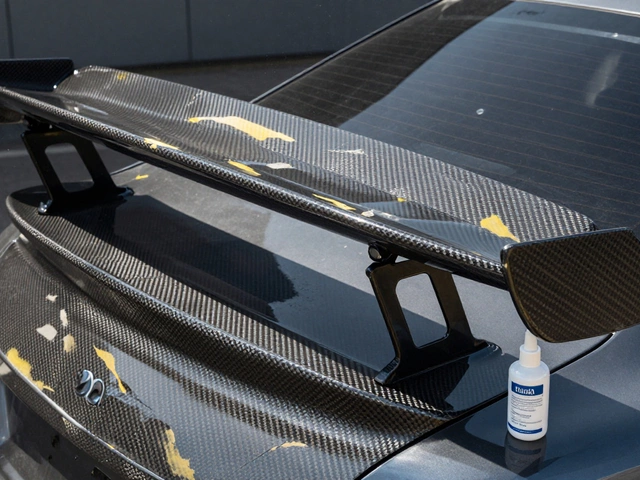
A stone chip. A parking scrape. A brush with a car wash brush. These might seem minor. But they create entry points. Once the clear coat is broken, water, dirt, and chemicals get under the surface. That’s when you start seeing tiny bubbles or a cloudy patch where the resin is lifting off the fibers. Once that starts, it spreads. You can’t just polish it out. The damage is underneath.
And here’s the kicker: carbon fiber is stiff. It doesn’t flex like plastic. That means when it takes a hit, the stress doesn’t spread-it concentrates. A small crack can turn into a big one. And once the fibers separate, the structural integrity is gone. That spoiler isn’t just ugly-it’s unsafe.
What actually protects carbon fiber?
Good maintenance isn’t about waxing it every week. It’s about defense. Here’s what works:
- High-quality clear coat: Factory clear coats are okay. But for long-term protection, go for a ceramic coating. It bonds chemically with the surface and lasts 3-5 years. It resists UV, chemicals, and water better than anything else.
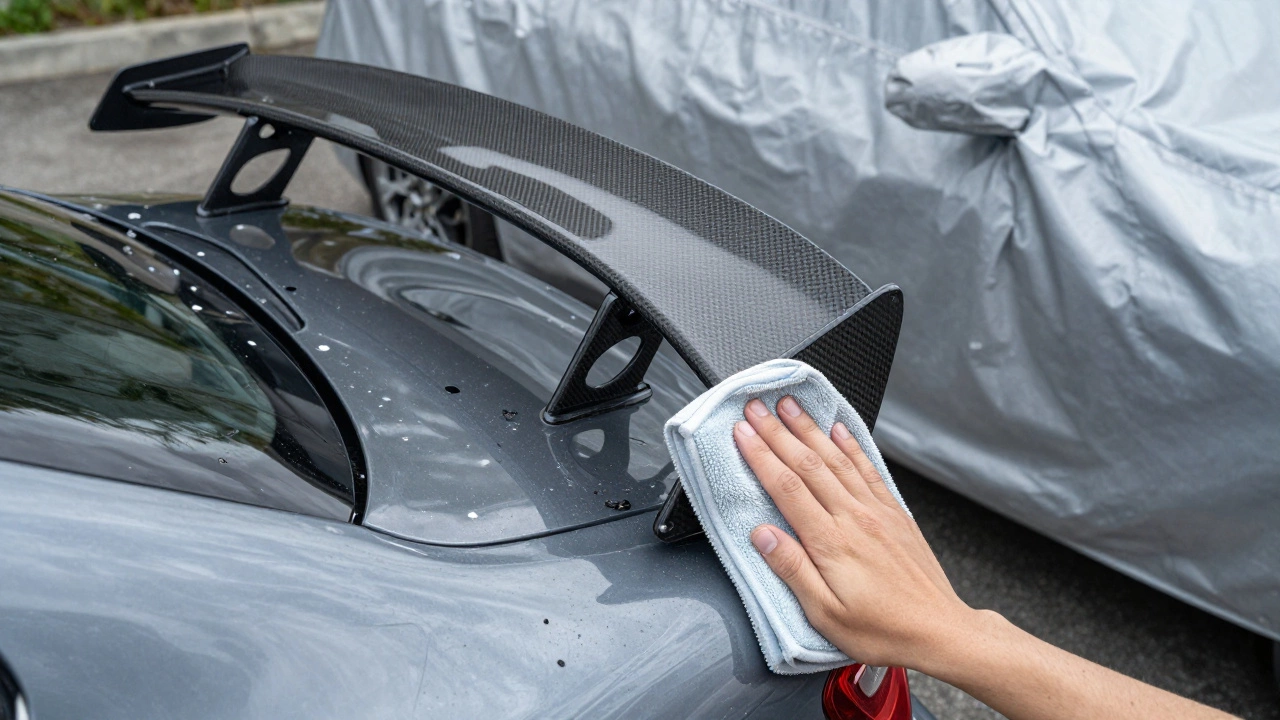
- Regular washing: Use pH-neutral soap. No dish soap. No tire cleaner. Rinse off salt and grime as soon as you can. Letting it sit is how damage starts.
- Avoid pressure washers: High-pressure water can force moisture under the clear coat. A gentle hand wash with a microfiber mitt is safer.
- Keep it shaded: Parking in the shade or using a car cover cuts UV exposure by 70%. That alone can double the life of your spoiler.
- Inspect for damage: Run your hand over the surface. If you feel rough spots or see micro-cracks, get it re-coated before it spreads.
Can you fix a damaged carbon fiber spoiler?
Minor surface scratches? Maybe. Sanding and re-clearing can work if the damage is only on the top layer. But if the resin is cracked, bubbled, or peeling? That’s not a DIY fix. You need professional resurfacing. That means stripping the old clear coat, repairing the resin, and applying a new UV-resistant layer. It’s expensive. Often, it’s cheaper to replace it.
And here’s the hard truth: once the fibers start to separate, there’s no going back. You can’t glue them back together. The bond is gone. That’s why prevention isn’t optional. It’s the only way to keep your spoiler looking factory-new for years.
What’s the real takeaway?
Carbon fiber doesn’t corrode like metal. But it doesn’t last forever either. The enemy isn’t rust. It’s time, sun, chemicals, and neglect. A well-maintained carbon fiber spoiler can last 10+ years. A neglected one? It’ll look like junk in 3. And once it’s gone, you can’t bring it back. The material doesn’t heal. It just breaks.
If you’ve got carbon fiber on your car, treat it like a fine watch-not a piece of plastic. Protect it. Clean it right. And don’t ignore the small signs of wear. They’re not just cosmetic. They’re warnings.
Can water corrode carbon fiber?
Water alone won’t corrode carbon fiber. But if the protective clear coat is damaged, water can seep underneath and cause the resin to swell, crack, or delaminate. Over time, this leads to permanent damage. That’s why keeping the surface sealed is critical.
Does salt damage carbon fiber spoilers?
Yes. Road salt doesn’t eat the carbon fibers, but it accelerates resin breakdown by pulling moisture into micro-cracks. Salt residue left on the surface for weeks can cause bubbling, cloudiness, and flaking. Rinse off salt as soon as possible after winter driving.
Is ceramic coating worth it for carbon fiber?
Absolutely. Ceramic coatings bond to the surface and create a hard, hydrophobic shield against UV rays, chemicals, and water. Factory clear coats fade in 2-3 years. A good ceramic coating lasts 3-5 years with proper care. It’s the best investment you can make for long-term protection.
Can you polish a carbon fiber spoiler?
Only if it has a clear coat and the damage is very light. Aggressive polishing can remove the protective layer entirely. If the surface looks dull or cloudy, it’s likely the resin underneath is breaking down. Polishing won’t fix that. You need professional re-coating.
What cleaners are safe for carbon fiber?
Use only pH-neutral car wash soap and microfiber towels. Avoid anything labeled as "degreaser," "engine cleaner," or "solvent-based." Even some all-purpose cleaners contain chemicals that attack the resin. Stick to products labeled "safe for carbon fiber" or "clear coat safe."
What to do next
If your carbon fiber spoiler is still in good shape, apply a ceramic coating now. If it’s already showing signs of wear-cloudiness, cracks, or flaking-get it inspected by a professional detailing shop that specializes in carbon fiber. Don’t wait until it’s too late. The material doesn’t heal. But with the right care, it can outlast the car it’s on.