Window Tint Legal Checker
Ever looked at a car with 20% tint and thought, Is that even legal? Or worse-Can I even see out of it at night? You’re not alone. A lot of people pick 20% tint because they want privacy, heat reduction, or that sleek, low-profile look. But here’s the truth: 20% tint is dark. Really dark. And whether it’s right for you depends on where you live, when you drive, and what you’re willing to sacrifice.
What does 20% tint actually mean?
Window tint percentage refers to the Visible Light Transmission (VLT)-how much light passes through the film. A 20% tint lets in only 20% of visible light. That means 80% of the light is blocked. For comparison, a brand-new car windshield usually lets in about 70-80% of light. Factory side windows are around 70%. So 20% is a massive drop.
Think of it like this: if you’re standing outside on a bright afternoon and you look through a 20% tinted window, it’ll look almost black from the outside. From the inside, it’s like wearing sunglasses indoors. You can still see clearly during the day, but the world gets noticeably dimmer.
Is 20% tint legal?
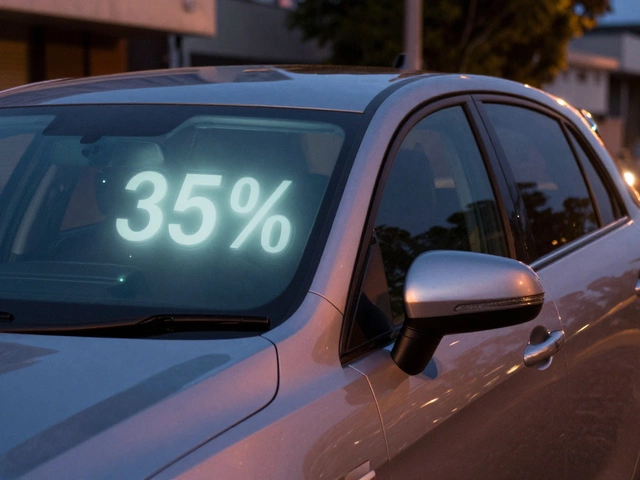
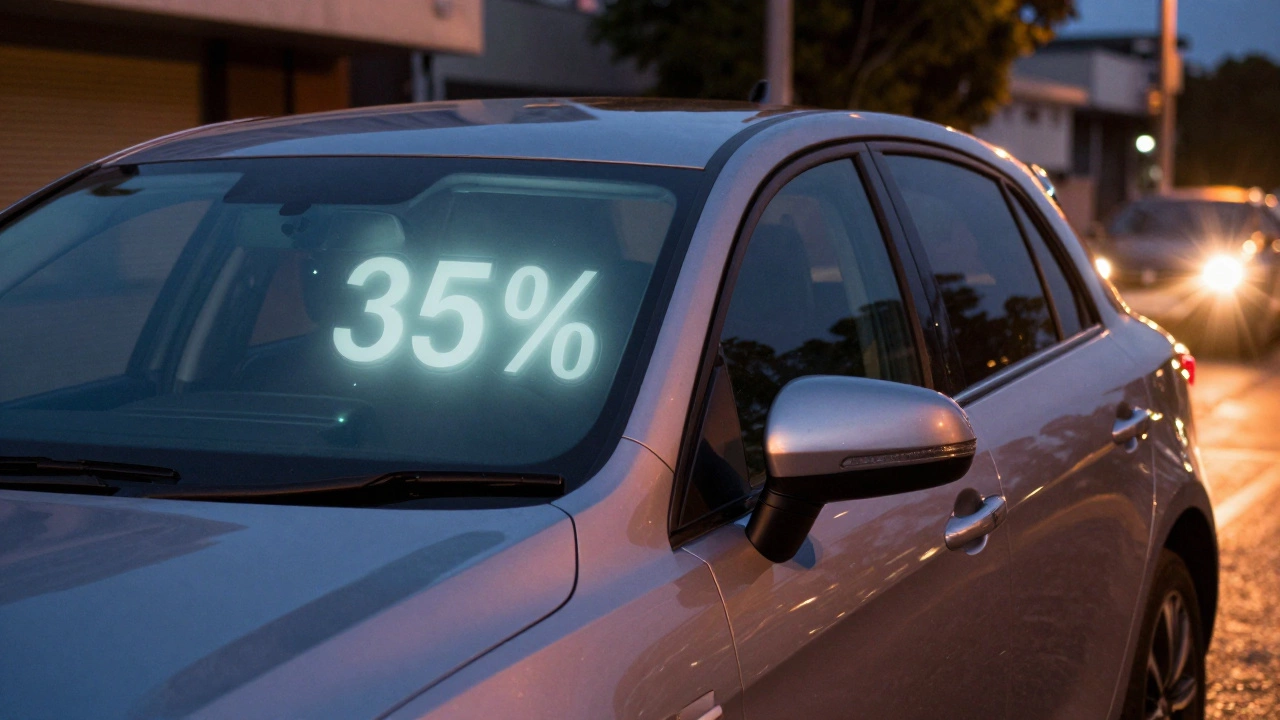
It depends on where you are. In Australia, each state has its own rules. In Victoria, where I live in Melbourne, the front side windows must let in at least 35% light. That means 20% tint on your front windows? Illegal. You’ll get fined. Rear windows and the back windshield? Those can go as low as 5% in Victoria. So 20% is fine on the back, but not on the driver’s side.
Other states are stricter. New South Wales allows 35% on front windows too. Queensland? Also 35%. Western Australia? 35% on front, 20% on rear. South Australia? 35% front, 20% rear. So if you’re planning to drive interstate, 20% on the front could get you pulled over anywhere in the country.
And it’s not just Australia. In the U.S., most states cap front window tint at 30-50%. California? 70% on front side windows. Florida? 28%. You can’t just slap on 20% and hope no one notices. Police officers are trained to spot it. And with automated license plate readers and tint meters becoming more common, getting caught is easier than ever.
Can you see out at night with 20% tint?
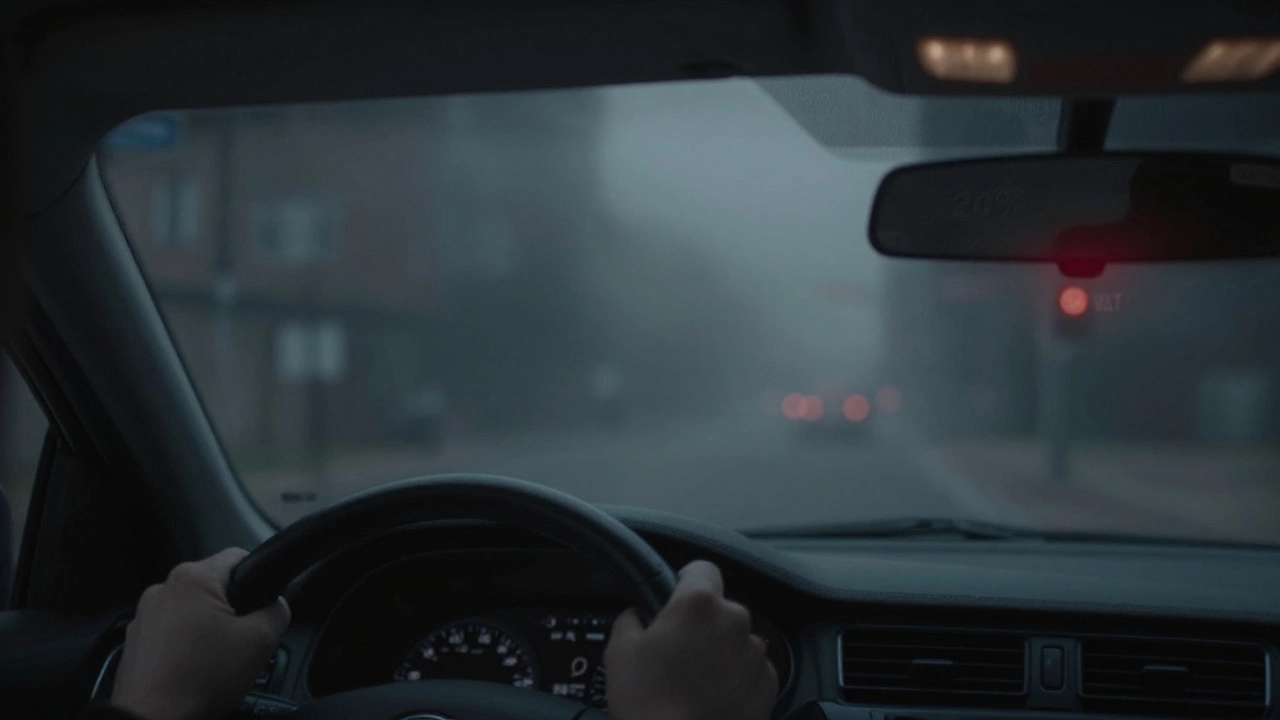
Yes-but it’s harder. And that’s the trade-off. During daylight, 20% tint looks cool and gives you great privacy. At night, especially on unlit roads, it becomes a problem. Streetlights, oncoming headlights, and traffic signals all look muted. You’ll need to squint a little more. Your peripheral vision takes a hit. And if you’re driving in heavy rain or fog, it gets worse.
One driver in Melbourne told me he got pulled over after dark because an officer thought his car was stolen-the tint was so dark he couldn’t see the driver’s face. That’s not a myth. It happens. And it’s not just about getting fined. It’s about safety. Your reaction time slows down when visibility drops. You’re not just risking a ticket-you’re risking an accident.
What about heat and UV protection?
Here’s the good part: 20% tint blocks almost all UV rays and a huge chunk of infrared heat. Most quality films block 99% of UV radiation, which protects your skin and prevents your dashboard from cracking. And in Melbourne’s summer, when the sun hits the passenger side like a blowtorch, 20% tint makes the difference between a sauna and a comfortable ride.
But here’s the catch: darker tint doesn’t always mean better heat rejection. Some 35% films use ceramic or carbon technology that block more heat than cheap 20% dyed films. So if your main goal is cooling, don’t assume darker = better. Look for films labeled with high infrared rejection numbers-not just low VLT.
Is 20% tint worth it?
Let’s break it down.
- If you want privacy-yes. 20% tint makes it nearly impossible for people to see inside your car. Perfect if you carry valuables, have kids in the back, or just hate being stared at.
- If you drive mostly at night-no. It’s a safety risk. You’ll feel tired faster. Your eyes strain more. And you’ll miss cues like pedestrians near the curb or brake lights flashing ahead.
- If you live in a hot climate-maybe. But only if you put it on rear windows and keep the front at 35% or higher. That’s the sweet spot: privacy and heat control without compromising safety.
- If you care about the law-don’t do it on the front. The fine in Victoria is $380 for a first offense. And you’ll have to remove it anyway.
What’s a better alternative?
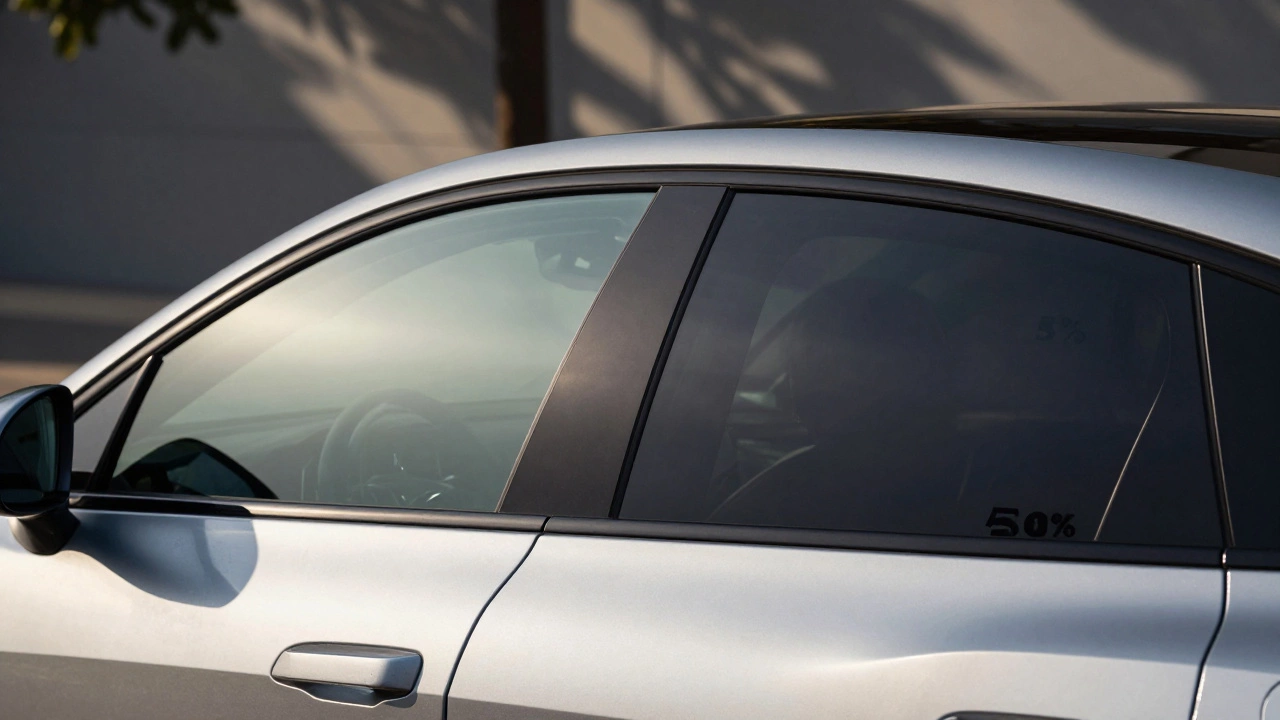
Instead of going full 20% on everything, try this: 35% on the front windows, 20% on the rear side windows, and 5% on the rear windshield. That’s what most professional tint shops recommend. It gives you privacy where it matters (back seat, trunk), keeps your front visibility safe, and still blocks 90% of UV rays.
Some people go for 30% tint on the front. It’s still dark enough to look cool, but you can see fine at night. And it’s legal in most places. It’s the middle ground that works for most drivers.
Another option? Ceramic tint. Even at 35%, it blocks more heat than a 20% dyed film. You get the benefits without the risks.
Real-world tip: Test before you commit
Before you shell out hundreds on tint, do this: grab a piece of 20% film (they sell sample swatches at auto shops) and tape it over your phone screen. Hold it up to a window on a cloudy day. Look through it. Now try it at dusk. Then try it after dark. See how much detail you lose? That’s what you’re signing up for.
Most people think they’ll be fine. Then they get behind the wheel at 7 p.m. and realize they can’t read street signs without squinting. Don’t be that person.
Bottom line
Is 20% tint pretty dark? Yes. Too dark for front windows in most places. It’s not just about looks-it’s about safety, legality, and practicality. If you want the deep black look, put it on the back. Keep your front windows at 35% or higher. You’ll still get heat protection, UV blocking, and privacy where it counts. And you won’t get pulled over.
Window tint isn’t just a style upgrade. It’s a safety feature. Don’t let the dark look blind you to the real risks.
Is 20% tint legal in Australia?
It depends on the state and the window. In Victoria, New South Wales, Queensland, and most other states, front side windows must allow at least 35% visible light. So 20% tint on front windows is illegal. Rear windows and the back windshield can legally be tinted darker-down to 5% in some places. Always check your state’s road rules before installing.
Can you see out of a car with 20% tint at night?
Yes, but it’s harder. You’ll need to rely more on your headlights and street lighting. Peripheral vision drops, and glare from oncoming cars becomes more distracting. In rain, fog, or poorly lit areas, visibility drops significantly. Many drivers report eye strain after just 20 minutes of night driving with 20% tint on the front windows.
Does darker tint block more heat?
Not necessarily. While darker tint blocks more visible light, heat rejection depends on the film’s technology. A high-quality 35% ceramic tint can block more infrared heat than a cheap 20% dyed film. Always look for infrared rejection ratings (IR rejection) and UV blockage numbers-not just the VLT percentage.
What’s the best tint percentage for a car in Melbourne?
For Melbourne’s mix of hot summers and variable light conditions, 35% on front windows and 20% on rear side windows is ideal. It keeps you legal, improves comfort, blocks UV rays, and still gives you privacy. Avoid 20% on front windows-it’s not worth the risk.
Will 20% tint make my car look stolen?
It can. Police officers use tint meters and often check for excessive darkness because it’s linked to criminal activity. A car with 20% tint on the front windows can trigger suspicion-even if you’re not doing anything wrong. You’ll get pulled over more often, just to check. It’s not paranoia-it’s standard procedure.
Can I install 20% tint myself?
You can, but you shouldn’t. DIY tint jobs often bubble, peel, or trap dust. More importantly, if it’s too dark and you get pulled over, you’ll still be fined-even if you installed it yourself. Professional installers know the legal limits, use quality film, and offer warranties. It’s worth the extra cost.