Spoiler Performance Calculator
Estimate how a rear spoiler affects your car's performance at different speeds based on real aerodynamic principles from the article.
Your Car's Performance at km/h
Based on SAE studies and aerodynamic principles from the article
Downforce Impact
Drag Impact
Estimated Downforce:
This helps keep your car stable during high-speed cornering and braking
Estimated Drag Increase:
This reduces fuel efficiency and top speed potential
Fuel Efficiency Impact:
Approximate increase in fuel consumption at highway speeds
At speeds below 140 km/h, spoilers provide minimal benefits. Above 140 km/h, the trade-off becomes significant.
People see a carbon fiber spoiler on a car and assume it’s there to make the car faster. It looks aggressive. It screams performance. But here’s the truth most people miss: spoilers don’t make cars go faster. They don’t add horsepower. They don’t magically unlock extra speed. What they actually do? They help the car stick to the road at high speeds - and that can slow you down on purpose.
What a Spoiler Actually Does
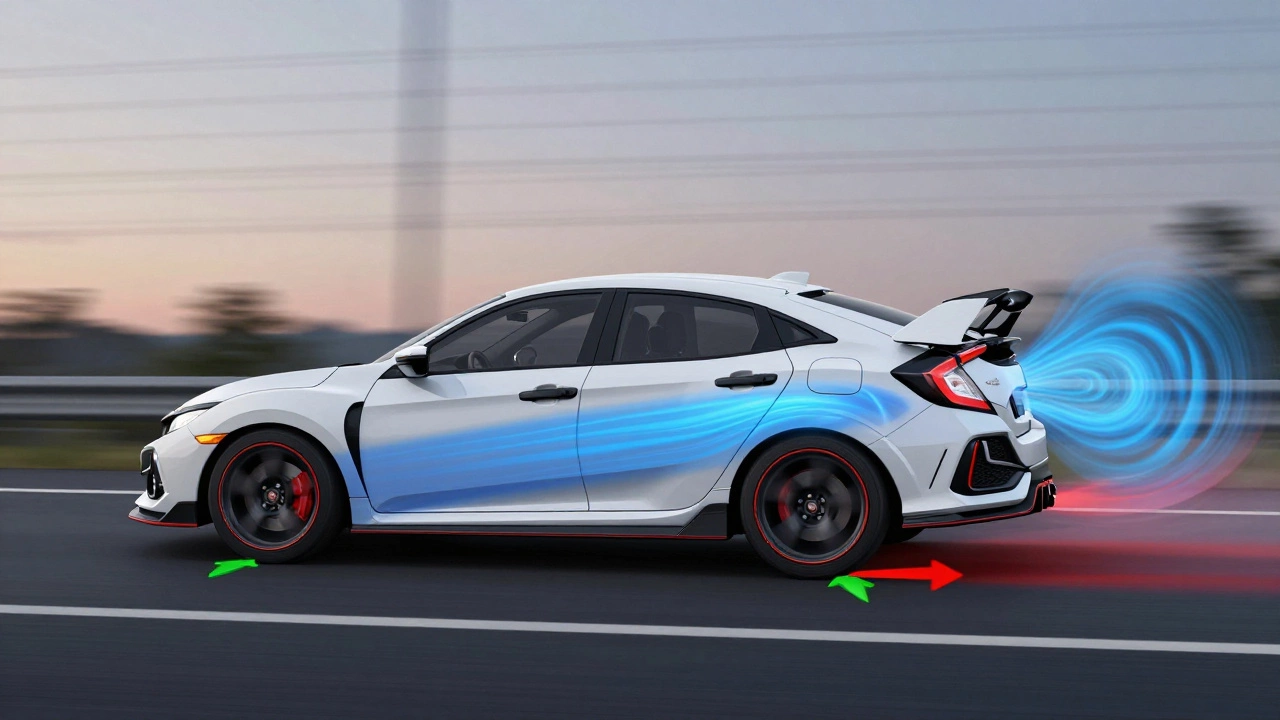
A spoiler isn’t a wing. It’s not designed to lift the car like an airplane wing. That’s a common mistake. A spoiler’s job is to disrupt airflow. Specifically, it interrupts the smooth flow of air over the rear of the car. When air rushes over a sedan or hatchback, it naturally lifts off the rear deck. That creates low pressure behind the car, pulling it upward. At 120 km/h or more, that lift can reduce tire grip. And that’s dangerous.
A properly sized spoiler forces that air to separate earlier. It pushes the air downward, creating downforce. That’s the key. Downforce presses the rear tires harder into the pavement. More grip. Better control. Less chance of spinning out in a high-speed turn or during sudden braking.
Think of it like this: if you’re driving a Toyota Camry at 160 km/h on the highway, the rear end might start to feel light. A spoiler doesn’t make it go faster. It makes it feel heavier. Safer. More planted. That’s not speed - it’s stability.
Why Carbon Fiber? And Why Do People Think It Adds Speed?
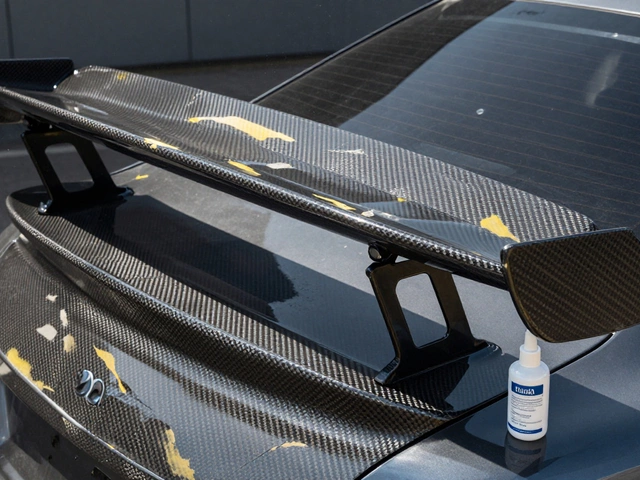
Carbon fiber is popular because it’s light and looks expensive. But its real advantage isn’t style - it’s weight. A steel spoiler might weigh 4 kg. A carbon fiber version? Around 1.2 kg. That’s less than a bag of sugar. Lighter parts mean less unsprung mass, which helps suspension respond faster. But the shape? The angle? The size? Those matter far more than the material.
Most people think carbon fiber = speed because of racing. You see it on Formula 1 cars, Supercars, and GT3 machines. But those aren’t street cars. They’re built from the ground up for aerodynamics. Their spoilers are engineered with wind tunnels, CFD simulations, and telemetry data. A $300 aftermarket spoiler bolted onto your Honda Civic? It’s not doing the same thing.
Here’s the reality: a poorly designed spoiler can actually hurt performance. If it’s too steep, it creates too much drag. Drag is air resistance. More drag = less fuel efficiency = slower acceleration. A spoiler that’s too small? It does nothing. A spoiler that’s too wide? It catches crosswinds and makes the car twitchy.
Drag vs. Downforce: The Trade-Off
Every aerodynamic part is a compromise. Spoilers trade speed for control. Here’s how it works:
- Downforce increases grip - good for cornering, braking, and stability
- Drag increases resistance - bad for top speed and fuel economy
At 80 km/h? A spoiler probably makes no noticeable difference. At 180 km/h? It’s the difference between feeling confident and feeling like the car might float.
Studies from the Society of Automotive Engineers (SAE) show that a well-tuned rear spoiler on a typical sedan can increase rear downforce by 15-25% at 160 km/h. But it also increases drag by 8-12%. That means your car needs about 5-7% more power to maintain the same speed. If you’re driving a 150-hp car, that’s like losing 8-10 horsepower. Not because of engine failure - because of air resistance.
So yes, a spoiler can slow you down. Not because it’s broken. But because it’s doing its job.
When Do Spoilers Actually Help?
Not every car needs one. A compact hatchback with a short deck? Probably not. A lifted SUV? No way - the airflow is already chaotic. But here are the cars that benefit:
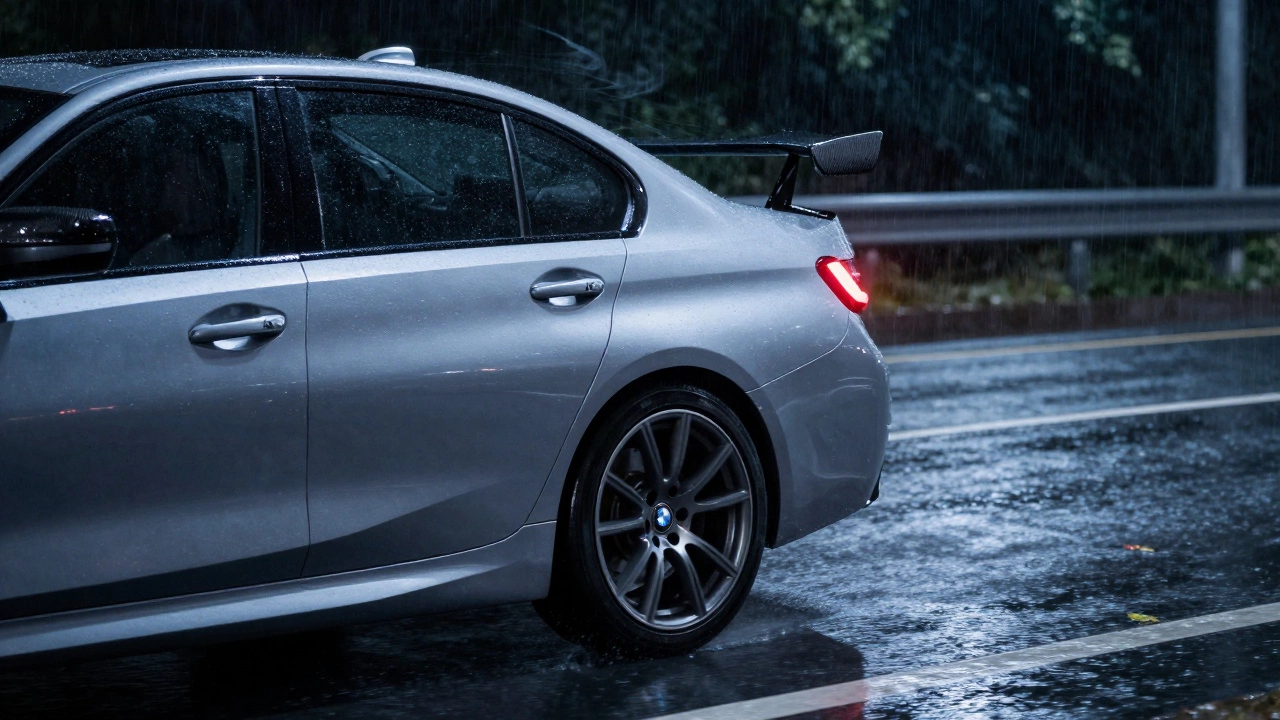
- Fast sedans (e.g., BMW 3 Series, Mercedes C-Class)
- Performance coupes (e.g., Subaru WRX, Nissan Skyline)
- Cars with high rear decks (e.g., hatchbacks like the Volkswagen Golf GTI)
- Any car driven regularly above 140 km/h
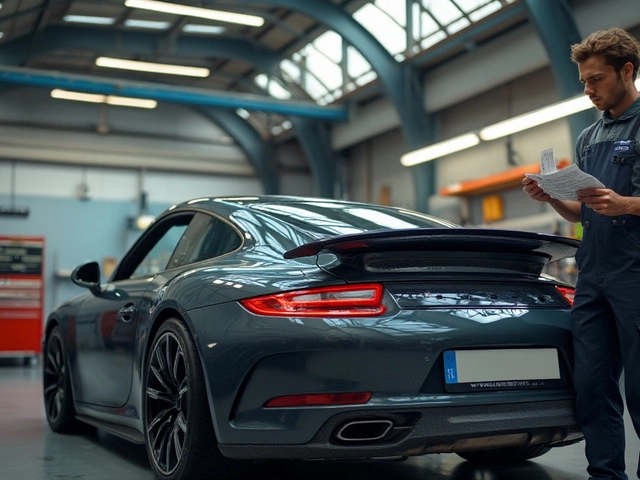
These cars naturally generate lift at the rear. A spoiler fixes that. But even then, the spoiler has to be designed for the car. A spoiler made for a Ford Mustang won’t work right on a Toyota Supra. The shape, angle, and height all need to match the car’s profile.
Real-world example: A 2023 Honda Civic Type R with its factory rear wing generates about 120 kg of downforce at 200 km/h. That’s more than the weight of two adults. That’s why it can brake harder and corner flatter than a regular Civic. That wing? It’s not there to look cool. It’s there to keep the car from flying.
What About Those Big Wing Spoilers on Street Cars?
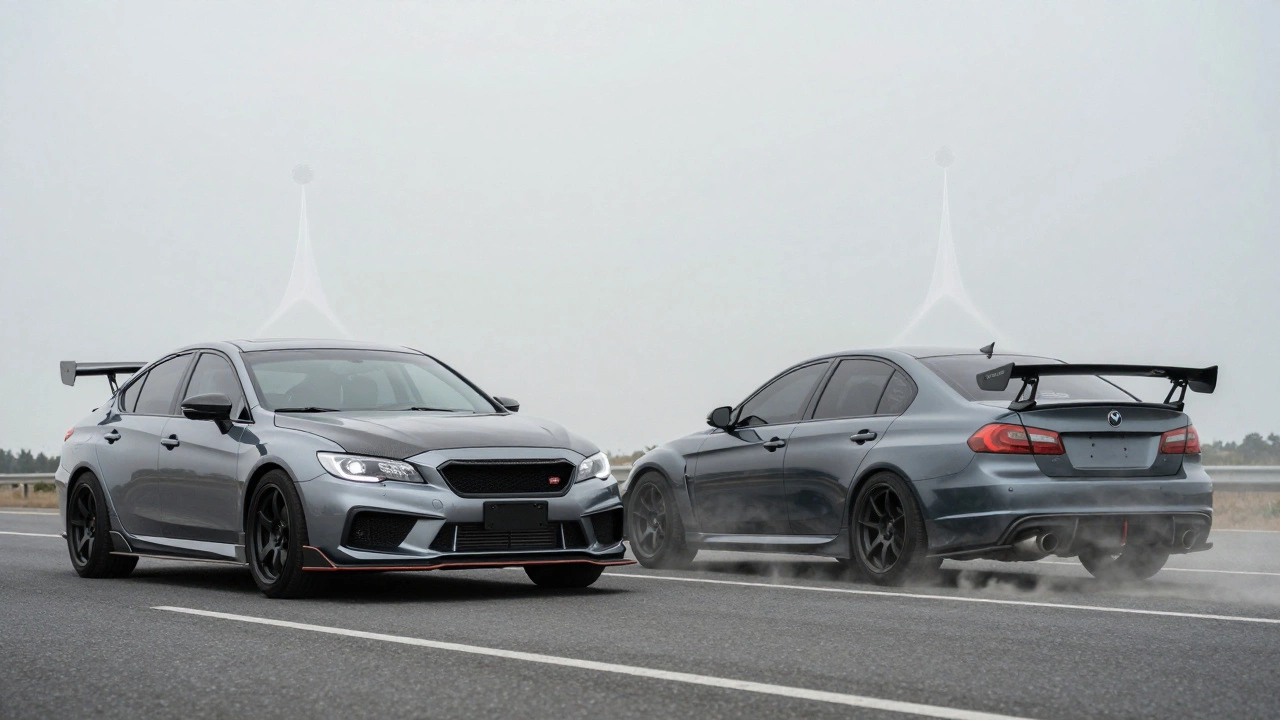
Let’s be honest - most of them are for show. A 30 cm tall carbon fiber wing on a Prius? It’s not helping. It’s probably hurting. It adds drag, increases wind noise, and makes parking harder. Worse, it might be illegal in some states if it extends too far beyond the body.
There’s a reason professional racers don’t use giant wings on street cars. They use subtle, low-profile spoilers. They’re tuned. They’re tested. They’re engineered. The big wings you see at car shows? They’re for Instagram. Not physics.
If you’re buying a spoiler for looks, fine. But don’t fool yourself into thinking it’s making your car faster. It’s not. It’s making it more stable - at the cost of a little speed.
How to Choose a Real Spoiler (Not Just a Lookalike)
If you actually want performance, here’s what to look for:
- Match it to your car model - Use a spoiler designed for your exact make and year. Aftermarket brands like APR, Roush, and HKS test their parts on real vehicles.
- Check the angle - Most street spoilers sit between 5° and 15°. Anything steeper than 20° increases drag too much.
- Look for wind tunnel data - Reputable brands publish downforce and drag numbers. If they don’t, avoid it.
- Weight matters - Carbon fiber is ideal. Aluminum is okay. Plastic? Skip it. It flexes and doesn’t hold shape.
- Installation matters - A spoiler mounted with double-sided tape won’t hold at high speed. Use bolts and proper brackets.
Don’t buy from random eBay sellers. Don’t trust YouTube influencers who say “this spoiler added 15 mph to my car.” That’s not how aerodynamics works.
Bottom Line: Spoilers Don’t Speed You Up - They Keep You in Control
Do spoilers slow down cars? Yes - technically. But that’s not a flaw. It’s the point.
A spoiler is like a seatbelt. You don’t wear it to go faster. You wear it so you don’t fly through the windshield when things go wrong. Spoilers do the same thing for your car’s rear end. They trade a tiny bit of speed for a huge gain in safety and control.
If you drive fast, especially on highways or twisty roads, a properly designed spoiler is one of the smartest upgrades you can make. Not because it makes your car quicker. But because it keeps you from losing control when you need it most.
And if you’re just buying one to look like a race car driver? Go ahead. But don’t pretend it’s performance. It’s decoration. And that’s okay - just be honest about it.
Do spoilers actually improve handling?
Yes - but only at higher speeds. Below 100 km/h, the effect is negligible. Above 140 km/h, a well-designed spoiler increases rear downforce, which improves tire grip. This leads to better braking, more stable cornering, and reduced risk of oversteer. It doesn’t make the car turn faster, but it lets you push harder without losing control.
Can a spoiler reduce fuel efficiency?
Yes. A spoiler adds drag, which forces the engine to work harder to maintain speed. On average, a street spoiler can reduce fuel economy by 3-7% at highway speeds. For a car that gets 9 L/100km, that’s an extra 0.3-0.6 L/100km. Over 10,000 km, that adds up to 30-60 extra liters of fuel. If you drive mostly in the city, the impact is minimal.
Are carbon fiber spoilers better than plastic ones?
For performance, yes. Carbon fiber is stiffer and lighter. A plastic spoiler can flex or warp over time, changing its angle and reducing effectiveness. Carbon fiber holds its shape under heat and stress. It also weighs less, which helps reduce unsprung mass. But if you’re only using it for looks, a high-quality ABS plastic spoiler will look nearly identical - and cost far less.
Do I need a spoiler if I don’t drive fast?
No. Below 120 km/h, most cars don’t generate enough lift for a spoiler to matter. If you’re driving in the city, on quiet roads, or mostly at speed limits, a spoiler adds no benefit. It only becomes useful when you’re regularly driving at high speeds - like on highways or track days.
Can a spoiler cause more wind noise?
Yes. Any rear-mounted aerodynamic device disrupts airflow, which can create whistling or buffeting sounds, especially at 100+ km/h. Poorly designed spoilers or ones with gaps between the car and the spoiler are the worst offenders. A properly fitted spoiler with smooth edges will minimize this, but some noise is normal.