Car Detailing Brand Finder
Select your primary goal or problem below to get a tailored brand recommendation based on expert reviews.
What is your main concern?
You’ve just spent thousands on a new paint correction, or maybe you’re trying to save that faded clear coat before it peels completely. Then you walk into the shop aisle and see fifty different bottles promising "mirror-like shine" and "hydrophobic protection." Which one is actually worth your money? The truth is, there isn't one single "best" car detailing brand for every situation. It depends entirely on whether you want speed, longevity, or pure gloss.
As someone who has spent more weekends in the driveway than I’d like to admit, I’ve tested everything from cheap supermarket sprays to professional-grade ceramic systems. Here is the breakdown of what actually works, based on real-world performance in Melbourne’s harsh UV and salt-air environment.
The Big Three: Understanding the Market Tiers
Before we name names, you need to understand how these companies structure their products. Most top-tier brands split their offerings into two distinct lines: consumer-facing retail products and professional-only lines. This distinction matters because professional lines often use higher concentrations of active ingredients but require specific application conditions (like controlled humidity) that are hard to manage at home.
For the average enthusiast, sticking to the retail versions of professional brands is usually the sweet spot. You get pro-level chemistry without needing a climate-controlled garage. Let’s look at the heavy hitters.
Gtechniq: The Longevity King
If you hate reapplying wax every three months, Gtechniq is likely your best bet. Founded by a former NASA chemist, this UK-based company focuses heavily on durability. Their flagship product, Crystal Serum Light, is a semi-permanent coating that bonds with the paint rather than just sitting on top.
- Best for: Owners who want set-and-forget protection.
- Key Attribute: Exceptional chemical resistance against bird droppings and tree sap.
- Downside: Application is unforgiving. If you mess up the prep work, the coating will fail prematurely.
In my experience, Gtechniq coatings last significantly longer than competitors in Australian summers. While a standard synthetic sealant might fade after six months under direct sun, a properly applied Gtechniq layer can hold strong for two years or more.
Koch Chemie: The German Precision Tool
When people ask me about polishing compounds, I almost always point them toward Koch Chemie from Germany. They don’t market themselves as aggressively as American brands, but their engineering is flawless. Their M3.02 Perfect Finish is legendary among detailers for removing fine swirl marks without leaving behind hazing.
| Brand | Primary Strength | Ease of Use | Durability | Price Point |
|---|---|---|---|---|
| Gtechniq | Ceramic Coatings & Protection | Moderate/Hard | High (2-5 Years) | Premium |
| Koch Chemie | Polishes & Compounds | Moderate | N/A (Removal Product) | Mid-High |
| Meguiar's | Versatility & Accessibility | Easy | Low-Medium (1-3 Months) | Budget-Friendly |
| Adam's Polishes | Scent & User Experience | Very Easy | Medium (3-6 Months) | Mid-Range |
| Sonax | Interior & Quick Detailers | Very Easy | Low (1 Month) | Budget-Friendly |
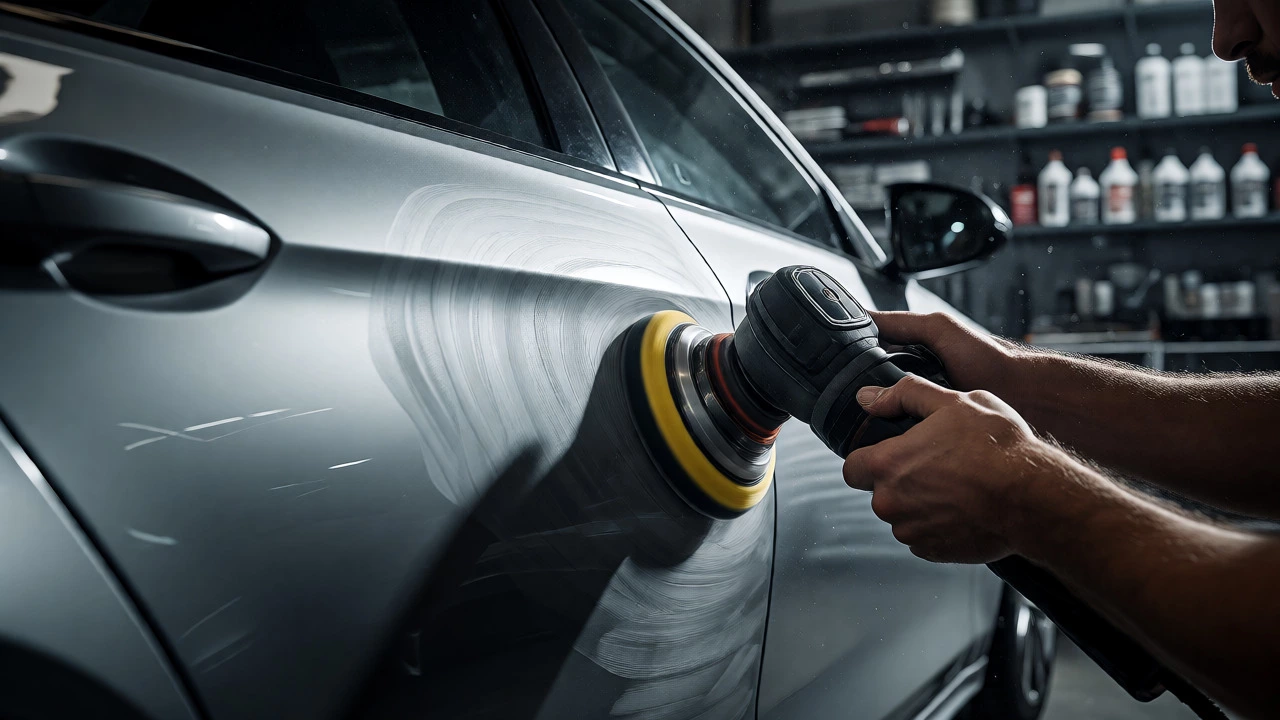
Koch Chemie shines when you are doing mechanical polishing. Their abrasives break down predictably, meaning you won’t suddenly switch from cutting to finishing halfway through a panel. For DIY users using a dual-action polisher, this consistency prevents burns and holograms.
Meguiar’s: The Reliable Workhorse
You cannot talk about car care without mentioning Meguiar’s. Since 1901, they have been the go-to for accessible quality. Is it the most advanced tech on the shelf? No. But is it consistent, affordable, and available everywhere? Absolutely.
Their Ultimate Liquid Wax is still one of the easiest ways to get a deep, wet-looking shine in under an hour. It doesn’t last as long as a ceramic coating, but for a quick weekend refresh before a show or sale, it’s unbeatable value. If you are new to detailing, start here. You won’t break the bank learning how to apply it correctly.
Choosing Based on Your Specific Need
So, which brand should you buy? Stop looking for a generic answer and look at your actual problem.
Problem 1: My paint is oxidized and dull.
You need correction, not just protection. Skip the waxes for now. Grab a bottle of Koch Chemie G3 Advanced Polish or Meguiar’s Ultimate Compound. These contain mild abrasives that remove the dead, oxidized layer of clear coat. Once the paint is bright again, then you protect it.
Problem 2: I want water to bead off instantly.
This is where hydrophobic coatings come in. If you want extreme beading, look at Gtechniq C2v3 Glass Coat for glass or Adams Polishes Ceramic Spray Sealant for paint. Adams offers a great middle ground: easier to apply than full ceramic coatings but far more effective than traditional wax. It lasts about four to six months, which is perfect if you wash your car monthly.
Problem 3: My interior smells like old gym socks.
Exterior brands aren’t always the best for interiors. Sonax makes excellent interior cleaners that smell fresh without being overpowering. Their Interior Cleaner is safe on leather, vinyl, and plastic, and it cuts through grease without leaving a shiny, artificial residue. Pair it with a good steam cleaner if you have fabric seats.
The Hidden Cost of Cheap Kits
You’ll see those all-in-one detailing kits on Amazon for $30. They usually include a microfiber towel, a small bottle of shampoo, and a spray wax. Are they bad? Not necessarily. But they are often diluted to maximize profit margins.
Here is a rule of thumb: If a shampoo doesn’t feel slippery when you mix it, it’s probably low-quality. High-end shampoos from brands like Chemical Guys or Adam’s Polishes are highly concentrated. You only need a capful for a bucket of water. A cheap kit might require half the bottle to get enough suds. When you do the math, the premium brands often end up costing less per wash.
Also, consider the towels. Cheap microfibers shed lint and scratch paint over time. Investing in high-GSM (grams per square meter) towels from reputable brands ensures you aren’t undoing your own work while drying the car.
Regional Considerations: The Australian Factor
Living in Australia changes the game. Our UV index is brutal. Standard organic waxes degrade rapidly under our sun. That’s why synthetic polymer sealants and ceramic coatings dominate the local market here.
If you live near the coast, salt air is another enemy. Salt accelerates corrosion and eats away at unprotected metal trim. In this case, Gtechniq Metal Guard is essential. It protects chrome and alloy wheels from pitting. Generic all-purpose cleaners often leave residues that attract more dust and salt, so rinse thoroughly.
Final Verdict: What Should You Buy?
If I had to pick one brand to cover 80% of your needs, it would be Adam’s Polishes. Why? Because they strike the best balance between performance, ease of use, and scent. Their lineup is cohesive-shampoo, clay bar lubricant, polish, and sealant all work well together. Plus, their customer service is fantastic, which matters when you’re unsure if you bought the right product.
However, if you are chasing perfection and don’t mind spending extra time, Gtechniq is the superior choice for protection. And if you are fixing paint defects, Koch Chemie is the tool you need.
Don’t let marketing hype confuse you. Detailing is about process first, product second. Even the best detailing brand won’t fix a dirty surface. Wash, decontaminate, correct, and then protect. That order never changes.
Is ceramic coating better than wax?
Generally, yes, for durability and protection. Ceramic coatings form a semi-permanent bond with the paint, offering superior resistance to chemicals, UV rays, and heat compared to traditional carnauba wax. However, wax provides a deeper, warmer glow that many enthusiasts prefer aesthetically. Ceramic coatings also require more rigorous surface preparation before application.
How often should I detail my car?
For most drivers, a thorough wash every two weeks and a wax or sealant application every 3 to 6 months is sufficient. If you live in a coastal area or park outdoors in high UV zones like Australia, increase the frequency of protective applications to every 2 to 3 months to prevent oxidation and salt damage.
Can I use household cleaners for car detailing?
It is risky. Many household cleaners, especially those containing ammonia or bleach, can strip protective waxes and dry out rubber seals and plastics. Dedicated automotive products are pH-balanced specifically for automotive surfaces, ensuring they clean effectively without causing long-term damage to paint, trim, or interior materials.
What is the difference between polish and wax?
Polish is an abrasive compound used to remove minor imperfections like swirl marks and light scratches from the clear coat. Wax is a protective layer applied after polishing to shield the paint from environmental contaminants and enhance shine. Polish removes material; wax adds protection. Never use them interchangeably.
Do expensive detailing brands last longer?
Not always. Expensive brands often offer higher concentration of active ingredients, better packaging, and specialized formulations for specific conditions. However, a mid-range brand applied correctly and maintained regularly will often outperform a premium brand that is neglected or applied poorly. Technique and maintenance matter more than price tag alone.