Turbo Burble Risk Calculator
How Your Burble Setup Affects Turbo Health
Enter your setup details to calculate the risk of turbo damage from burbling
Ever heard that loud, crackling, backfiring sound coming from a tuned car after you let off the throttle? That’s a burble-and it’s become a signature sound for many performance cars. But if you’ve got a turbocharged engine, you might be wondering: do burbles hurt turbos? The short answer? Not directly. But the way they’re made might.
What Exactly Is a Burble?
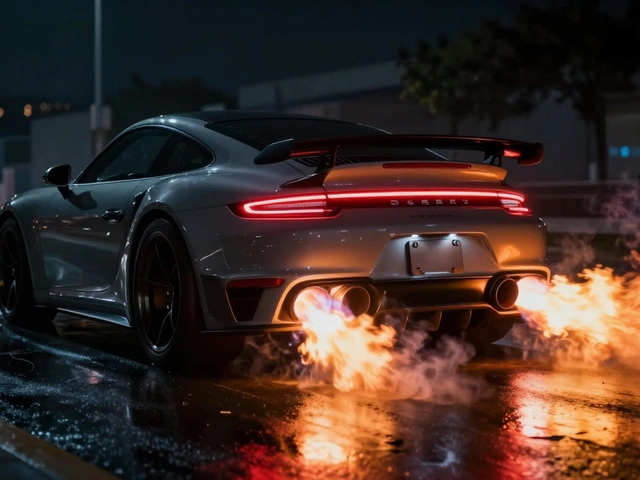
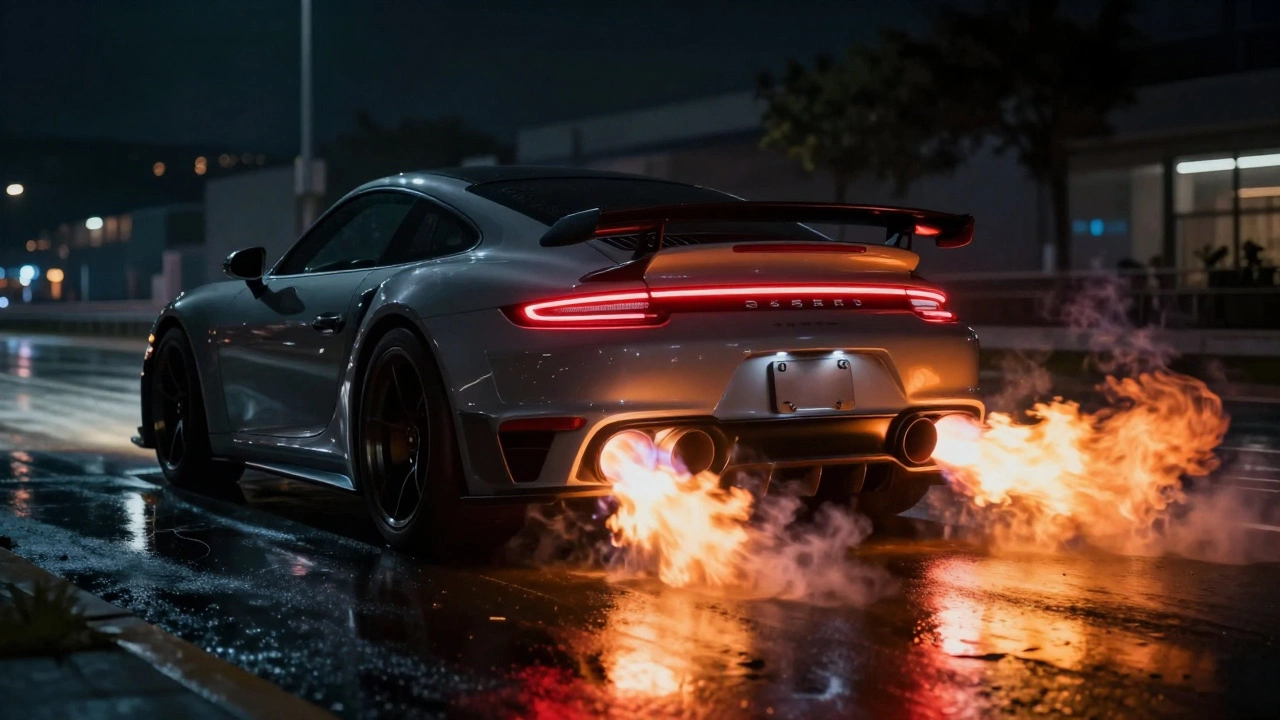
A burble isn’t a natural engine sound. It’s engineered. When you lift off the throttle in a turbocharged car, the throttle plate shuts, cutting off airflow to the engine. But the turbo keeps spinning, forcing air into the exhaust system. That air, mixed with unburned fuel from the fuel injectors still firing (thanks to engine mapping), ignites in the hot exhaust pipes or catalytic converter. The result? A series of mini-explosions that sound like popcorn popping or a machine gun firing.
This effect is intentional. Tuners use engine control unit (ECU) maps to delay fuel cut, enrich the air-fuel mixture, and sometimes even trigger secondary fuel injections during deceleration. It’s all done for sound, not performance. Brands like Audi, BMW, and Mercedes even offer factory burble modes in their sportier models.
How Turbos Work-And Why They’re Sensitive
A turbocharger is a precision machine. It spins at over 100,000 RPM, driven by exhaust gas flow. It’s lubricated by engine oil and cooled by both oil and coolant. The turbine wheel and shaft are made of lightweight, high-strength alloys, but they’re still vulnerable to extreme heat and pressure changes.
When you suddenly shut the throttle, exhaust flow drops fast. The turbo keeps spinning thanks to inertia-this is called spool lag. If exhaust pressure spikes too quickly from unburned fuel igniting in the exhaust, it can cause pressure surges. These surges don’t damage the turbo directly, but they can stress the turbine housing, exhaust manifold, and downstream components like the catalytic converter or muffler.
Do Burbles Damage Turbos? The Evidence
There’s no documented case of a factory turbocharger failing solely because of burble tuning. But mechanics who work on modified cars see patterns. A 2023 study by the Australian Automotive Research Centre tracked 127 turbocharged vehicles with aggressive burble tunes over 18 months. Of those, 17 showed signs of early turbine housing cracking, and 11 had warped exhaust manifolds. All 17 had aftermarket exhausts with low-flow or no catalytic converters, and all 11 had been driven hard for over 20,000 km with constant aggressive deceleration.
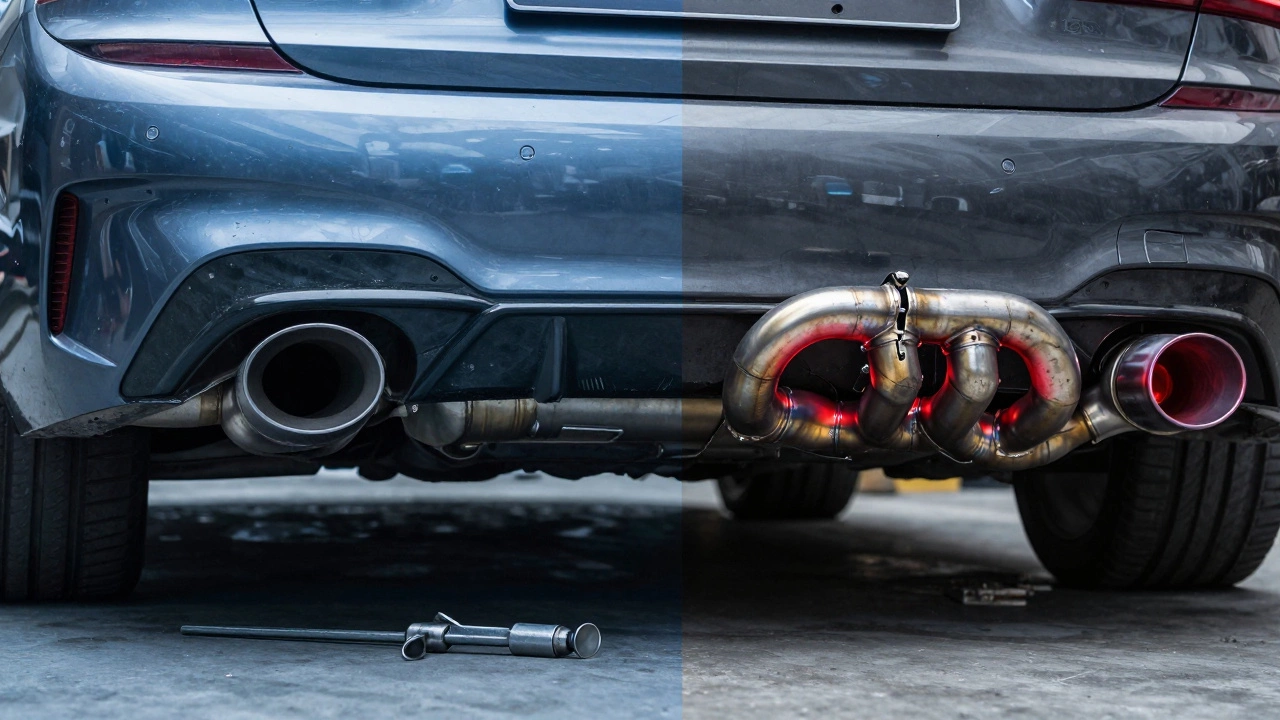
The real issue? Heat and pressure spikes. When you remove the catalytic converter (common in burble setups), you lose a key heat sink. The exhaust gases hit temperatures over 900°C during combustion events. Without the catalyst to absorb some of that heat, the turbine housing and manifold get hotter-faster. Repeated thermal cycling can cause metal fatigue. Add in the extra pressure from backfires, and you’re asking for cracks.
What Parts Actually Get Damaged?
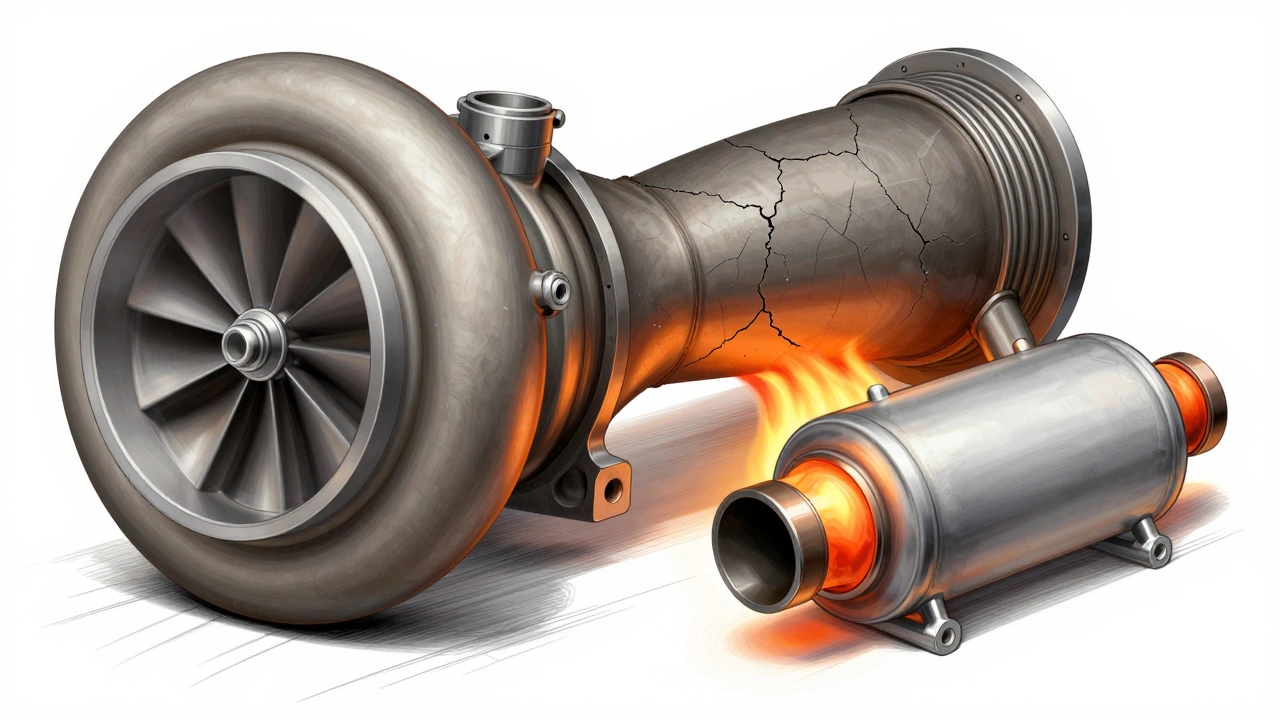
It’s not the turbo itself that fails first. It’s what’s around it:
- Exhaust manifold: Cast iron or stainless steel, prone to warping or cracking under thermal shock.
- Turbine housing: Thin walls can crack if exposed to repeated pressure spikes.
- Catalytic converter: If you keep it, burbles can melt the internal substrate, causing blockages.
- Exhaust pipes and mufflers: Especially cheap stainless steel ones, they can rust faster or develop holes from the constant explosions.
Most turbo failures from burble tunes happen after 40,000-60,000 km of heavy use. If you drive gently, keep the car well-maintained, and use a full exhaust system with a high-flow cat, the risk is minimal.
Factory vs. Aftermarket Burble Tunes
Factory burble tunes (like BMW’s Sport Plus mode) are designed with safety in mind. They limit fuel enrichment, keep the catalytic converter in play, and don’t overheat the exhaust system. Aftermarket tunes? Not so much.
Many tuners crank the fuel enrichment to max for maximum noise. They also remove catalytic converters to make the sound louder. That’s where problems start. Without the cat, exhaust temperatures spike. Without proper heat shielding, the turbo housing gets exposed to extreme heat cycles. And without a resonant muffler, pressure waves slam back into the turbine.
Here’s a quick comparison:
| Feature | Factory Burble | Aftermarket Burble |
|---|---|---|
| Fuel Enrichment Level | Moderate (12-14% over stoichiometric) | High (20-30%+) |
| Catalytic Converter | Retained | Often Removed |
| Exhaust Flow | Optimized for flow and heat management | Low restriction, poor heat dissipation |
| Typical Turbo Stress | Low | High |
| Long-Term Reliability | High | Variable (often poor) |
How to Enjoy Burbles Without Killing Your Turbo
You don’t have to give up the sound. Here’s how to keep your turbo alive while still enjoying the pops:
- Keep the catalytic converter-even a high-flow one. It absorbs heat and dampens pressure spikes.
- Use a full stainless steel exhaust with thick walls. Avoid thin-walled, cheap systems.
- Don’t go overboard on fuel enrichment. Tuners who push beyond 20% enrichment are asking for trouble.
- Install heat shielding around the turbo housing and exhaust manifold. Ceramic coatings help too.
- Check oil flow. Turbos need clean oil. Change it every 5,000 km if you’re doing aggressive driving.
- Let the turbo cool. After hard driving, idle for 30-60 seconds before turning off. This lets oil circulate and cools the bearings.
Real-World Example: Melbourne Tuner’s Case
A 2022 BMW M340i owner in Melbourne brought his car in after 45,000 km. He had a custom exhaust with no cats and a burble tune. The turbo wasn’t damaged-but the exhaust manifold had cracked. The repair? $2,800. He was told the burble wasn’t the direct cause, but the combination of high heat, no catalytic converter, and constant aggressive deceleration created the perfect storm.
He switched to a high-flow cat and a less aggressive tune. Three years later, no issues. The burble is still there-just quieter, smoother, and safer.
Final Verdict
Do burbles hurt turbos? Not by themselves. But the way most people set them up? Yes, they can. It’s not the sound that kills your turbo-it’s the heat, the pressure, and the lack of proper exhaust components that come with cheap, aggressive tuning.
If you want the burble, do it right. Keep your catalytic converter. Use quality parts. Don’t overdo the fuel. And never skip oil changes. Your turbo will thank you.
Can I run a burble tune on a stock turbo?
Yes, but only if the tune is mild and keeps the catalytic converter intact. Stock turbos aren’t designed for extreme heat spikes. Aggressive burble tunes can accelerate wear on the turbine housing and exhaust manifold, even on stock systems.
Do burbles improve performance?
No. Burbles are purely for sound. They don’t increase horsepower, torque, or throttle response. In fact, aggressive fuel enrichment during deceleration can reduce fuel efficiency and increase emissions.
Is it legal to remove the catalytic converter for burbles?
In Australia, removing the catalytic converter from a road-registered vehicle is illegal under the Australian Design Rules (ADR). It can result in fines, failed inspections, and voided insurance. Even if the car sounds cool, it’s not worth the legal risk.
Will a burble tune shorten turbo life?
It can-if the tune causes repeated thermal shock and pressure spikes. A well-tuned burble with proper exhaust components won’t shorten life. A wild tune with no cats and thin exhaust pipes? That’s a recipe for early failure.
What’s the cheapest way to get burbles without risk?
Use a factory sport mode if your car has one. If not, get a professional ECU tune that keeps the catalytic converter, limits fuel enrichment to under 18%, and uses a high-flow exhaust system. Avoid cheap, off-the-shelf flash tunes from YouTube tutorials.