Wheel Spacer Risk Calculator
Enter your spacer thickness to see the increased stress on wheel bearings and potential consequences.
Enter a spacer thickness to see risk assessment...
Wheel spacers might look like a simple, cheap way to make your wheels stick out farther and give your car that aggressive stance. But if you’re thinking about installing them, you need to know what you’re really signing up for. They’re not just harmless spacers - they change how your car handles, stresses its parts, and even how safe it is on the road. Many people buy them for looks without realizing the hidden costs. And by the time something breaks, it’s too late.
They Put Extra Stress on Wheel Bearings
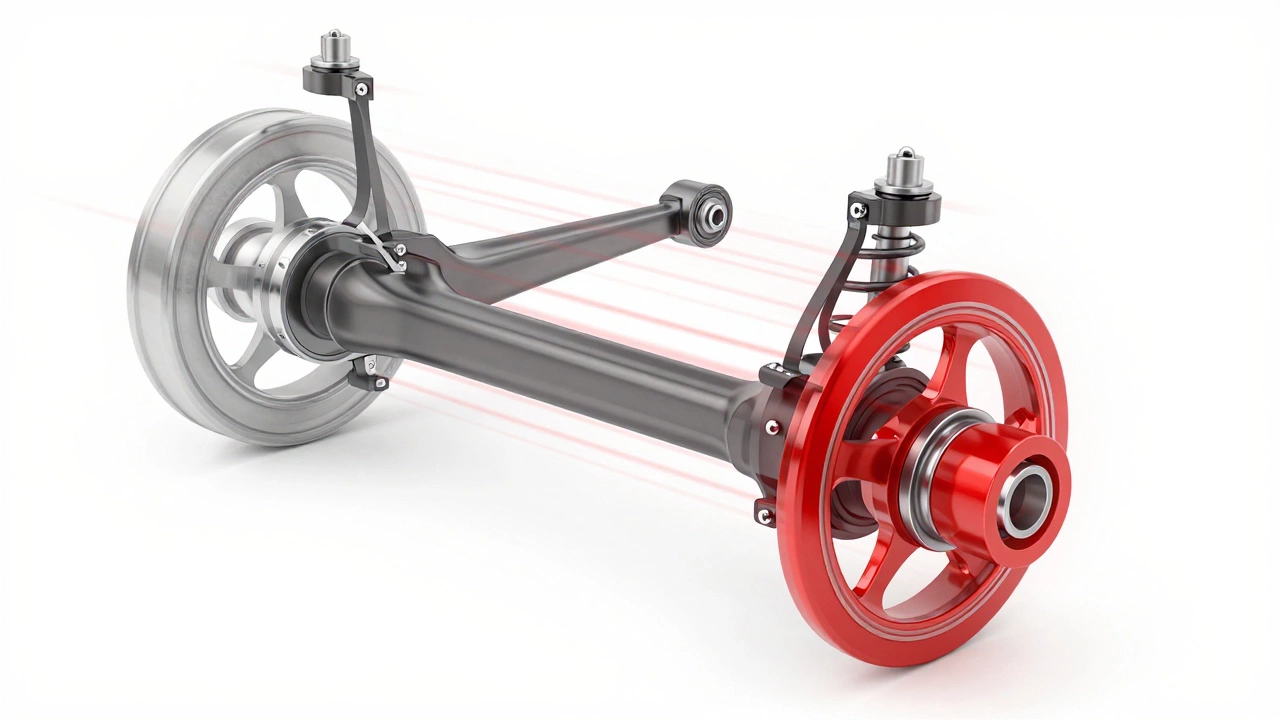
Every time you drive, your wheel bearings take the weight of the car and handle the forces from turns, bumps, and braking. When you add a spacer, you’re moving the wheel farther away from the hub. That increases the distance between the bearing and the center of the wheel - also called the lever arm. This might sound technical, but here’s what it means in real life: your wheel bearings now have to work 20%, 30%, or even 50% harder depending on spacer thickness.
It’s like holding a 10kg weight right against your chest versus holding it out at arm’s length. The farther out it is, the more strain you feel. Wheel bearings aren’t designed for that kind of extra load. Over time, they overheat, wear out faster, and can fail without warning. I’ve seen cars with 20mm spacers where the front bearings failed before 20,000 km - half the normal lifespan. Replacing them isn’t cheap, and if they seize while you’re driving, you could lose control.
They Can Cause Steering and Handling Issues
Your car’s suspension is tuned for a specific track width - the distance between the left and right wheels. When you add spacers, you’re widening that track. That might sound good, but it changes how the car responds to steering inputs. The steering becomes heavier, especially at low speeds. Parking becomes a chore. You’ll notice the car feels less responsive in quick maneuvers.
Worse, spacers can introduce torque steer in front-wheel-drive cars. That’s when the car pulls to one side under hard acceleration. It’s caused by uneven forces on the half-shafts because the wheels are now farther out. Some drivers think it’s just ‘more grip,’ but it’s actually instability. On wet roads or during emergency swerves, that imbalance can make the car harder to control. A 2023 study by the Australian Automotive Research Centre found that vehicles with 15mm+ spacers showed a 17% increase in steering correction inputs during emergency lane changes.
They Increase the Risk of Wheel Stud Failure
Most spacers are bolted on using the factory wheel studs. That means the studs now have to hold the wheel and the spacer together. But wheel studs aren’t designed to handle the extra leverage from a spacer. The force isn’t just pulling straight on the stud - it’s twisting and bending it sideways.
Over time, this causes micro-cracks. You won’t see them. But one day, under hard cornering or a big bump, the stud snaps. I’ve seen it happen. A guy in Geelong lost a front wheel on the freeway because his stud sheared off. He was lucky he wasn’t hurt. The spacer made the load too much for the stud to handle. Even if you use aftermarket extended studs, they don’t fix the root problem - the geometry is still wrong.
They Can Interfere with Suspension and Brake Components
Not all spacers are created equal. Cheap ones are just flat metal discs. But even the good ones can cause problems. Thicker spacers (over 15mm) often push the wheel inward, making it rub against the brake caliper or suspension arm. That’s not a minor scratch - it’s metal-on-metal grinding. You’ll hear it. You’ll smell it. And if you ignore it, you’ll eventually damage your brakes or control arms.
Some cars have very tight clearance. A 10mm spacer might be fine on a Subaru, but on a Honda Civic, it could hit the strut. You can’t just assume it’ll fit. You need to physically test it. Most people skip this step. They buy spacers online, bolt them on, and drive off. That’s how you end up with a warped rotor or a broken control arm.
They Can Void Your Warranty
If your car is still under factory warranty, installing spacers is a guaranteed way to lose coverage on suspension, steering, and wheel-related parts. Dealers don’t need to prove the spacer caused the failure - they just need to know it was installed. If your wheel bearing goes out, they’ll say, ‘You modified the hub setup,’ and deny the claim. That’s standard practice across all major manufacturers.
Even extended warranties or third-party plans often exclude damage from aftermarket modifications. You’re not just risking mechanical failure - you’re risking thousands in out-of-pocket repair costs.
They Can Affect Tire Wear and Alignment
Spacers change the wheel’s position relative to the suspension geometry. That throws off your camber and toe settings. Even if you get an alignment after installing them, the alignment machine can’t fully compensate for the altered leverage. You’ll end up with uneven tire wear - usually on the inside or outside edge.
One guy I spoke to in Melbourne replaced his front tires every 12,000 km after adding 12mm spacers. Without them, he got 35,000 km out of a set. That’s over $1,200 extra in tire costs every couple of years. And it’s not just tires - your suspension bushings wear out faster too. The angles are wrong, so everything’s under abnormal stress.
They Can Make Your Car Illegal
In Australia, road regulations are strict about wheel and tire protrusion. The Vehicle Standards Bulletin 14 says wheels can’t extend beyond the fender line by more than 25mm without approval. Many spacers push you over that limit. Even if your car looks cool, you’re now driving an unroadworthy vehicle.
Police can pull you over for it. Insurers can refuse to pay if you’re in an accident and they find you’re running illegal modifications. And if you get caught, you might be forced to remove them - or face fines. In Victoria, the penalty for non-compliant wheel protrusion is up to $1,000.
They Don’t Improve Performance - They Just Look Different
Let’s be clear: spacers don’t make your car faster, handle better, or stop quicker. They don’t add power. They don’t improve traction. All they do is make the wheels stick out farther. That’s it. Some people think wider stance = better grip. That’s a myth. Grip comes from tire compound, suspension tuning, and weight distribution - not how far the wheel sticks out.
If you want better handling, invest in better tires, coilovers, or sway bars. Those actually improve performance. Spacers just make your car look like it’s trying too hard.
What About High-Quality Spacers?
You’ll hear people say, ‘But I bought hub-centric, CNC-machined spacers with long studs - they’re safe.’ Yes, they’re better than cheap eBay junk. They fit tighter, run truer, and are less likely to vibrate. But they don’t fix the physics. The lever arm is still longer. The bearings still work harder. The studs still take more stress. The alignment is still off. The legal issues remain.
High-quality spacers reduce some risks - but they don’t eliminate them. They’re still a modification that compromises the factory design. And no manufacturer ever designed a car to run with spacers. Not even the most expensive ones.
When Are Spacers Acceptable?
There are a few cases where spacers make sense - but they’re rare.
- On race cars with custom suspension setups, where the entire geometry is rebuilt to account for wider stance.
- On track-only vehicles where safety and warranty don’t matter.
- On classic cars where the original wheels are too narrow and you’re restoring with modern tires - and you’ve re-engineered the suspension to match.
For 99% of street-driven cars? No. The risks far outweigh the look. If you want that aggressive stance, consider wheels with the right offset. It’s more expensive upfront, but it’s safe, legal, and doesn’t wear out your car.
Bottom Line
Wheel spacers are a cheap fix for a problem you don’t have. They look cool in pictures, but on the road, they create more problems than they solve. You’re trading long-term reliability, safety, and money for a visual tweak. Bearings wear out. Studs break. Tires wear unevenly. You risk your warranty. You might even break the law.
If you’ve already installed them, check your wheel bearings every 10,000 km. Listen for any new noises. Watch for uneven tire wear. And think about removing them before something expensive - or dangerous - happens.
Are wheel spacers legal in Australia?
It depends on how much they stick out. Australian road rules limit wheel protrusion to 25mm beyond the fender line without approval. Most spacers push you past that limit. Even if your car looks fine, you could be driving an unroadworthy vehicle. Police can fine you, and insurers can deny claims if they find spacers were installed.
Do wheel spacers cause vibrations?
Yes, especially cheap, non-hub-centric spacers. If the spacer doesn’t sit perfectly flush against the hub, it creates a wobble that transfers to the wheel. Even high-quality spacers can cause vibrations if they’re too thick or if your wheels aren’t perfectly balanced after installation. Any new vibration after installing spacers is a red flag - get it checked immediately.
Can spacers damage my brakes?
Absolutely. Thick spacers can push the wheel inward, causing the tire or rim to rub against the brake caliper or suspension arm. This leads to overheating, warped rotors, and even brake failure. Always physically check clearance before driving. Never assume it’ll fit.
Do spacers affect fuel economy?
Not directly. But if spacers cause increased tire wear or misalignment, your rolling resistance goes up. That means your engine has to work harder, which can reduce fuel efficiency by 2-5% over time. It’s not a huge number, but it adds up.
What’s a better alternative to wheel spacers?
Use wheels with the correct offset. If you want a wider stance, choose wheels with a lower (more negative) offset. That moves the wheel outward without changing the hub-to-wheel distance. It’s more expensive upfront, but it’s safe, legal, and doesn’t stress your suspension or bearings. You’ll also keep your warranty and avoid alignment issues.