Suspension Upgrade Decision Tool
Select the lowering method you are considering to see the safety risks, cost implications, and professional verdict.
Cutting Springs
Budget: $0 DIY ModificationLowering Springs
Budget: Moderate Aftermarket KitCoilovers
Budget: High Full SystemKey Requirement:
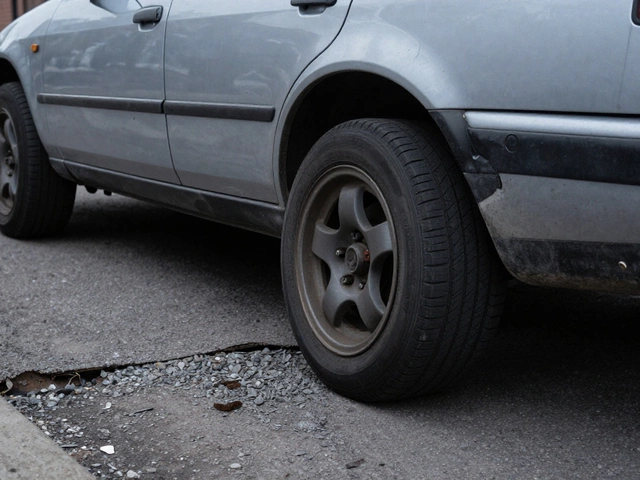
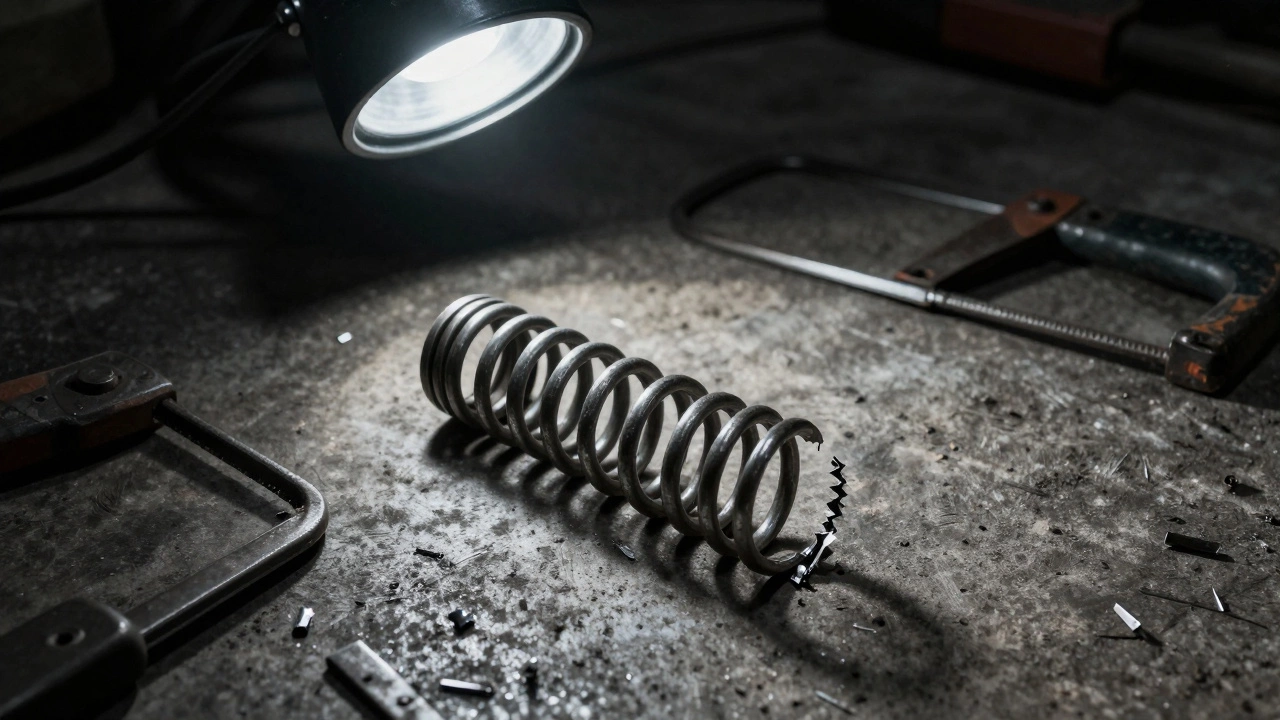
You want that aggressive, low-slung look for your car, but you're on a tight budget. You've seen videos of people taking a hacksaw or a grinder to their factory coils, chopping a few inches off, and popping them back in. It seems like a quick fix to get the car closer to the ground without spending hundreds on a kit. But here is the truth: cutting your springs is a gamble with your car's stability and your own safety.
Key Takeaways for Your Suspension
- Cutting springs permanently alters the spring rate, often making the ride unpredictable.
- Shortened springs can "unseat" from their perches, causing sudden suspension collapse.
- You lose significant structural integrity and risk premature spring failure.
- Proper lowering springs or coilovers are far safer and maintain vehicle geometry.
The Mechanics of the Coil Spring
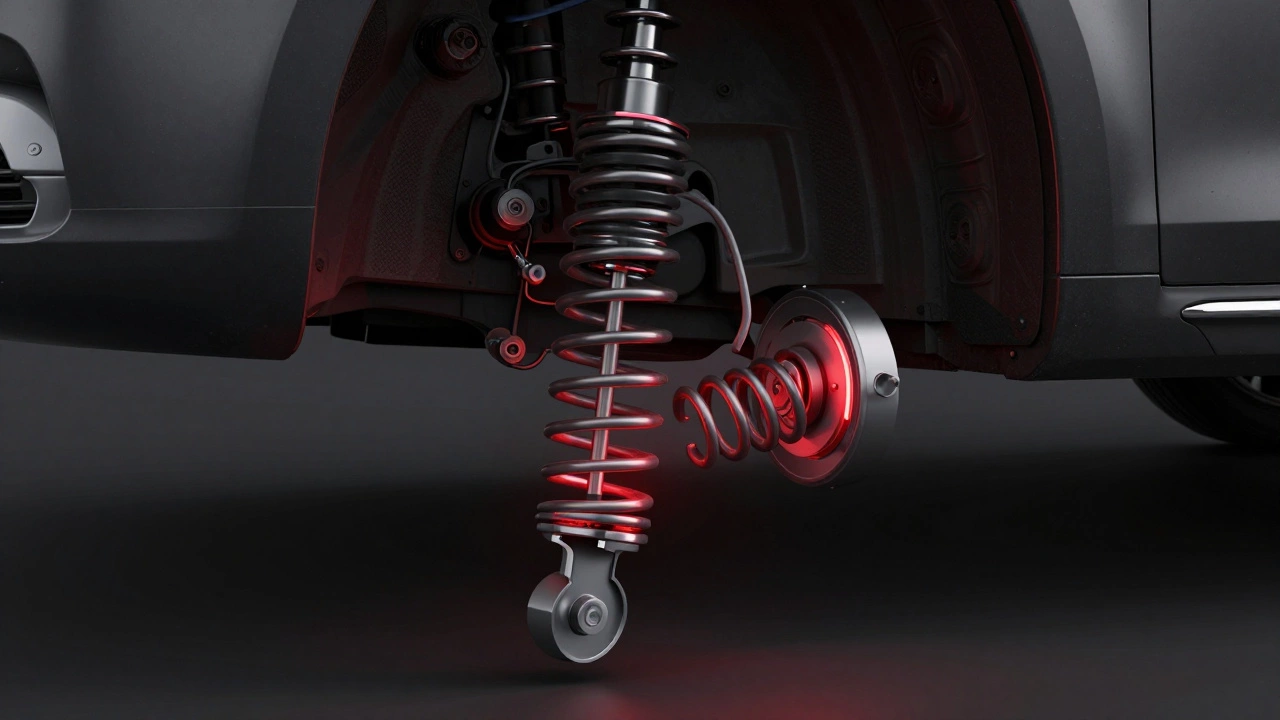
To understand why cutting is a bad idea, you first have to understand what a Coil Spring is a heavy-duty steel component designed to support a vehicle's weight and absorb road impacts through elastic deformation. These aren't just pieces of wire; they are precision-engineered components. The number of coils, the diameter of the wire, and the pitch (the distance between coils) are all calculated to provide a specific Spring Rate, which is the amount of force required to compress the spring by one inch.
When you cut a spring, you aren't just lowering the car; you are changing the physics of the part. Removing coils increases the spring rate, meaning the spring becomes stiffer. While "stiffer" might sound like it would help with handling, it's actually uncontrolled. You're creating a mismatch between the spring and the Shock Absorber, which is the hydraulic device that controls the spring's oscillation. If the spring is too stiff for the shock, the car will bounce violently over small bumps, which can lead to a loss of traction at high speeds.
Why Cutting Lowering Springs is Dangerous
The most immediate danger is "spring perch escape." In a factory setup, the spring sits securely in a rubber or metal seat. When you cut the spring, you remove the tension that holds it in place. During a hard turn or when hitting a pothole, the shortened spring can literally jump out of its seat. If this happens while you're doing 100 km/h on the highway, your suspension effectively disappears on one corner, causing the car to dip violently and potentially veer into another lane.
Then there's the issue of the Spring Rate inconsistency. Factory springs are often "progressive," meaning the coils are spaced differently to provide a soft ride initially and get stiffer as they compress. By cutting the bottom or top, you might be removing the very part of the spring that manages the transition from soft to firm. This leads to a ride that feels like a pogo stick-unpredictable and jarring.
| Feature | Cutting Factory Springs | Lowering Springs (Aftermarket) | Coilovers |
|---|---|---|---|
| Cost | Almost Zero | Moderate | High |
| Predictability | Dangerous/Random | Engineered | Fully Adjustable |
| Safety | Low (Risk of Unseating) | High | Highest |
| Ride Quality | Harsh/Bouncy | Firm but Controlled | Customizable |
Impact on Alignment and Handling
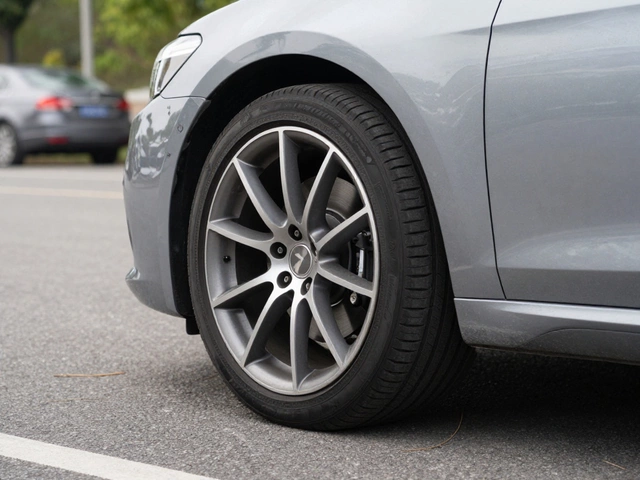
Lowering a car isn't just about the height; it's about the geometry. Your Suspension Geometry determines how your tires touch the road. When you chop your springs, you drastically alter the Camber Angle (the inward or outward tilt of the wheels) and the Toe (whether the wheels point toward or away from each other).
Without a proper design, cutting springs often leads to excessive negative camber. This means only a small sliver of your tire is touching the road. You'll notice your tires wearing out in a strange pattern-bald on the inside edge while the outside looks new. More importantly, your braking distance increases because you have less rubber in contact with the asphalt. If you've ever felt your car "wander" on the road, a hacked-up suspension is often the culprit.
The Better Ways to Get Low
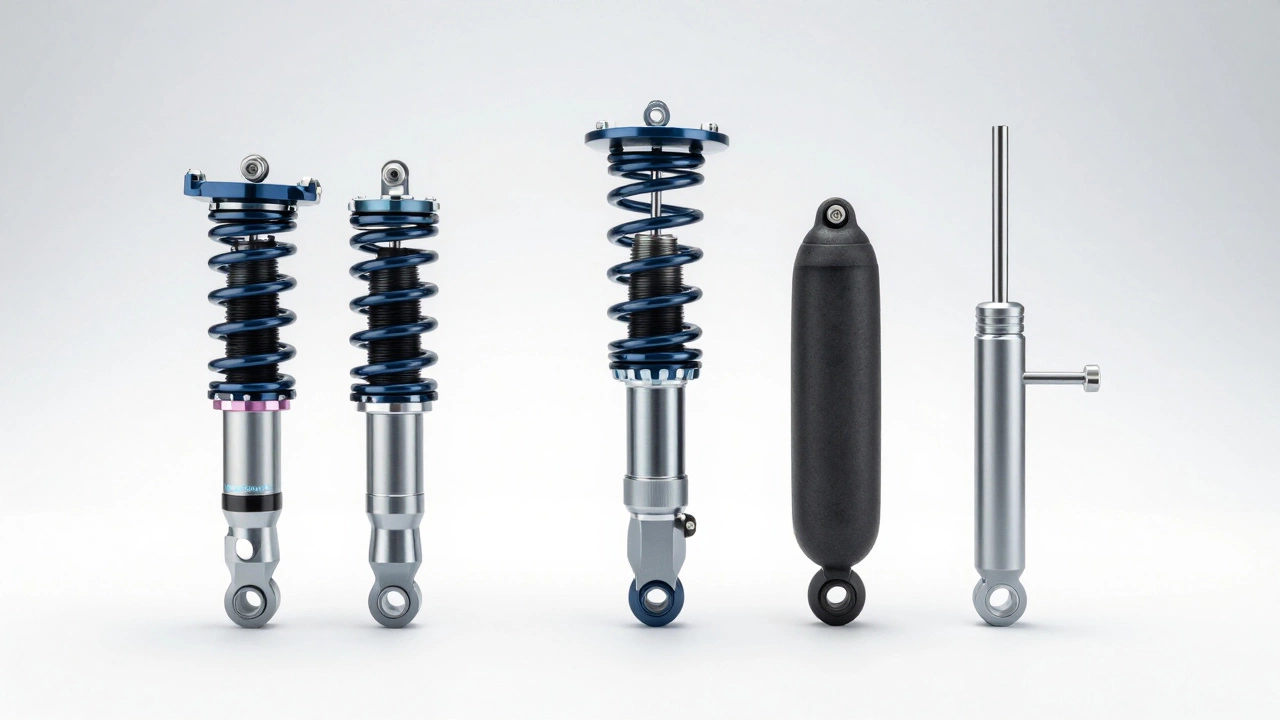
If you want a lower stance, there are three real ways to do it without risking a crash. First, there are dedicated lowering springs. These are designed from the ground up to be shorter while maintaining a safe spring rate and ensuring they stay seated in the perches. They are the best "plug and play" option for most drivers.
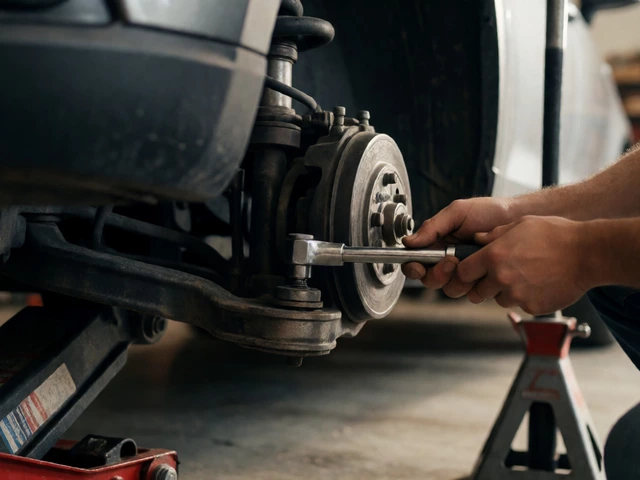
Second, consider Coilovers. These replace the entire spring and shock assembly with a single unit that has an adjustable threaded collar. This allows you to dial in the exact height you want. If you find the car is scraping too much on speed bumps, you can simply turn a wrench and raise it back up by ten millimeters. It's the gold standard for both performance and aesthetics.
Finally, for those with deeper pockets, air suspension is the way to go. This replaces steel springs with rubber air bags. You can slam the car to the ground for a show, then raise it to factory height with a button press to clear a driveway or a steep incline. While expensive, it removes the compromise between looks and usability.
Common Mistakes and Pitfalls
Some people try to mitigate the risk by cutting only the "bottom coil." This is a myth. Cutting any part of the spring alters the tension. Others try to use spacers to keep the spring seated. This is just adding another point of failure to a system that is already unstable.
Another huge mistake is forgetting to replace the Strut Mounts. If you're modifying your suspension, your old rubber mounts are likely worn out. Putting a stiff, cut spring into a perished mount is a recipe for loud clunking noises and a vibrating steering wheel.
Will cutting my springs void my warranty?
Yes, almost certainly. Modifying safety-critical components like the suspension is a fast track to having your manufacturer's warranty voided. If you have a failure in another part of the chassis, the dealership can point to your modified springs as the cause.
Can I just cut one coil and be safe?
No. Even removing a single coil changes the spring rate and the tension holding the spring in the seat. There is no "safe" amount of factory spring to cut because they aren't designed to be shortened.
Do I need an alignment after lowering my car?
Absolutely. Any change in ride height alters your camber and toe settings. Without a professional alignment, you will destroy your tires in a few thousand kilometers and potentially suffer from unstable handling.
What is the cheapest safe way to lower a car?
The cheapest safe option is a set of engineered lowering springs. While more expensive than a hacksaw, they are significantly cheaper than coilovers and ensure the car remains road-worthy and predictable.
Will my ride be stiffer if I use lowering springs?
Generally, yes. Lowering springs usually have a higher spring rate to prevent the car from bottoming out now that there is less travel. However, this stiffness is engineered and consistent, unlike the erratic bounce caused by cutting springs.
What to do now
If you've already cut your springs, the best move is to replace them immediately. Your safety and the lives of your passengers aren't worth the cost of a spring set. Start by checking your current ride height and seeing where you're rubbing. If you're seeing tire wear on the inner edges, get an alignment check immediately.
For those still planning their build, map out your budget. If you can't afford a full set of coilovers, save up for a reputable brand of lowering springs. Avoid "no-name" kits from auction sites; look for brands that provide specific fitment data for your chassis. Your car will look better, handle better, and most importantly, it will actually be safe to drive.