Airflow Calculator: Filter CFM Impact
Calculate Your Engine's Airflow
When you swap out your stock air filter for a performance filter, you’re told it’ll boost horsepower, improve throttle response, and let more air into the engine. But one question keeps popping up: Do filters reduce CFM? The answer isn’t yes or no-it’s more complicated than that.
What CFM Actually Means for Your Engine
CFM stands for cubic feet per minute. It’s a measurement of how much air your engine can pull in every minute. Think of it like breathing: if your lungs can’t take in enough oxygen, you’re tired. Same with your engine. If airflow is restricted, power drops.
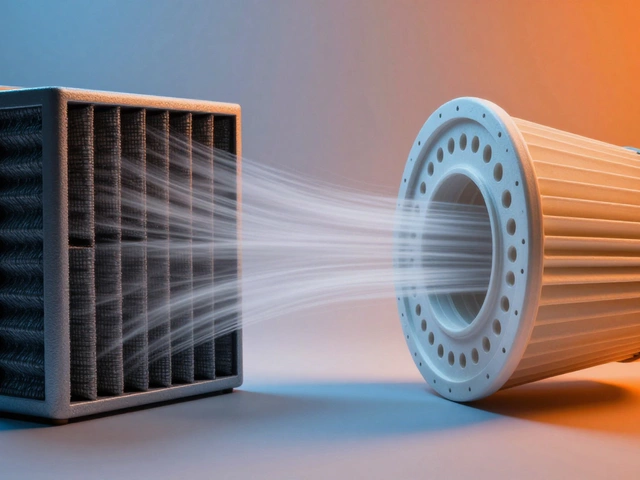
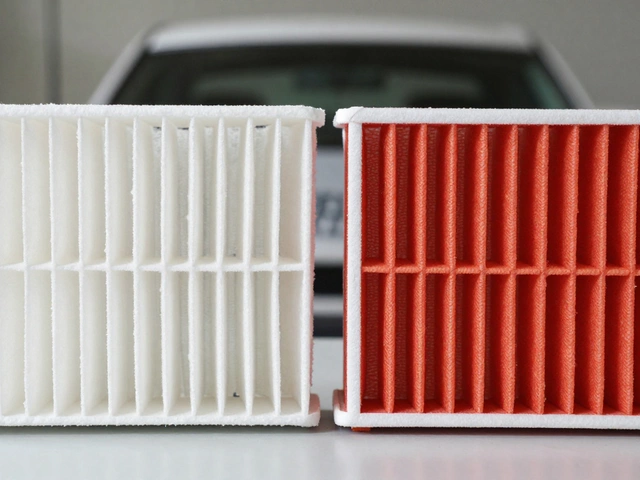
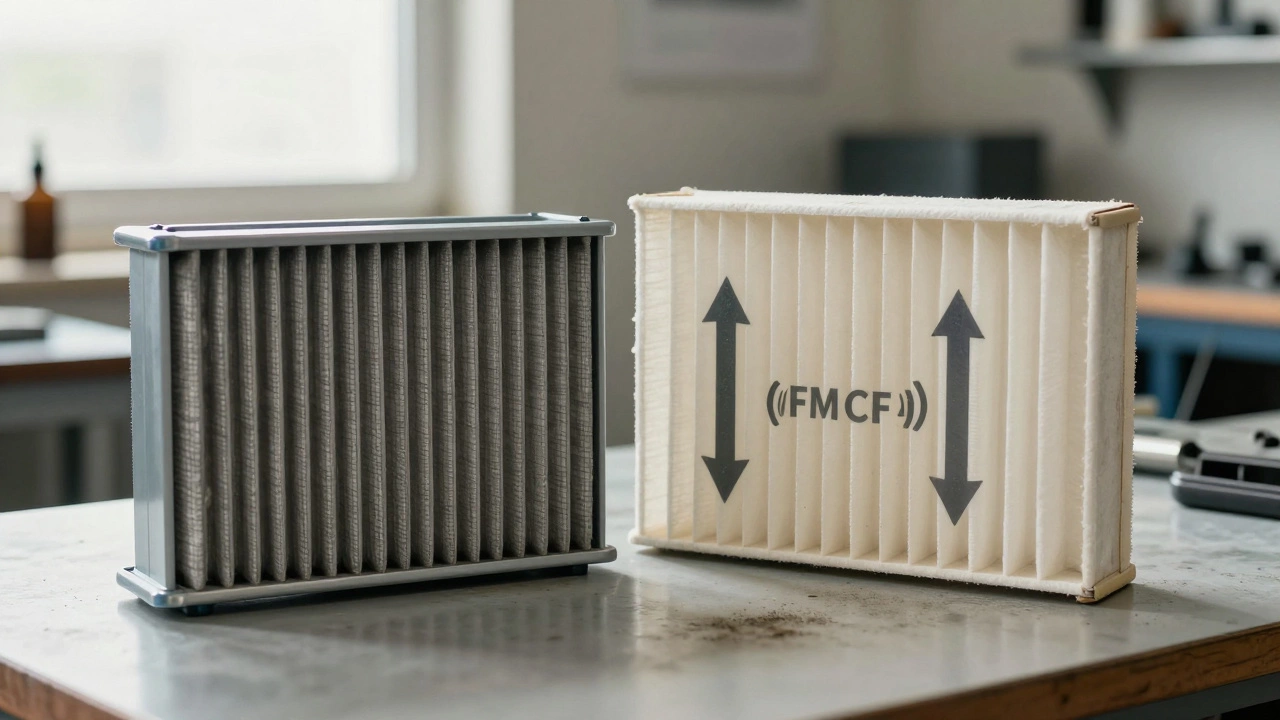
Stock air filters are designed for cost, durability, and noise reduction-not airflow. They often use dense paper media that can clog fast. Performance filters, like cotton gauze or foam types, are made to flow more air while still trapping dirt. But here’s the catch: even the best performance filter still creates some resistance. That’s physics. No filter is 100% open air.
How Much Airflow Do Filters Actually Restrict?
Independent dyno tests by Car and Driver and MotorTrend show that a clean stock filter might restrict airflow by 8-12% compared to a free-flowing aftermarket filter. That’s a measurable difference. But when that stock filter gets dirty? Airflow can drop by 25% or more. That’s where the real problem lies.
Performance filters, when clean and properly oiled, typically restrict airflow by only 3-5%. That’s a 50% improvement over a dirty stock filter. But if you over-oil a cotton filter or let it go too long without cleaning, the oil can clog the pores. Suddenly, you’re back to near-stock restriction levels.
One 2024 test by a Melbourne-based tuning shop measured airflow through five popular filters on a 2.0L turbocharged engine. Results:
- Stock paper filter (new): 280 CFM
- Stock paper filter (dirty, 15,000 km): 210 CFM
- Performance cotton filter (clean): 305 CFM
- Performance cotton filter (over-oiled): 260 CFM
- Performance foam filter (clean): 295 CFM
That’s a 45 CFM gain from a clean performance filter over a dirty stock one. But if you mess up maintenance, you lose nearly all of that gain.
Do All Performance Filters Perform the Same?
No. Not all ‘performance’ filters are created equal. Some brands slap on a ‘race-ready’ label and charge double, but their airflow numbers barely beat the stock unit.
Look at the data. Brands like K&N, AEM, and Injen publish independent airflow test results. K&N’s most popular drop-in filter (part number 33-2314) flows about 12% more air than a new OEM filter in lab tests. But some no-name eBay filters? They flow less than the stock one because they use cheaper, denser cotton or poorly designed frames that don’t seal right.
Sealing matters. If air leaks around the filter instead of going through it, your engine pulls in unfiltered air. That’s worse than a clogged filter-it’s engine damage waiting to happen. A high-flow filter with a bad seal is a net loss.
What About Cold Air Intakes? Do They Help More?
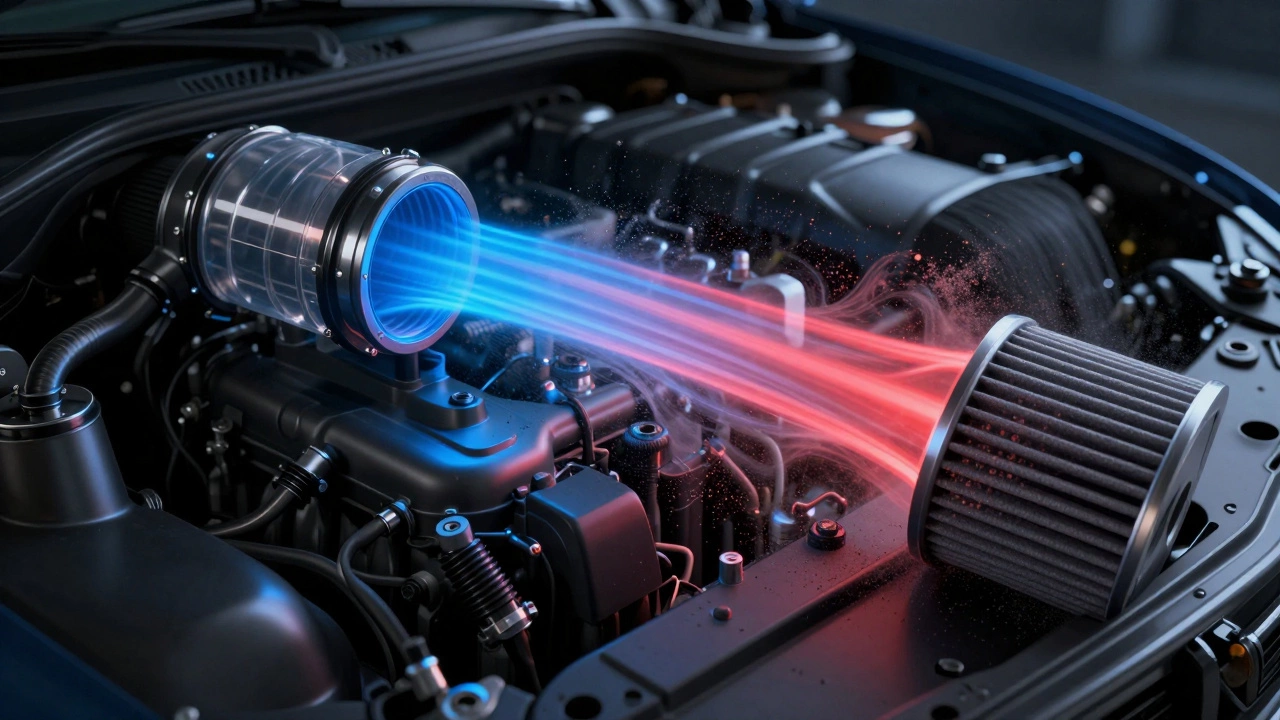
Many people think swapping just the filter isn’t enough. They go for a full cold air intake (CAI) system. And yes, those can help-but not because the filter itself is better. It’s because the entire path is shorter, straighter, and cooler.
A CAI removes the factory airbox, which often has sharp bends and long ducts that create turbulence. It replaces them with smooth, wide tubes that reduce airflow resistance. The filter in a CAI might be the same as a drop-in, but the system around it makes a bigger difference.
On a turbocharged car, a good CAI can add 8-15 horsepower just by improving airflow efficiency. But on a naturally aspirated engine? The gains are smaller-maybe 3-7 hp. And if the CAI pulls in hot air from the engine bay instead of the fender well? You lose power. Heat is the enemy of density.
Real-World Impact: Does Higher CFM Mean More Power?
Here’s the truth: more CFM doesn’t automatically mean more power. Your engine only takes what it needs. If your fuel system, injectors, or ECU aren’t tuned for the extra air, you’re not gaining anything. In fact, you might run lean, which can cause overheating or even engine knock.
On a stock car with no tune, a clean performance filter might give you 1-3 hp. That’s barely noticeable. But if you’ve done other mods-exhaust, turbo upgrade, intake manifold? Then that extra airflow becomes critical. The engine is begging for more air, and now the filter isn’t holding it back.
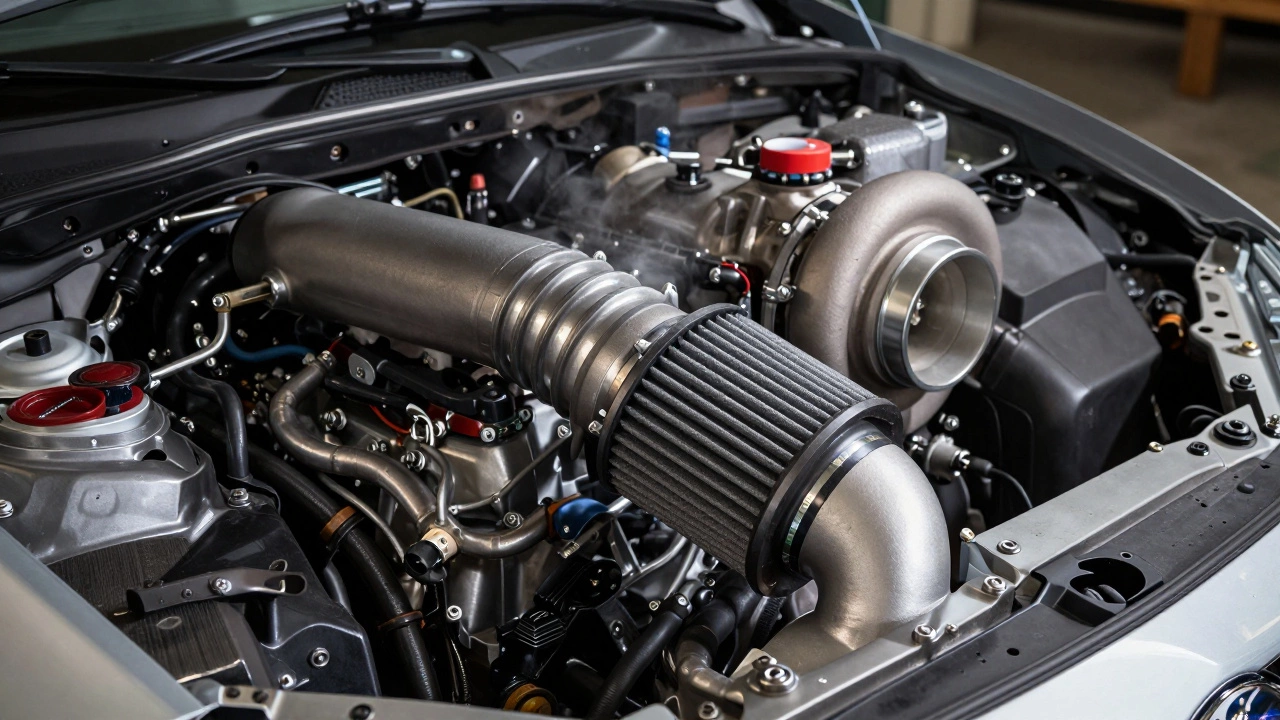
One tuner in Adelaide ran a test on five identical 2020 Subaru WRXs. All had the same tune and exhaust. One had a stock filter, one had a K&N, one had a cone CAI, one had a sealed CAI, and one had no filter (just a bare intake tube). The no-filter car made the most power-but it also ingested dirt and died after 300 km. The sealed CAI made the best consistent power without risk. The K&N was close, but slightly behind.
When Filters Actually Hurt Performance
Performance filters can hurt more than help if you ignore maintenance. Over-oiling is the #1 mistake. A little oil helps trap dust. Too much oil turns the filter into a sticky trap. It clogs fast. Some people oil theirs every 5,000 km like clockwork. That’s not necessary. Check the filter visually. If it looks gray and dusty, clean it. If it still looks clean? Wait.
Also, avoid ‘washable’ filters if you drive in dusty conditions. Sand, clay, and fine dust can pack into the cotton fibers and stay there, even after cleaning. In places like the Outback or rural Victoria, a high-flow filter might need cleaning every 8,000 km. That’s expensive and time-consuming.
And don’t forget: some modern engines have mass airflow sensors (MAF) that are sensitive to oil mist. Over-oiled filters can coat the MAF sensor, causing idle issues, poor fuel economy, or check engine lights. You fix one problem and create three others.
What Should You Do?
If you want better airflow without risk:
- Start with a clean OEM filter. It’s cheaper and just as good when fresh.
- If you want a performance filter, pick a reputable brand with published CFM data (K&N, AEM, Injen, BMC).
- Use the correct amount of oil-follow the manufacturer’s instructions. Less is more.
- Don’t install a CAI unless you know where it’s pulling air from. Cold air in, hot air out.
- Get a tune if you’re doing major mods. Don’t assume the filter alone will unlock power.
Performance filters don’t magically make your car faster. They just remove a bottleneck. If your engine doesn’t need more air, you won’t feel a difference. But if you’ve upgraded everything else? Then yes-a good filter is the final piece that lets your engine breathe properly.
Bottom Line: Do Filters Reduce CFM?
Yes, all filters reduce CFM-that’s their job. They slow down air to trap dirt. But a clean, high-quality performance filter reduces it far less than a dirty stock one. The real question isn’t whether filters reduce CFM. It’s whether you’re using one that lets your engine breathe better than the one it replaced.
Choose wisely. Maintain it. And don’t expect miracles. Real power comes from the whole system working together-not just one part.
Do performance air filters increase horsepower?
On a completely stock engine, a performance air filter typically adds 1-3 horsepower. That’s barely noticeable. But if you’ve modified your exhaust, turbo, or ECU, that extra airflow can help the engine make 5-15 more horsepower by removing a restriction. The filter alone doesn’t create power-it just lets the engine reach its potential.
Can a dirty air filter reduce CFM?
Yes, a dirty air filter can reduce airflow by 20-30% compared to a clean one. That’s more than the difference between a new stock filter and a performance filter. If your car feels sluggish and your filter hasn’t been checked in 15,000+ km, it’s probably clogged. Replace or clean it before assuming you need a new performance part.
Are K&N filters worth it?
K&N filters flow about 10-15% more air than a clean OEM filter and last longer. But they cost 3-5 times more. If you drive in clean conditions and don’t mind cleaning it every 20,000-40,000 km, they’re fine. If you drive in dust or don’t maintain them, you’ll lose the benefit-and risk damaging your MAF sensor. For most daily drivers, a clean OEM filter is cheaper and just as effective.
Do I need a cold air intake with a performance filter?
Not necessarily. A drop-in performance filter gives you most of the airflow benefit. A cold air intake adds more by reducing bends and pulling in cooler air, but it’s only worth it if your stock airbox is restrictive. Many factory airboxes are actually quite efficient. Test your setup before spending extra.
Can a performance filter hurt my engine?
Yes-if you over-oil it or use a low-quality filter that doesn’t seal properly. Oil can coat the MAF sensor and cause idle issues. Poor sealing lets unfiltered air in, which wears out cylinders and valves. A bad filter can cost you more in repairs than the savings from not changing stock filters.