LED Headlight Orientation Simulator
Correct Alignment
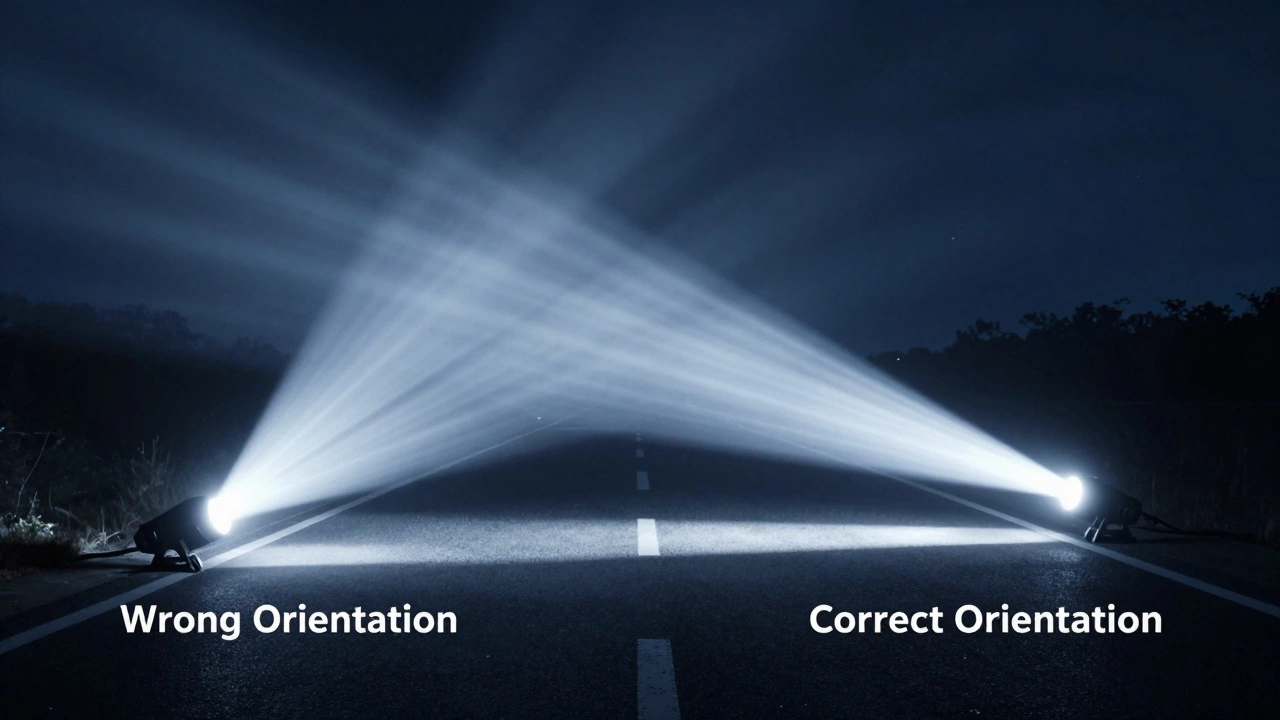
Chips are at the 3 and 9 o'clock positions. This mimics the original halogen filament and provides the intended beam pattern.
| Orientation | Beam Effect | Road Visibility | Risk |
|---|---|---|---|
| 3 & 9 O'Clock | Focused Cutoff | Maximum | Low |
| 12 O'Clock | Scattered High | Poor (Too high) | High (Blinds) |
| 6 O'Clock | Low Concentration | Poor (Too short) | Medium |
You've just spent your hard-earned money on a set of high-powered LED bulbs to replace those dim, yellow halogen lights. You pop the hood, slide the bulbs in, and flip the switch. But then you notice something weird: the light isn't hitting the road; it's scattering everywhere, or worse, blinding the driver in the opposite lane. The culprit isn't the bulb itself, but the direction the chips are facing. If you're wondering whether LED headlight orientation should be facing up or down, the short answer is that the chips must be perfectly horizontal-facing the sides of the housing, not the ceiling or the floor.
Quick Guide: The Golden Rule of LED Positioning
Before we get into the technical weeds, here is the cheat sheet for your installation. If you want a clean beam and a safe drive, follow these points:
- The LED chips (the actual light-emitting diodes) should be at the 3 o'clock and 9 o'clock positions.
- They should never face straight up (12 o'clock) or straight down (6 o'clock).
- If the bulb is crooked, your beam pattern will be skewed, creating "dark spots" on the road.
- Always check your beam against a wall from 5 meters away to verify the cutoff line.
Why Orientation Actually Matters
To understand why the direction matters, we have to look at how a car's headlight works. Your car doesn't just have a hole for a light; it has a Reflector is a curved mirrored surface designed to bounce light from a specific point and project it forward in a controlled beam. This reflector is engineered based on the exact shape and position of the original halogen filament.
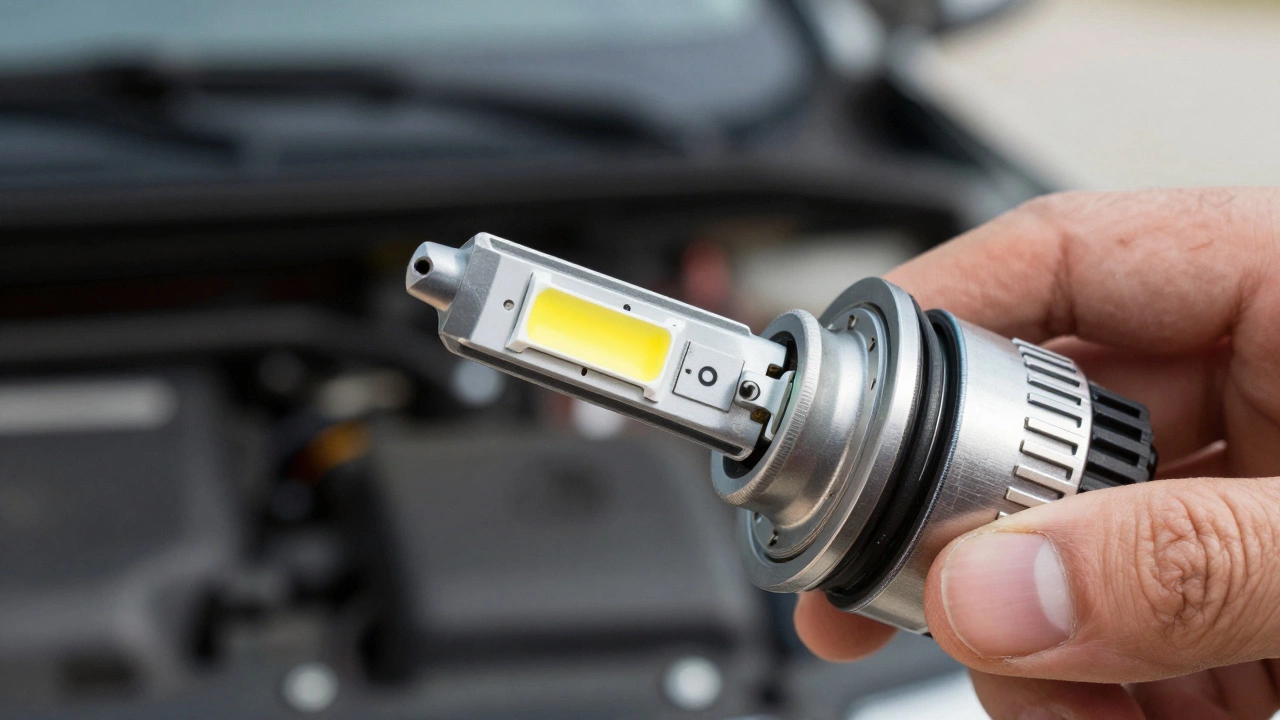
A halogen bulb has a tiny wire filament that glows. Because it's so small and centered, the reflector knows exactly how to push that light. An LED Bulb is a semiconductor light source that uses light-emitting diodes to produce bright, energy-efficient illumination, but its light comes from flat chips on the sides of the core. If those chips are facing up or down, they are hitting the reflector at the wrong angle. Instead of a focused beam that lights up the asphalt, the light bounces randomly, often shooting straight into the eyes of oncoming traffic.
The Danger of Facing Up or Down
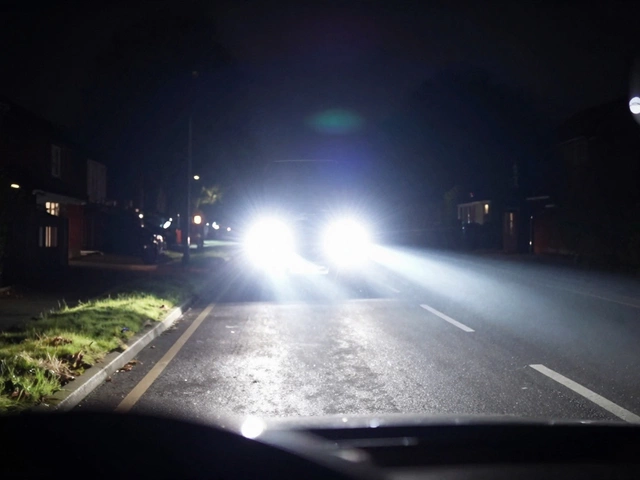
What happens if you get it wrong? If the chips face up, the light often hits the top of the reflector and is projected too high. This creates a "glare' effect. You'll be the person everyone is flashing their high beams at because you're accidentally blinding them. If they face down, you'll likely see a bright spot right in front of your bumper, but the road 20 feet ahead will remain pitch black. Neither scenario is safe.
Think of it like a flashlight. If you tilt the lens just a few degrees, the spot of light moves several feet. In a car, because the Beam Pattern is the specific distribution of light projected by a headlight to maximize visibility without blinding others is so precise, a 45-degree mistake in bulb orientation can make the lights almost useless.
| Position | Beam Effect | Road Visibility | Safety Risk |
|---|---|---|---|
| 3 & 9 O'Clock (Correct) | Focused, horizontal cutoff | Maximum | Low |
| 12 O'Clock (Facing Up) | Scattered, high-aimed | Poor (Too high) | High (Blinds others) |
| 6 O'Clock (Facing Down) | Concentrated low/near | Poor (Too short) | Medium (Low visibility) |
Step-by-Step: How to Align Your Bulbs Perfectly
Installing LEDs isn't always as simple as "plug and play," especially in tighter housings. Here is the best way to ensure your bulbs are squared away.
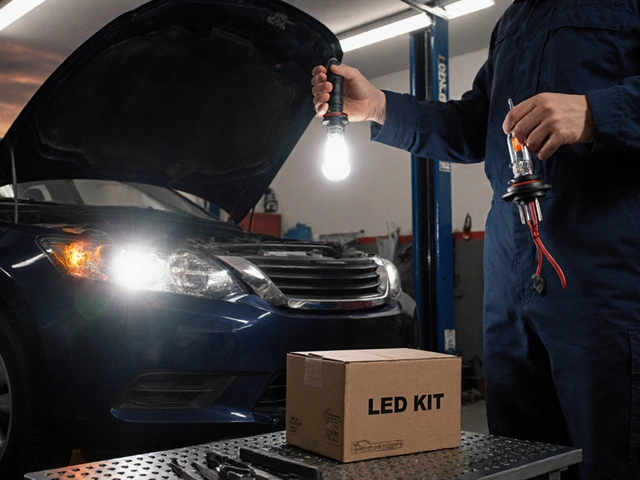
- Install and Power On: Fit the bulbs into the housing and turn them on while the hood is open. This lets you see the actual light output before you lock everything down.
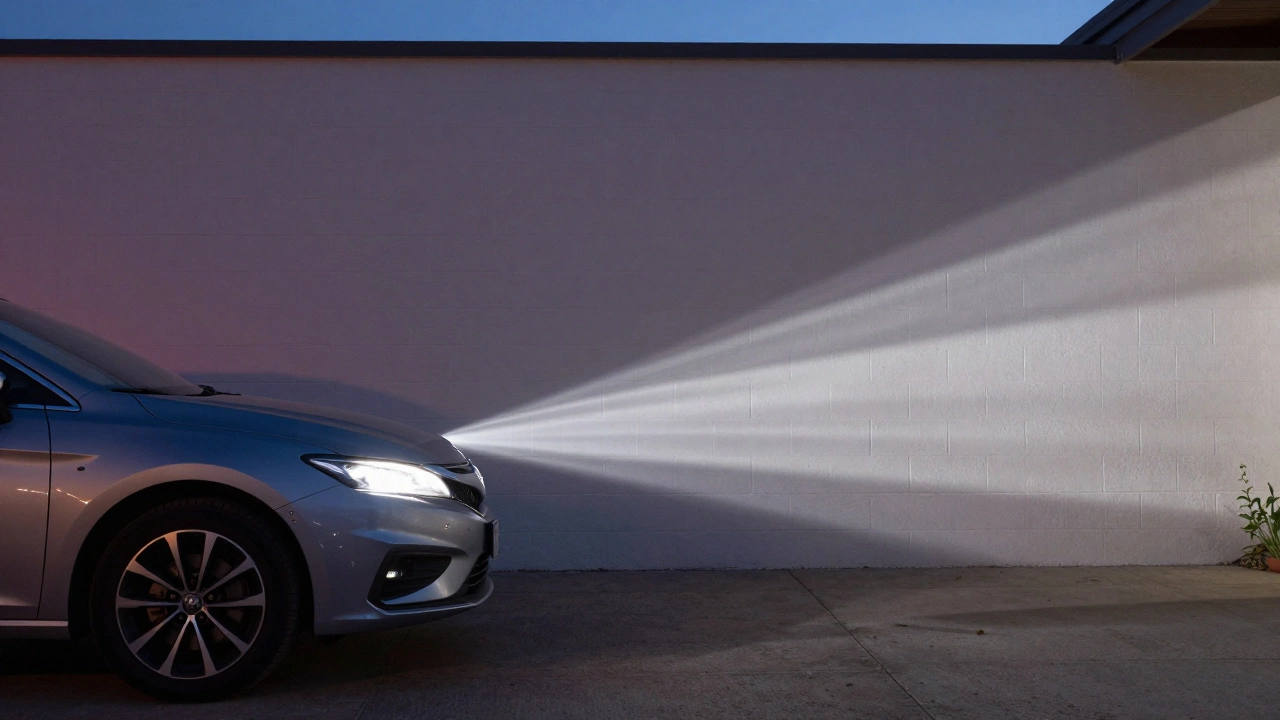
- The Wall Test: Park your car about 5 to 10 feet away from a flat, light-colored wall. This is the only way to truly see if your light is centered.
- Observe the Cutoff: You should see a relatively flat line of light. If the light is "blobbing" or looks like a giant circle with no clear edge, your bulbs are likely rotated.
- Adjust the Base: Most modern LED Headlight Conversion Kits are aftermarket LED replacements designed to fit into housings originally meant for halogen bulbs have an adjustable collar. Loosen the locking ring slightly, rotate the bulb until the beam on the wall is flat and focused, and then tighten it.
- Check Symmetry: Make sure the left bulb and the right bulb are mirroring each other. If one is slightly higher, adjust the bulb rotation or the headlight adjustment screw on the housing.
Common Pitfalls to Avoid
Many people make the mistake of assuming the bulb is automatically aligned because it "clicked" into place. However, many H11 or 9005 bulbs (common socket types) can be seated slightly off-center if the housing is old or worn. Always trust the beam pattern on the wall over the "click" of the socket.
Another common error is ignoring the Heat Sink. The cooling fins on the back of the LED are heavy. If they are hanging at an odd angle, they can actually pull the bulb out of alignment. Ensure the heat sink is supported and not putting torque on the bulb's base.
Comparing LED vs Halogen Alignment
You might wonder why you never had to worry about this with your old bulbs. Halogen bulbs use a 360-degree omnidirectional light source (the filament). It doesn't matter how you rotate a halogen bulb because the light goes everywhere. LEDs are directional. They only shoot light from the flat side of the chip. This shift from omnidirectional to directional light is why orientation is the single most important part of an LED upgrade.
Can I just leave the bulbs facing up if they look bright?
Absolutely not. While they might seem bright to you, the light is being projected into the air and into the eyes of other drivers. This is a major safety hazard and can lead to accidents or police fines for improper lighting.
What if my LED bulbs don't have an adjustable base?
If the bulbs are fixed and coming out crooked, you may have a compatibility issue. Some cheap LEDs don't align their chips perfectly with the halogen focal point. In this case, you might need a different brand or a set with a built-in alignment adapter.
How do I know if my beam is too high?
Use the wall test. If the brightest part of the beam is above the height of your headlights on the wall, it is too high. The beam should generally be slightly angled downward to illuminate the road, not the horizon.
Do all LED bulbs need to be horizontal?
For 99% of automotive headlight reflectors, yes. The reflectors are designed to take light from a central point and push it forward. Since LED chips are the light source, placing them at 3 and 9 o'clock mimics the widest part of a halogen filament's output.
Will rotating the bulb affect the lifespan of the LED?
No, rotating the bulb for alignment does not affect the electronics or the lifespan of the LEDs. It only changes where the light is pointed.
Next Steps for a Perfect Setup
Once you've got your chips facing 3 and 9 o'clock, don't stop there. If you're still seeing some glare, check your Headlight Lens clarity. If your lenses are oxidized or foggy, the best-aligned LED in the world will still produce a blurry, scattered beam. A quick polish with a restoration kit can make a world of difference in how that light actually hits the road.
For those with very old vehicles, consider if your housing is a "Projector" or a "Reflector." Projector housings (the ones with the glass magnifying lens) are much more forgiving with LED orientation, while open reflector housings require absolute precision to avoid blinding others.