Exhaust Flame Safety Diagnostic Tool
Answer the questions below to determine if your exhaust flames are a harmless side effect of tuning or a warning sign of mechanical failure.
Diagnosis Result
Risk LevelLikely Cause
-
Safety Assessment
-
Recommended Action
-
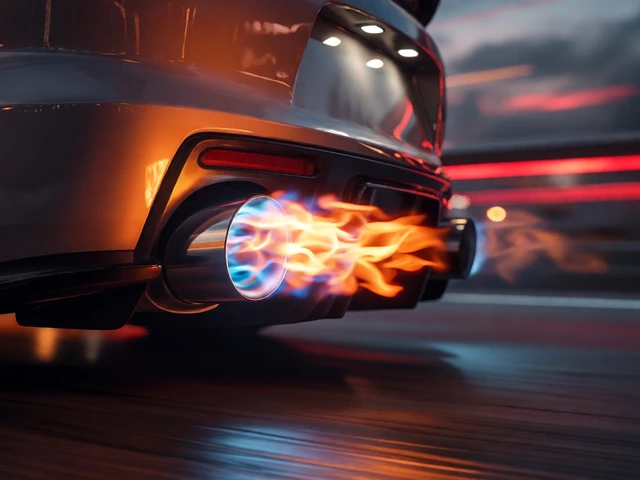
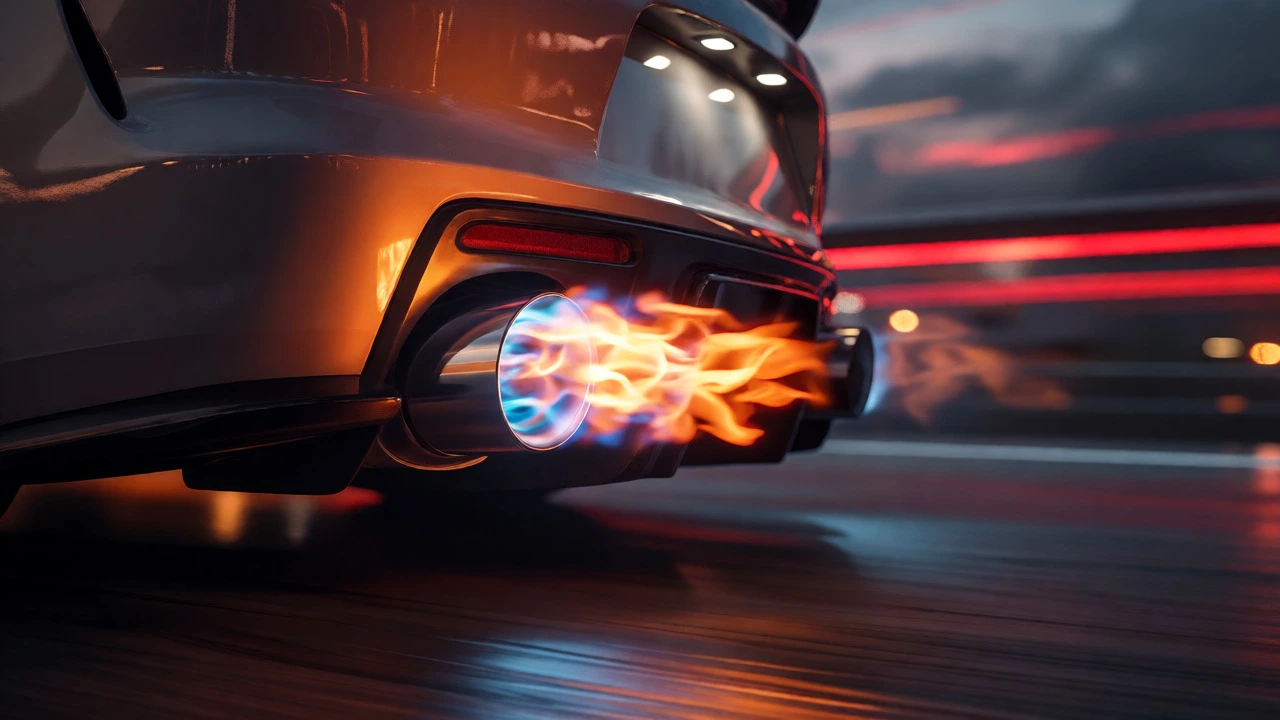
You’re cruising down the highway, windows down, music up. Suddenly, a loud pop echoes from behind you, followed by a bright orange flicker shooting out of your tailpipe. Your heart skips a beat. Is your engine about to explode? Are you driving a rolling fire hazard? If you’ve ever installed a custom exhaust system or tuned your car for performance, you’ve probably wondered: are exhaust flames safe?
The short answer is nuanced. While seeing fire shoot out of your exhaust looks like something out of a Mad Max movie, it’s rarely the catastrophic failure most drivers fear. However, it’s not exactly "normal" either. It’s a symptom of how your engine is behaving under specific conditions. Let’s break down what’s actually happening inside those pipes, when it’s harmless fun, and when it’s a warning sign that needs immediate attention.
What Actually Causes Exhaust Flames?
To understand the risk, you have to understand the source. An internal combustion engine works by burning a mixture of air and fuel. Ideally, this mixture burns completely inside the cylinders, pushing pistons down and turning wheels. But engines aren’t perfect. Sometimes, unburnt fuel escapes the combustion chamber and travels through the exhaust manifold into the hot pipes.
When this raw fuel hits the superheated metal of the exhaust system-often exceeding 800°C (1472°F)-it ignites. This secondary combustion creates the visible flame. In high-performance contexts, this is often intentional. Tuners richen the fuel mixture (adding more fuel than air) during deceleration or aggressive throttle lifts. This cools the intake charge but dumps excess fuel into the exhaust, creating those dramatic pops and flames.
Backfiring is the ignition of unburnt fuel in the exhaust system, distinct from pre-ignition in the cylinder. It’s crucial to distinguish between a simple backfire (a pop without visible flame) and an actual exhaust flame. The flame requires enough unburnt fuel and oxygen to sustain combustion outside the pipe, which usually happens at higher RPMs or with specific tuning setups.
The Safety Myth vs. Reality
Most panic comes from a misunderstanding of how heat works. You might think, "If there's fire coming out, the whole car should be melting." But here’s the thing: the exhaust gases are moving fast. They don’t stay in one spot long enough to transfer massive amounts of heat to the surrounding bodywork unless something is broken.
Modern exhaust systems, especially aftermarket ones made from stainless steel or titanium, are designed to handle extreme temperatures. A momentary flash of flame doesn’t melt steel. What melts plastic trim, rubber mounts, or paint is sustained contact with hot components or dripping fluids, not a split-second jet of fire.
However, "safe" doesn’t mean "risk-free." The primary danger isn’t the fire itself; it’s the cause of the fire. If your car is spitting flames because of a deliberate tune, you’re likely fine. If it’s spitting flames because your engine is misfiring badly, you have a different problem. Misfires can lead to catalytic converter overheating, which can cause real damage or even start a fire if debris accumulates underneath the car.
When Flames Are Just Cool (And When They’re Not)
Context is everything. Here’s a quick way to diagnose your situation:
- The "Tuner Special": If you have an ECU remap, a catless downpipe, or a race-style exhaust, and you see flames on overrun (when you lift off the gas), this is expected behavior. The engine management system is intentionally dumping fuel. As long as the check engine light isn’t flashing wildly and the car drives normally, this is generally safe.
- The "Misfire Monster": If the flames happen while accelerating hard, accompanied by jerking, loss of power, or a rough idle, you have a misfire. Unburnt fuel entering the exhaust due to failed spark plugs or coils can overheat the catalytic converter. This is dangerous for the component’s longevity.
- The "Cold Start" Flicker: Occasionally, on very cold mornings, you might see a small puff of smoke or a tiny flicker. This is often just condensation and unburnt fuel clearing out. It’s rare to get large flames here, but minor pops are common in older cars.
| Scenario | Likely Cause | Safety Risk Level | Action Required |
|---|---|---|---|
| Flames on deceleration | Rich fuel mixture / Anti-lag | Low | Enjoy the show; check mounts |
| Flames under acceleration | Misfire / Ignition fault | Medium-High | Inspect plugs/coils immediately |
| Loud bangs + smoke | Catalytic converter failure | High | Replace cat; check for blockage |
| Constant dripping + pop | Fuel leak / Injector issue | Medium | Check fuel pressure/regulator |
Risks to Your Custom Exhaust System
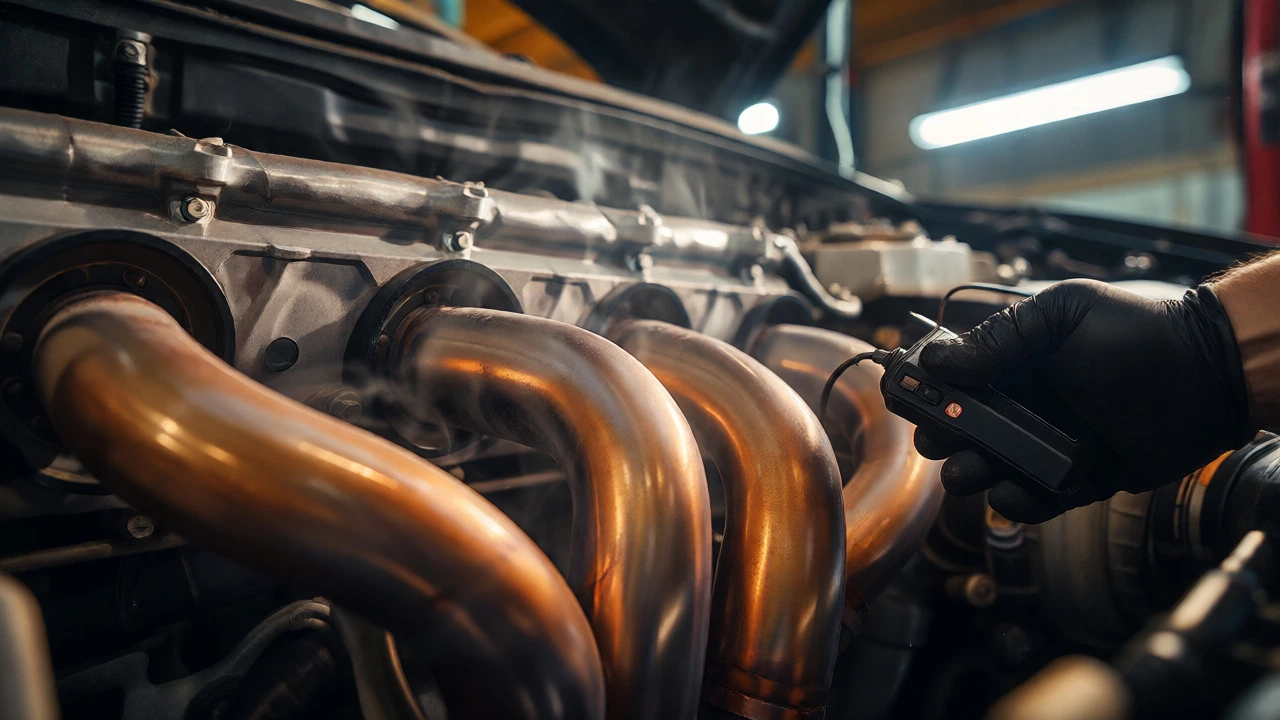
If you’ve spent good money on a cat-back exhaust system replacing the stock muffler and resonator, you want it to last. Exhaust flames can accelerate wear in subtle ways.
First, consider the material. Stainless steel handles heat well, but repeated thermal cycling-heating up rapidly with every flame event-can stress welds over time. If your exhaust has cheap clamps or poor-quality hangers, the vibration from loud backfires can loosen them. A loose exhaust section can rub against the chassis, wearing through paint and potentially causing a hole in the pipe later.
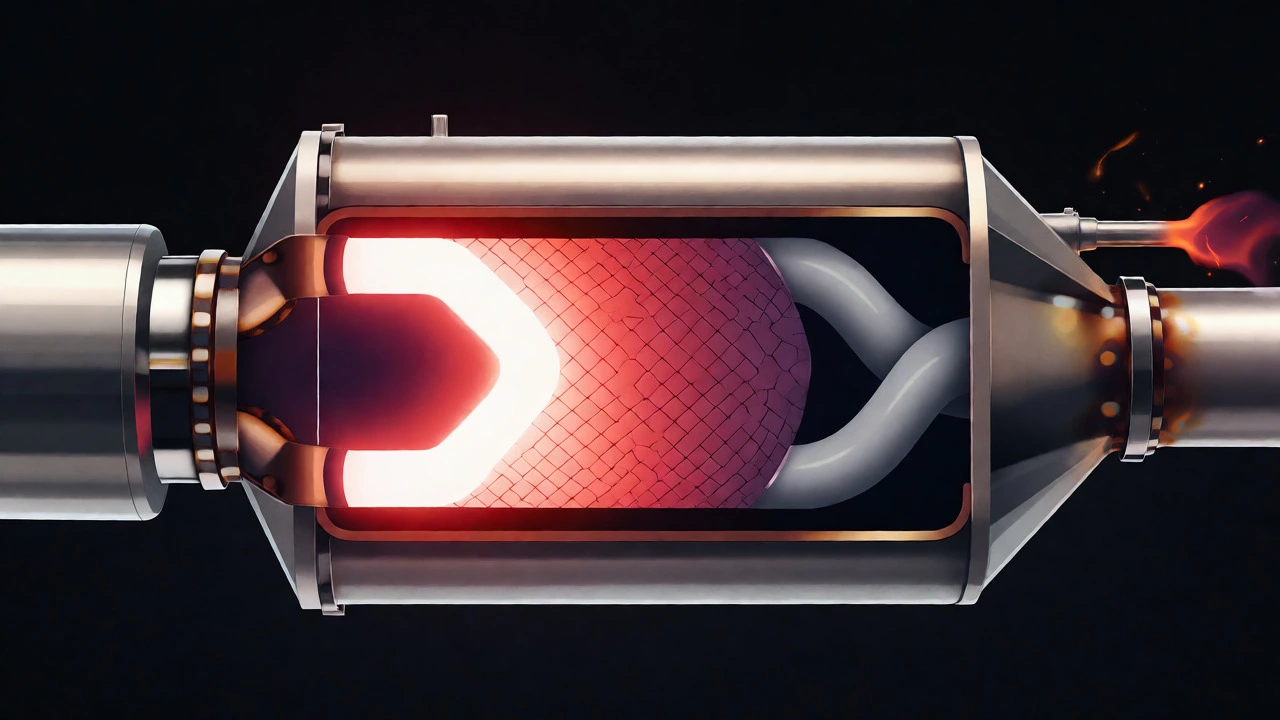
Second, think about the catalytic converter. If you haven’t removed it, it’s sitting right before the muffler. Rich mixtures that cause flames put extra load on the cat. If the cat gets too hot (above 1000°C), its ceramic substrate can melt or crack. Once cracked, pieces can break off and block the exhaust flow, killing power and potentially causing backpressure issues that hurt the engine.
Titanium systems are lighter and look great, but they are more brittle than steel. Extreme heat spikes from severe backfiring events can sometimes discolor titanium (which is cosmetic) or, in worst-case scenarios with poor quality control, cause cracks near joints.
How to Control or Stop Exhaust Flames
Maybe you love the sound but hate the fire. Or maybe you’re trying to pass emissions testing. Here’s how to dial it back.
Adjust the Fuel Map: The most effective fix is retuning the ECU. Ask your tuner to lean out the fuel mixture slightly during deceleration or reduce the amount of fuel injected on throttle lift. This reduces the amount of unburnt fuel available to ignite.
Install a High-Flow Catalytic Converter: If you’re running a catless setup, installing a high-flow sports cat will help burn off some of that excess fuel before it reaches the tip. It won’t eliminate flames entirely, but it will significantly reduce their intensity and frequency.
Check Ignition Components: Old spark plugs or weak ignition coils cause incomplete combustion. Replacing these ensures more fuel burns in the cylinder rather than escaping into the exhaust. Fresh plugs are cheap insurance against unwanted fires.
Upgrade the O2 Sensor: A slow or faulty oxygen sensor can send incorrect data to the ECU, leading to overly rich mixtures. Ensuring your sensors are clean and functioning helps maintain the correct air-fuel ratio.
Legal and Social Considerations
In Australia, where I’m writing from, road rules regarding noise and emissions are strict. While exhaust flames themselves aren’t explicitly illegal in Victoria or NSW, the noise associated with them often is. Loud pops and bangs can violate local noise ordinances, especially in residential areas.
Furthermore, if your vehicle undergoes inspection (like a Roadworthy Certificate), excessive smoke or evidence of a modified emission system can be flagged. If the flames are caused by a missing catalytic converter, you’ll fail emissions tests in states that require them. Always check your local regulations before going full race-spec on the street.
Final Verdict: Should You Worry?
So, are exhaust flames safe? For the vast majority of enthusiasts with properly maintained, tuned vehicles, yes. They are a side effect of performance modifications, not a mechanical failure. The fire is contained within the exhaust stream and dissipates quickly.
But don’t ignore them. Treat every new flame event as a diagnostic clue. If it’s consistent with your tune, enjoy it. If it appears suddenly, changes character, or comes with performance loss, investigate immediately. Your engine will thank you, and so will your wallet when you avoid a blown catalytic converter.
Can exhaust flames damage my engine?
Directly, no. The flames occur after the combustion process is complete in the cylinders. However, the underlying cause-such as a rich fuel mixture or misfires-can indirectly harm the engine if left unchecked for extended periods, particularly affecting the catalytic converter and oxygen sensors.
Why do my exhaust flames only happen when I let go of the gas?
This is known as "deceleration popping." When you lift off the throttle, the engine vacuum increases, pulling more air into the cylinders. Many tuners keep the injectors open longer to cool the engine or prevent hesitation, resulting in unburnt fuel entering the hot exhaust system and igniting.
Is it bad to run a car with exhaust flames?
Running a car with intentional exhaust flames from a tune is generally fine. However, if the flames are due to mechanical faults like misfires, it can overheat the catalytic converter, leading to expensive repairs. Regular maintenance checks are essential.
Do all modified cars produce exhaust flames?
No. Only cars with specific tunes that enrich the fuel mixture on deceleration, or those with mechanical issues causing incomplete combustion, will produce visible flames. Many performance cars with standard maps or conservative tunes will never show them.
Can I remove the catalytic converter to stop flames?
Removing the catalytic converter often makes flames more frequent and louder because there is less resistance and fewer catalysts to burn off the excess fuel. To reduce flames, you typically need to adjust the fuel map or add a high-flow cat, not remove it.