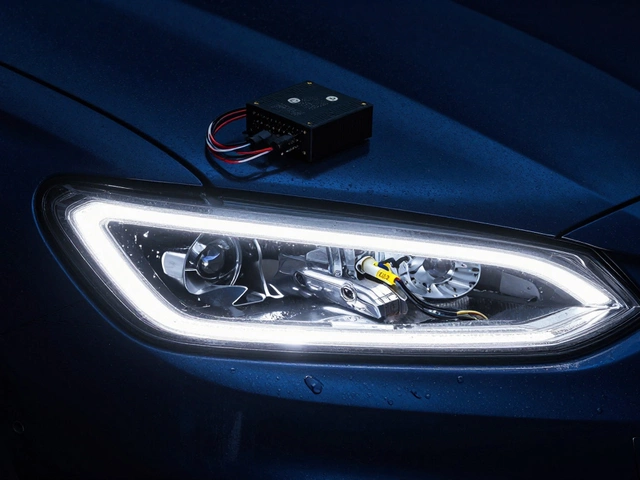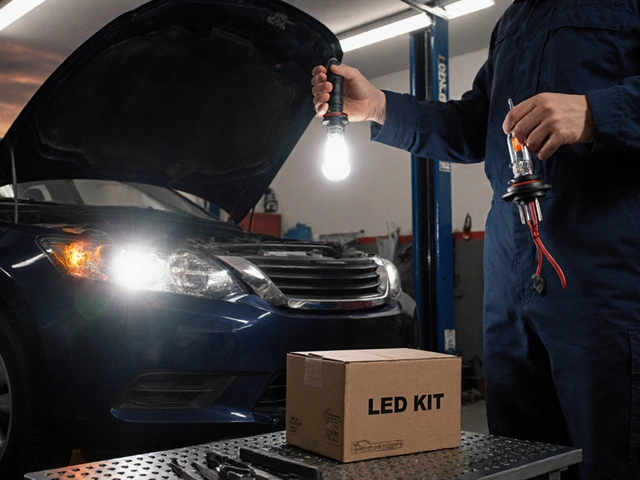
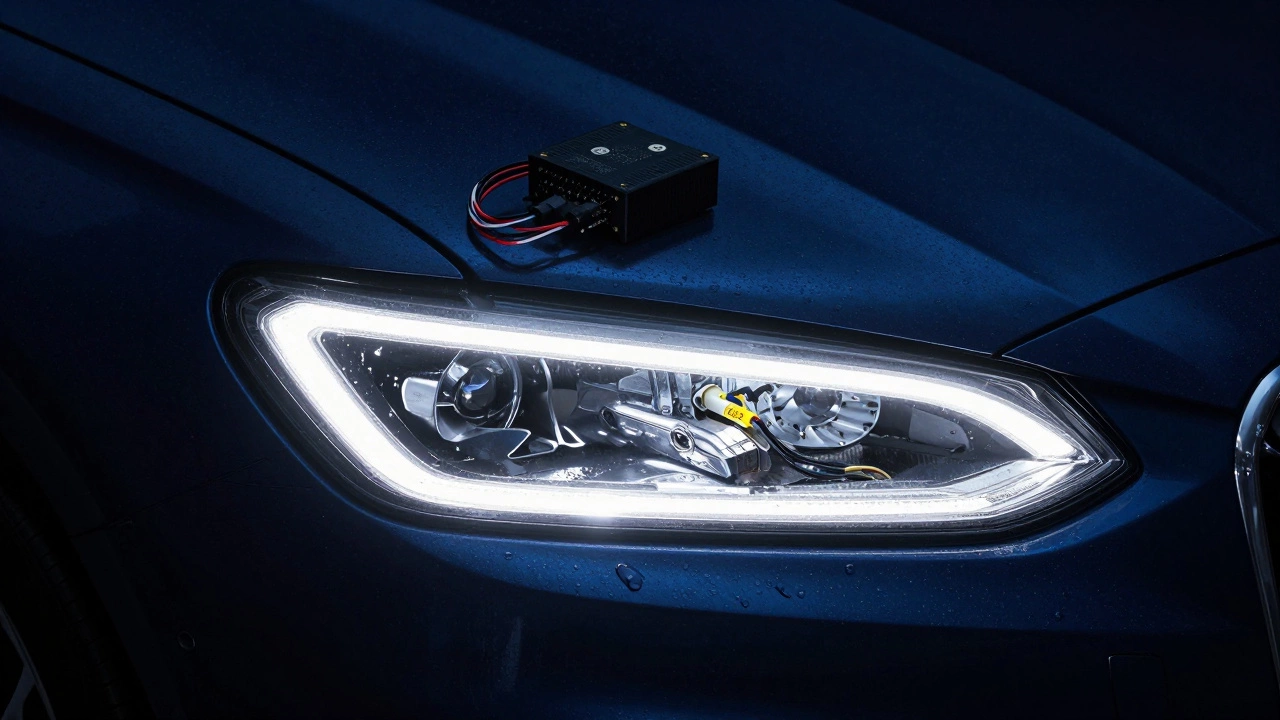
When you see LED headlights glowing bright on the road, it’s easy to assume they’re just like your phone charger-plugged in and drawing power from an outlet. But that’s not how car lighting works. LED headlights don’t need to be plugged in. They run on your car’s electrical system, not a wall socket. The confusion comes from mixing up household LEDs with automotive ones. If you’re thinking about upgrading your car’s lights, understanding how they actually get power matters-because it affects everything from installation to safety.
How LED Headlights Actually Work
LED headlights use semiconductor technology to produce light. Unlike old halogen bulbs that heat a filament, LEDs push electrons through a chip to create photons. This makes them more efficient, longer-lasting, and cooler running. But here’s the key: they don’t need external power cords. They draw electricity directly from your vehicle’s 12-volt battery and alternator system. That’s the same system that powers your radio, windows, and engine control unit.
When you turn on your headlights, the car’s electrical system sends current through wiring harnesses to the LED modules. These modules contain tiny drivers-small circuit boards-that convert the 12V DC power from your car into the exact voltage and current the LEDs need to operate safely. No plugs, no outlets, no extension cords. Just wires connected to your car’s existing lighting circuit.
Why People Think LED Lights Need to Be Plugged In
Most people associate LED lights with desk lamps, strip lights under kitchen cabinets, or holiday decorations. Those are designed for home use and come with AC adapters or USB plugs because they’re meant to plug into wall outlets. That’s where the confusion starts. When someone sees an aftermarket LED headlight kit with a small box or wire harness, they assume it’s a plug-in device.
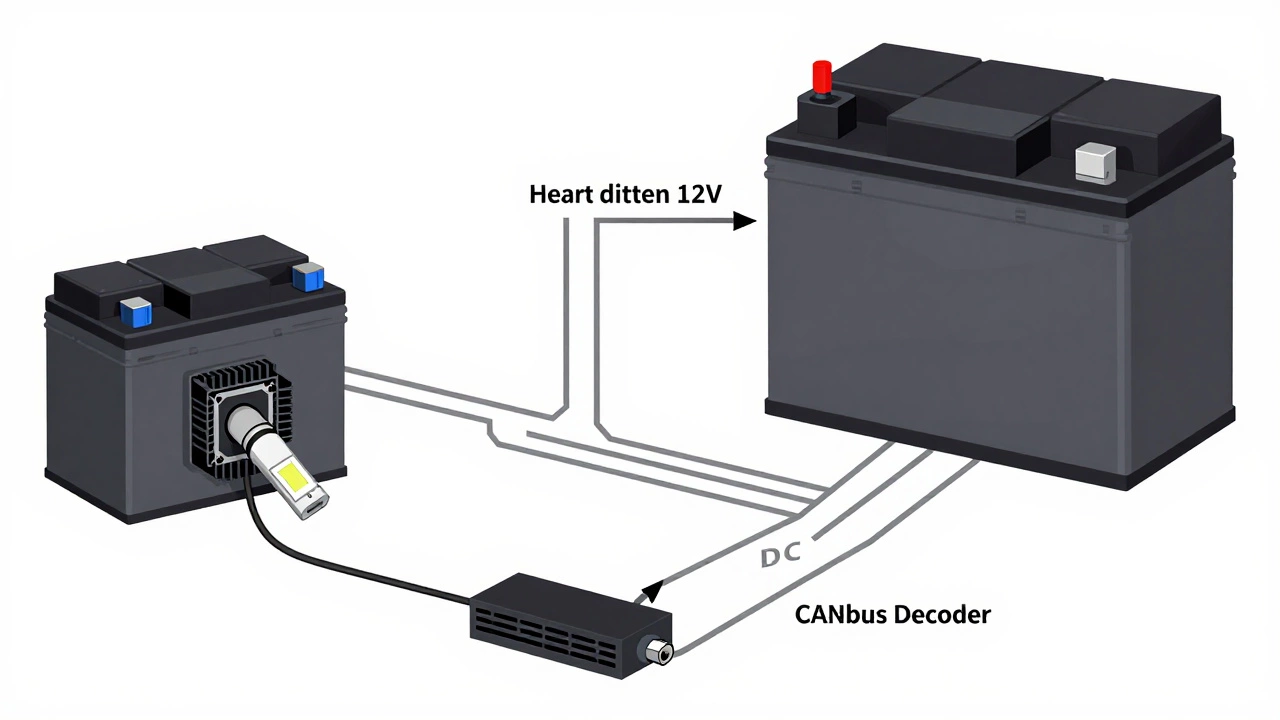
But that box isn’t a power adapter. It’s a CANbus decoder or resistor pack. These components fix issues caused by modern cars that monitor bulb function. If your car detects a lower power draw (LEDs use way less than halogens), it may throw a dashboard error saying “bulb out.” The decoder tricks the car into thinking a halogen bulb is still there. It’s a fix for compatibility-not a power source.
Installation: No Plugs, But Still Needs Wiring
Installing LED headlights isn’t like plugging in a lamp. You’re replacing the factory bulb, not adding a new device. You remove the old halogen or HID bulb, slide in the LED replacement, and connect the wiring harness to the factory socket. The harness usually has a small module that sits near the headlight housing. That’s not a power adapter-it’s a noise filter or CANbus module.
Some kits include an external power wire that runs back to the battery. This isn’t for plugging in. It’s to provide a direct, clean power source and avoid voltage drops from old factory wiring. This is common in high-output LED kits that draw more current than the original bulb. It’s still wired into the car’s system, not plugged into a wall.
If you see someone claiming you can “plug LED headlights into a cigarette lighter,” that’s either a misunderstanding or a scam. Cigarette lighter ports can’t handle the power draw of headlights, and doing so could melt wiring or cause a fire. Headlights need dedicated circuits designed for high current-something only the car’s factory wiring can safely provide.
What Happens If You Try to Plug LED Headlights Into an Outlet?
Don’t try it. Plugging a car LED headlight into a 120V or 230V wall outlet will destroy it instantly. Automotive LEDs are built for 12V DC. Household outlets supply 120V AC. The voltage difference is massive-ten times higher than what the LEDs can handle. Even if you used a transformer, the alternating current (AC) would fry the internal driver circuit. LED headlights aren’t designed to work with AC power at all.
Some people buy LED bulbs labeled “universal” and assume they’re compatible with any power source. That’s misleading. “Universal” means they fit multiple bulb bases (H7, H11, 9005), not that they work with any voltage. Always check the voltage rating on the packaging. It should say “12V DC” or “for automotive use.” If it doesn’t, walk away.
Do All LED Lights in Cars Work the Same Way?
Yes-within reason. All factory and aftermarket LED lighting in cars (headlights, fog lights, brake lights, interior lights) runs on the vehicle’s 12V DC system. The only exceptions are aftermarket accessories like LED light bars mounted on the roof or bumper. Those often come with their own wiring harnesses that connect directly to the battery or fuse box. Even then, they’re not “plugged in.” They’re hardwired.
Some high-end luxury cars have LED lighting that’s integrated into the body structure, like ambient lighting strips under the dash. Those are also powered by the car’s electrical system. There’s no plug. No outlet. Just wires hidden under trim panels, connected to the car’s central control module.
Even LED license plate lights or turn signals follow the same rule. They’re part of the car’s circuit. If your car didn’t have a wiring system, none of these lights would work-not even with a battery pack.
Why This Matters for Car Owners
Knowing that LED headlights don’t need to be plugged in helps you avoid bad advice and scams. You won’t waste money on “plug-and-play” LED kits that promise to connect to a USB port. You won’t risk damaging your car’s electronics by trying to power headlights from a power bank or inverter.
It also helps with troubleshooting. If your LED headlights flicker or dim, it’s not because they’re “not getting enough juice” from a wall outlet. It’s likely a bad ground connection, a failing alternator, or a mismatched CANbus decoder. Those are real automotive issues that need proper diagnosis-not a trip to an electrical outlet.
And if you’re thinking of installing LED lights yourself, you need basic tools: a screwdriver, wire strippers, maybe a multimeter. You don’t need an extension cord or a power strip. Your car’s battery is the only power source you need.
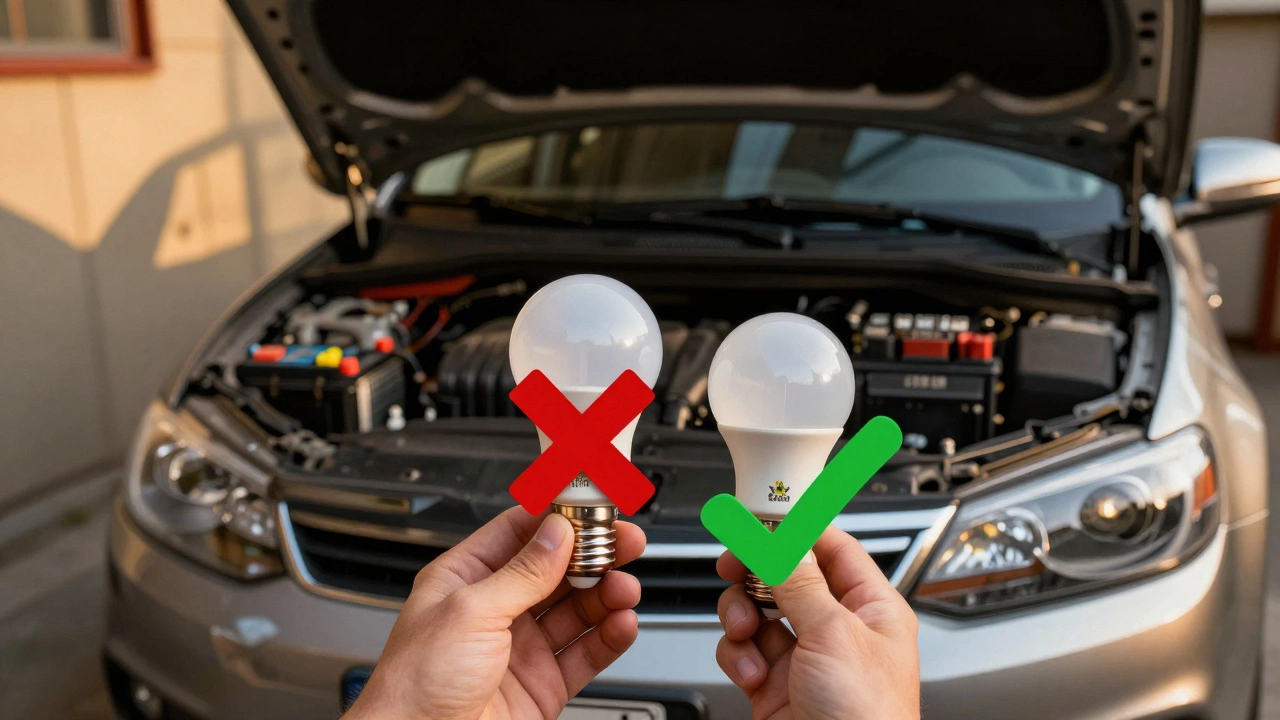
Common Myths About LED Headlights
- Myth: LED headlights need to be plugged in to work. Truth: They’re wired into the car’s electrical system-no plugs required.
- Myth: You can use LED bulbs from a hardware store in your car. Truth: Home LED bulbs aren’t designed for vibration, heat, or moisture. They’ll fail fast and could be unsafe.
- Myth: LED headlights are too bright and blind other drivers. Truth: Properly installed, DOT- or ECE-certified LED headlights focus light exactly like halogens-just more efficiently. Poorly installed or cheap knockoffs are the real problem.
- Myth: LED headlights drain your battery. Truth: LEDs use up to 80% less power than halogens. They actually reduce strain on your electrical system.
What to Look for When Buying LED Headlights
Not all LED headlights are created equal. Here’s what to check:
- Voltage rating: Must say “12V DC.” Avoid anything labeled “universal” without voltage specs.
- Certifications: Look for DOT (U.S.) or ECE (Europe) approval. These ensure proper beam pattern and safety.
- Heat dissipation: Good LED kits have aluminum heat sinks. Poor ones overheat and die early.
- Canbus compatibility: If your car has bulb-out warnings, get a kit with built-in CANbus decoders.
- Warranty: Reputable brands offer 1-3 year warranties. Cheap ones don’t.
Brands like Philips, Osram, and Auxbeam are known for reliable automotive LED products. Avoid no-name brands sold on marketplaces that don’t list technical specs.
Final Thought: Power Comes From the Car, Not the Wall
LED headlights are one of the smartest upgrades you can make to your car. They’re brighter, use less power, last longer, and improve night visibility. But they’re not magic. They’re engineered to work with your car’s existing electrical system. No outlets. No plugs. No adapters. Just clean, direct wiring that’s been tested for safety and performance.
If someone tells you to plug your LED headlights in, they’re either misinformed or trying to sell you something that won’t work. Your car already has everything it needs to power them-right under the hood.
Do LED headlights need to be plugged into a wall outlet?
No, LED headlights do not need to be plugged into a wall outlet. They run on your car’s 12-volt electrical system, drawing power directly from the battery and alternator. Any plug or adapter included with aftermarket kits is for CANbus compatibility or noise filtering-not for connecting to household power.
Can I use a regular LED bulb from a hardware store in my car?
No. Regular LED bulbs sold for home use are designed for 120V AC power and lack the durability to handle car vibrations, heat, and moisture. They’ll likely fail quickly and could create a safety hazard. Always use LED bulbs specifically labeled for automotive use with a 12V DC rating.
Why do some LED headlight kits have a small box or wire harness?
That box is usually a CANbus decoder or resistor pack. Modern cars monitor bulb function and may trigger a dashboard warning if they detect lower power draw from LEDs. The decoder tricks the car into thinking a halogen bulb is still installed. It’s not a power adapter-it’s a compatibility fix.
Will LED headlights drain my car battery?
No. LED headlights use up to 80% less power than traditional halogen bulbs. They actually reduce the load on your electrical system. If your battery is draining, the issue is likely a faulty alternator, parasitic draw, or bad wiring-not the LED lights themselves.
Can I power LED headlights with a power bank or inverter?
Technically, yes-but you shouldn’t. Power banks and inverters aren’t designed for the continuous, high-current draw of headlights. They can overheat, shut down, or damage your equipment. LED headlights are meant to be powered by your car’s dedicated electrical system, not portable devices.