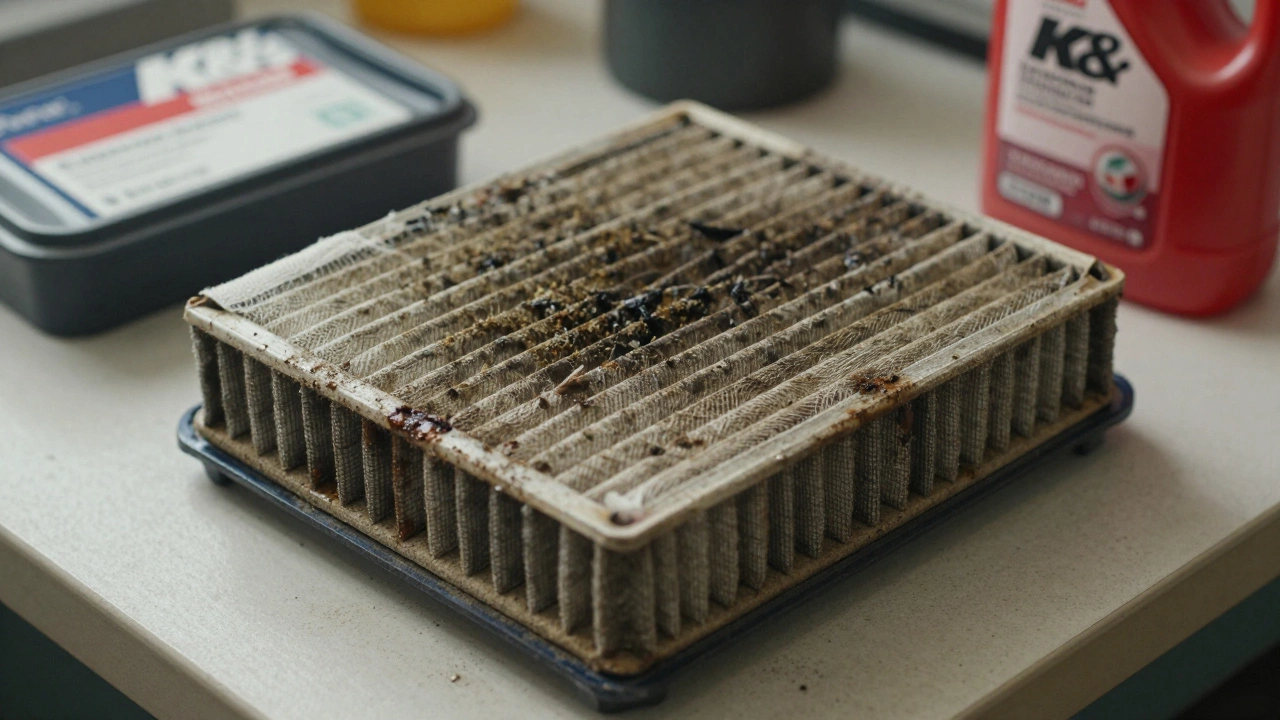
Reusable Air Filter: What It Really Does for Your Engine
When you hear reusable air filter, a washable, long-lasting alternative to standard paper filters that lets more air into your engine. Also known as performance air filter, it's often sold as a way to squeeze out more power, improve fuel economy, or just look cool under the hood. But here’s the truth: most daily drivers won’t see a real difference. The gains are tiny—maybe 1 to 3 horsepower if everything else is stock. And if your engine isn’t tuned for it, you could actually hurt performance by letting in too much dust.
What really matters is engine airflow, how much clean air your engine can pull in to mix with fuel and burn efficiently. A clogged paper filter restricts airflow, which is bad. But a dirty reusable air filter does the same thing. People think these filters are magic because they’re washable, but they still need cleaning. And if you over-oil them—common mistake—you risk coating the mass airflow sensor, which can throw off your fuel mixture and trigger check engine lights.
These filters work best for modified cars with bigger intakes, turbochargers, or high-flow exhausts. If you’ve upgraded your exhaust or tuned your ECU, a reusable filter can help keep up. But for a regular commuter? The OEM paper filter is cheaper, more reliable, and designed exactly for your engine. You’re not gaining performance—you’re paying more for maintenance and risking sensor damage.
And don’t get fooled by marketing. Some brands claim 50% more airflow. That’s in a lab, not on the road. Real-world tests show almost no difference in acceleration or fuel economy for stock vehicles. The real benefit? Saving money over 10 years by not buying new filters. But that only works if you clean it right—every 15,000 to 20,000 miles, depending on driving conditions. Skip that, and you’re just trading one problem for another.
There’s also the air filter restriction, how much the filter slows down airflow before it reaches the engine. Factory filters are designed with just enough restriction to catch dirt without choking the engine. Aftermarket filters reduce that restriction, but only if they’re clean. A dirty cotton filter can restrict airflow more than a clean paper one. It’s not about material—it’s about maintenance.
So who should use a reusable air filter? Enthusiasts who track their cars, off-roaders in dusty conditions, or people who want to avoid landfill waste. Everyone else? Stick with the factory filter. It’s not sexy, but it’s proven. And if you’re thinking about upgrading your air intake system, that’s where real gains happen—not just swapping the filter.
Below, you’ll find real-world tests, installation tips, and breakdowns of which filters actually deliver on their promises—and which ones are just hype. No fluff. Just what works, what doesn’t, and what you should do next for your car’s engine.
Performance air filters last 25,000-35,000 km with proper cleaning, but dirty filters can damage your engine. Learn real-world maintenance tips and when to replace yours.