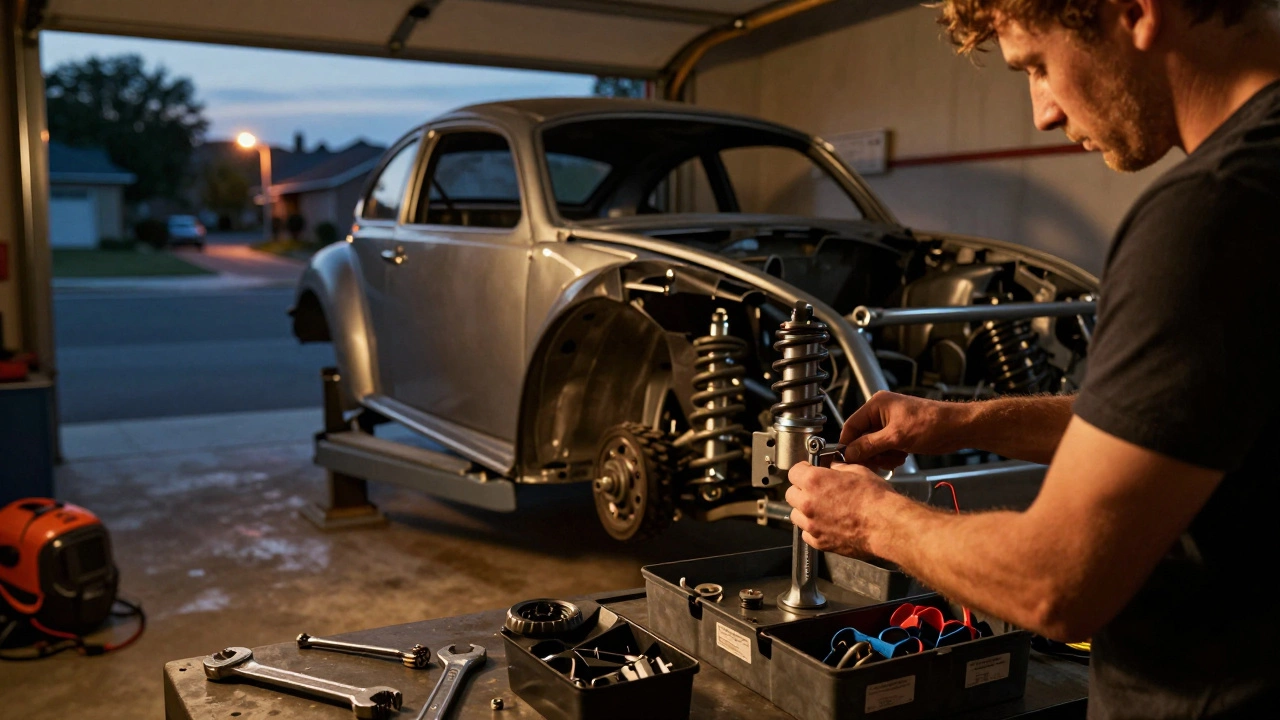
Kit Car Assembly: What You Need to Know Before Building Your Own
When you think about kit car assembly, the process of building a vehicle from a pre-fabricated set of components rather than buying a factory-made car. Also known as DIY car build, it gives you total control over design, performance, and style—but it’s not a weekend project for most people. This isn’t just bolting on body panels. It’s wiring a full electrical system, aligning a chassis, matching suspension parts, and making sure everything meets safety standards. People who take this on aren’t just tweaking their Honda Civic—they’re starting from zero and ending with something that’s truly theirs.
Most kit cars, complete vehicle kits sold by manufacturers like Caterham, Ariel, or even budget-friendly options from UK-based builders. Also known as custom car build, they range from simple roadsters to high-performance machines that rival supercars. But here’s the catch: a kit doesn’t come with a title or registration. You have to prove it’s road legal. That means documenting every part, getting inspections, and sometimes even re-engineering components to pass MOT or equivalent tests. And if you’re using parts from donor vehicles—like a Ford engine or a BMW transmission—you need to track those too. It’s not just assembly. It’s paperwork, patience, and precision.
Then there’s the car modification, any change made to a vehicle after it leaves the factory, including engine swaps, suspension upgrades, or custom interiors. Also known as automotive customization, it’s what turns a kit car from a shell into a machine that drives like it looks. You’ll see this in the posts below—people who swapped out stock suspensions for coilovers, added custom exhausts that don’t rattle the cabin, or wrapped their builds in vinyl to avoid repainting. These aren’t random tweaks. They’re deliberate choices made by builders who learned the hard way what works and what doesn’t. Some tried wheel spacers and ended up with broken bearings. Others skipped clear coating on carbon fiber parts and watched them crack in a year. The real lesson? Every mod has a trade-off, and kit car builders learn them all before they ever hit the road.
What you’ll find here isn’t theory. It’s real stories from people who’ve been there: the cost overruns, the late-night wrenching, the moments they almost quit. You’ll read about what voids a warranty when you swap parts, how to move a dead car without damaging your custom body kit, and why a 3-inch exhaust might sound cool but hurt performance if your engine doesn’t need it. This isn’t a guide for dreamers. It’s a resource for anyone serious enough to start building—and smart enough to learn from others’ mistakes first.
Building a kit car takes anywhere from 3 months to over 2 years, depending on your experience, the kit type, and how much time you can dedicate. Learn what really affects the timeline and how to avoid common delays.