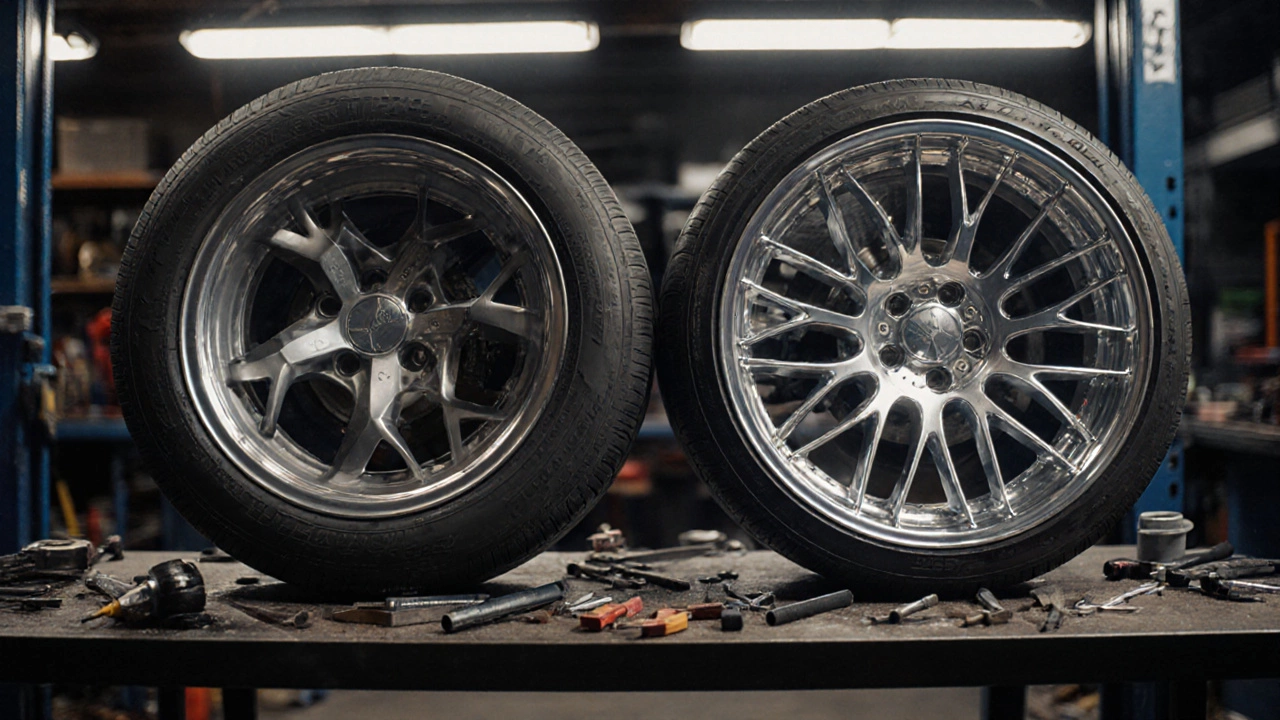
Rims: What You Need to Know Before Upgrading Your Wheels
When you think about rims, the circular frames that hold your tires and connect to your car’s suspension. Also known as wheels, it’s easy to assume they’re just for style—but they directly impact how your car handles, wears out tires, and even how safe it is on rough roads. Most people pick rims because they look sharp, but few realize how much they change the way your car actually drives. A set of lightweight alloy rims can improve acceleration and braking, but heavier ones or ones with the wrong offset can strain your suspension, wear out bearings faster, and make your ride feel bouncy or unstable.
That’s why alloy wheels, lightweight wheels made from aluminum or magnesium alloys are so popular—they cut weight without sacrificing strength. But even these come with trade-offs. If you go too wide or lower the offset too much, you risk rubbing against your fenders or suspension parts. And if you add wheel spacers, metal or plastic discs that push wheels outward to fill out the fender gap, you’re adding stress to your hub bearings and control arms. Some drivers swear by them for a wider stance, but mechanics see the damage they cause over time: worn ball joints, uneven tire wear, and expensive repairs.
And it’s not just about how they feel—it’s about what they do to your warranty. If you install aftermarket wheels, non-factory wheels bought from third-party vendors, your bumper-to-bumper warranty might still stand… but any damage caused by those wheels won’t be covered. That means if a spacer cracks a hub bearing, you’re paying for it yourself. Insurance companies also take note. In Australia and the UK, changing wheels without telling your insurer can void coverage after an accident—even if the rims weren’t the cause.
So what’s the right move? Start with size. Most cars run best within 1-2 inches of factory specs. Go bigger, and you’ll need lower-profile tires, which means less cushion for potholes. Go wider, and you’ll need to check clearance. And always match the bolt pattern and center bore exactly—forcing a rim to fit can warp it or damage your hubs. Look for hub-centric rings if your rim’s center hole is too big; they center the wheel properly on the axle instead of relying on lug nuts alone.
Don’t forget the finish. Chrome looks great but chips easily. Powder-coated rims hold up better in winter weather. Matte black is trendy but needs regular cleaning to avoid fading. And if you live somewhere with salted roads, sealed rims last longer than uncoated ones.
There’s no one-size-fits-all rim setup. What looks cool in a showroom might feel terrible on your daily commute. The posts below break down real experiences—what works, what doesn’t, and what you’ll regret later. Whether you’re debating spacers, wondering if bigger rims hurt fuel economy, or trying to figure out if your insurance needs an update, you’ll find honest answers here. No fluff. Just what matters before you hand over your cash.
Rims are just the outer edge of a wheel; alloy wheels are the full wheel made of lightweight metal. Understand the real difference to make smarter upgrades and repairs.