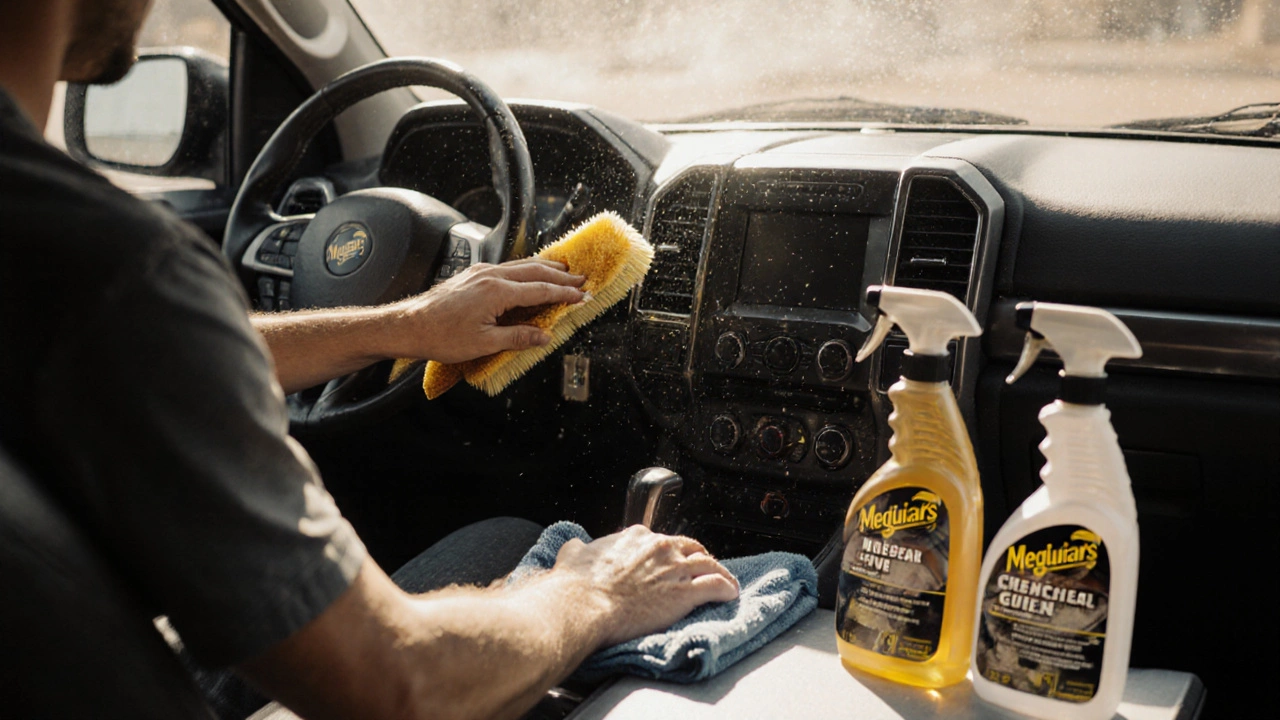
Clean Car Dashboard: Tips, Products, and Common Mistakes
When you think about keeping your car looking new, the clean car dashboard, the central surface that shows wear first and reflects how well you maintain your vehicle matters more than you think. It’s not just about looks—it’s about protecting plastic, vinyl, and touchscreen surfaces from cracking, fading, and sticky residue. A dirty dashboard isn’t just ugly; it’s a sign of neglect that can spread to other interior parts if you’re not careful.
Many people reach for whatever cleaner is handy—like Clorox wipes, a common household disinfectant often misused on car interiors—but those wipes contain alcohol and harsh chemicals that dry out plastic over time. They might make your dashboard shine briefly, but they’ll leave it brittle and cracked within months. Professional detailers avoid them entirely. Instead, they use microfiber cloths, dedicated interior cleaners, and conditioners that restore moisture without leaving greasy films. Even something as simple as a 50/50 mix of distilled water and isopropyl alcohol works better than Clorox for most surfaces, as long as you don’t soak the material.
What you use to clean your dashboard also depends on what it’s made of. Leather, matte plastic, glossy trim, and touchscreen displays all need different care. A cleaner that’s safe for vinyl might fog up your infotainment screen or strip the finish off brushed aluminum accents. That’s why a good cleaning routine isn’t just about the product—it’s about knowing which part needs what. You don’t need a full kit of ten sprays. Just a good interior cleaner, a couple of microfiber towels, and a soft brush for vents are enough to do it right.
And it’s not just about wiping. Dust builds up in vents, around buttons, and under the steering wheel. If you skip those spots, you’re only cleaning half the job. A soft brush or a vacuum with a nozzle attachment makes a big difference. And never clean your dashboard under direct sunlight—it dries the product too fast, leaving streaks and residue. Early morning or evening is the best time.
There’s also a myth that shiny dashboards last longer. Actually, the opposite is true. Heavy gloss sprays attract dust and fingerprints, making your car look worse faster. Most pros prefer matte or satin finishes that hide smudges and don’t reflect glare while driving. If you want your dashboard to look great for years, skip the shine spray and go for protection, not sparkle.
What you’ll find in the posts below are real, tested methods for keeping your interior clean without spending a fortune or damaging your car. From what detailers actually use to what household products you should never touch your dashboard with, we cover the mistakes most drivers make and how to fix them. You’ll also see how cleaning ties into bigger interior styling choices—like choosing the right seat covers, avoiding UV damage, and keeping your car smelling fresh without air fresheners that just mask dirt. This isn’t about quick fixes. It’s about building a habit that keeps your car looking new, inside and out.
Learn how to restore your car's interior to like-new condition with simple, affordable steps - from deep cleaning and trim restoration to seat care and odor control. No expensive detailers needed.