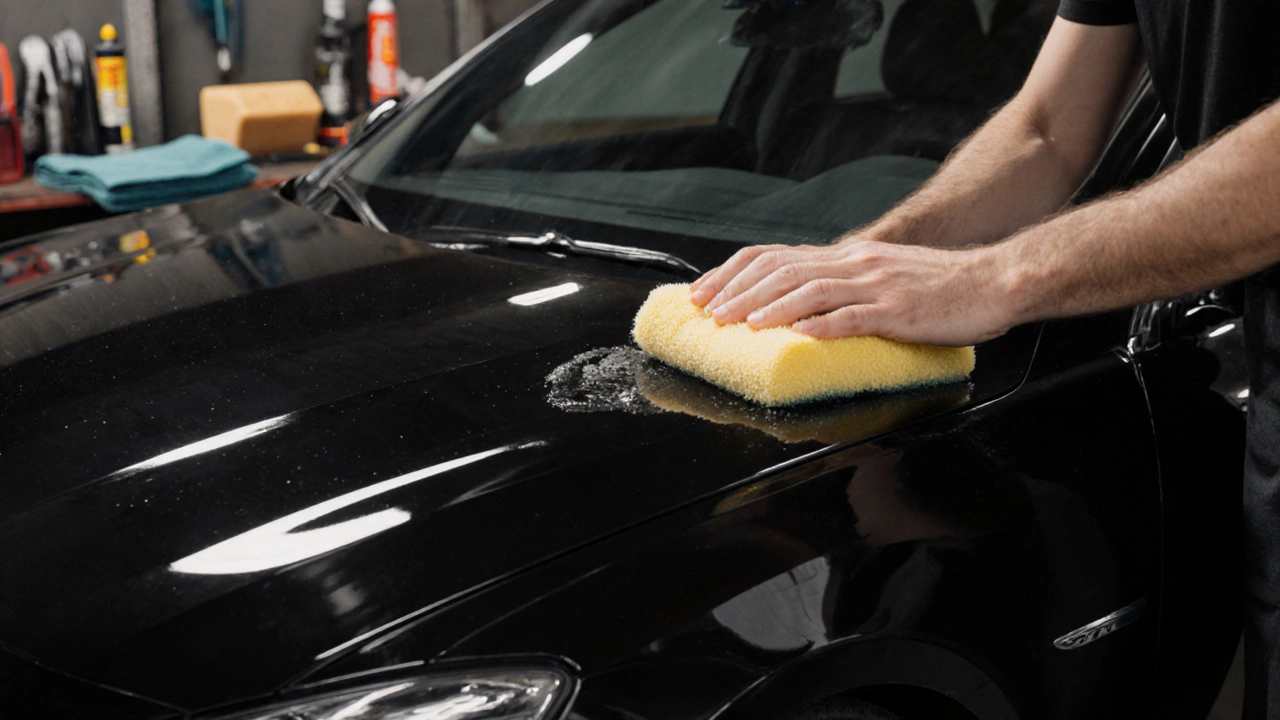
Car Waxing Tools: What You Need and What Actually Works
When it comes to protecting your car’s paint, car waxing tools, the physical items used to apply, buff, and remove wax from vehicle surfaces. Also known as detailing tools, they’re not just about making your car look shiny—they’re about keeping the paint safe from UV rays, dirt, and environmental damage. But here’s the thing: most people buy the wrong tools because they think more expensive means better. That’s not true. A $50 microfiber towel and a basic foam applicator can outperform a $200 kit if you know how to use them.
Car wax, a protective coating applied to automotive paint to enhance shine and block contaminants doesn’t work by itself. It needs the right wax application tools, devices and materials designed to spread wax evenly without scratching. Think applicator pads, microfiber cloths, and dual-action polishers. Skip the cheap sponge pads—they leave streaks and trap grit. Use a high-density foam pad instead. It holds wax better, spreads it smoother, and won’t scratch your clear coat. And never use a terry cloth towel to remove wax. Those fibers are too rough. Stick to plush, lint-free microfiber. It’s the difference between a glossy finish and a hazy mess.
People also forget that paint protection, the long-term defense of a vehicle’s surface from environmental damage starts before the wax even touches the paint. If your car has swirls, scratches, or oxidation, wax just hides them. It doesn’t fix them. That’s why many pros use a clay bar first, then polish, then wax. The clay bar removes bonded contaminants like tree sap, rail dust, and industrial fallout that regular washing misses. It’s not glamorous, but it’s necessary. And if you’re skipping this step, you’re wasting your wax.
There’s no magic tool that does it all. You don’t need a $400 rotary buffer for a weekend project. But you also can’t expect good results with a rag and a can of spray wax. The sweet spot is simple: a foam applicator, two clean microfiber towels, and a decent quality wax. That’s it. Apply in the shade, work in small sections, and buff off before the wax dries to a haze. That’s how professionals do it—and that’s how you get results that last months, not weeks.
What you’ll find below isn’t a list of the top 10 waxing kits. It’s a collection of real-world guides from people who’ve tried everything—expensive polishers, DIY wax recipes, even household products—and learned what actually works on real cars. Whether you’re dealing with faded paint, stubborn water spots, or just want to stop paying for professional detailing, the posts below show you how to get better results without overpaying or overcomplicating things.
Professional detailers use high-quality carnauba wax, synthetic sealants, or hybrids to protect and enhance paint. Learn which products they trust, how to prep properly, and what to avoid for long-lasting shine.