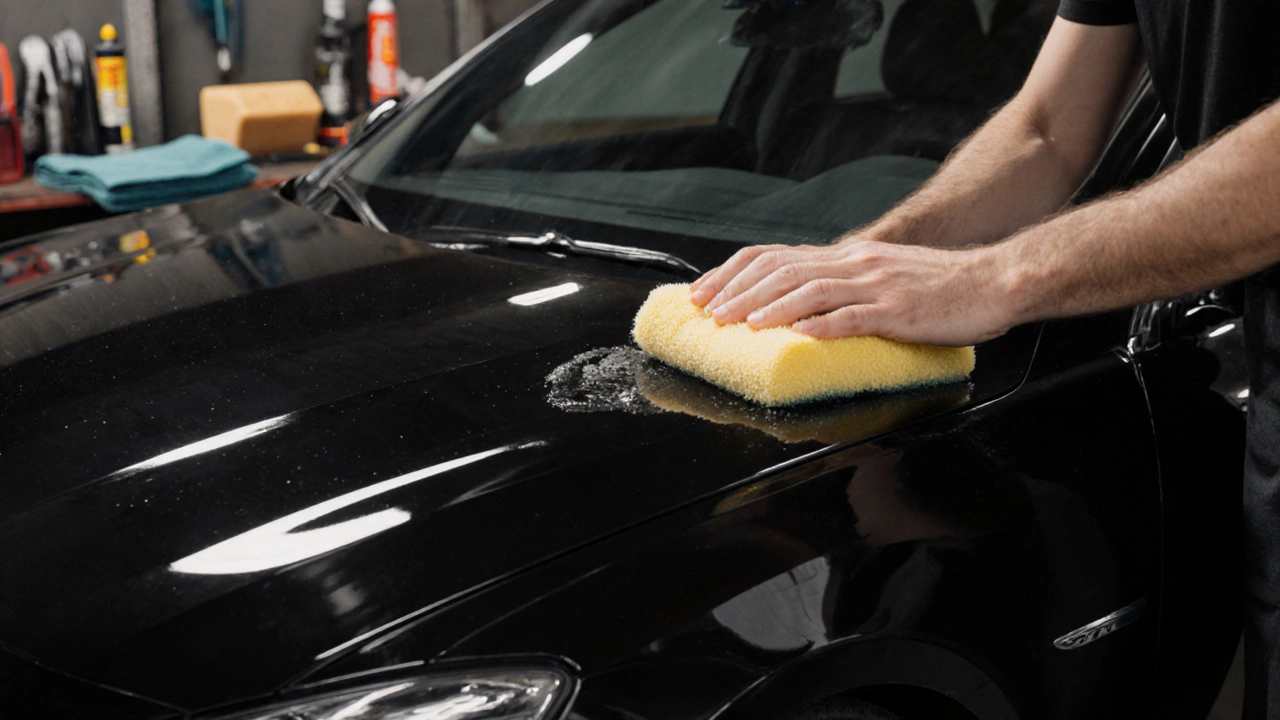
Car Wax: What It Does, What It Doesn't, and What You Really Need
When you hear car wax, a protective coating applied to a vehicle’s paint to enhance shine and guard against environmental damage. Also known as automotive wax, it’s one of the oldest tricks in the book for keeping a car looking fresh. But here’s the truth: most people use it wrong—or worse, they think it’s the only thing their car needs.
Car wax sits on top of your paint, filling in tiny scratches and creating a barrier against things like bird droppings, tree sap, and UV rays. It doesn’t repair damage—it hides it temporarily. And if you’re using cheap wax every month, you’re not protecting your car—you’re just building up layers of gunk that make future detailing harder. Better alternatives like paint protection film, a clear, durable layer applied to high-impact areas of a vehicle to prevent chips and scratches or ceramic coatings, a liquid polymer that bonds chemically with paint to create a long-lasting, hydrophobic shield are changing the game. They last longer, resist heat and chemicals better, and don’t need reapplying every few weeks.
Here’s what most people miss: wax doesn’t fix a dirty car. If your paint has swirl marks or oxidation, wax just makes them look shinier while hiding the real problem. Real protection starts with proper washing, clay barring, and polishing. Wax is the final step—not the starting point. And if you’re driving in the rain, snow, or salt-heavy roads, wax alone won’t cut it. You need something that sticks, not just sits.
Look at the posts below. You’ll find guides on what actually damages your car’s finish—like using Clorox wipes on your dashboard or swapping halogen bulbs for LEDs without checking legality. You’ll see how wheel spacers affect alignment, how lowering springs change ride quality, and why some air filters do more harm than good. All of these are part of the same conversation: how to care for your car without making costly mistakes. Car wax is just one piece. The real question is: are you treating your car like a machine that needs smart maintenance—or just a shiny decoration that needs constant polishing?
Professional detailers use high-quality carnauba wax, synthetic sealants, or hybrids to protect and enhance paint. Learn which products they trust, how to prep properly, and what to avoid for long-lasting shine.